— A Rock-Cut Miniature Temple Beside Flowing Waters —
Meaning: Jukut paku means ‘fern shoots’ which are eaten as a ceremonial dish; it is unclear why the site bears this name.
Also called: CANDI TEBING JUKUT PAKU, GOA RAKSASA
Location: Southwest of Ubud, in the Wos river valley.
Map: Singakerta, Ubud, Gianyar, Bali, Indonesia
Dates back to: 11ᵗʰ century.
Main buildings: A rock-cut candi and meditation caves.
Region: Around Ubud
Theme: The Rock Temples of Central Bali
Requirements for visit: Free to visit. Sarongs are not required, but may be worn as a courtesy.
Accessibility: Around 70 steps lead down to the relief.
A miniature of a Javanese-style temple
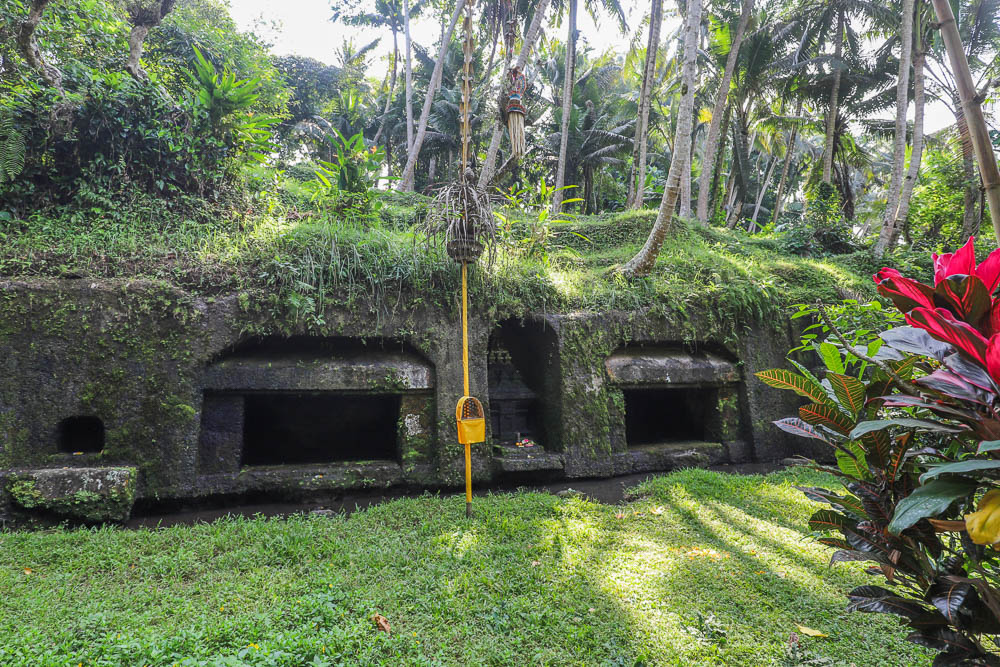
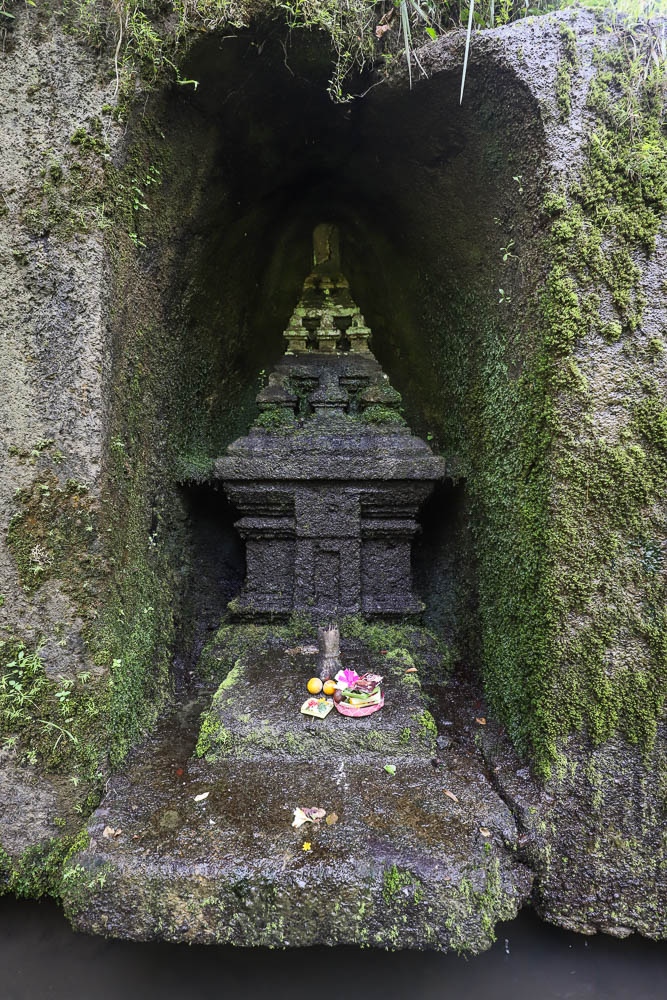
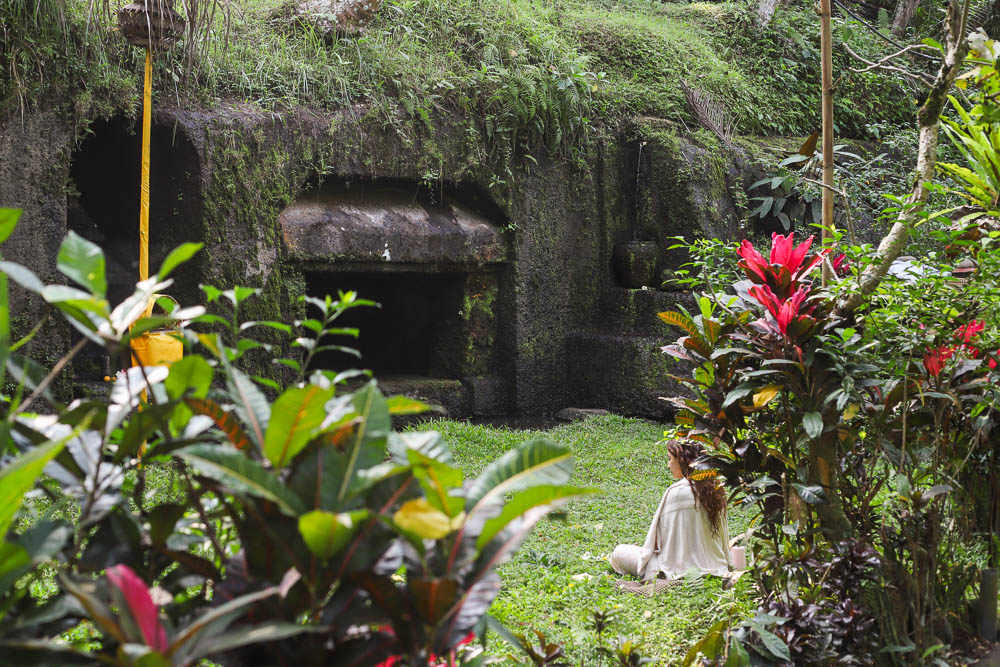
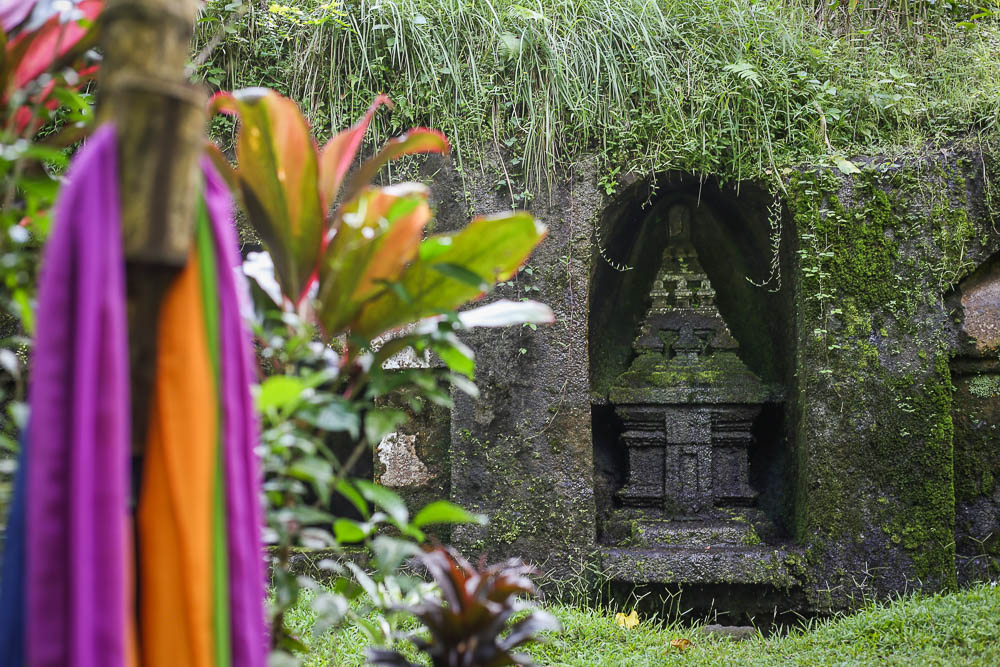
Southwest of Ubud, on the western bank of the Wos (also called Oos) River, lies a rock-cut miniature candi (pronounced: chahn-dee) flanked by two hermits’ caves. The niche enclosing the candi is unusually deep compared with the relatively small size of the relief itself. Its form resembles the Shaivist Hindu temples of Central Java from that era and is particularly similar in structure to the rock-cut temples of the Pakerisan River valley, most closely the Tenth Shrine of Pura Gunung Kawi and, in its form, Candi Tebing Kerobokan. It is possibly one of the most ancient monuments in Bali, probably dating as early as the 11ᵗʰ century, contemporaneous with the larger candis at Gunung Kawi.
Monument and hermitage
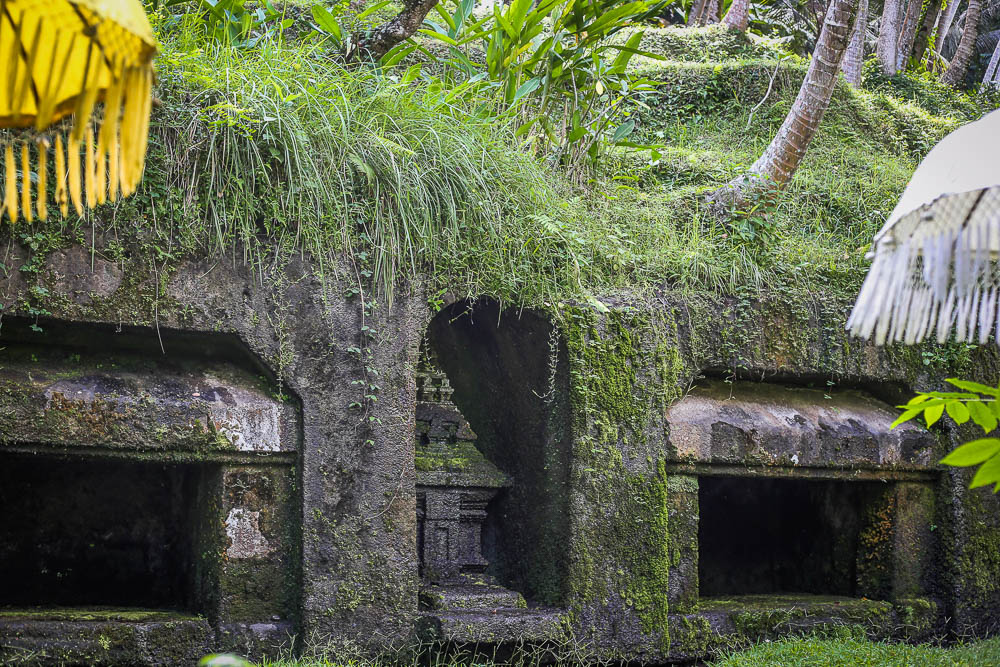
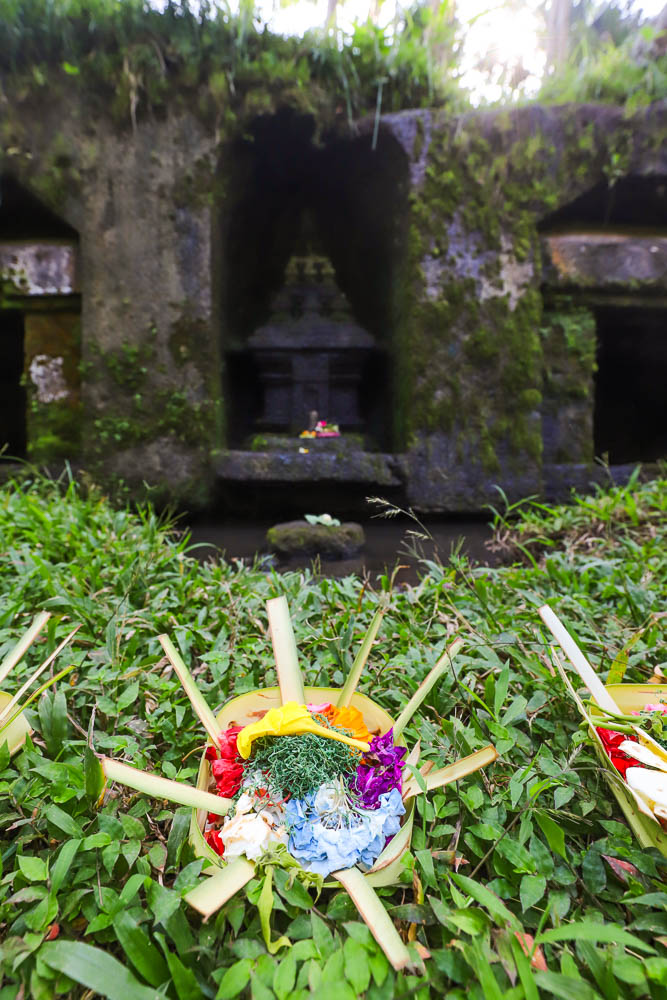
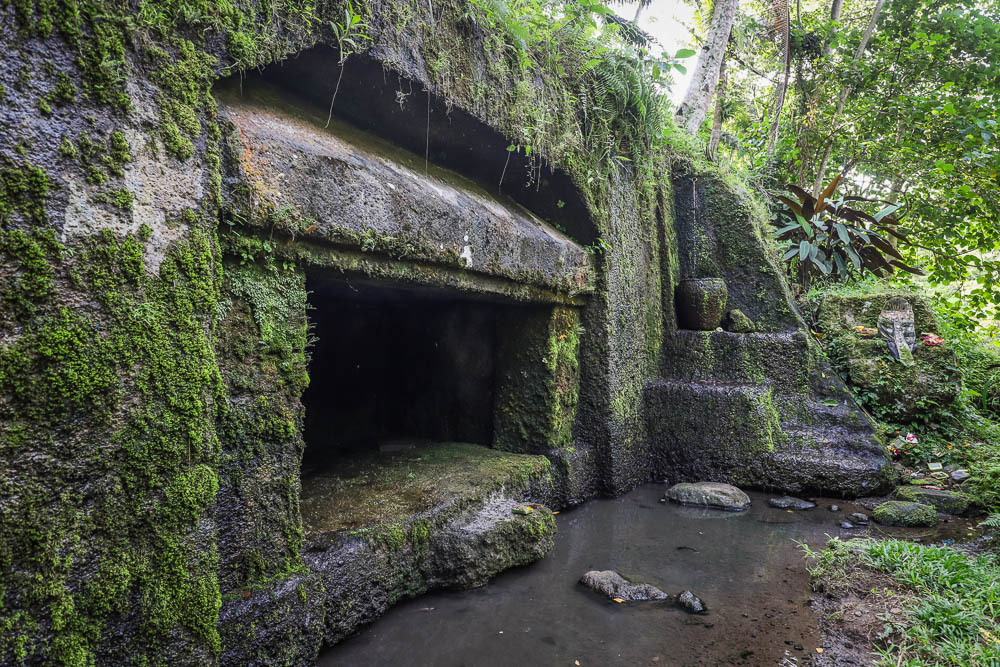
As with all Balinese candis, the rock-cut miniature temple likely served as a monument—an empty tomb of a departed ruler whose name is now lost. The caves on the sides were likely occupied by hermit caretakers, who tended the site, cleared vegetation, placed offerings, and performed rituals. Carved from living rock, the monument is partly sheltered from the elements, but any ornamentation it may once have had has vanished over the past ten centuries. Unlike some other candis, such as those at Gunung Kawi, no inscriptions survive here. The candi was most probably not a tomb: the ruler’s ashes were likely scattered elsewhere.



Water flows and a garden grows
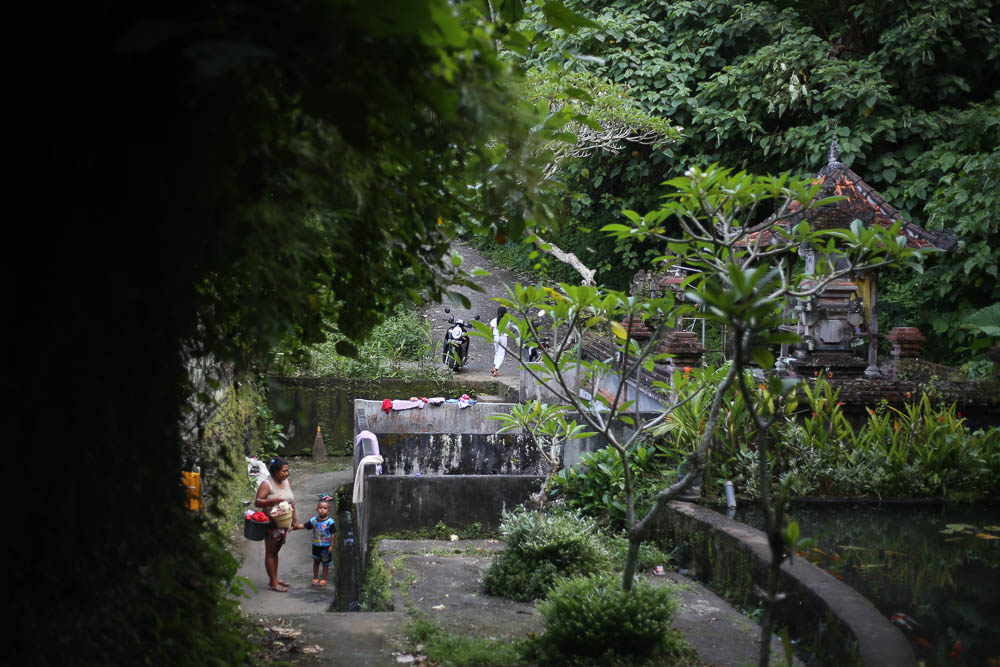
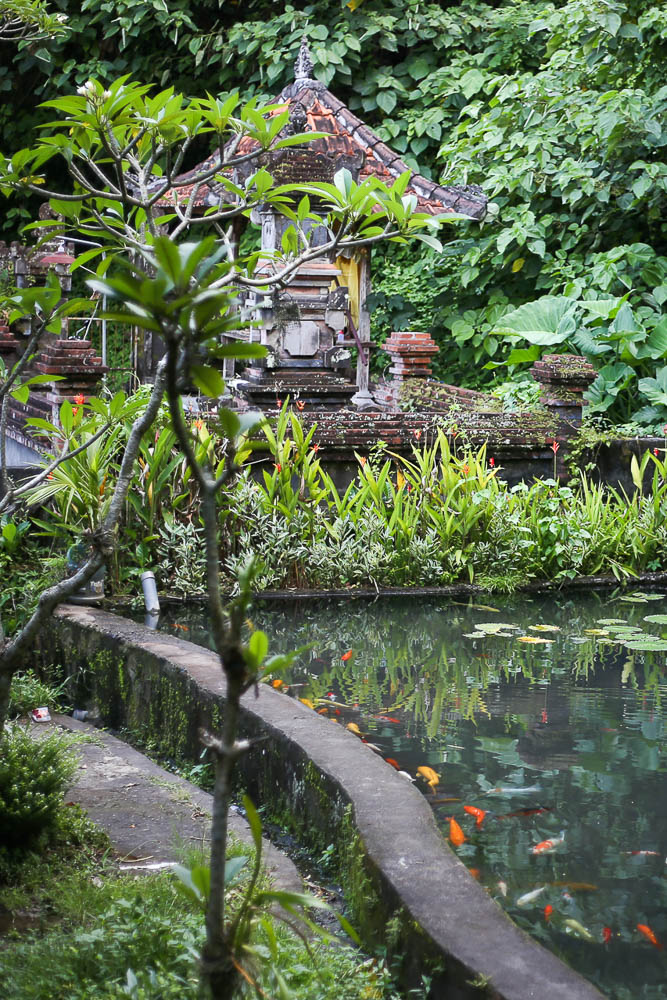
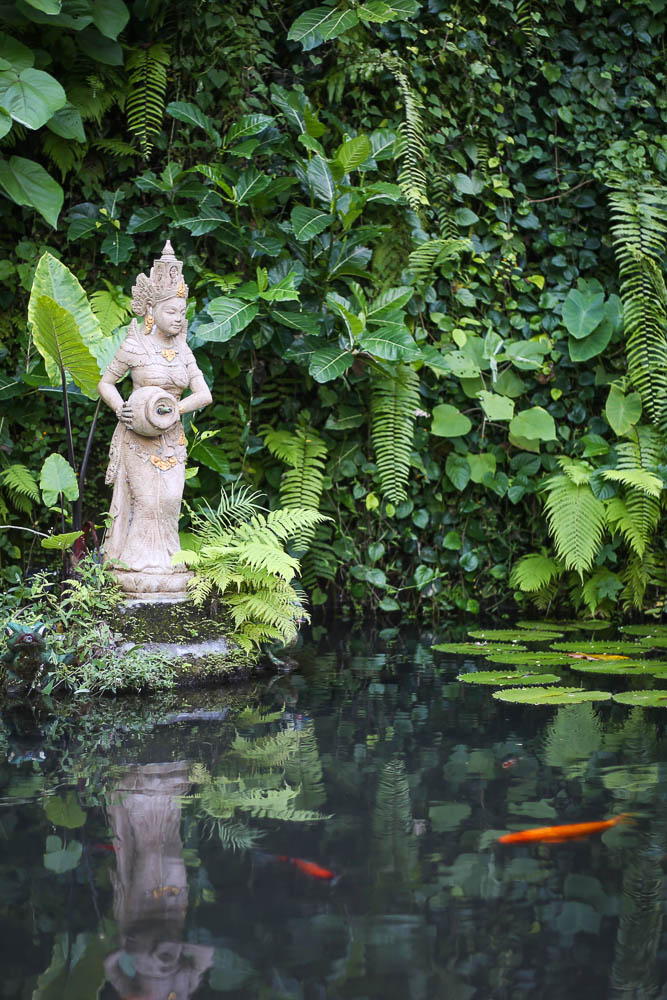
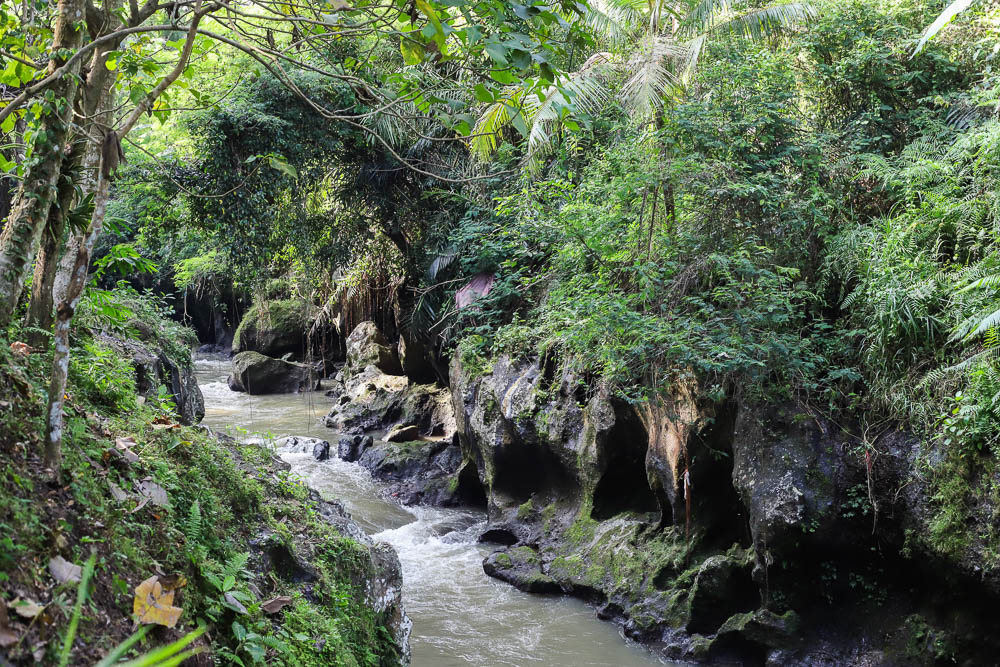
The site’s beauty and calm atmosphere are striking. The only sounds are the cicadas’ shrill songs, birdsong, and the rush of the Wos River. Pink hibiscus, croton, poinciana, and mussaenda grow in the well-tended small garden surrounding the site.
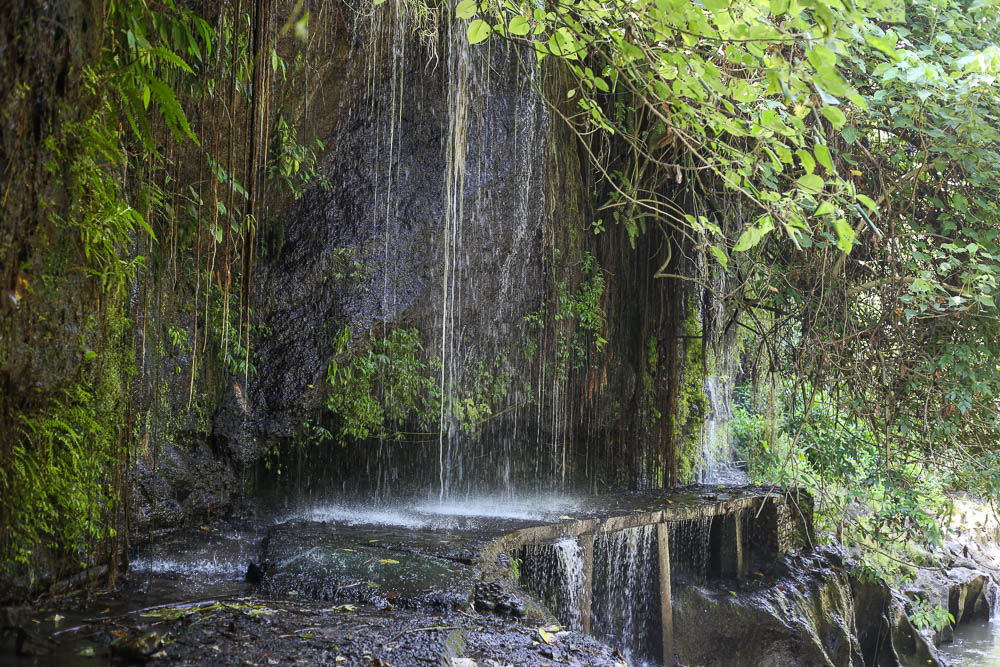
Next to the candi, water flows continuously from spouts and a small waterfall on the north side. Some 50 meters up the hill, a modern bathing area, used by the nearby residents of Singakerta village is supplied by a water-rich spring.

Bibliography
Asian Historical Architecture: Candi Tebing Jukut Paku https://www.orientalarchitecture.com/sid/1664/indonesia/gianyar-regency-bali/candi-tebing-jukut-paku
Kempers, A. J. Bernet Monumental Bali. Singapore: Periplus Editions, 1991.
Mason, Victor Bali Bird Walks. Singapore: APA Publ. U. Höfer Press, 1992.
Spitzing, Günter Bali. Tempel, Mythen und Volkskunst auf der tropischen Insel zwischen Indischem und Pazifischem Ozean. Köln: DuMont, 1983.
Nearby Temples
Goa Gajah, a 10ᵗʰ-century cave temple with a bathing area, is about a half-hour drive to the east, along with many other sites in Central Bali and Pejeng, like the similarly rock-cut Candi Tebing Kalebutan. The next temple on our Ancient Bali tour, Pura Taman Pule Mas, is roughly twenty minutes away by car.
Previous temple:
Next temple:
Photos and text © 2025 Alida Szabo.
