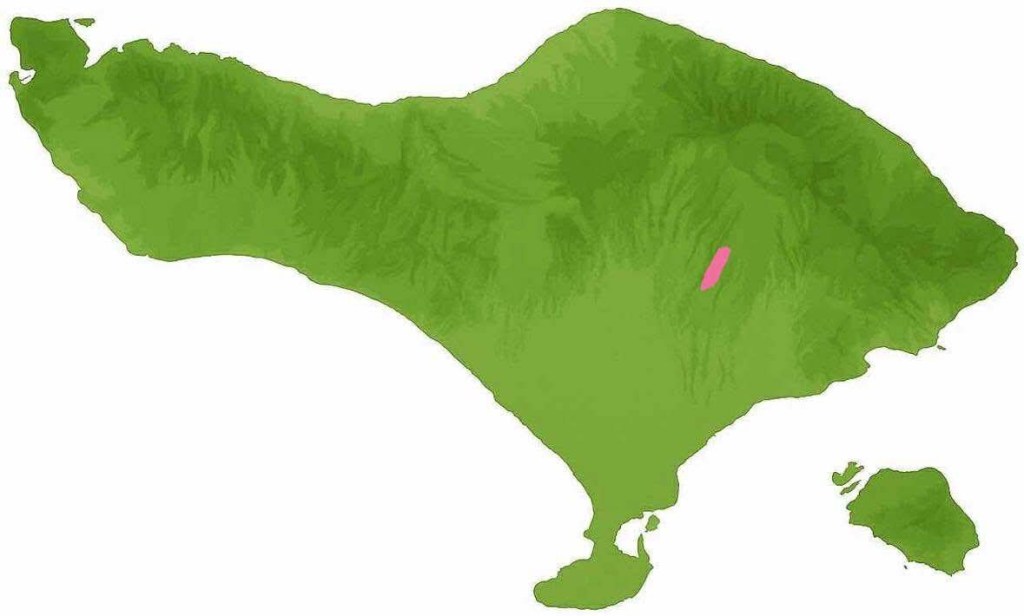
East of Ubud lies Pejeng. Its main road leads from Bedulu in the south along the Pakerisan river valley to Tampaksiring in the north. This area’s remarkable concentration of historical temples reflects its history being the heart of the Pejeng Kingdom, where many sites lie just a short walk apart. There is an archaeological museum south of Intaran village (Museum Arkeologi, here) showing finds of one of Bali’s oldest inhabited areas. In this compact yet rich region, spiritual and archaeological heritage meet each other today. You can explore the meditation site of overgrown Candi Tebing Kerobokan and that of the stunning Goa Garba next to Pura Pengukur-ukuran, both in the Pakerisan valley. From here on you can walk from site to site to see the “Moon of Pejeng” at Pura Penataran Sasih, the symbolic navel of the world at Pura Pusering Jagat, Pura Kebo Edan, the neighboring Pura Arjuna Mentapa shrine. The cliff-carved sanctuary of Candi Tebing Kalebutan add layers of history, ranging from the bronze age to 14th century – and until today.
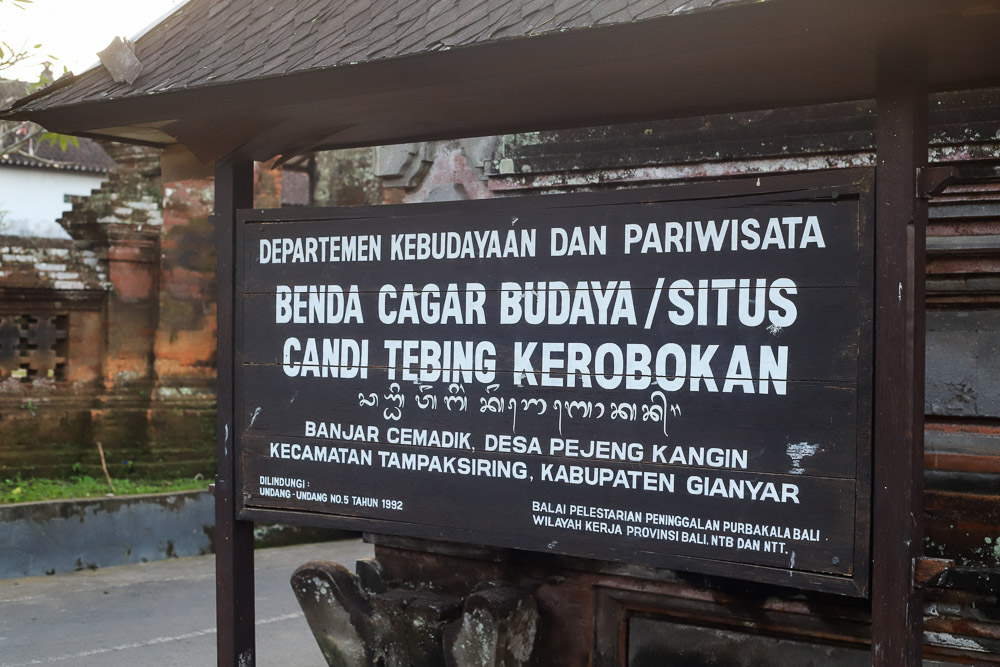
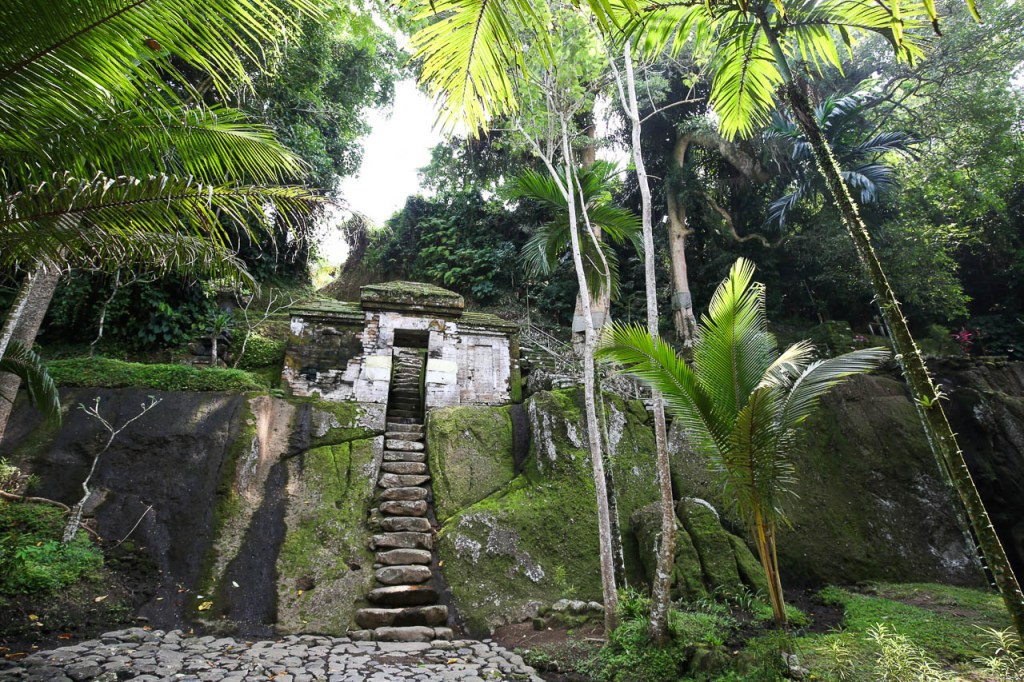
Candi Tebing Kerobokan
— Overgrown by Nature —
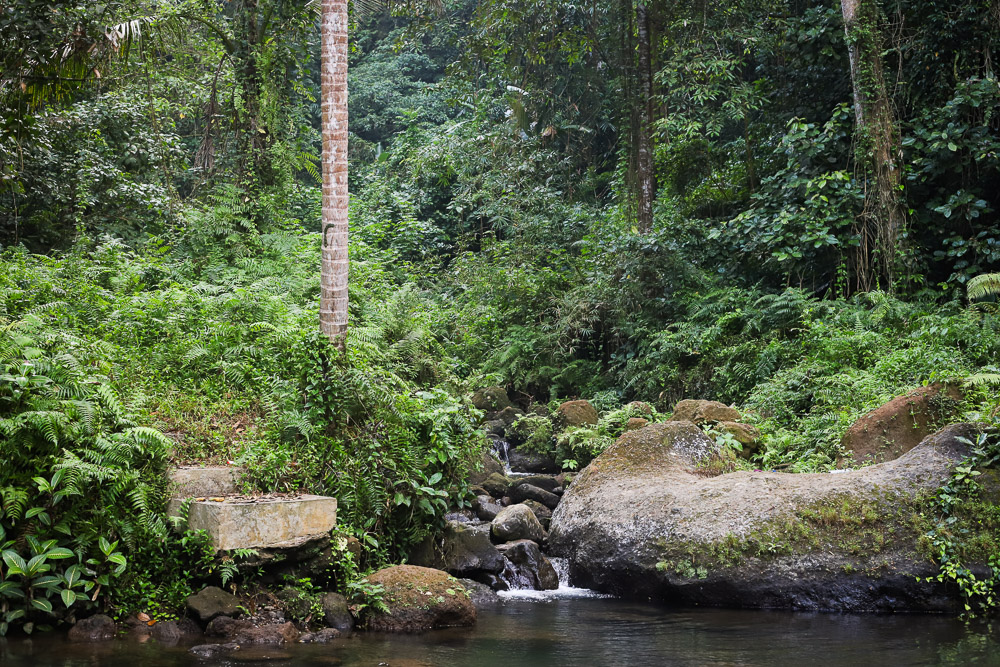
Carved into a steep, humid riverbank cliff and surrounded by dense vegetation, the site dates stylistically to around the 12th century CE and belongs to the broader tradition of early Balinese cliff sanctuaries such as Gunung Kawi and Tegallinggah. Interpreted as a secluded place for meditation, ritual practice, and possibly high-status retreat, Candi Tebing Kerobokan is today little visited and heavily weathered. More…
Goa Garba
— Carved by the Mythical Giant Kebo Iwa –—
Carved in the cliffs north of Pejeng, Goa Garba is one of the very special places in Bali. Back in the 11th century, royal kids came here to learn and meditate. Legend says Kebo Iwa, Bali’s own gentle giant-warrior, trained here too. It’s peaceful and powerful. Go for the myth, stay for the stillness. More…

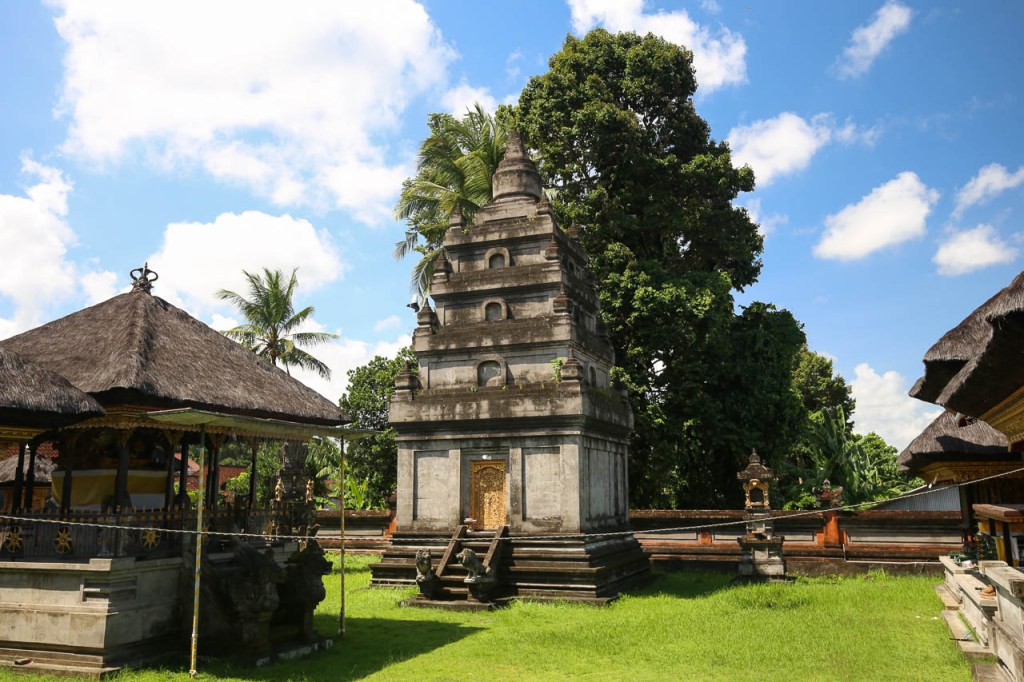
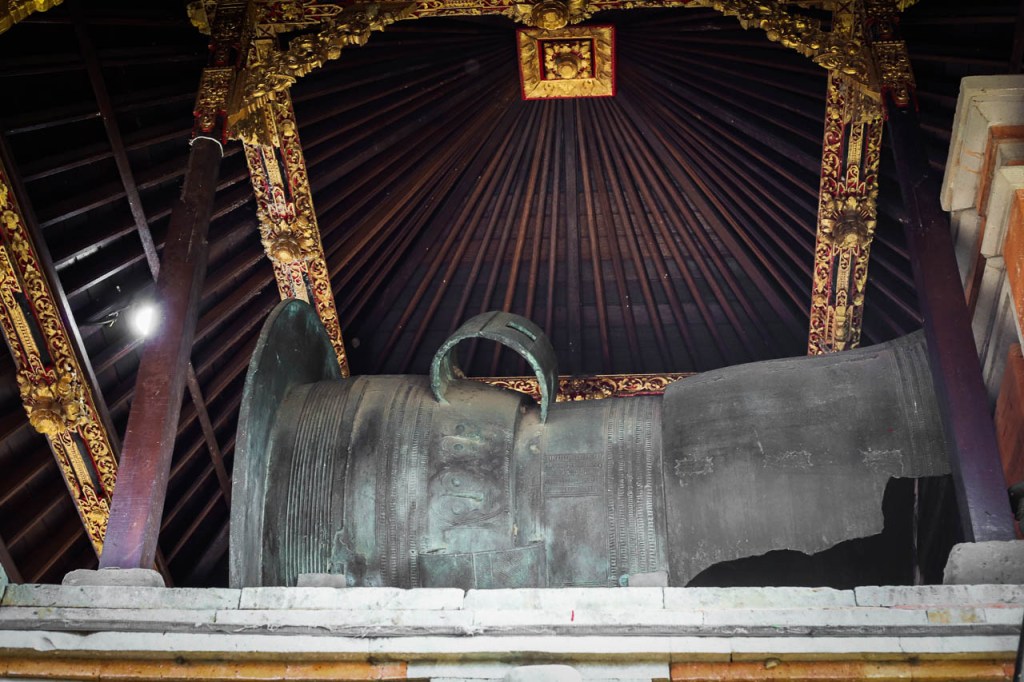
Pura Penataran Sasih
— The Keeper of the Moon of Pejeng —
This is another ancient place where ancient meditation meets the magic of water, like Pura Gunung Kawi in Tampaksiring. Goa Gajah, Bali’s famous Elephant Cave Temple is a mystical cave, where monks and priests once sat in quiet reflection. Step down the stone staircase and you’re greeted by an ancient bathing pool, lined with statues of women holding water jugs—symbols of the sacred rivers of India. More…
Pura Pusering Jagat
— The Center of the Universe —
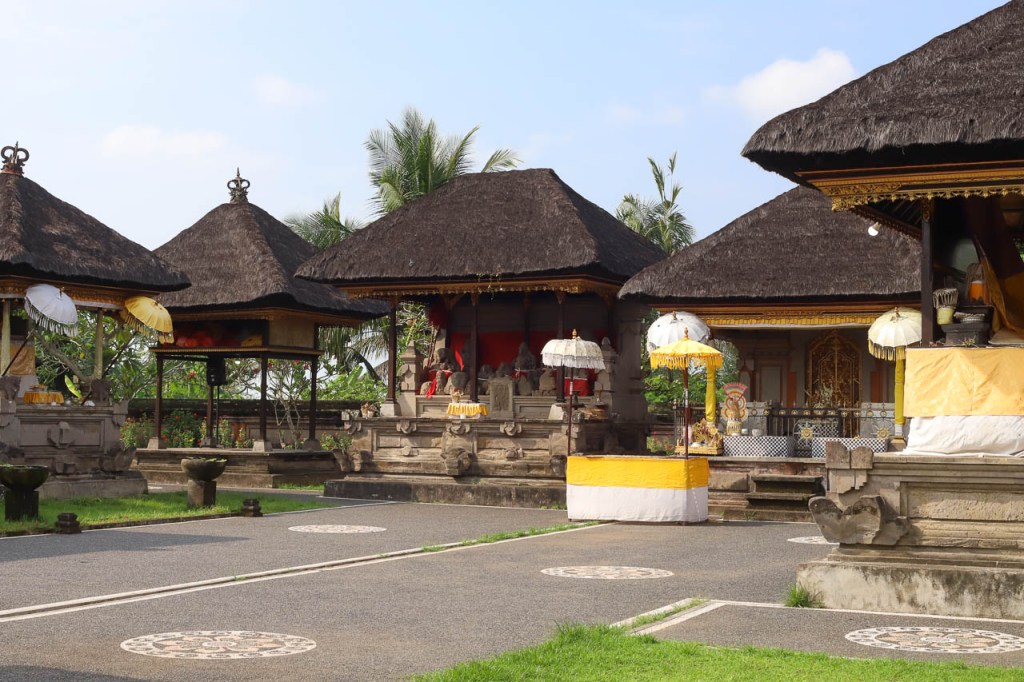
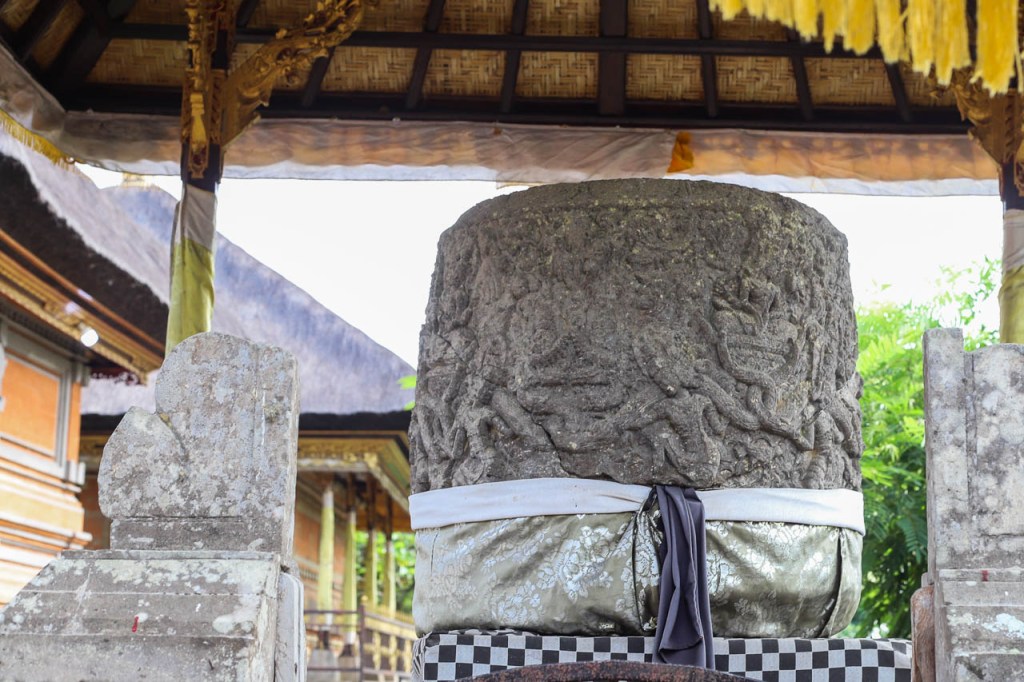
This place is Bali’s “Navel of the World,” a sacred center believed to channel the island’s spiritual energy. Founded in the 14th century during Bali’s ancient Pejeng Kingdom, it’s packed with legends and mysteries. The temple is famous for its massive stone water container, said to have magical powers. Local stories whisper that it was used by the gods themselves. More…
Pura Kebo Edan
— A Special Statue with Legends —
This is one of Bali’s oldest – and most mysterious- temples, dating back to the 13th century. Step inside and you’re greeted by a wild, larger-than-life stone figure called Bhairawa, or “Crazy Buffalo,” said to be a powerful tantric priest or even a deity. Lingam and yoni symbols cluster around, making it clear this place is all about life force and fertility. The stories get even wilder: locals whisper that the statue once came to life, adding a layer of magic to the temple’s already potent atmosphere. Today, people come here seeking protection, healing, and spiritual power. More…
Candi Tebing Kalebutan
— In a Little Valley West of Pejeng —
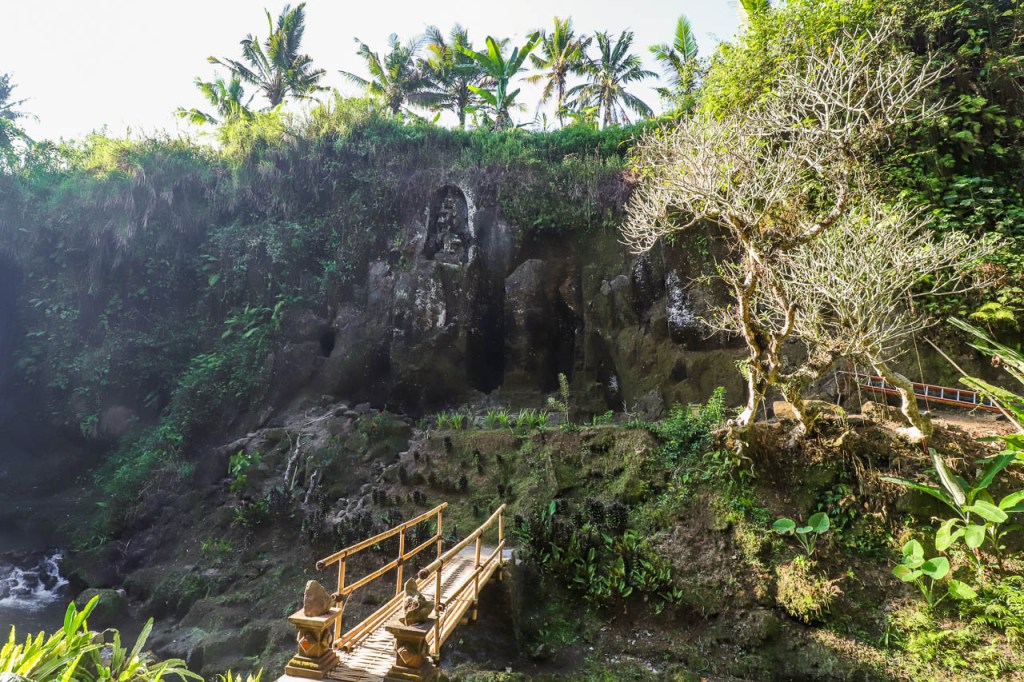
Candi Tebing Kalebutan is one of Bali’s lesser-known cliff temples, a mystical spot where time seems to slow and nature takes center stage. Carved into a sheer rock face, this ancient shrine is placed in a cheerful little valley between Ubud and Pejeng. More…
Continue your journey to the next region: WEST CENTRAL BALI
Photos, maps and text © 2025 Alida Szabo
