— White Cattle and Black Roofs —
Meaning: ‘Large temple of Mount Raung’, referring to a holy mountain in East Java
Also called: PURA GUNUNG RAUNG
Location: In Taro village, north of Ubud.
Map: Taro, Tegallalang, Gianyar, Bali, Indonesia
Dates back to: 8ᵗʰ century
Region: Around Ubud
Theme: Mountain Temples
Requirements for visit: Seek permission before entering. Bring your own sarong.
Accessibility: Flat ground throughout the complex, with a few steps at the gates.
Founding legends
Taro is regarded as one of Bali’s most ancient villages, and its origins are inseparable from the figure of Rsi Markandeya, also known as Dang Hyang Markandeya. According to the legend, Rai Markandeya was meditating on Mount Raung in East Java when he received divine instruction to travel to Bali and establish a settlement and ritual center there. Accompanied by hundreds of followers, he began clearing forested land below Mount Agung. The attempt ended disastrously when many of his followers died from illness, which Rsi Markandeya understood as a sign that the proper ritual foundations had not yet been laid.
He returned to Mount Raung in sorrow and contemplation, where further meditation revealed the necessity of correct offerings and spiritual preparation before opening the land. On his second journey to Bali, this time accompanied by fewer followers, he succeeded and established Pura Besakih. Guided by a mysterious light emanating from a taru tree to the west, he identified an auspicious site and established a pasraman (school) and temple. From this association, the settlement became known as Taro, and the temple was named Gunung Raung, recalling Markandeya’s original spiritual center in Java. Then he continued to establish Pura Gunung Lebah in Ubud.
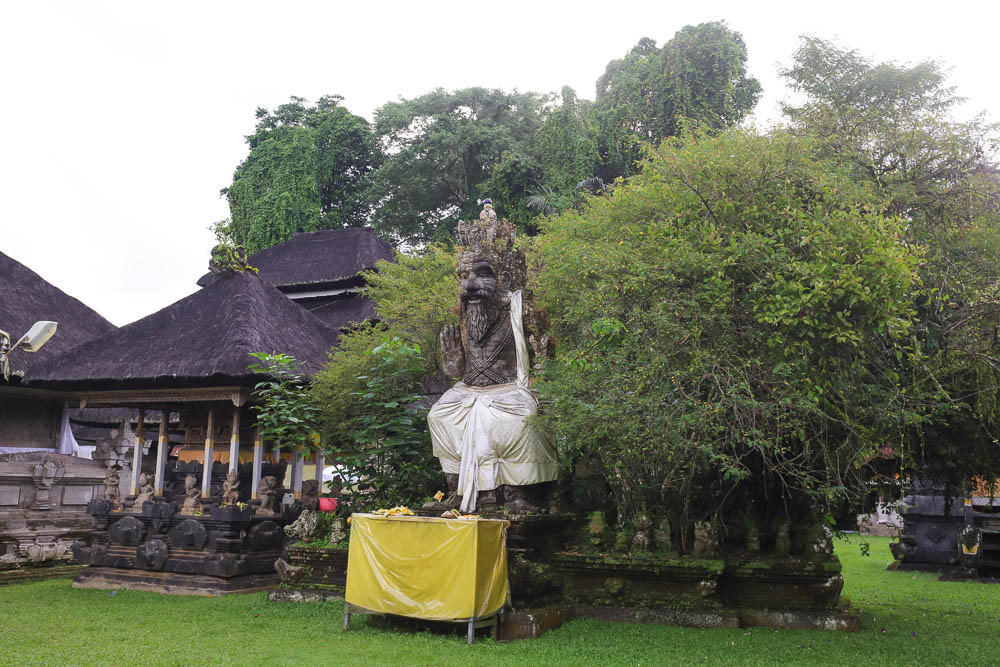
Temple layout
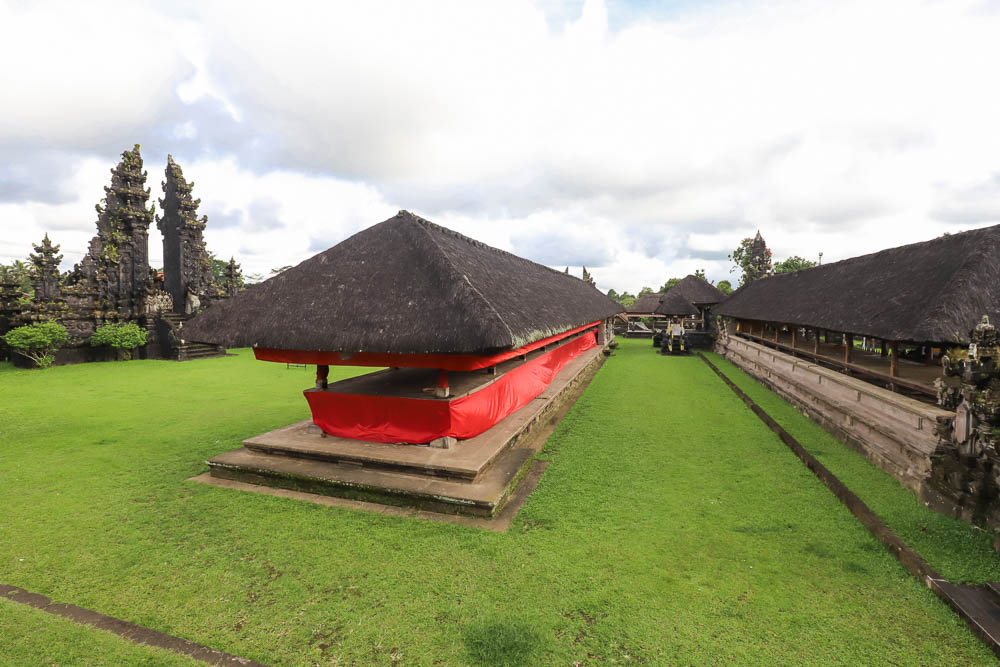
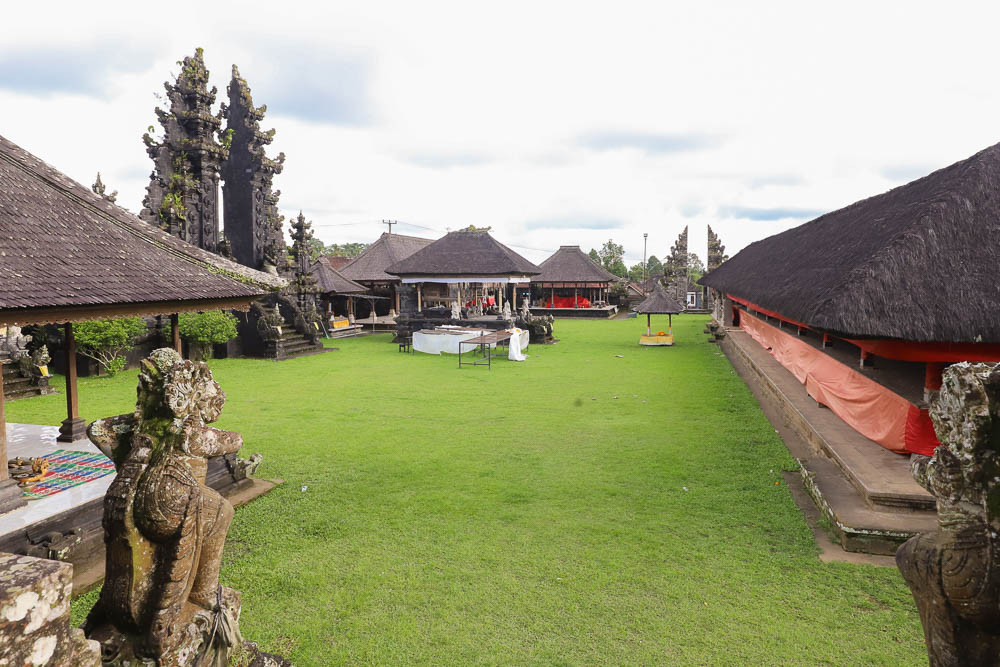
The temple complex follows the classical Balinese tripartite structure: the nista mandala (outer courtyard), madya mandala (middle courtyard), and utama mandala (innermost sacred space).
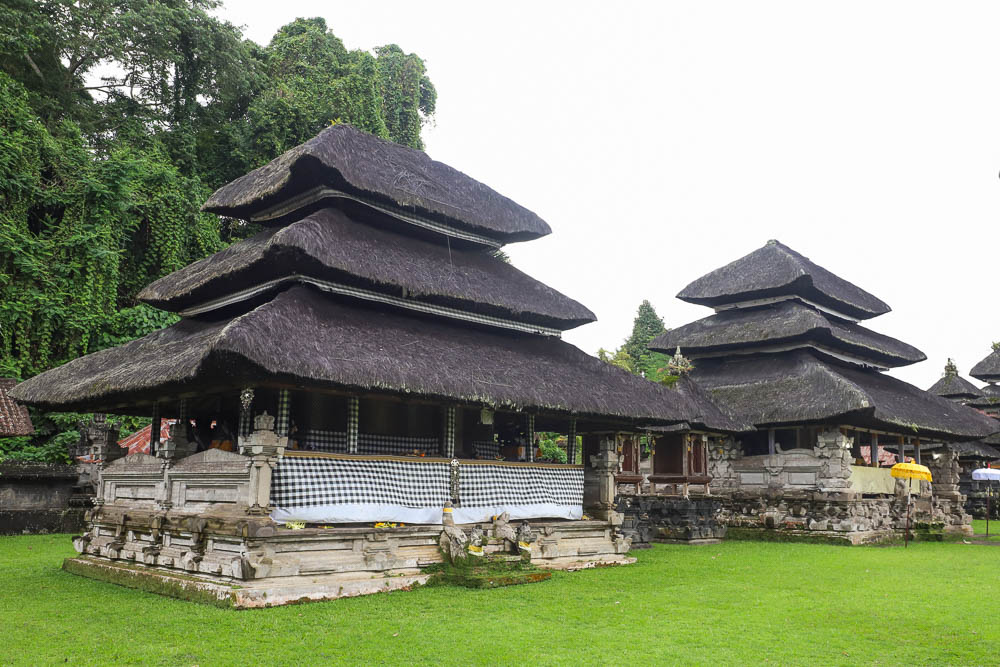
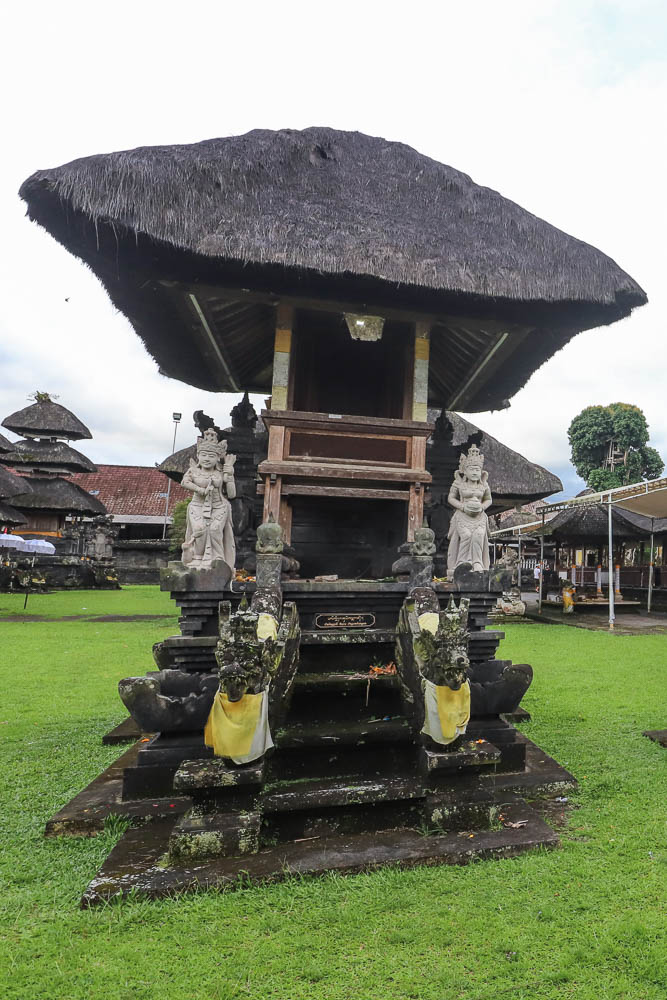
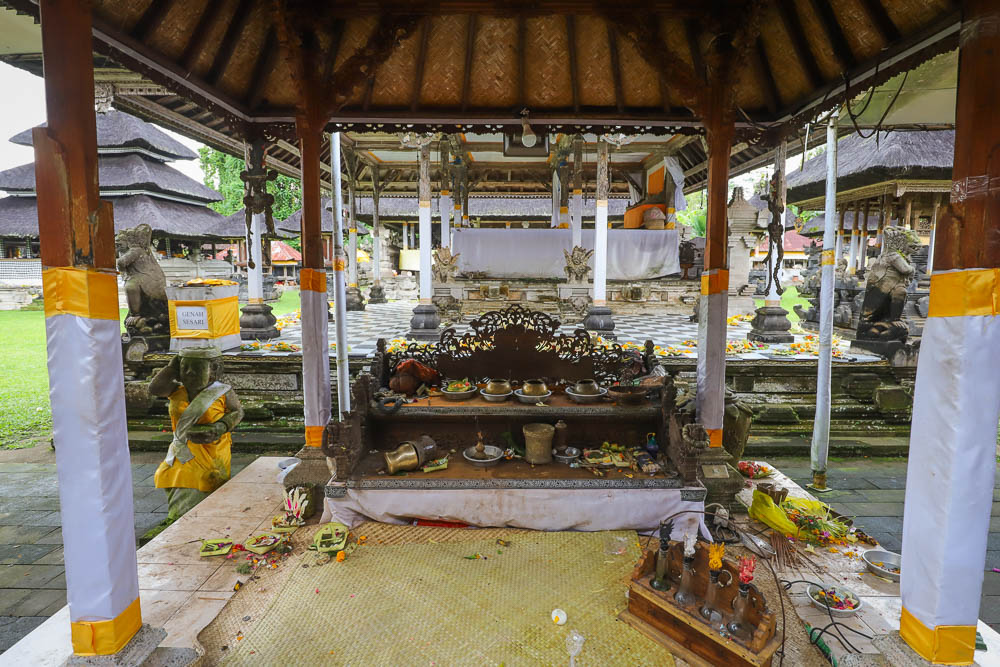
Within the middle courtyard stand several bale, open-sided pavilions used for meetings, preparation of offerings, and ritual activities. These structures are decorated with carvings depicting Hindu cosmology and episodes associated with Rsi Markandeya’s spiritual journey. One of the most striking architectural features is a long ceremonial pavilion whose seating platform is supposed to be carved from a single tree trunk, emphasizing the connection between nature and ritual.
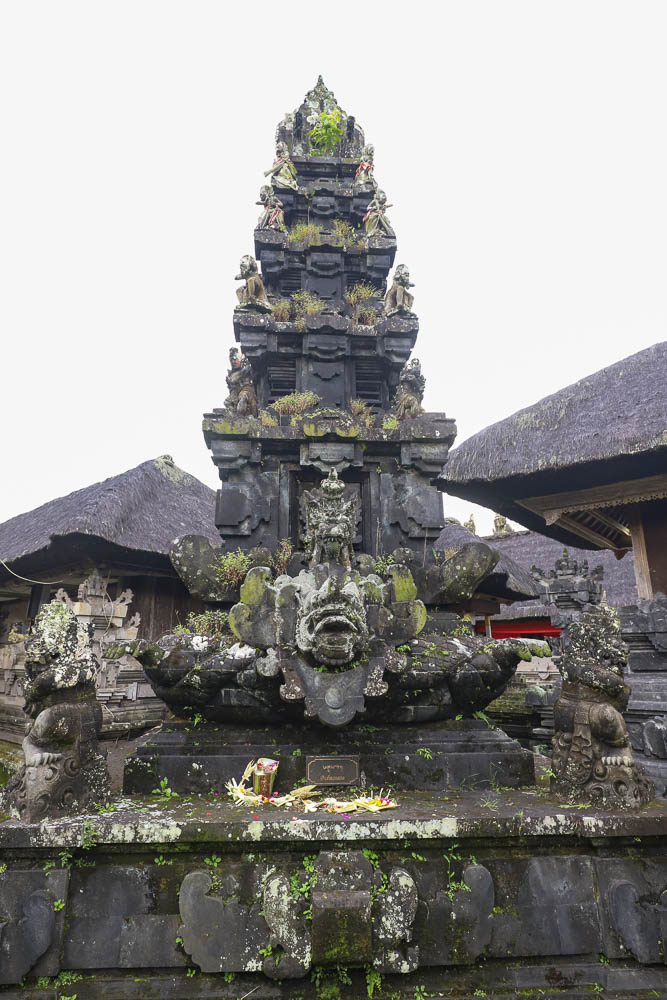
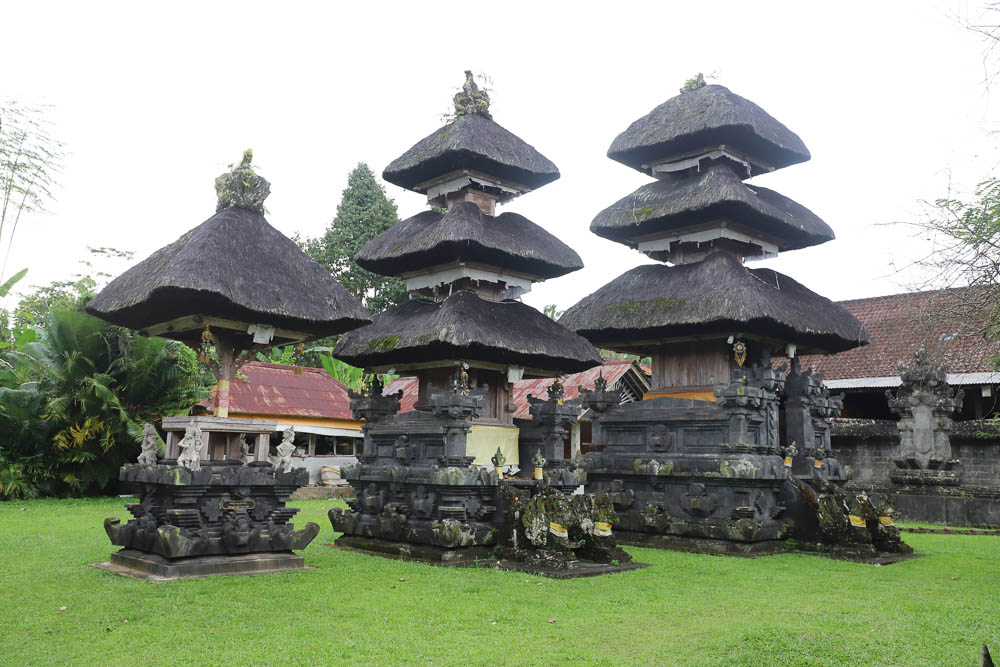
In the innermost courtyard rises a prominent meru shrine with multiple black-thatched tiers symbolizing Mount Meru, the cosmic mountain. Its unusually grand proportions are linked to the temple’s distinctive orientation: worship here is directed westward, toward Mount Raung in Java, rather than northward (kaja) toward Bali’s central mountains. This orientation sets the temple apart within Balinese sacred architecture.
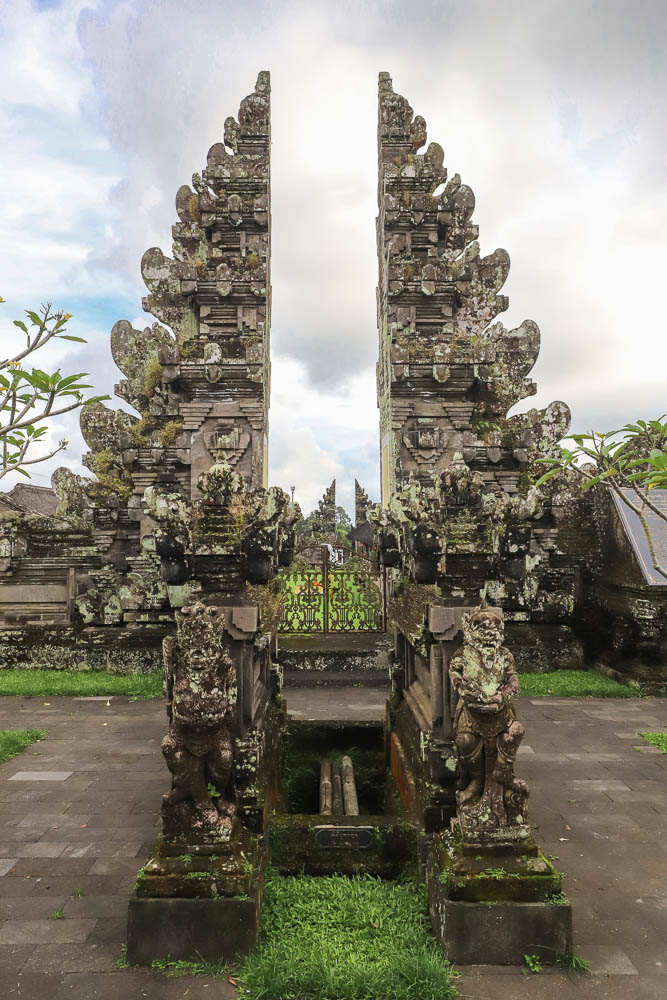
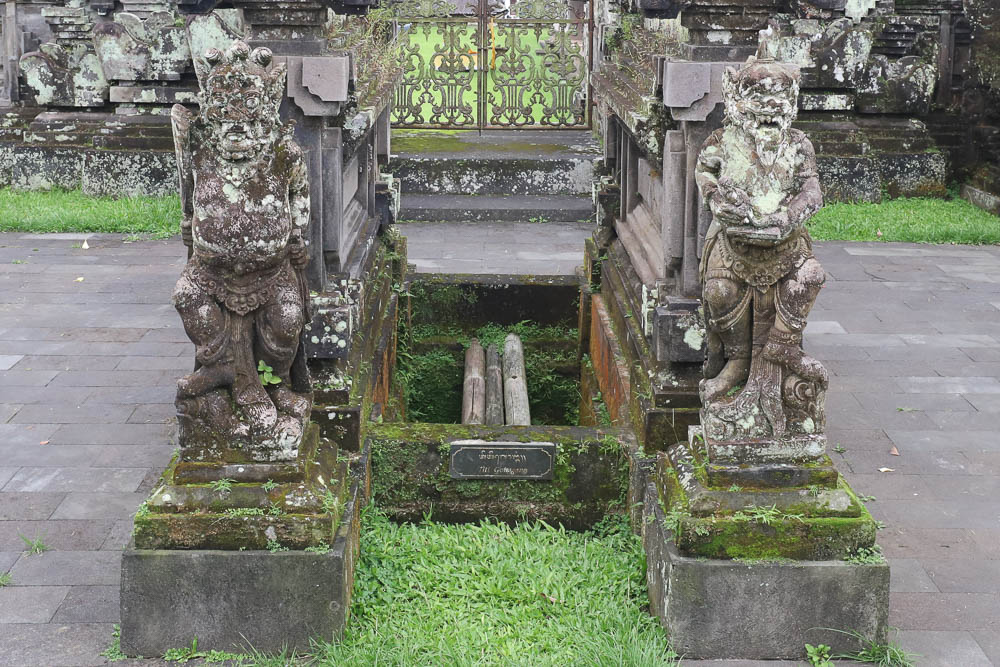
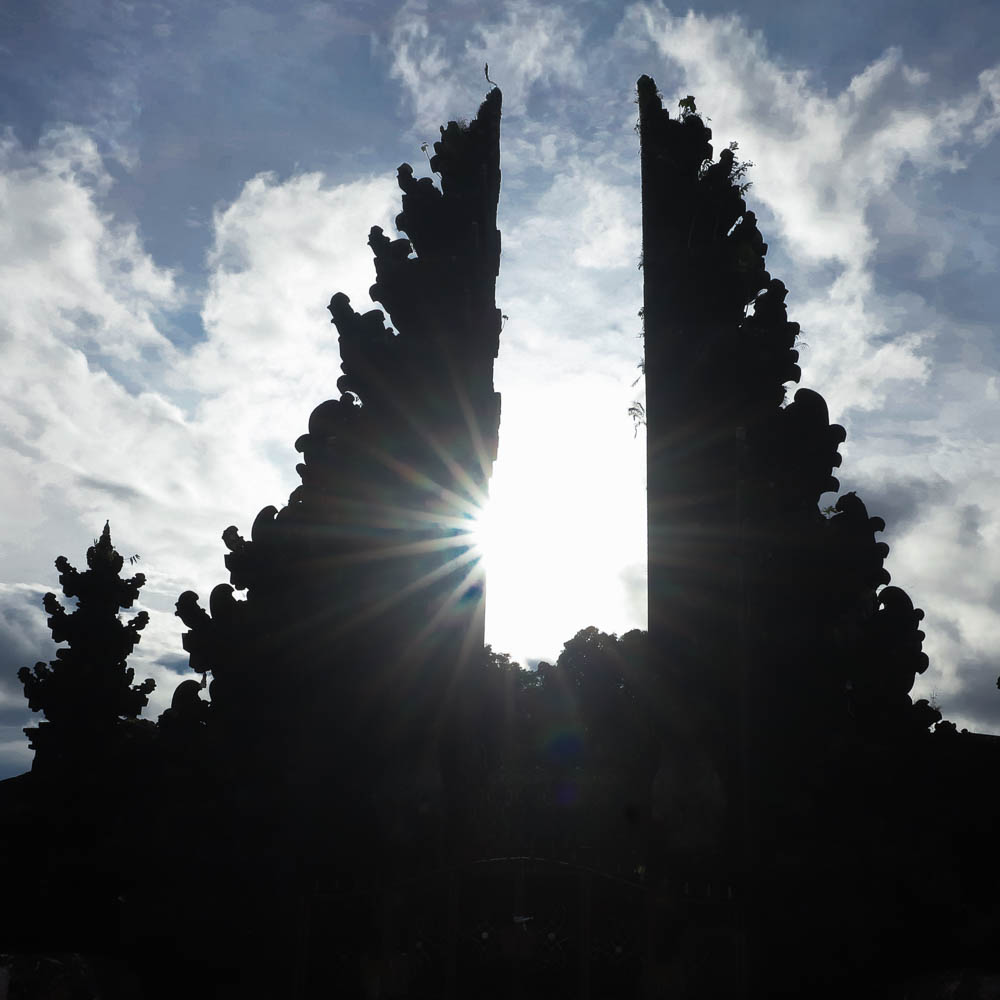
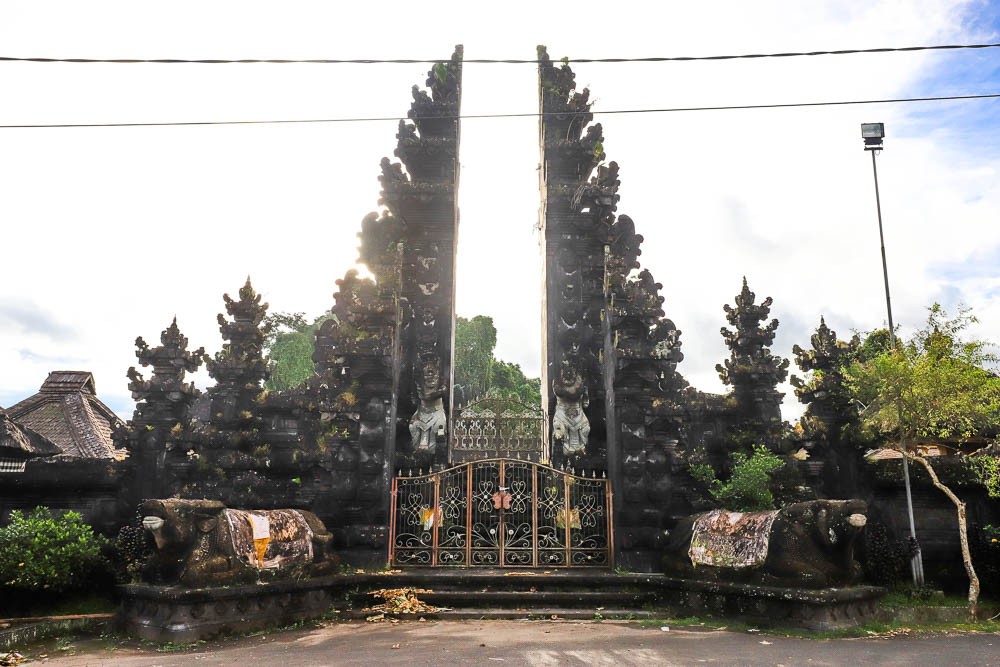
The temple has four candi bentar serving as pamedalan pura (entrance and exit gates) at the north, east, south, and west. At the northern and southern gates stand two Titi Gonggang.
The Titi Gonggang consist of three bamboo poles forming a small bridge about one meter long. They mark the arrival of Rsi Markandeya in Taro and function as spiritual neutralizers of the temple. They must not be crossed, as they serve as a passage in the niskala (invisible) realm.
Anyone who crosses a Titi Gonggang must perform a pacaruan ritual and a guru piduka offering in the inner sanctum. If this is not done within a week, a larger ritual (upakara) is required, in accordance with local customary law (hukum adat).
Role in agrarian traditions
Pura Agung Gunung Taro occupies a central place in Balinese narratives concerning the origin of agriculture and land opening. Rsi Markandeya is remembered not only as a religious teacher but as a bearer of knowledge about living in balance with nature—principles that underpin wet-rice cultivation and water management.
In contemporary discourse, the temple is framed as a memory-site for early land-clearing rituals, sustainable farming practices, and the worldview that later crystallized into Bali’s highly organized irrigation traditions. In this sense, the temple is not only sacred but pedagogical, embodying an inherited understanding of human responsibility toward land and water.
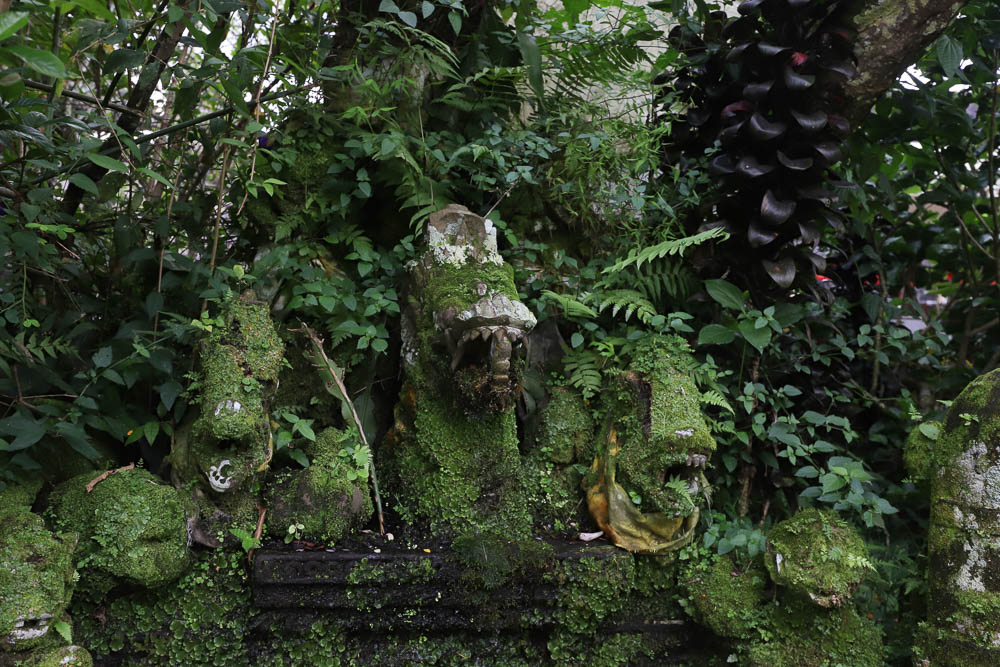
Sacred white cattle
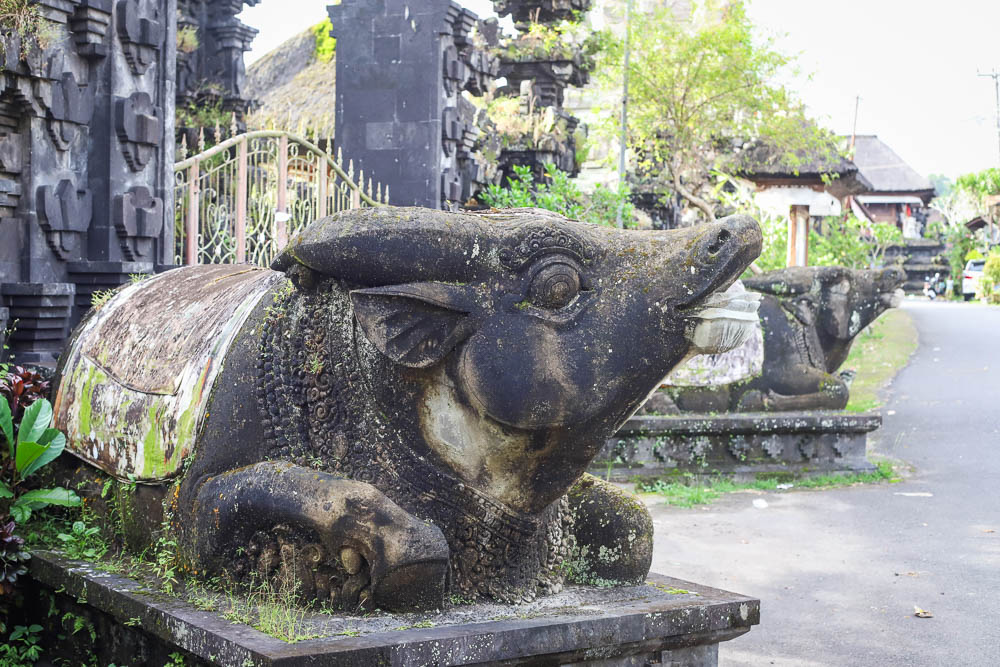
Taro village is unique in Bali for raising sacred white (albino) cattle. These animals are closely associated with Shaivite traditions and with Rsi Markandeya’s spiritual legacy. They are considered ritually pure and play an important role in ceremonies connected to fertility, protection, and agricultural cycles.
The cattle are kept in an enclosure at the southern end of the village. Rather than being sacrificed, they are ritually lent for ceremonies elsewhere—a process governed by strict protocol, comparable to requesting holy water. In certain rites, such as Ngasti, the cattle are led from forest to temple, circumambulate the ceremonial space three times clockwise, receive offerings, and are then returned to their lives under fairly good conditions.
Ritual life and contemporary practice
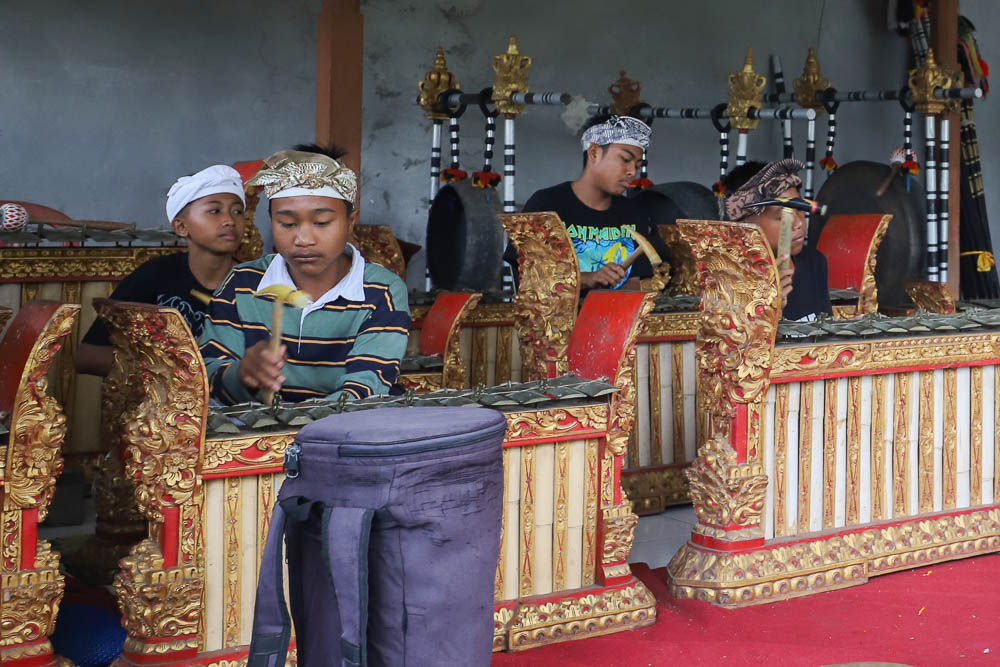
Pura Agung Gunung Taro functions as a major regional temple serving surrounding communities. It hosts regular odalan (temple anniversary) ceremonies as well as large-scale cycle rituals that draw significant congregations. The temple is a living ritual space, not a static monument.
Documented ceremonies include Ngelinggihan, during which sacred symbols are temporarily installed in elevated shrines, and large barong processions associated with village protection and spatial cleansing. Young girls perform rejang, an ancient temple dance in which pre-pubescent dancers embody divine presence during preparatory phases of major festivals.
Today, Pura Agung Gunung Taro remains an important pilgrimage destination for devotees seeking purification, blessings, and spiritual strengthening, particularly in relation to Rsi Markandeya’s legacy and Shaivite worship. Visitors are expected to observe Balinese temple etiquette, including wearing proper attire (at least a sarong) and respecting local adat rules governing ritual purity.
South of the temple lies the Mason Elephant Safari Park, home to a herd of elephants rescued from the forests of Sumatra.
Bibliography
Kempers, A. J. Bernet Monumental Bali. Singapore: Periplus Editions, 1991.
Mason, Victor Bali Bird Walks. Singapore: APA Publ. U. Höfer Press, 1992.
Spitzing, Günter Bali. Tempel, Mythen und Volkskunst auf der tropischen Insel zwischen Indischem und Pazifischem Ozean. Köln: DuMont, 1983.
Nearby Temples
A few valleys away to the east you can reach Pura Telaga Waja, a water sanctuary of ancient origins. Further to the east you get to Tampaksiring, while to the west you can reach the temples of West-Central Bali. Heading to the north brings you to Kintamani and the temples of Mount Batur.
Previous temple:
Next temple:
Next, explore the region of PEJENG or go to see ALL REGIONS
Photos and text © 2025 Alida Szabo.
