— The Story of a Marriage at the Backside of Mount Batur —

Meaning of the name: It symbolizes Bali’s royal line (Bali + Ing) and Chinese influence (Kang),
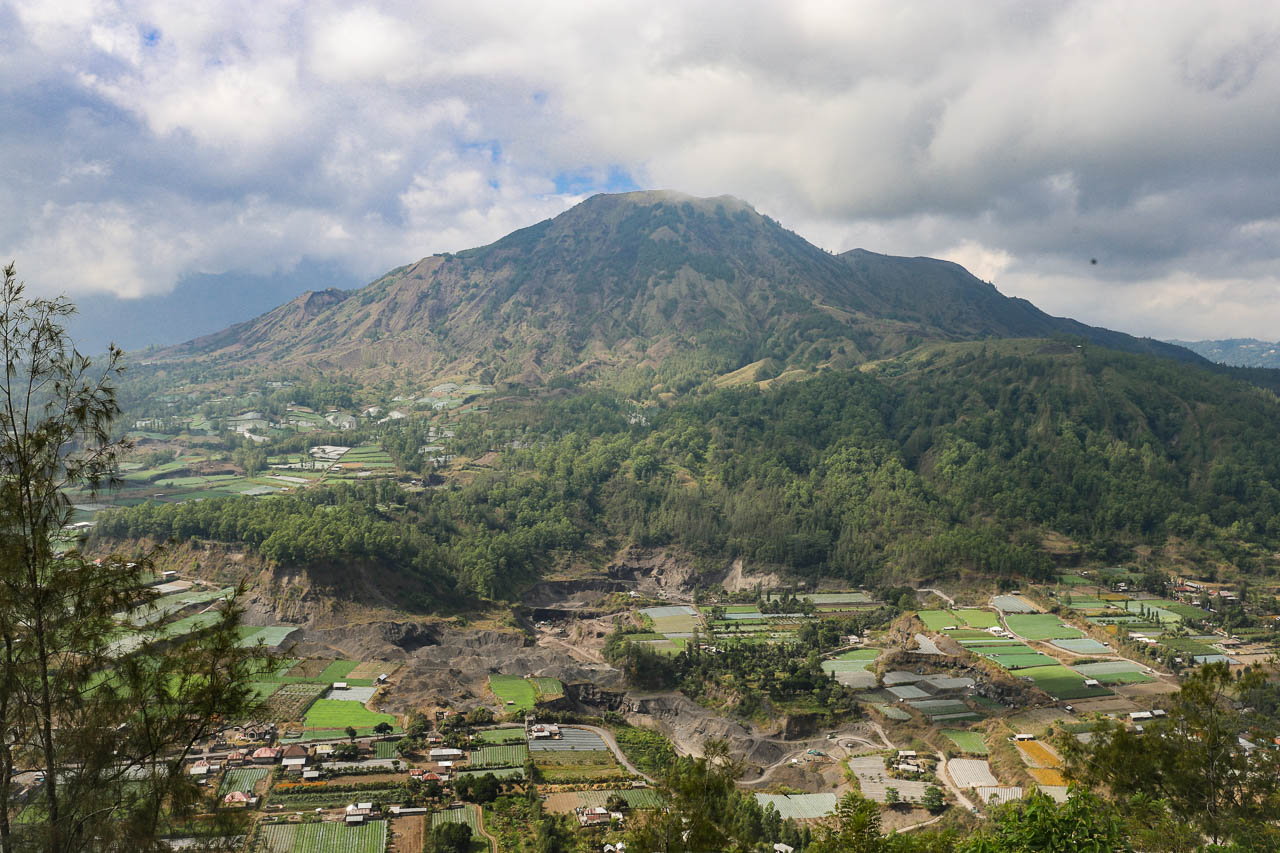
Location: At the northwest side of the Batur caldera, on an interior plateau, in the village Pinggan.
Map: Pinggan, Kintamani, Bangli, Bali, Indonesia
Dates back to: 12ᵗʰ century
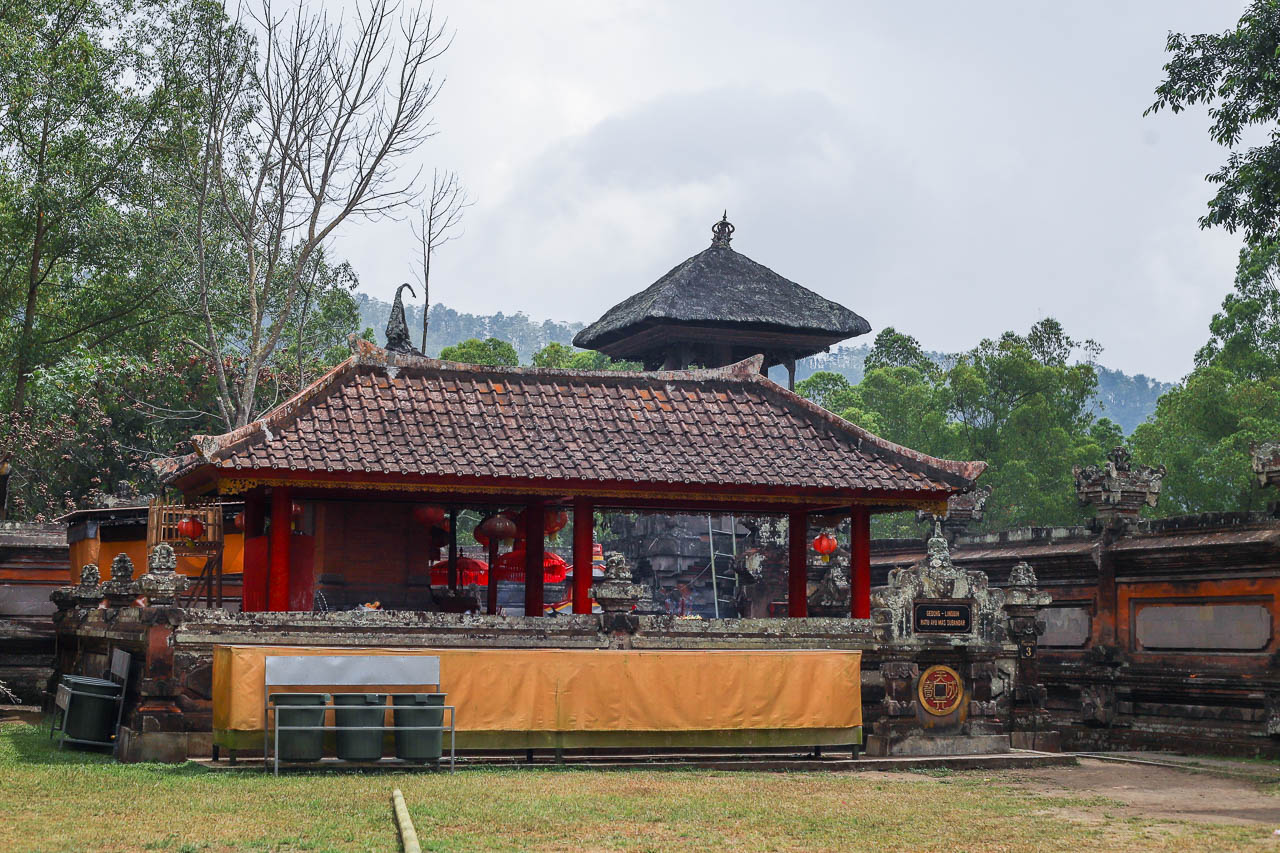
Most interesting buildings: Gedong Linggih Ratu Ayu Mas Subandar shrine, a Buddhist part of the Hindu temple
Region: Mount Batur
Requirements for visit: Seek permission before entering. Bring your own sarong and sash.
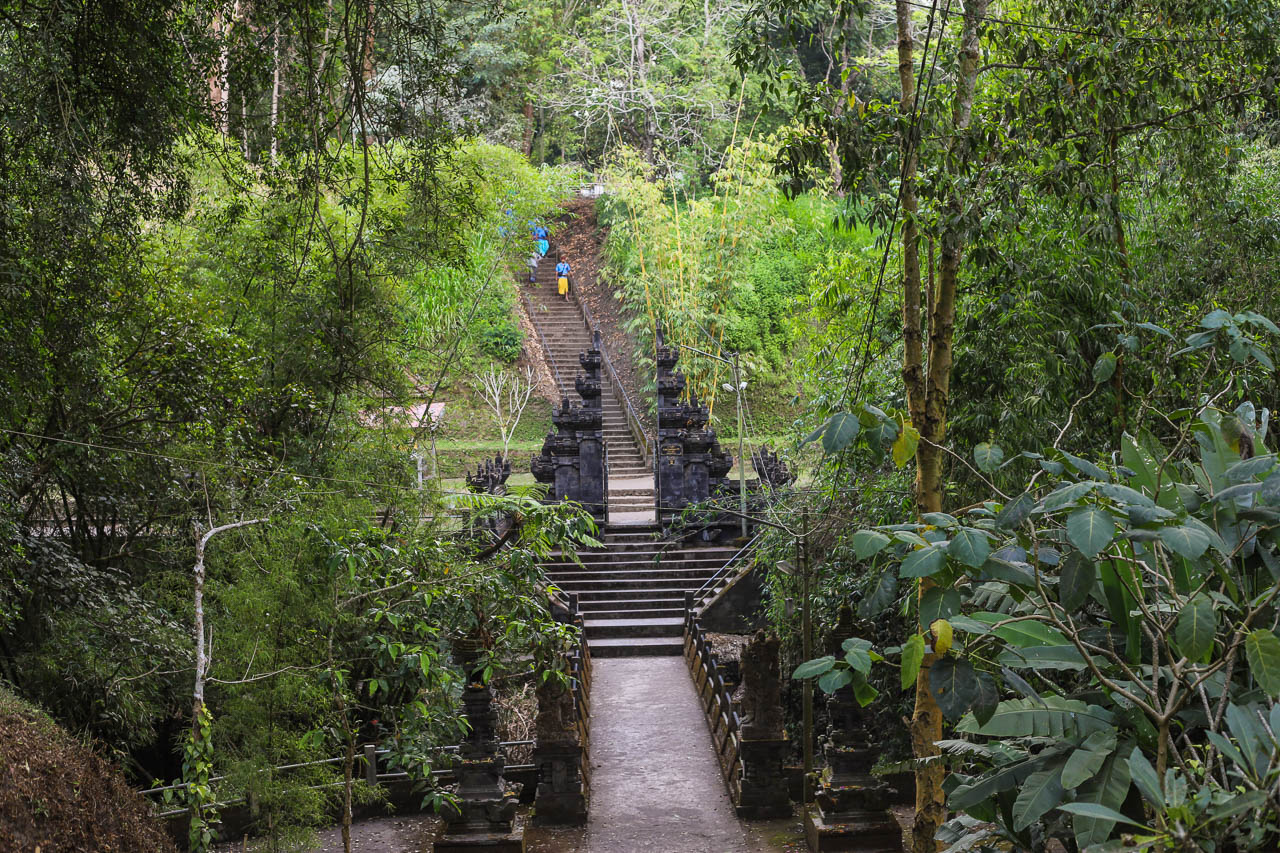
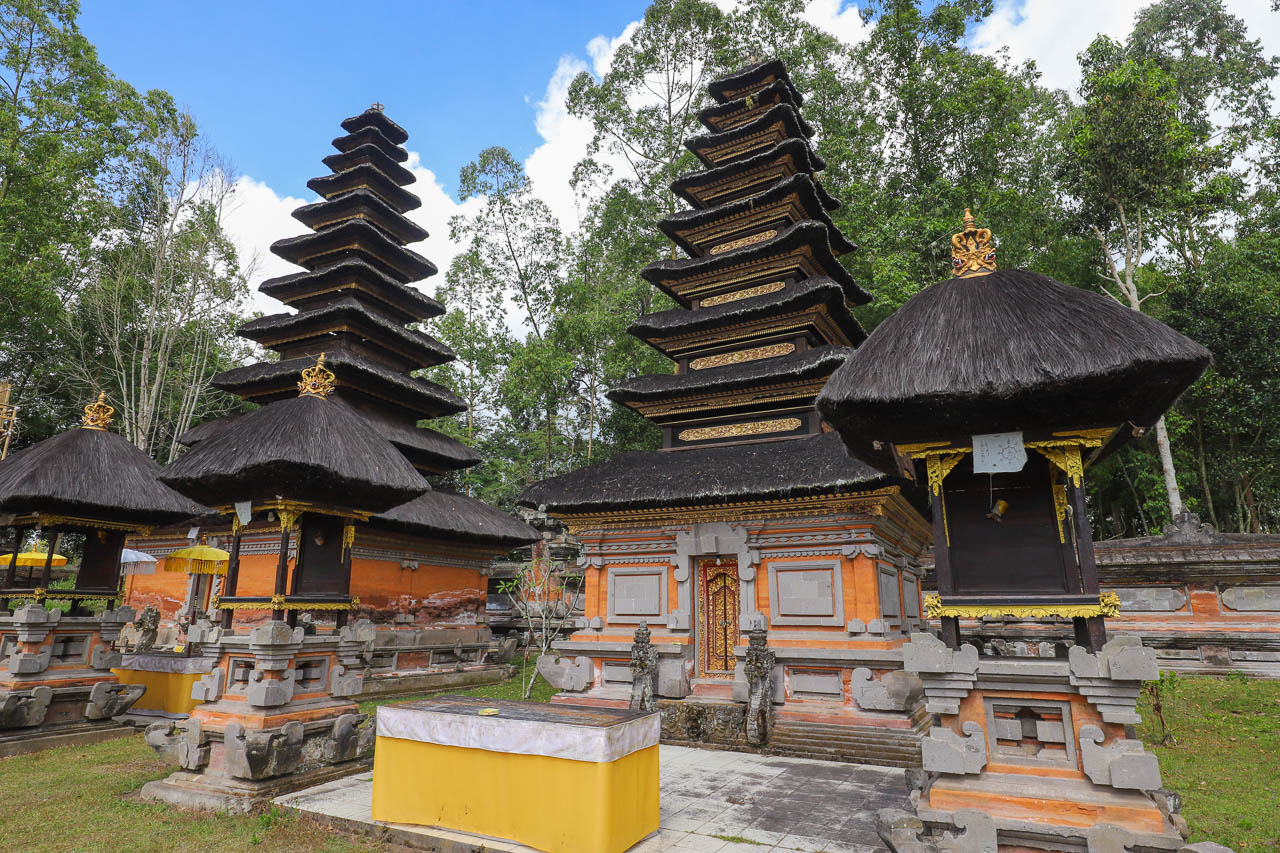
Pura Dalem Balingkang stands on the northwest side of Bali’s Batur caldera, in the quiet village of Pinggan on a broad inner plateau, giving it a sense of seclusion and spaciousness. Occupying 130 by 130 meters, the temple complex was once the site of a royal palace in the 12ᵗʰ century and remains significant today both for its size and unique history.
Royal Origins
The temple’s story revolves around King Sri Jaya Pangus, who ruled Bali from 1178–1181 CE, and his marriage to Kang Cing Wie, a Chinese woman often remembered as a princess. Their union introduced new customs to Bali, notably the use of Chinese kepeng coins (also called pis bolong) which are still used today in ritual offerings, as well as merging some Buddhist influence into Balinese Hinduism.
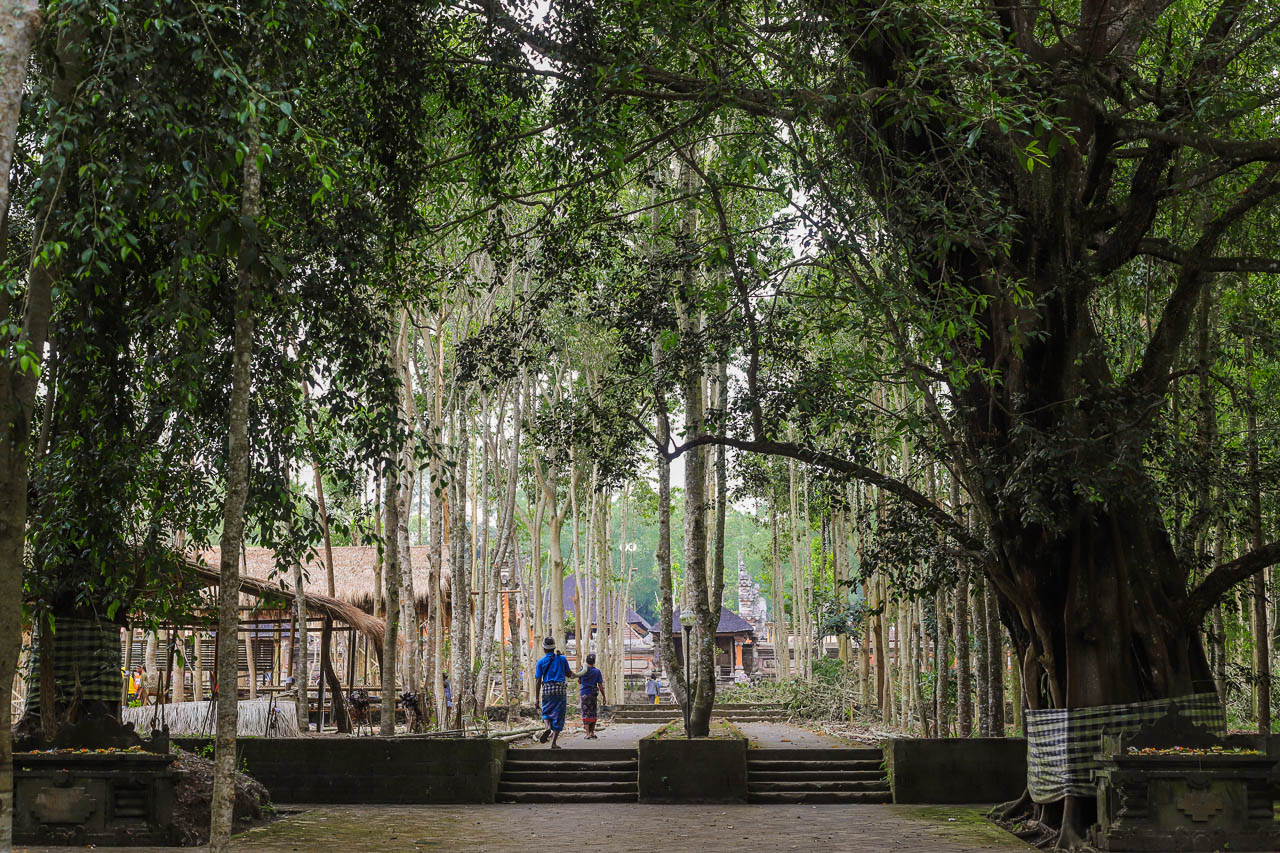
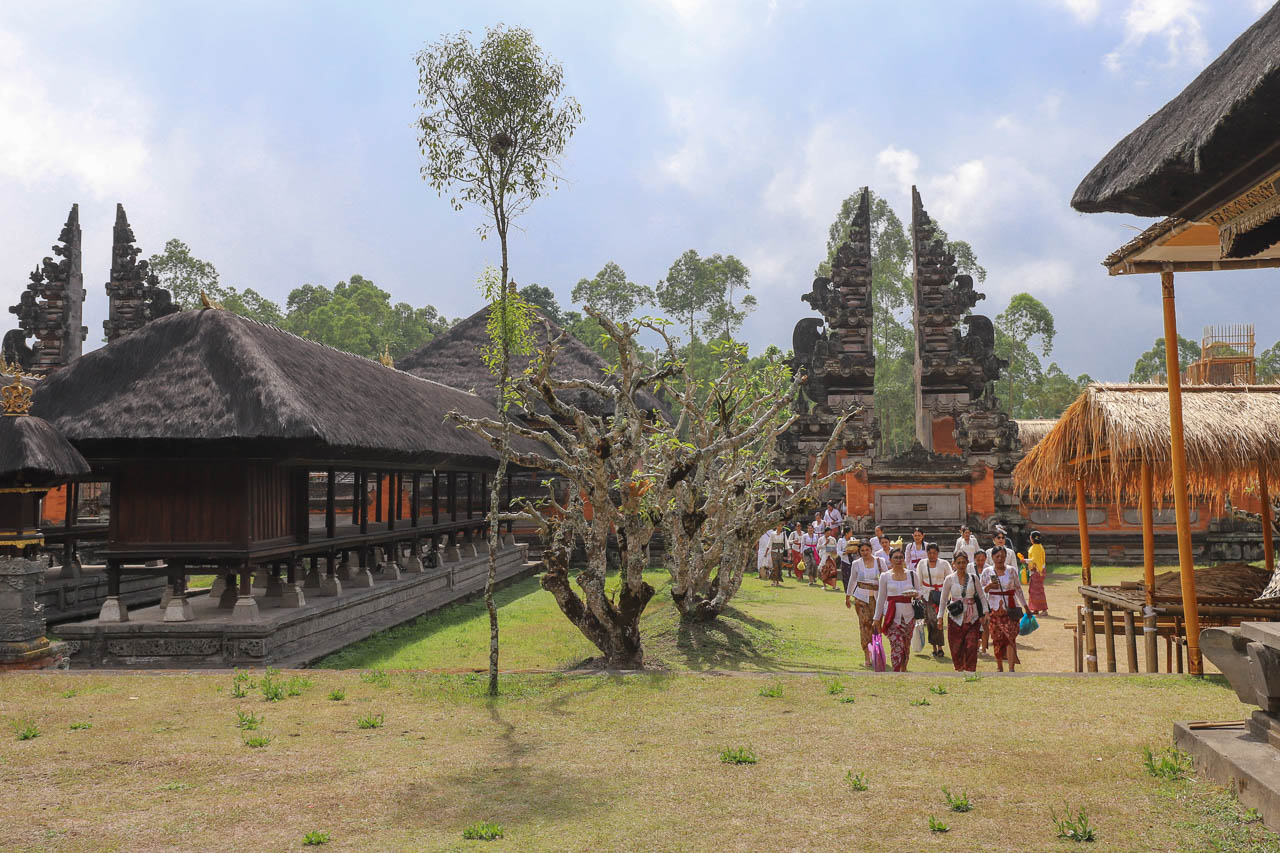
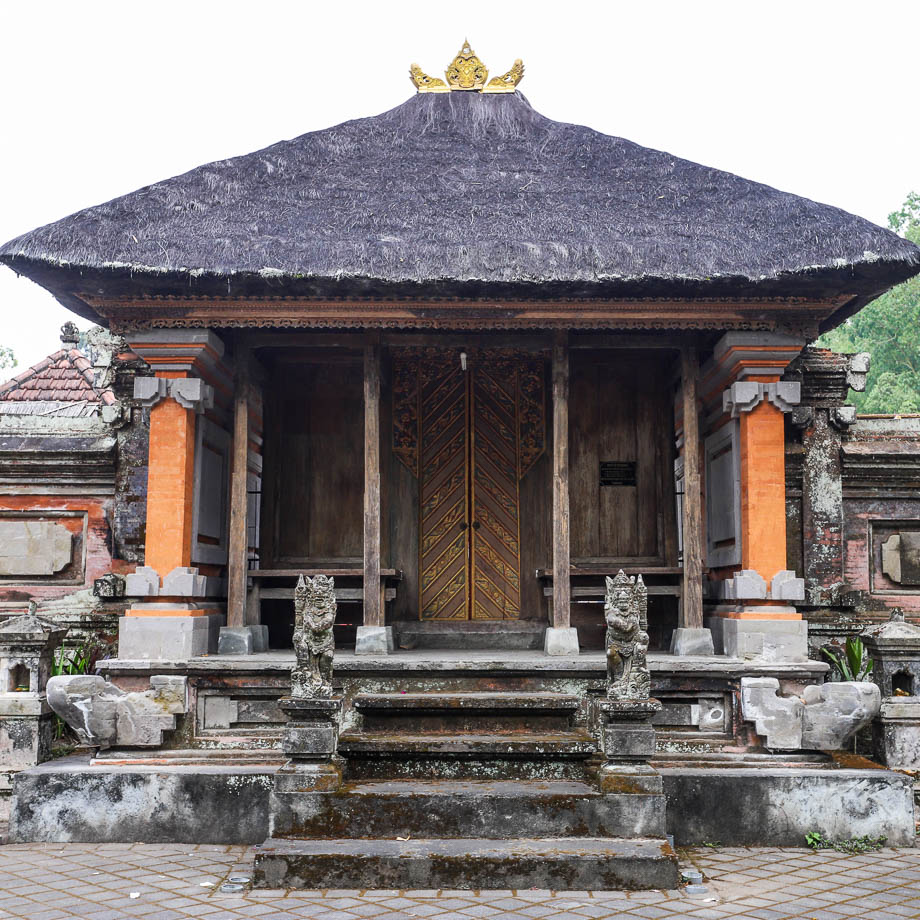
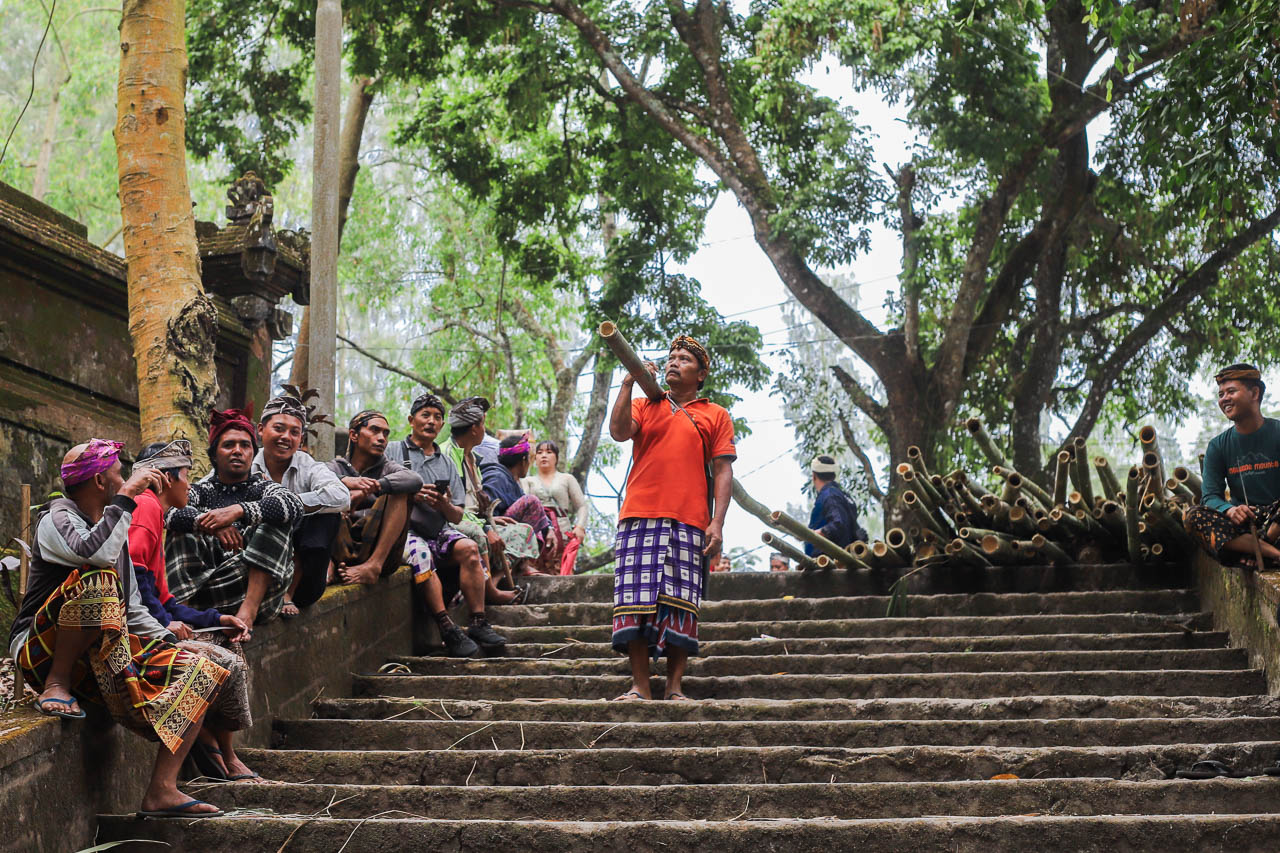
Visitors reach the temple by crossing a ravine and walking up the stairs through a group of trees into the open courtyards. There are two candi bentars (split gates) leading from the first spacious courtyard with bale pavilions to the inner courtyard (jeroan). Rows of frangipani trees mark the way to several nine-tiered meru towers and the padmasana tower, towards the green caldera rim.
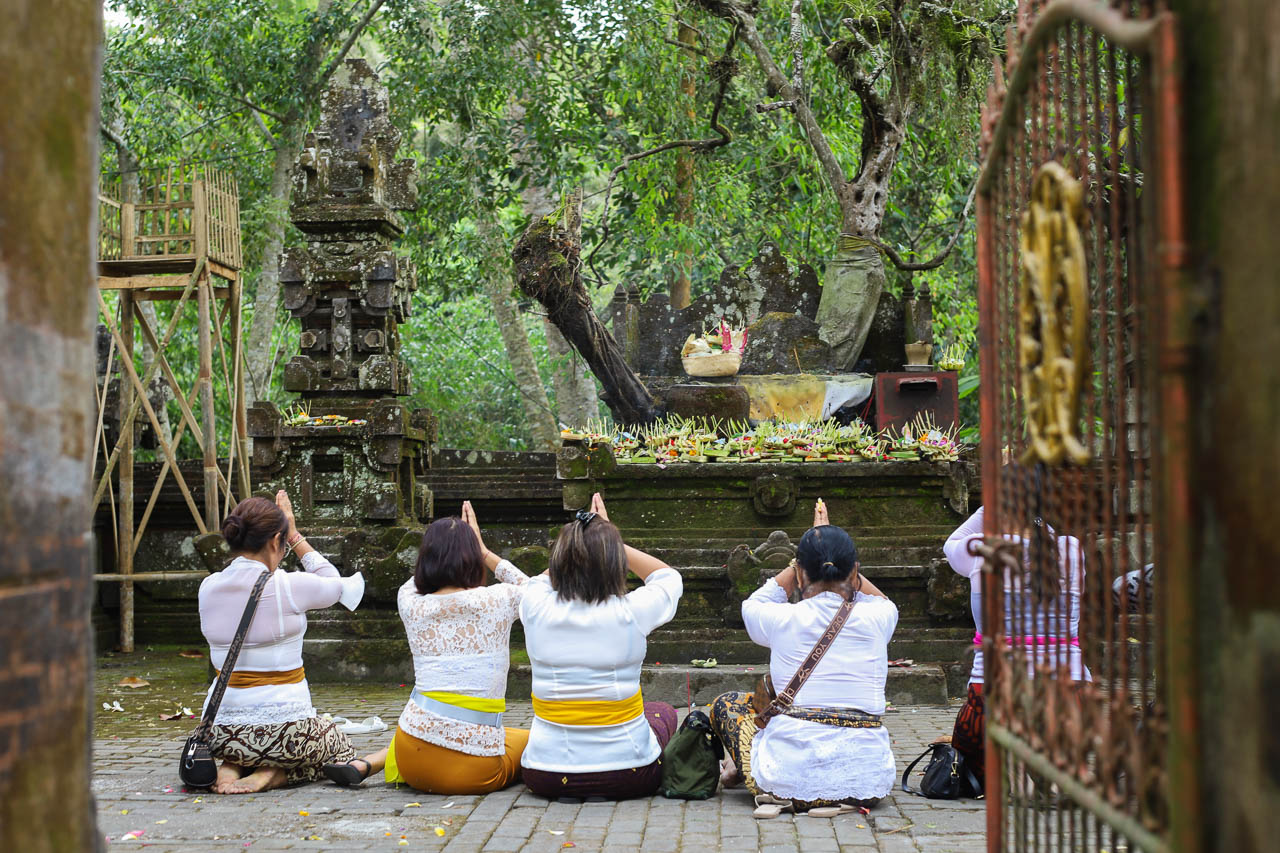
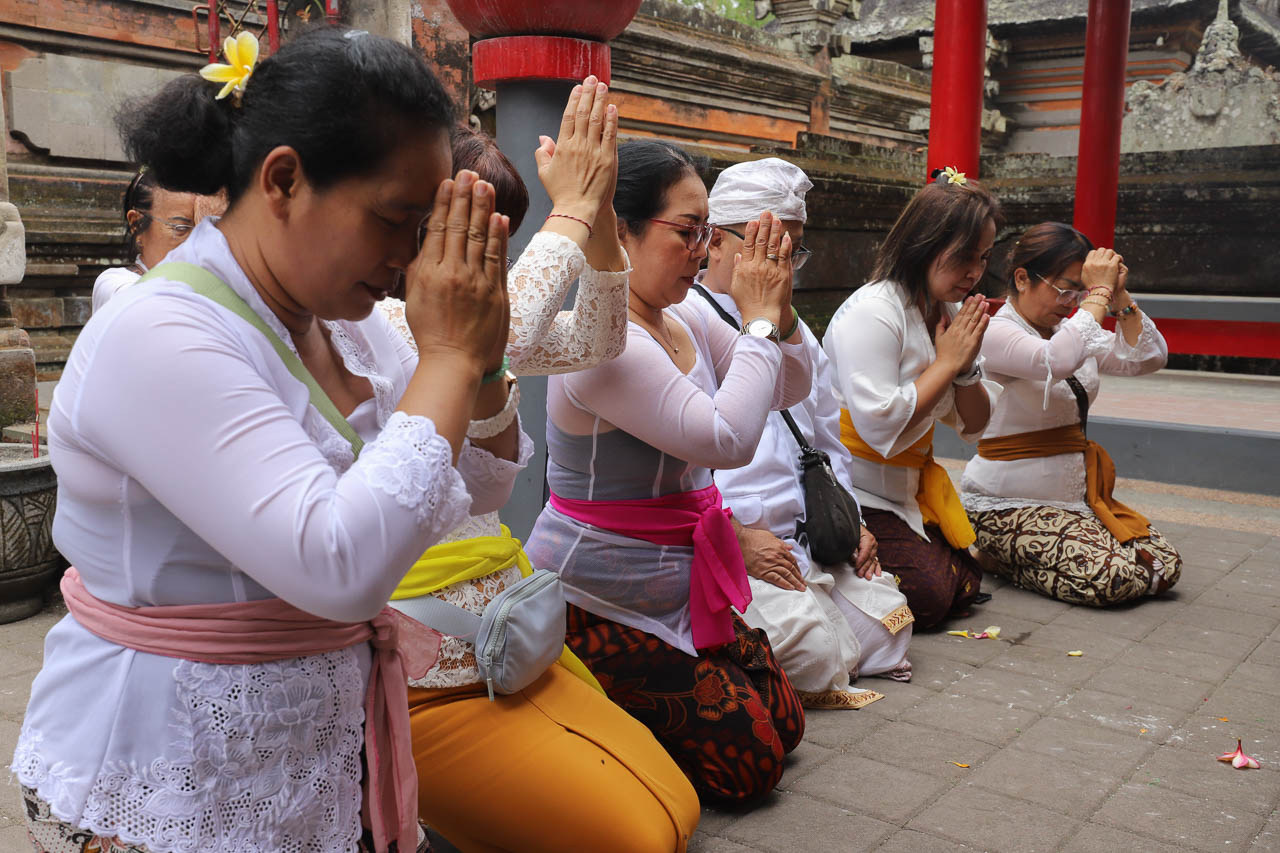
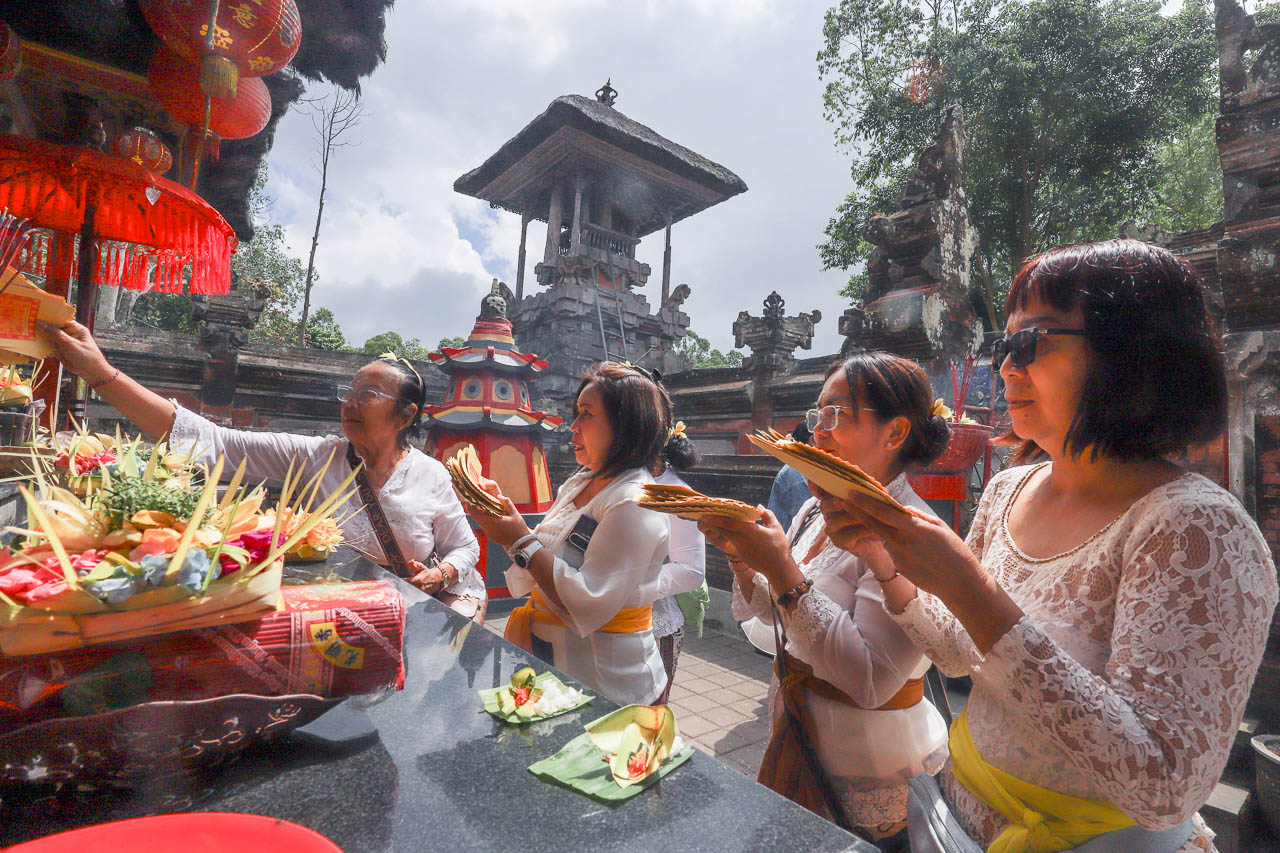
A side sanctuary at the northeast corner of the first courtyard honors Kang Cing Wie, known locally as Putri Ayu Subandar, today still honored as the goddess of prosperity. The Gedong Linggih Ratu Ayu Mas Subandar shrine, adorned with red and yellow colors like Buddhist temples, features a prominent giant kepeng coin as a symbol of prosperity. Rituals here blend Hindu and Buddhist-Chinese elements, with offerings sometimes performed standing (“Chinese” style) and sometimes kneeling (Balinese Hindu style), reflecting active syncretism.
Pura Dalem Balingkang is also important to a banua network of Bali Aga (“original Balinese”) villages, with less influence than Pura Puncak Penulisan.
The Legend of the Chinese Queen of Bali
King Sri Jaya Pangus, ruler of Bali, shocked his court and kingdom when he fell deeply in love with Kang Ching Wie, the daughter of a Chinese trader—an outsider with no noble blood. Defying custom and lineage expectations, he elevated her to the rank of queen, bestowing upon her the royal title Sri Mahardatta. This bold act of love and defiance stirred unrest in the royal court, where many advisors and priests viewed the union as an insult to tradition and a threat to the sanctity of the kingdom.
The King’s chief priest, Bhagawan Siwagandu was among the dissenters. He refused to sanctify the marriage, declaring it a violation of royal precedent. Furious at this challenge, the King banished Siwagandu to a remote and lowly region near the lake what is now known as Songan village—a place considered unworthy for someone of such spiritual stature at that time.
The exile of a holy man so revered disturbed the natural and spiritual balance. Mount Batur, the sacred volcano, is said to have trembled with rage at the injustice. Flames and floods alternated from its core, as if nature itself was expressing outrage.
Not being sanctified, the royal marriage remained childless. Desperate for an heir, the king set off on a pilgrimage to Mount Batur, where he met Dewi Danu, the goddess of Lake Batur. A passionate romance followed, from which a son named Mayadenawa was born.
When Kang Cing Wie discovered her husband’s secret, she confronted him and as a result, Dewi Danu learned about their existing marriage. Betrayed and furious, the goddess turned both the King and Kang Cing Wie into stone statues.
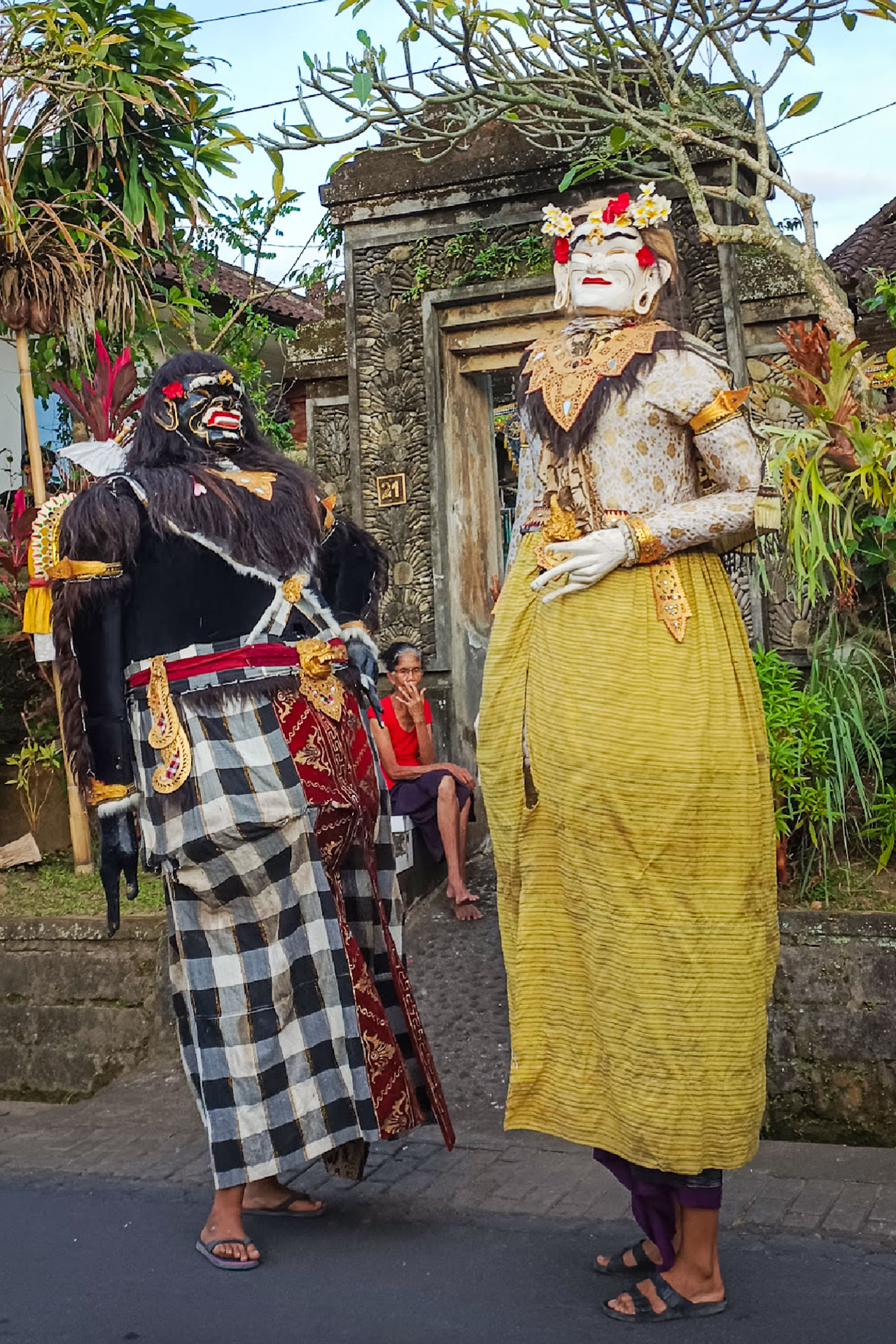
Despite their tragic end, they are being honoured through Barong Landung, giant figures created by the people, which are being paraded during the Galungan and Kuningan festivals. Ironically, their son, Mayadenawa would later become a tyrant who banned religious worship—only to be defeated by the god Indra in the epic battle now commemorated by Galungan, a celebration of good triumphing over evil.
Syncretic Rituals
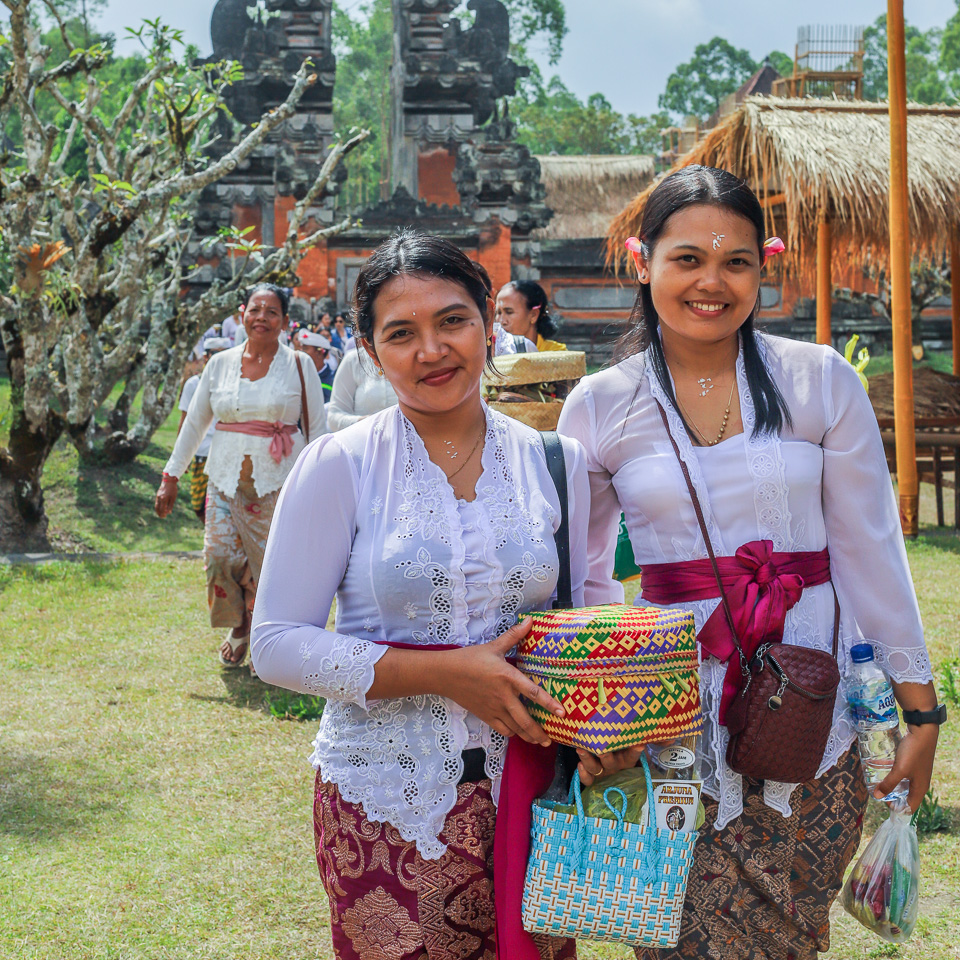
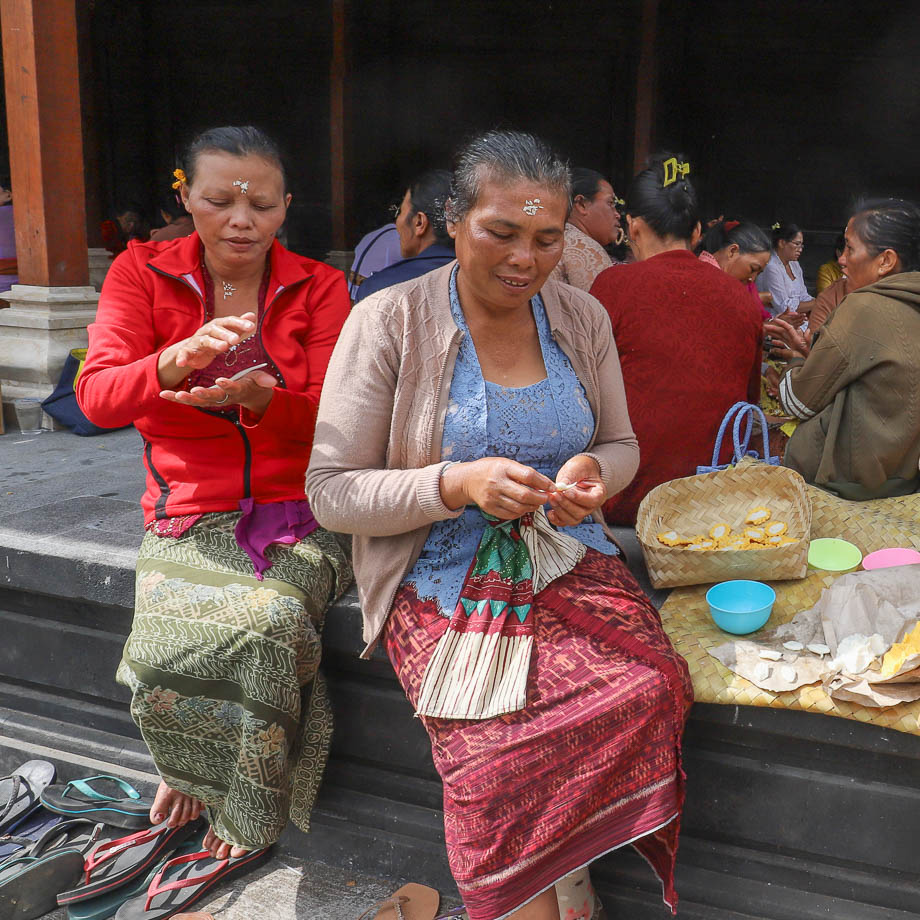
The legend of Sri Jaya Pangus and Kang Cing Wie lives on also through cultural performances such as the Barong Landung dance, featuring giant puppets depicting the royal couple. Pura Dalem Balingkang’s role as a bridge between Balinese and Chinese traditions makes it a symbolic nexus of multicultural openness, alongside the Chinese shrine of Pura Tuluk Biyu Batur. Today, it remains a vital site for both local and regional worshippers, and for more and more for visitors from other regions of Bali.


Context Today
Pura Dalem Balingkang holds special meaning not only for Balinese of Chinese descent or for those who embrace a mixed cultural heritage. Faced with the rampant commodification of cultural traditions amid international tourism and urbanization, some voices in Bali are calling for the rediscovery of a Balinese civilization reaching back to earlier than the Majapahit influences coming from Java in the 16th century. As a counterpoint to the overly Majapahit-oriented politics of identity and temples such as Pura Besakih, many ancient banua temples in the northern mountains—like Pura Dalem Balingkang and Pura Puncak Penulisan—are regaining significance. These sites are seen as representing a more ancient and authentic Balinese identity due to their Bali Aga roots.
Bibliography
Asian Historical Architecture Pura Dalem Balingkang https://www.orientalarchitecture.com/sid/1706/indonesia/bangli-regency-bali/pura-dalem-balingkang 8.Oct.2025
Exelby, Marina and Eveleigh, Mark Verborgenes Bali. Berlin: Jonglez Verlag, 2024
Lombard-Salmon, Claudine, and Sidharta Myra. “The Hainanese of Bali: A Little Known Community.” Archipel, vol. 60, 2000, pp. 87–124. https://doi.org/10.3406/arch.2000.3582
Now!Bali Pura Dalem Balingkang: Remnants of an Ancient Kingdom. https://www.nowbali.co.id/pura-dalem-balingkang-remnants-of-an-ancient-kingdom/
Reuter, Thomas A. Custodians of the Sacred Mountains: The Ritual Domains of Highland Bali. Hawaii: University of Hawaii Press, 2022.
Reuter, Thomas The House of Our Ancestors. Precedence and dualism in Highland Balinese Society. Leiden: KITLV Press, 2002.
Previous temple:
Next temple:
Photos and text © Alida Szabo
