— A Historical Forest Temple —
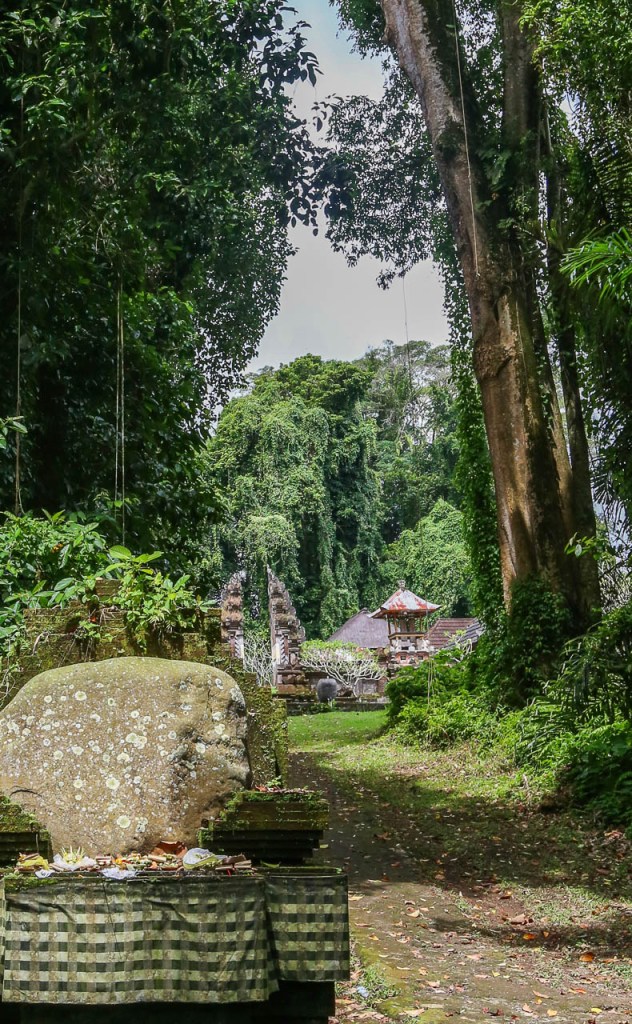
Also called: PURA ALAS GUMANG CATUR PAIGUMAN
Location: North of Pura Tirta Empul, in the middle of a forest patch
Map: Manukaya, Tampaksiring, Gianyar, Bali, Indonesia
Dates back to: 9ᵗʰ century as an animist site
Main features: Shaivist and Buddhist artifacts
Region: Tampaksiring
Requirements for visit: Bring your own sarong.
History of Unity
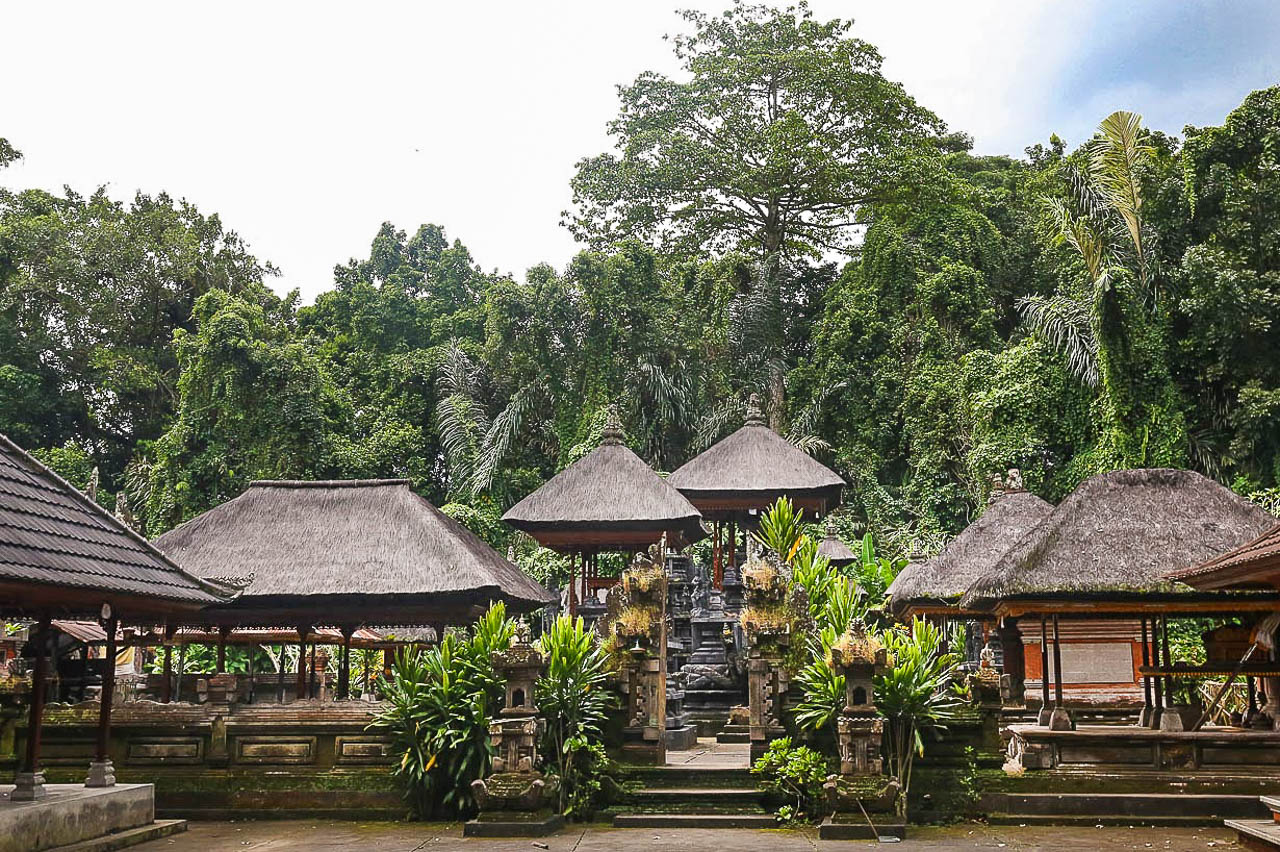
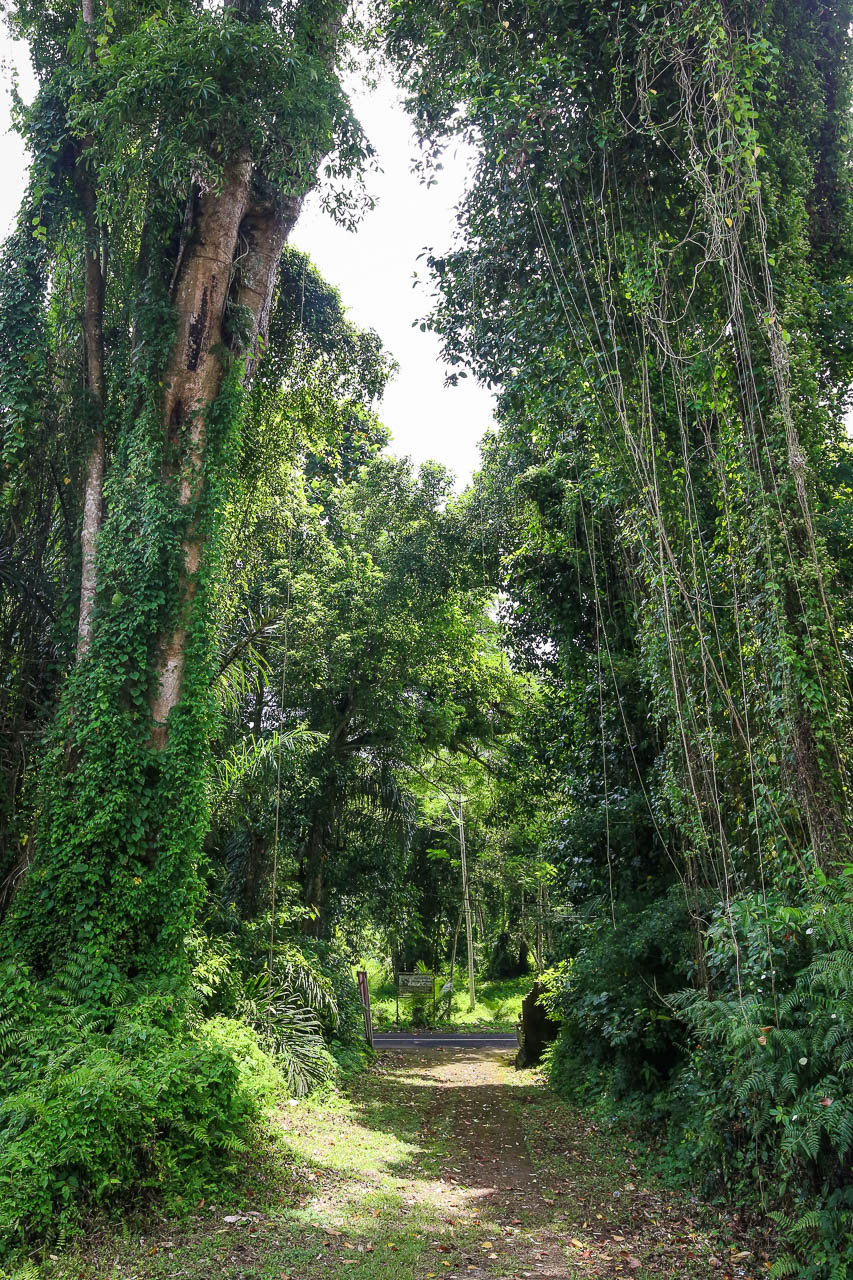
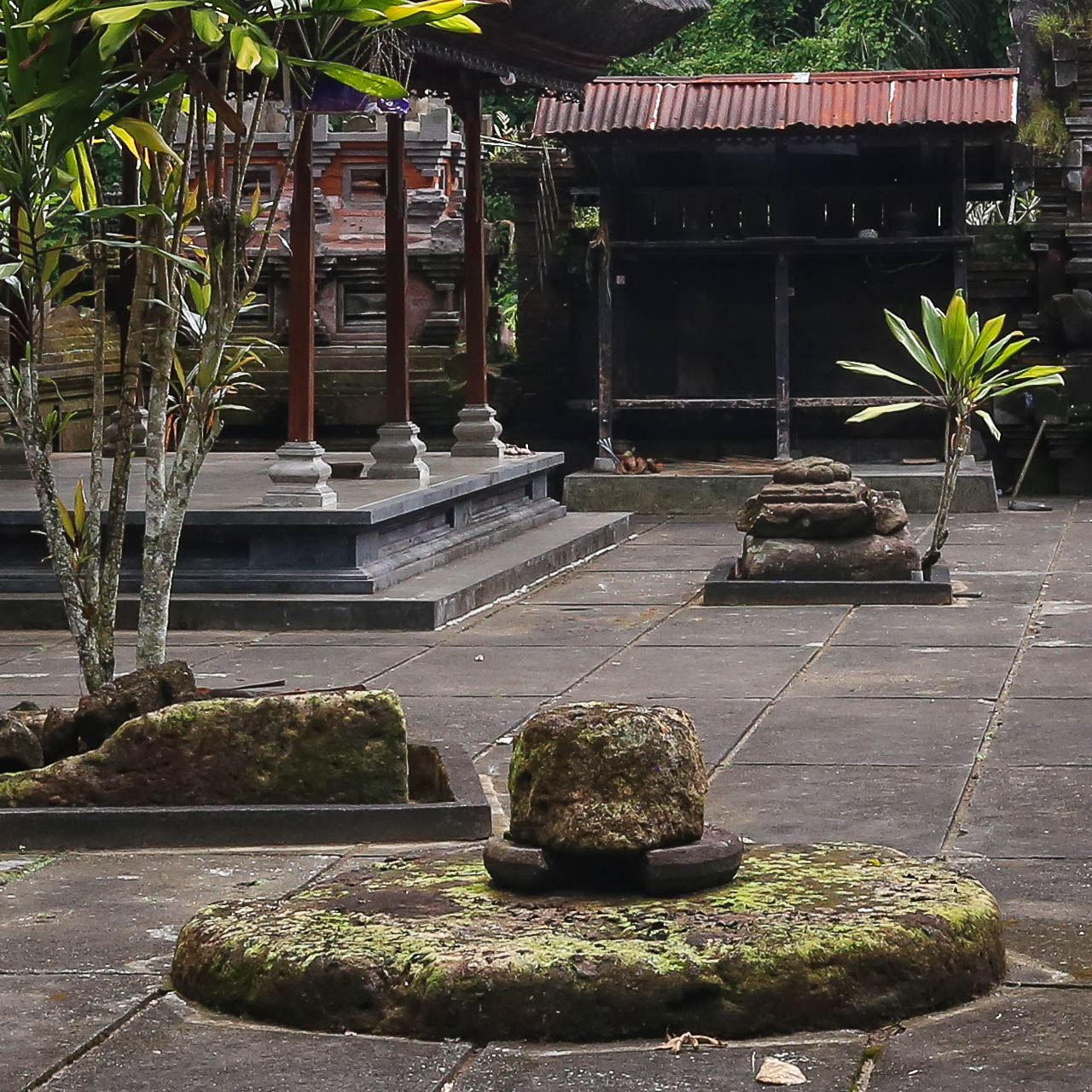
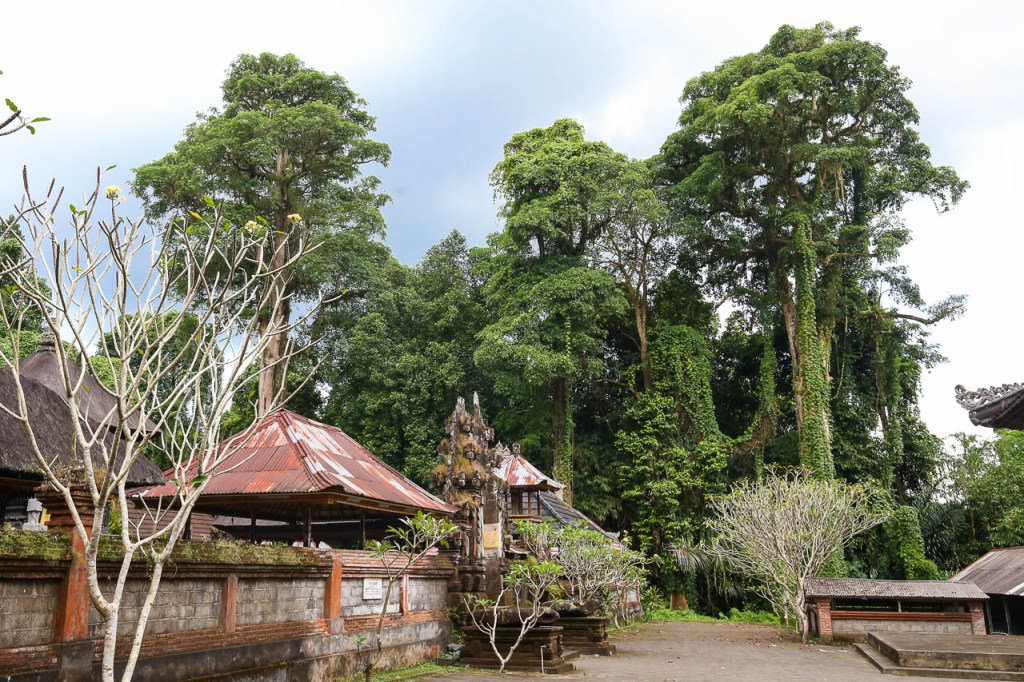
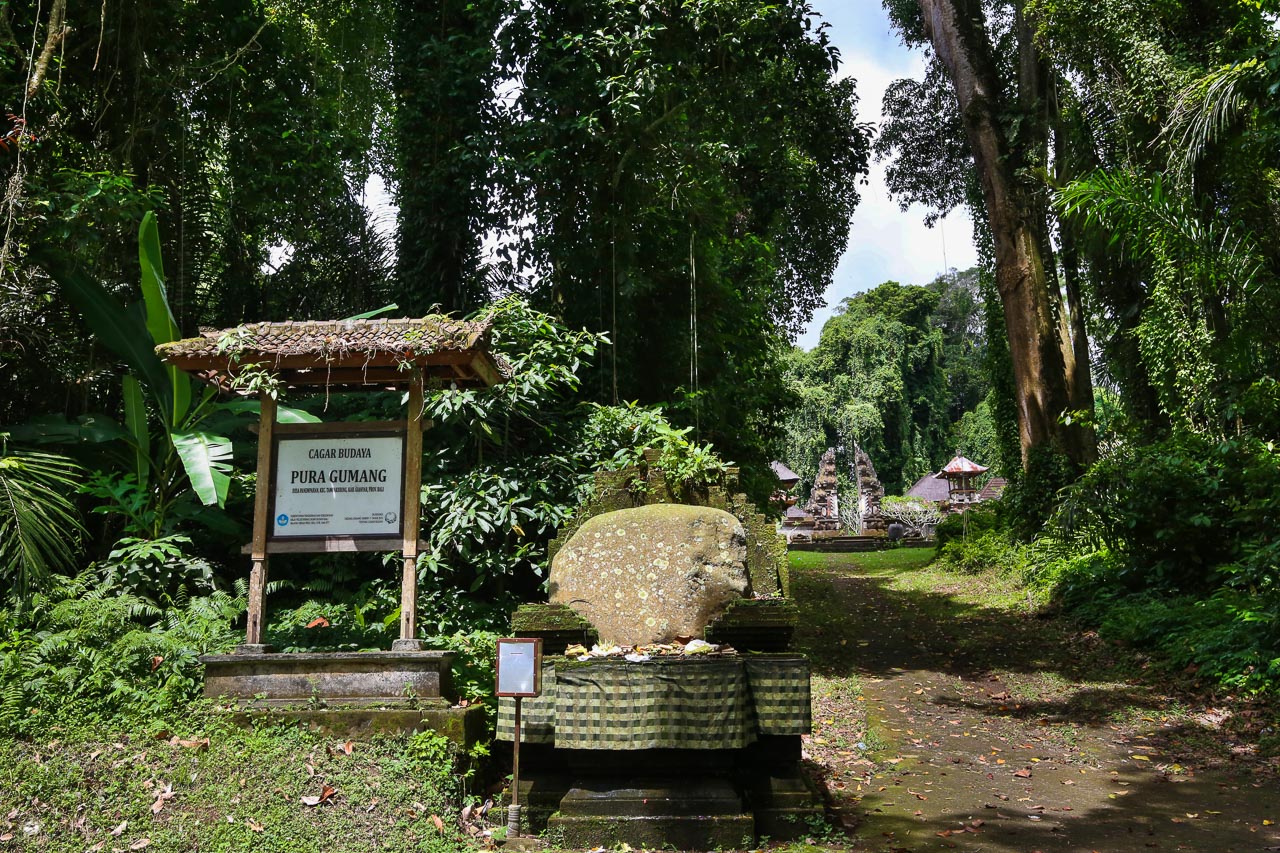
Approaching Pura Gumang along a narrow road in the upper reaches of the Pakerisan valley, you are greeted by a small forest of towering trees. A rock on an altar and a sign with the temple’s name mark the entrance to the middle of the small forest patch. The peaceful surroundings immediately set the tone for tranquility, as if the spirit of the past hovered above the small clearing.
The temple predates the Majapahit Kingdom, making it one of Bali’s historical spiritual sites, dating back to the 9th century as an animist shrine. Pura Gumang was pivotal in resolving religious conflicts during the 11th century. A meeting led by Mpu Kuturan brought together leaders of nine competing sects (Siwa-Sidhanta, Pasupata, Bodha, Bhairawa, Brahmana, Waisnawa, Rsi, Sora and Ganeca) to end the disputes and promote harmony and unity. This gathering laid the foundation for Bali’s syncretic Hindu practices and established Pura Gumang as a symbol of reconciliation.
The temple’s name reflects this history, derived from “Gumang,” meaning “agreement.” The name is often used as Pura Alas Gumang, where alas means forest. The occasional name addition Catur Paiguman joins catur (“four”) with paiguman, a term for a ritual community or clan group. Together, they denote the four traditional groups or leaders who jointly maintain the temple and guide its ceremonies.
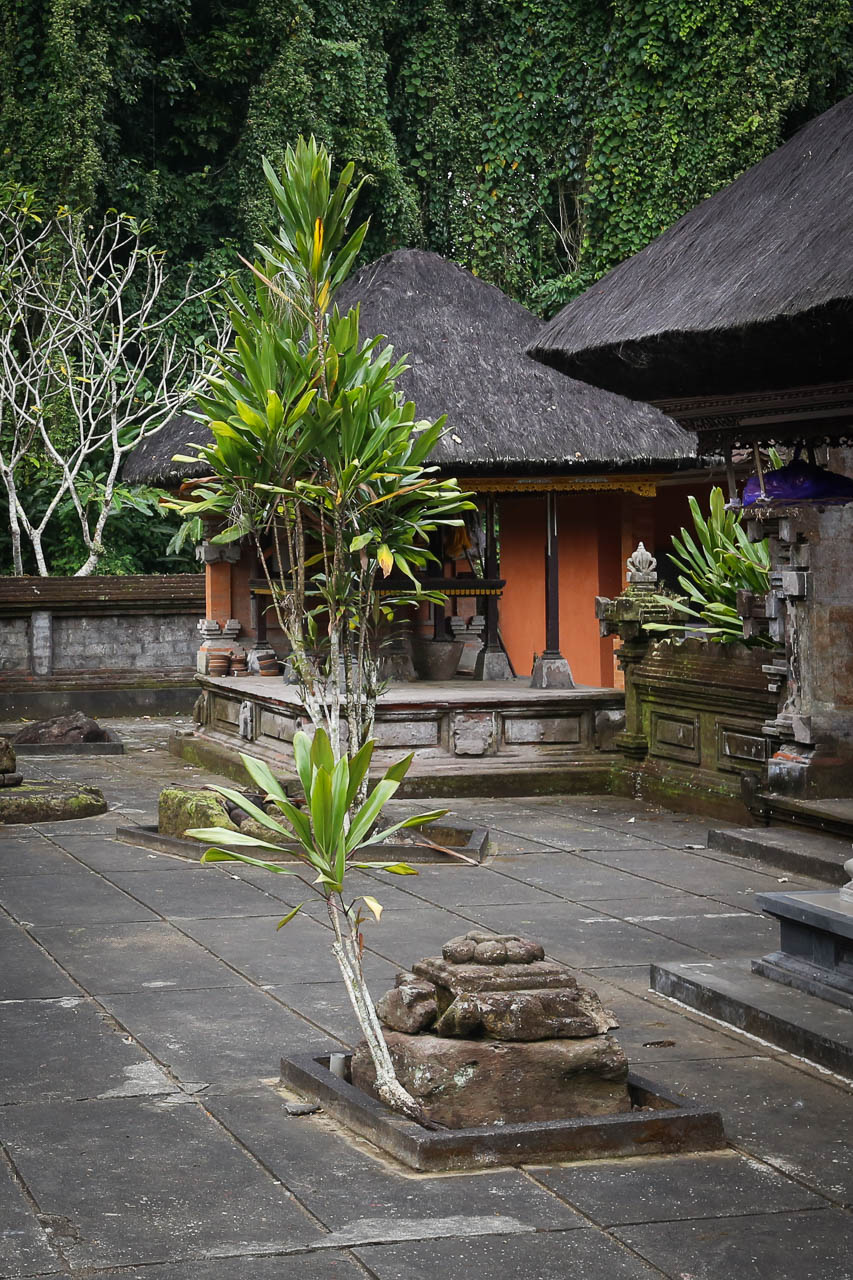
Pura Gumang’s architectural design is notable for its distinct four-gate configuration, a feature that separates it from the typical Balinese temple layout with only two entrances2. These four gates, positioned to welcome visitors from all cardinal directions, symbolize the temple’s historical role as a place of inclusive dialogue, physically manifesting its purpose as a meeting ground where all opinions and traditions were welcomed regardless of origin.
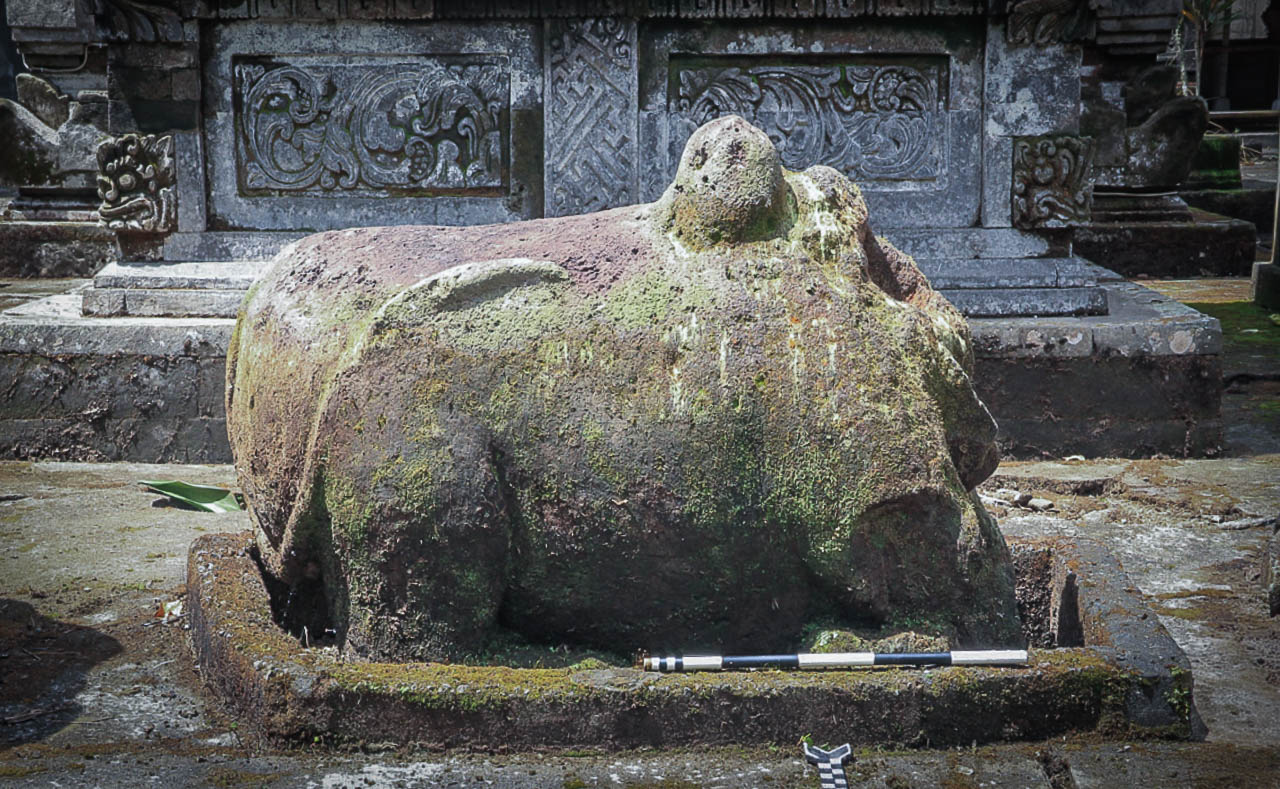
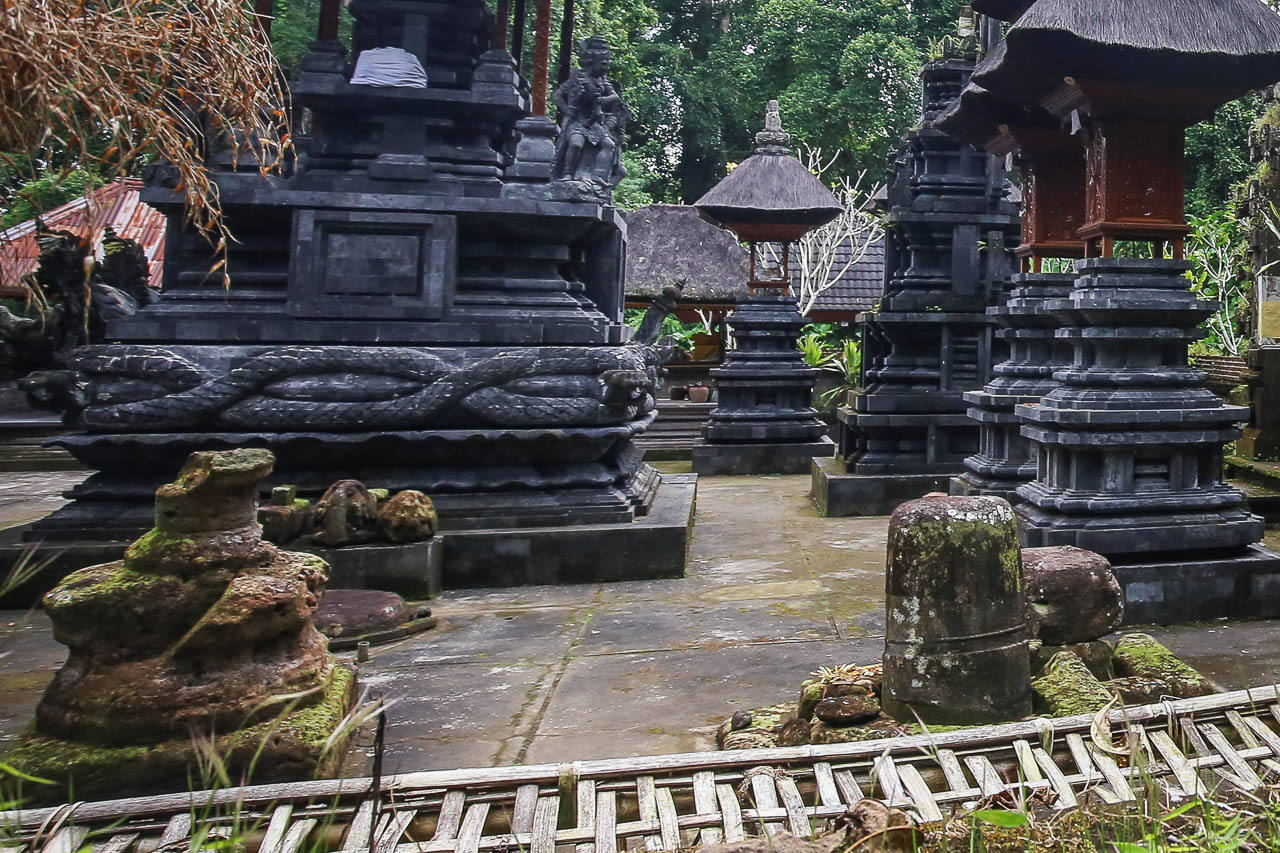
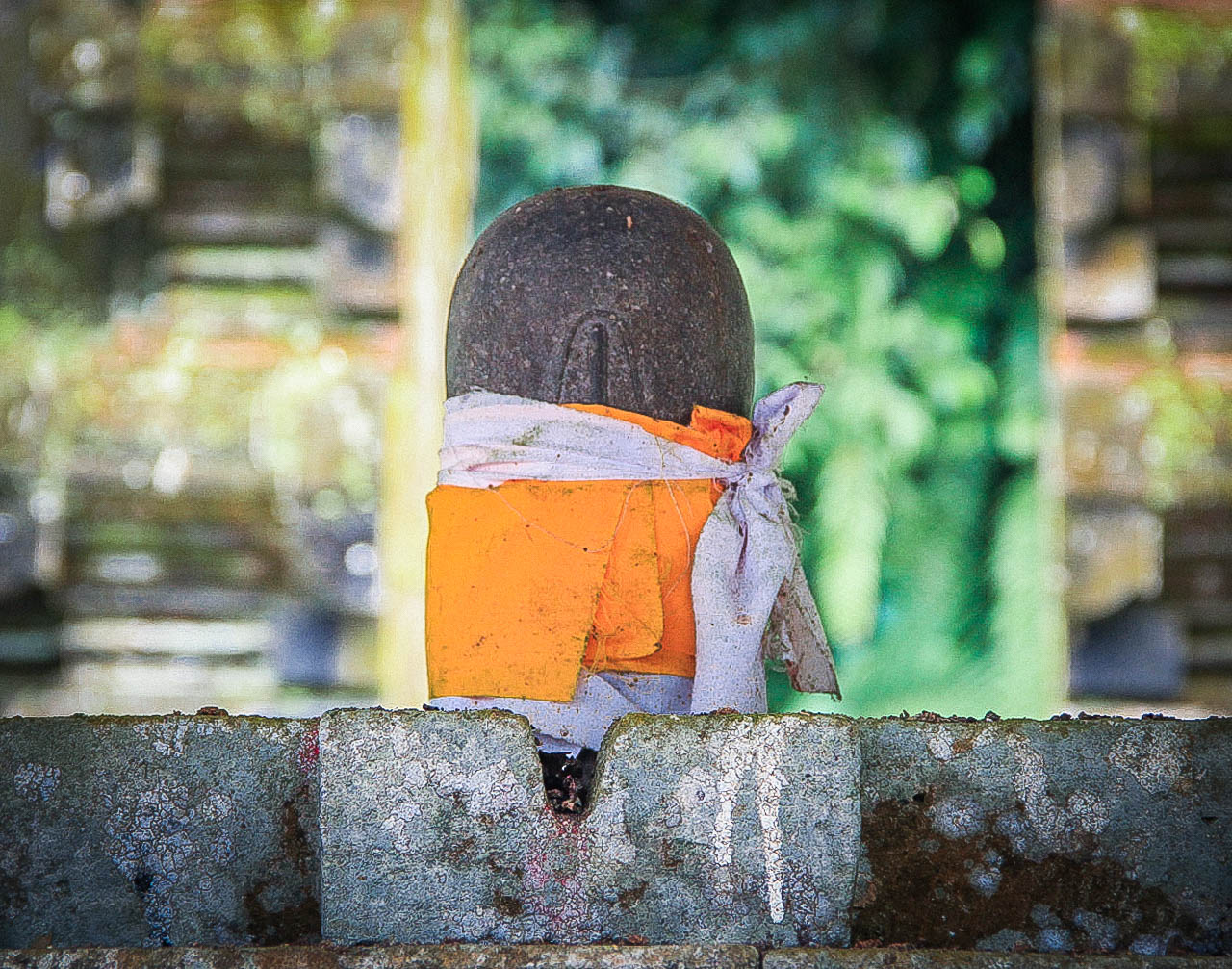
The temple houses several ancient artifacts that reflect Bali’s religious syncretism. Among them are three lingga–yoni statues, symbolizing fertility and abundance, as well as a nandi (bull) statue, the mount of Shiva. Similar features can be found at Pura Tirta Empul and at numerous Shaivite Hindu sites in Central Java, the largest of which is Candi Prambanan. Additionally, the site contains a Mandala stupa representing Buddhist traditions. These artifacts highlight the integration of Siwa, Buddha, and Bali Mula teachings within the temple, emphasizing its role as a unifying spiritual space.
Bibliography
Artanegara, Agung et al. Tinggalan arkeologi di daerah aliran sungai Pakerisan dan Petanu. Balai Pelestarian Cagar Budaya Bali, 2021.
Kempers, A. J. Bernet Monumental Bali. Singapore: Periplus Editions, 1991.
Spitzing, Günter Bali. Tempel, Mythen und Volkskunst auf der tropischen Insel zwischen Indischem und Pazifischem Ozean. Köln: DuMont, 1983.
Nearby Temples
Pura Tirta Empul is famous for its holy springs and purification pools, while Pura Pegulingan preserves early Buddhist-Hindu elements such as a buried stupa. The serene Pura Mengening centers on clear, forest-fed springs used for quiet cleansing rituals. Nearby, Pura Gunung Kawi features monumental 11th-century rock-cut shrines, and Pura Gunung Kawi Sebatu celebrates the abundance of water with its ponds and tiered pools.
Previous temple:
Next temple:
Photos and text © 2025 Alida Szabo.
