— “The Royal Tombs” in a Spectacular Valley—
Meaning of its name: “Temple of the mountain of poetry”; pura-‘temple’, gunung -‘mountain’,kawi can refer to a poet or sacred, ancient writing.
Also called: CANDI GUNUNG KAWI, CANDI TEBING GUNUNG KAWI
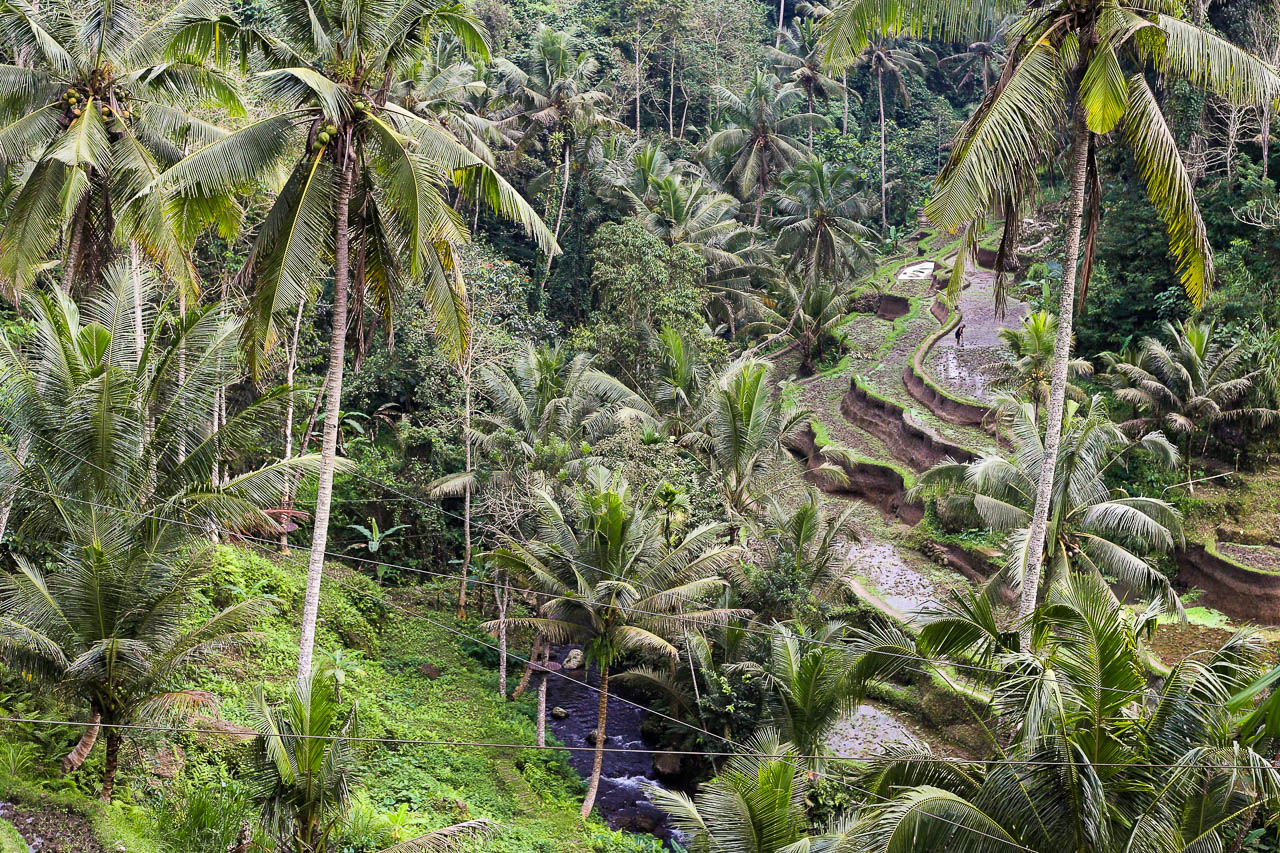
Location: In the upper Pakerisan river valley.
Map: Tampaksiring, Gianyar, Bali, Indonesia
From: 11ᵗʰ century
Main buildings: Ten huge rock-hewn relief-candis in three groups; hermitage and meditation caves.
Region: Tampaksiring
Theme: The Rock Temples of Central Bali
Requirements for visit: Tickets cost 50,000 Rp. Sarongs are available to borrow.
The nine royal monuments
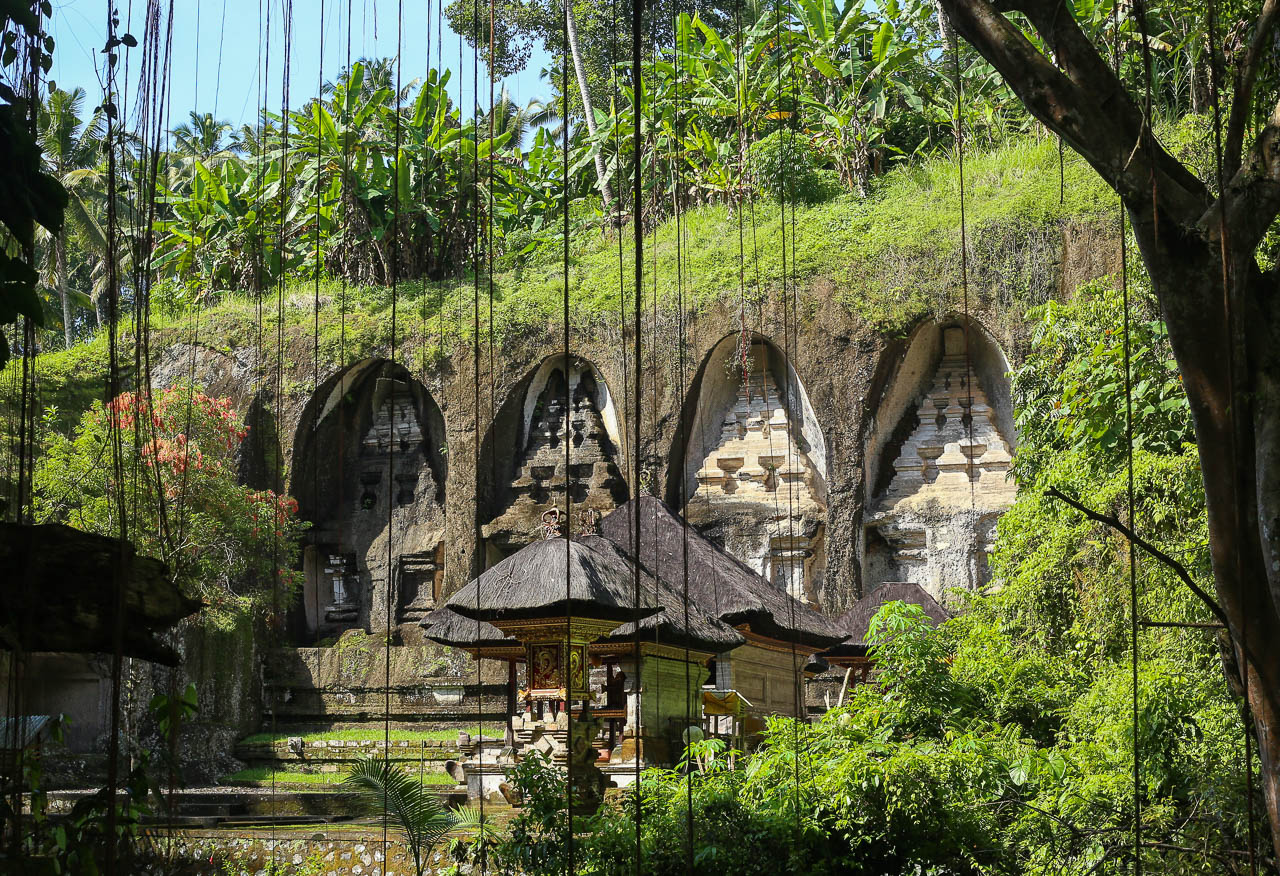
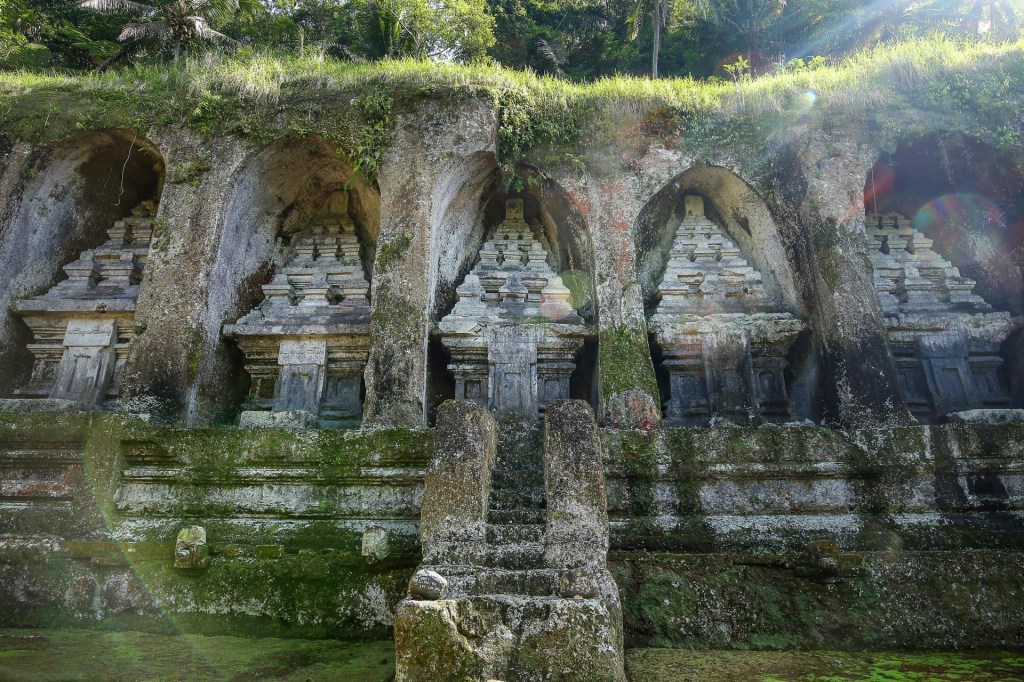
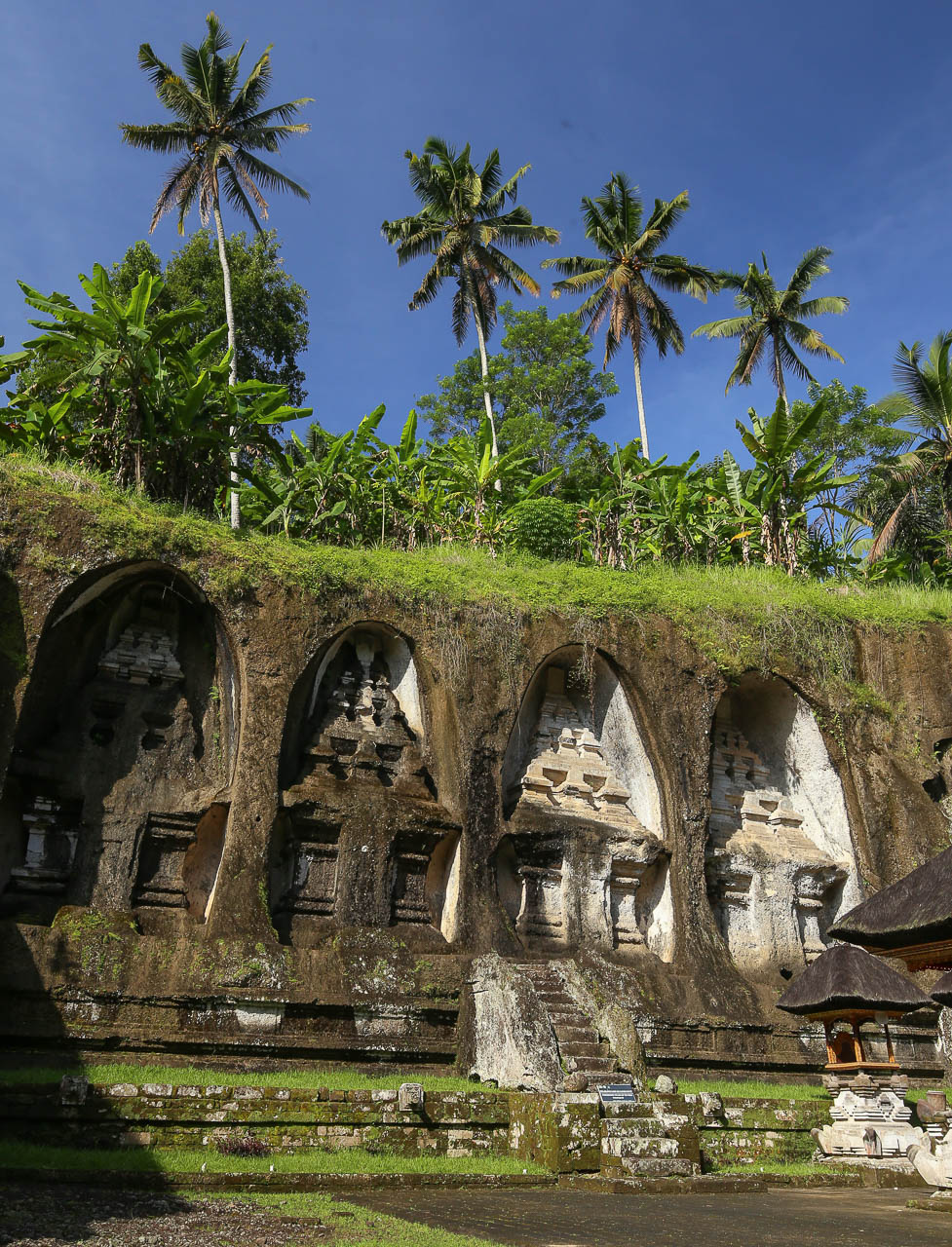
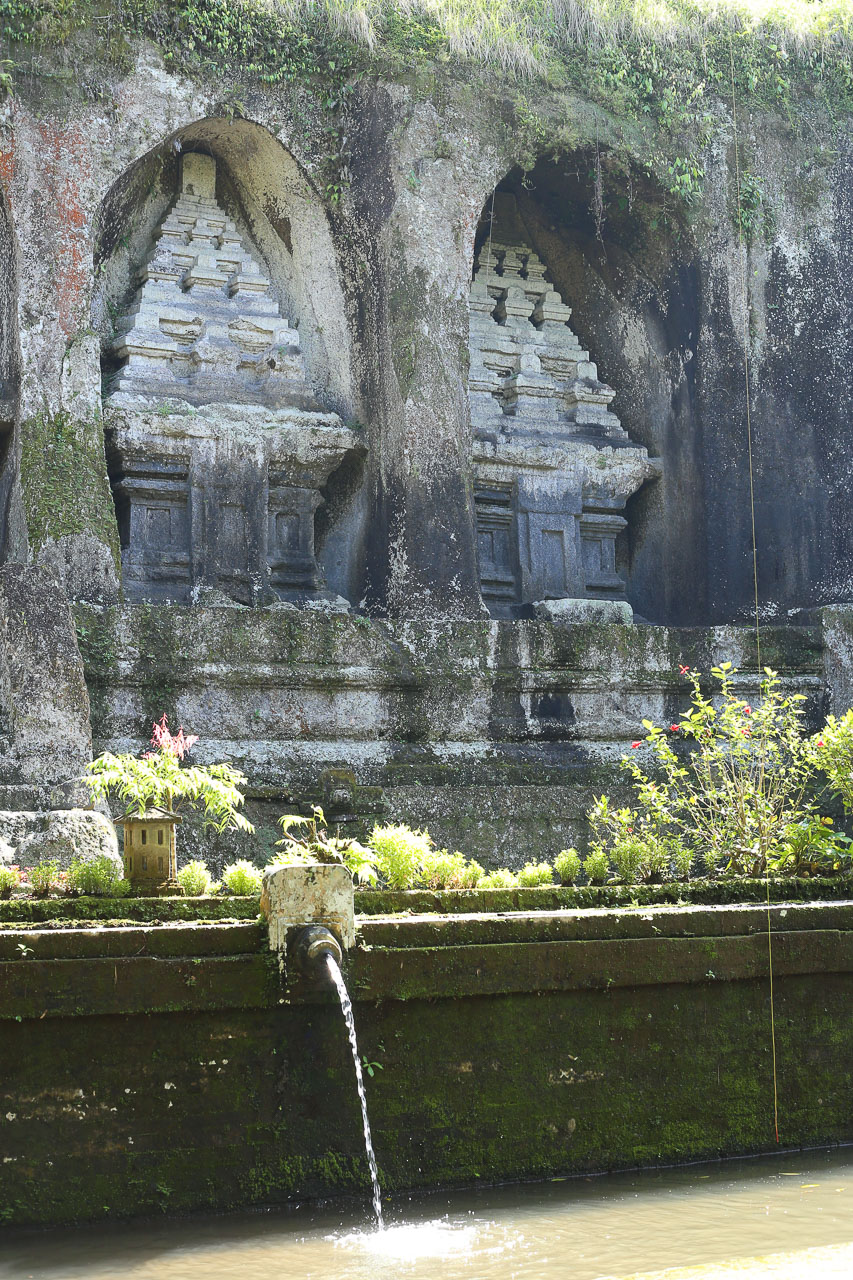
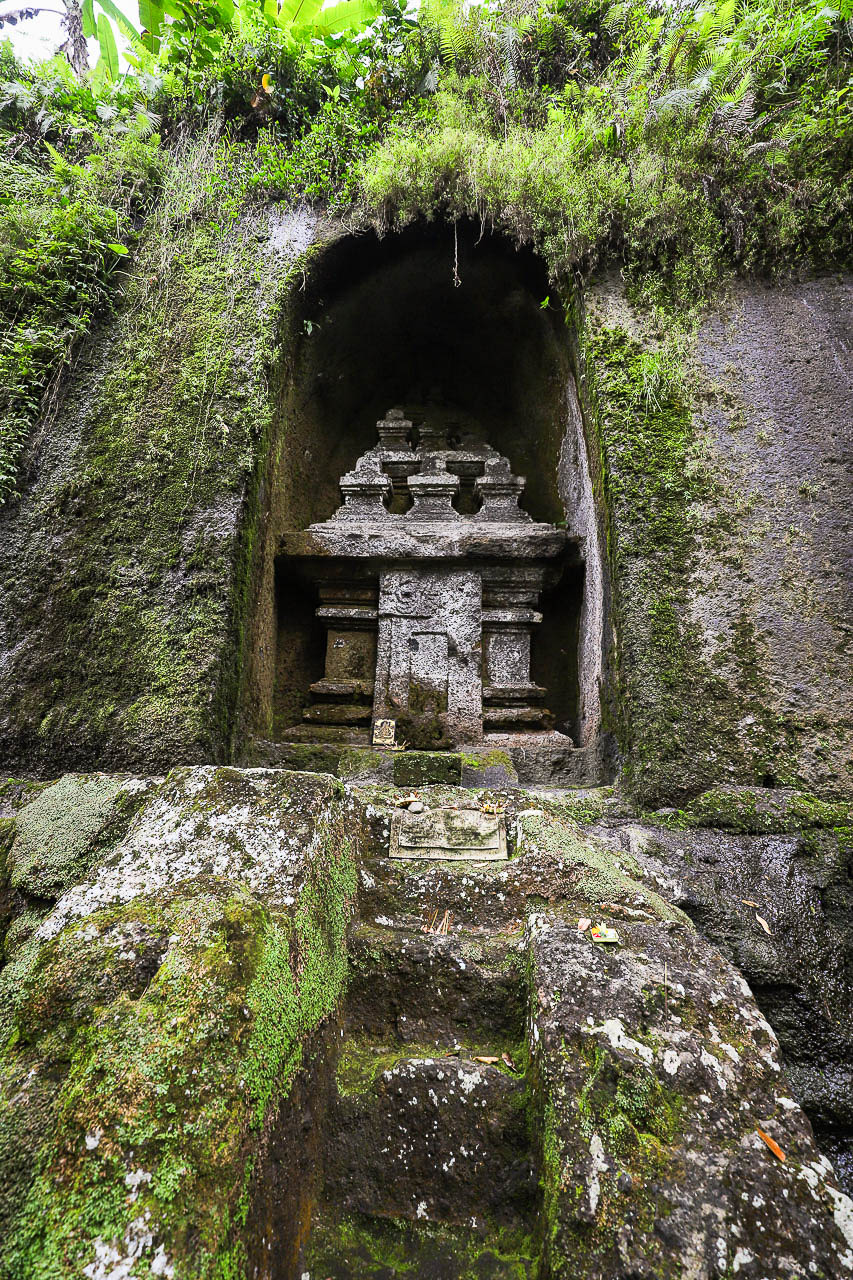
The candi shrines are a focal point of both historical and religious importance. The seven-meter-high rock-cut candis resemble the temples of Central and East Java, and the prasada structures found in Bali. Yet here they are not freestanding sanctuaries, but reliefs with a kind of false door. Their roofs are crowned with a finial, and each of the three tiers is adorned with three small ornamental towers, reminiscent of abstracted lingga-yonis, the symbols of fertility and Shiva.
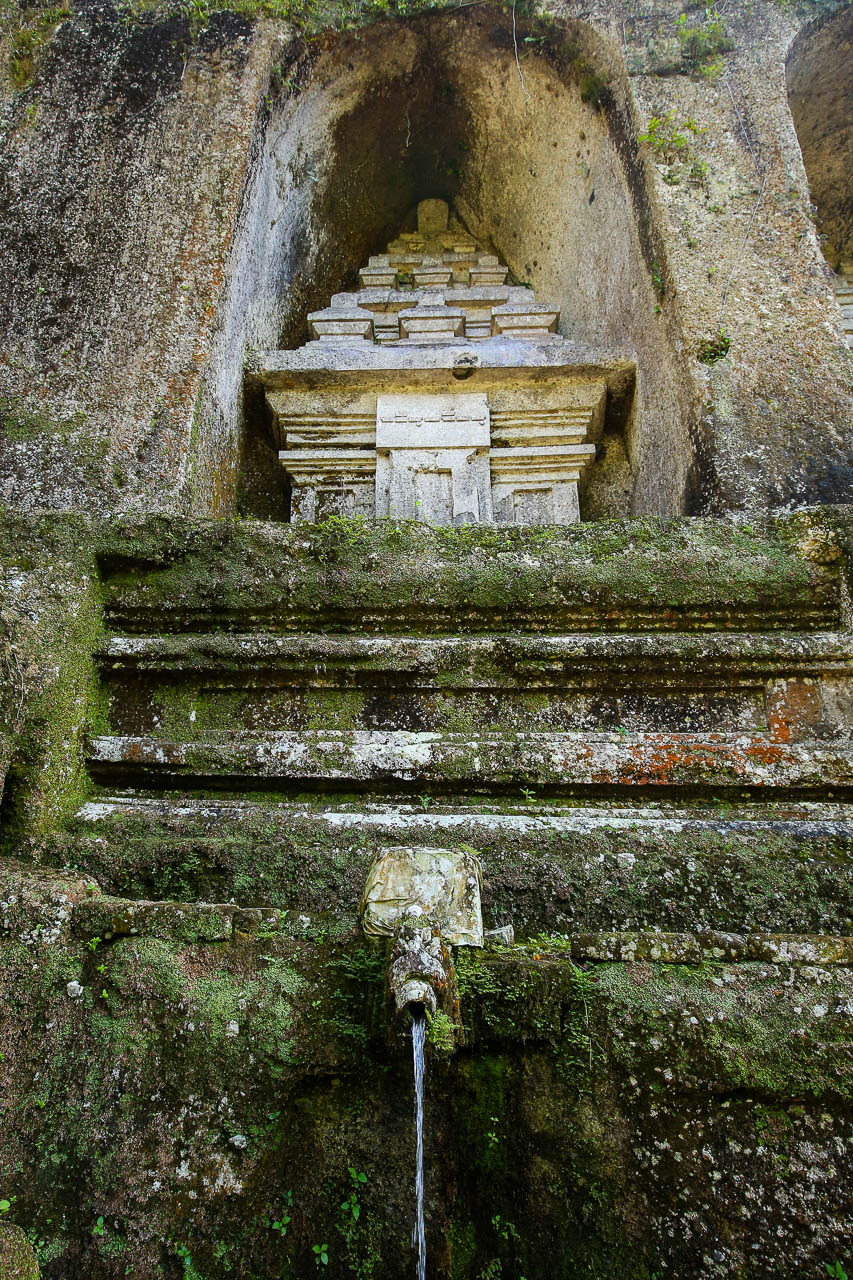
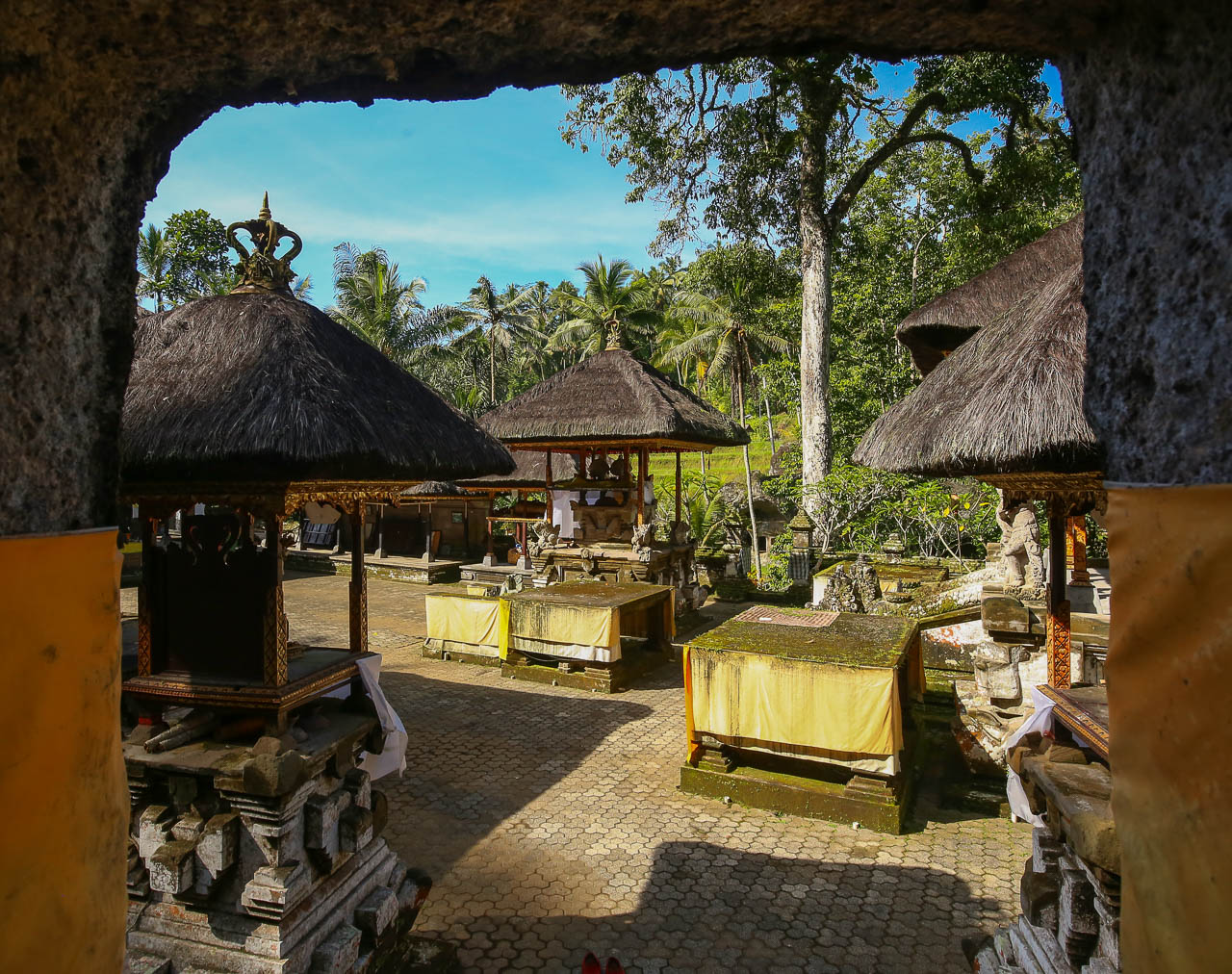
The temple-like niches are commemorative structures, as there are inscriptions over the false doorways indicating to whom they are dedicated. The inscriptions are made in a decorative script known as “Kadiri Quadrate”after the East Javanese kingdom of Kediri where it is also found in the late 10ᵗʰ and 11ᵗʰ centuries.
According to the worn inscriptions, the central candi was dedicated to the king Anak Wungsu (approx. 1049–1078), the younger brother of Airlangga, ruler of Java. Or was it the work of the giant Kebo Iwa, who is said to have carved this and the other rock-cut temples of this river valley with nothing but his mighty nails?
The ancient hermitage
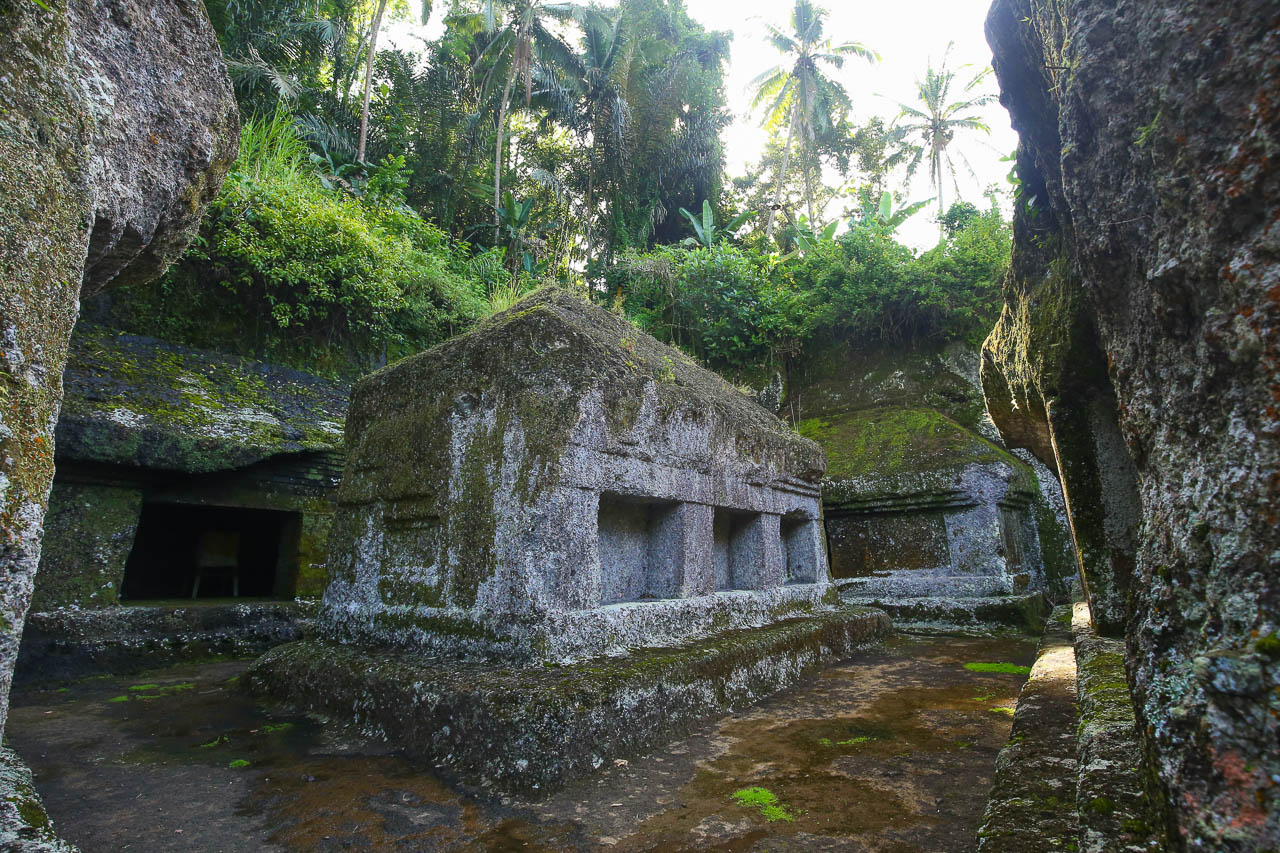
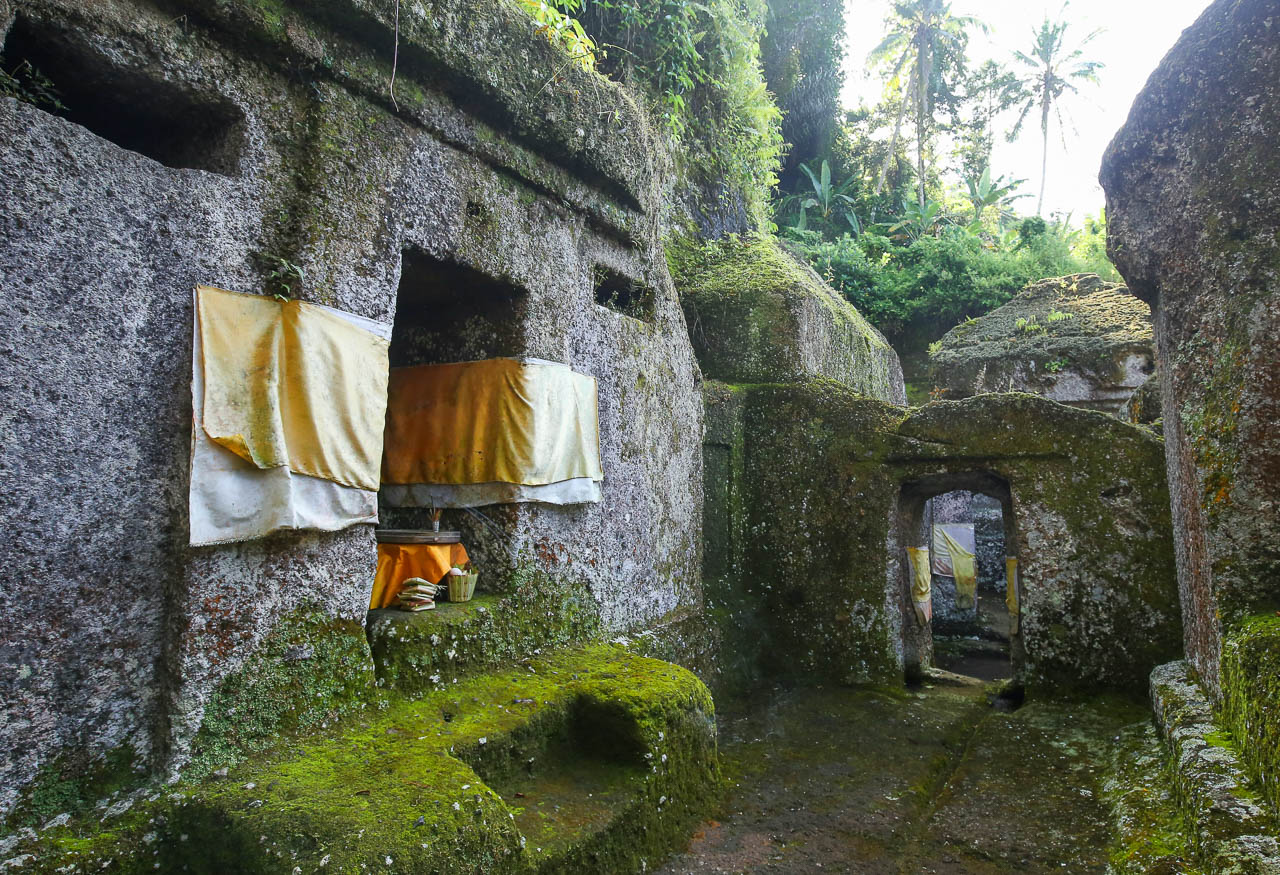
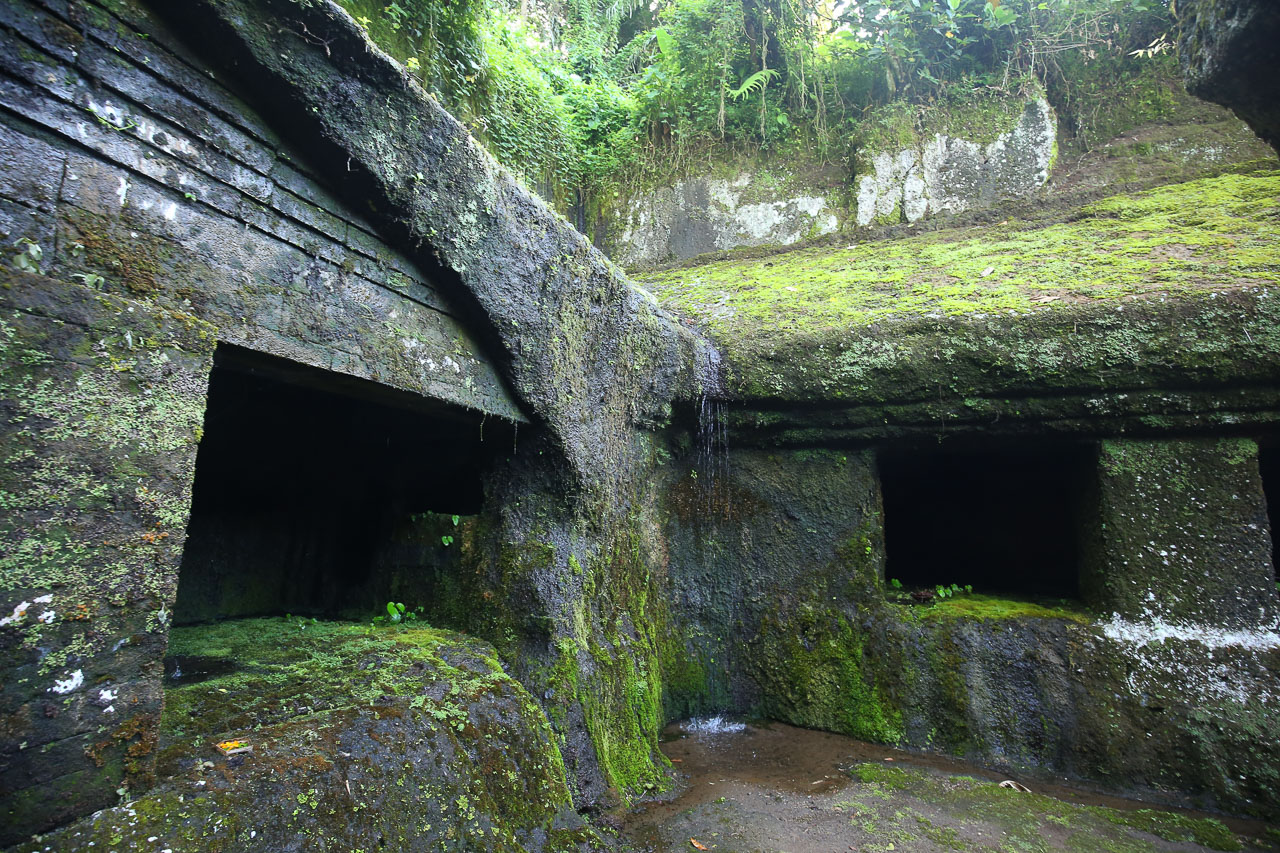
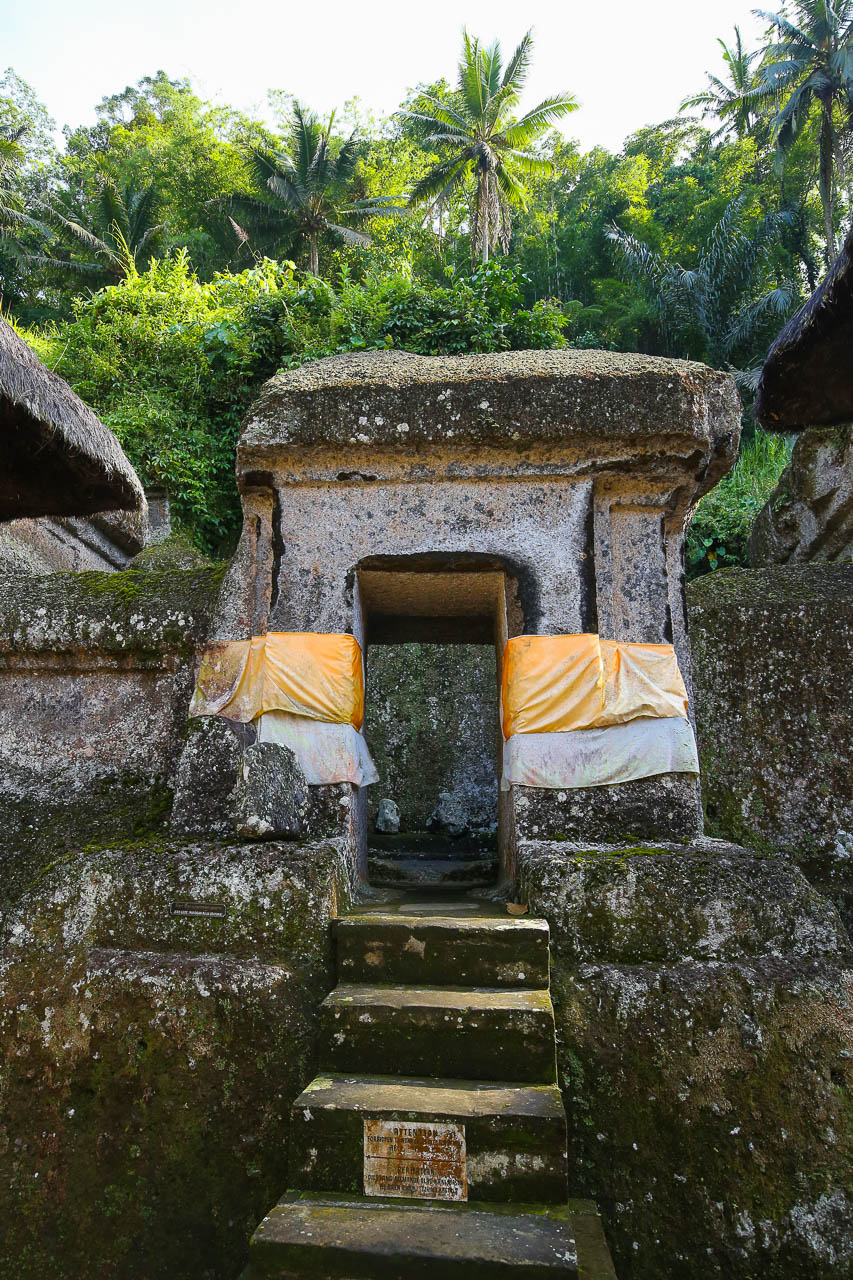
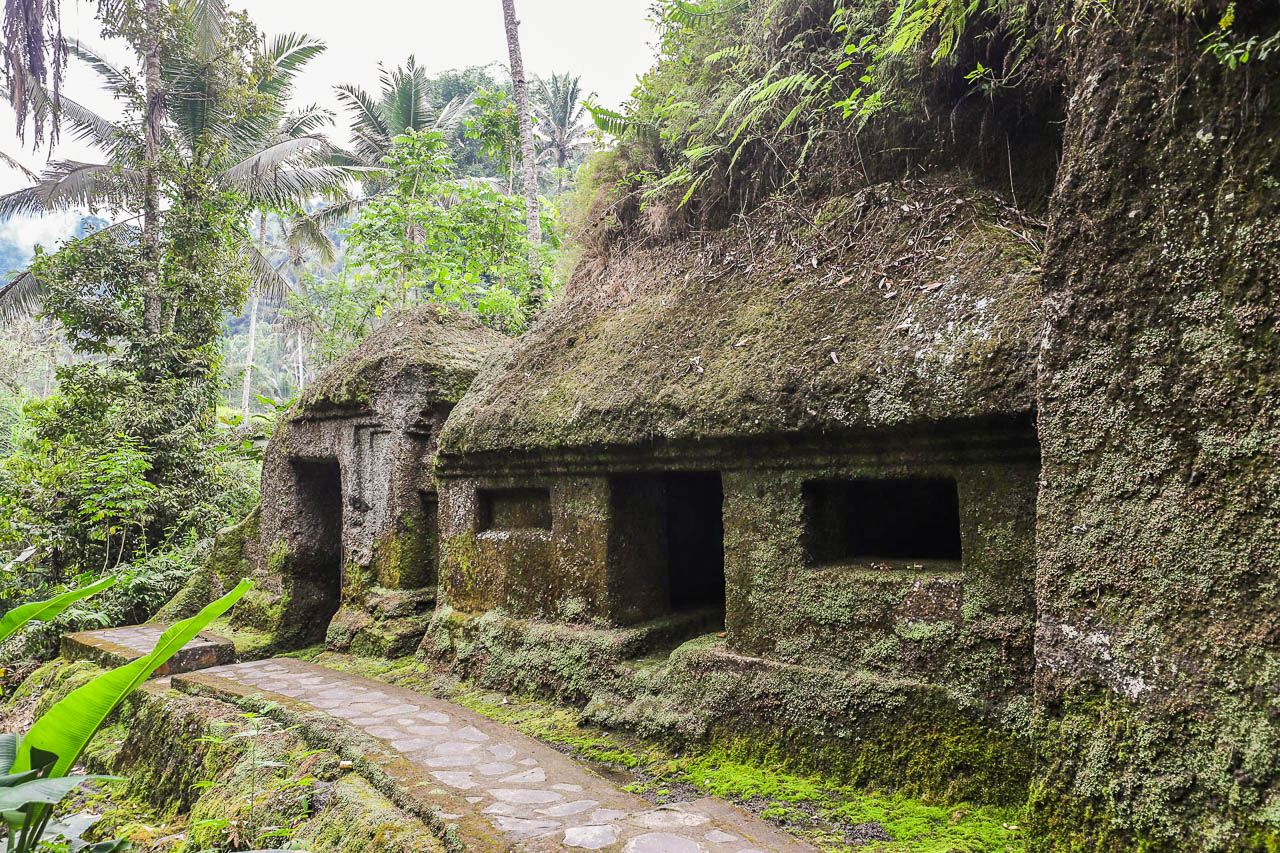
The site contains 34 meditation caves (goa), most of which hold historical and spiritual significance as royal meditation places, particularly linked to King Udayana. While several caves served as practical living quarters for temple caretakers and hermits (pedanda), others were reserved as sacred retreats for meditation, purification, and communion with the holy waters of the Pakerisan River flowing through the valley. Some caves remain off-limits, marked by pelinggih (altars) and draped with wastra (sacred cloths), signifying their sanctity.
Water flows
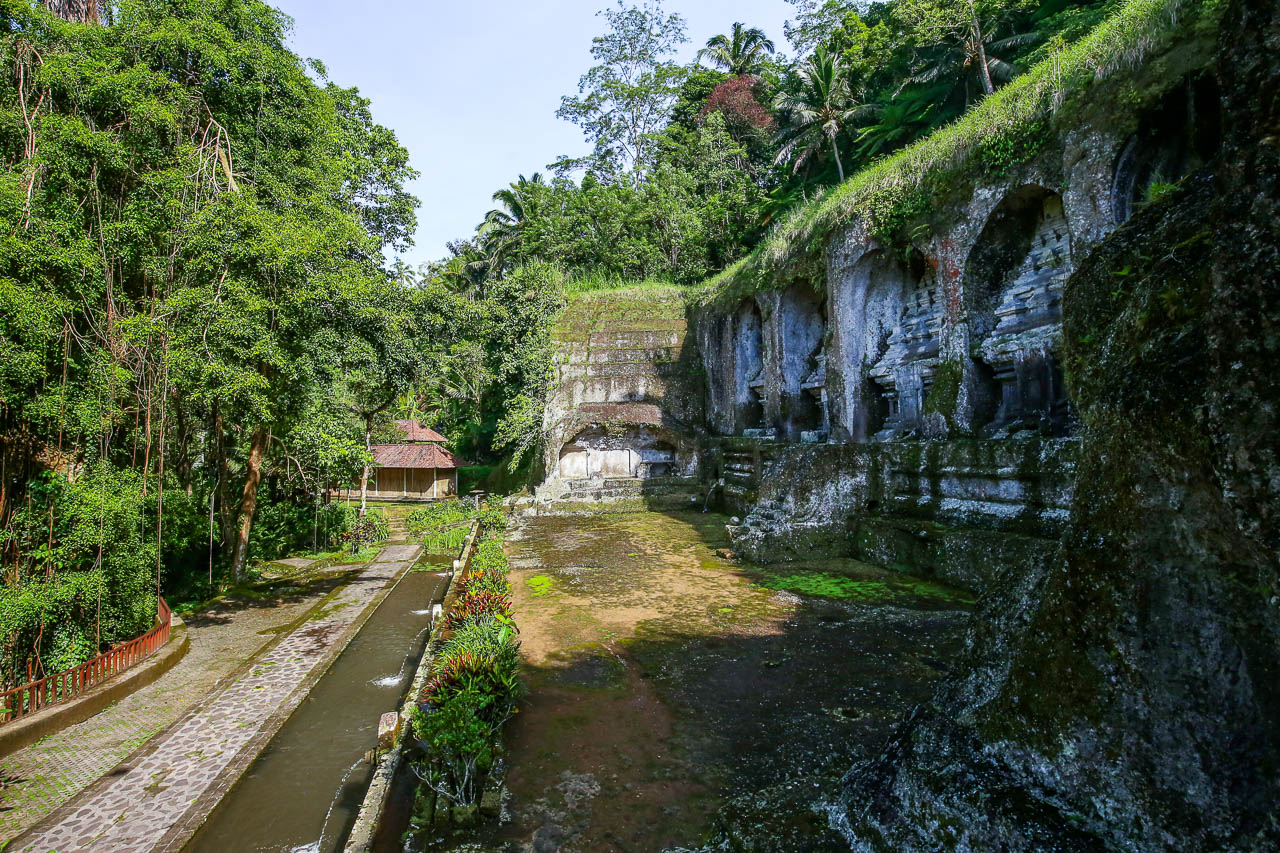
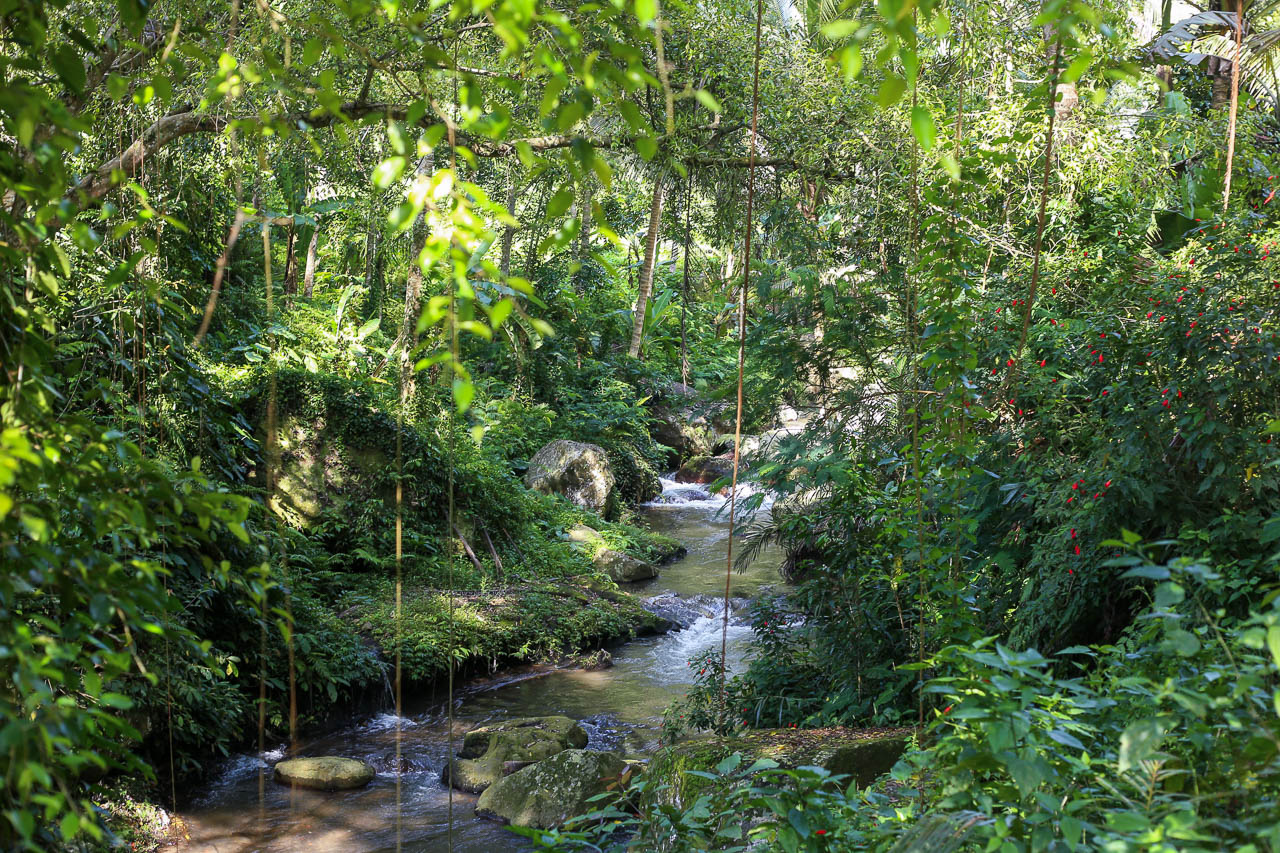
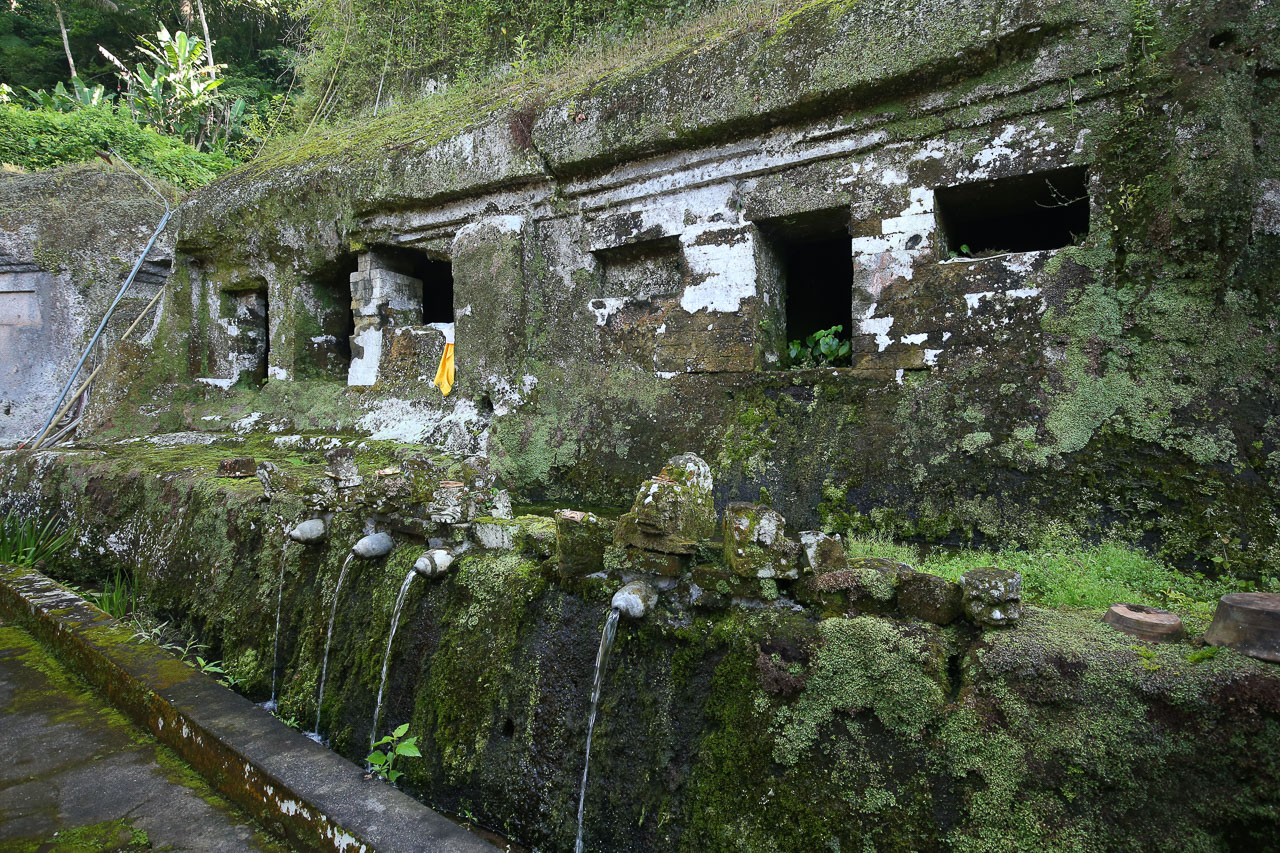
Water is ever-present at Candi Gunung Kawi. The constant sound of the Pakerisan River forms the deep bassline of a natural orchestra, accompanied by the lighter tones of smaller streams, irrigation channels, and natural springs that weave through the site. This sacred river, one of Bali’s holiest, has long been used for ritual purification (melukat) and is tied to the subak irrigation system, symbolizing the life-giving balance between nature, humans, and the divine. Carefully designed channels encircle the central complex on the left bank of the river, where the central monument commemorating the deceased king is located. Each rock-cut candi relief is equipped with a water spout (pancoran), the central one is carved in the shape of a naga serpent, while the other spouts are plain. Here, the interplay of stone and flowing water reflects the Balinese belief that sanctity is not only carved into rock, but also carried in the living movement of water.
The Tenth Shrine
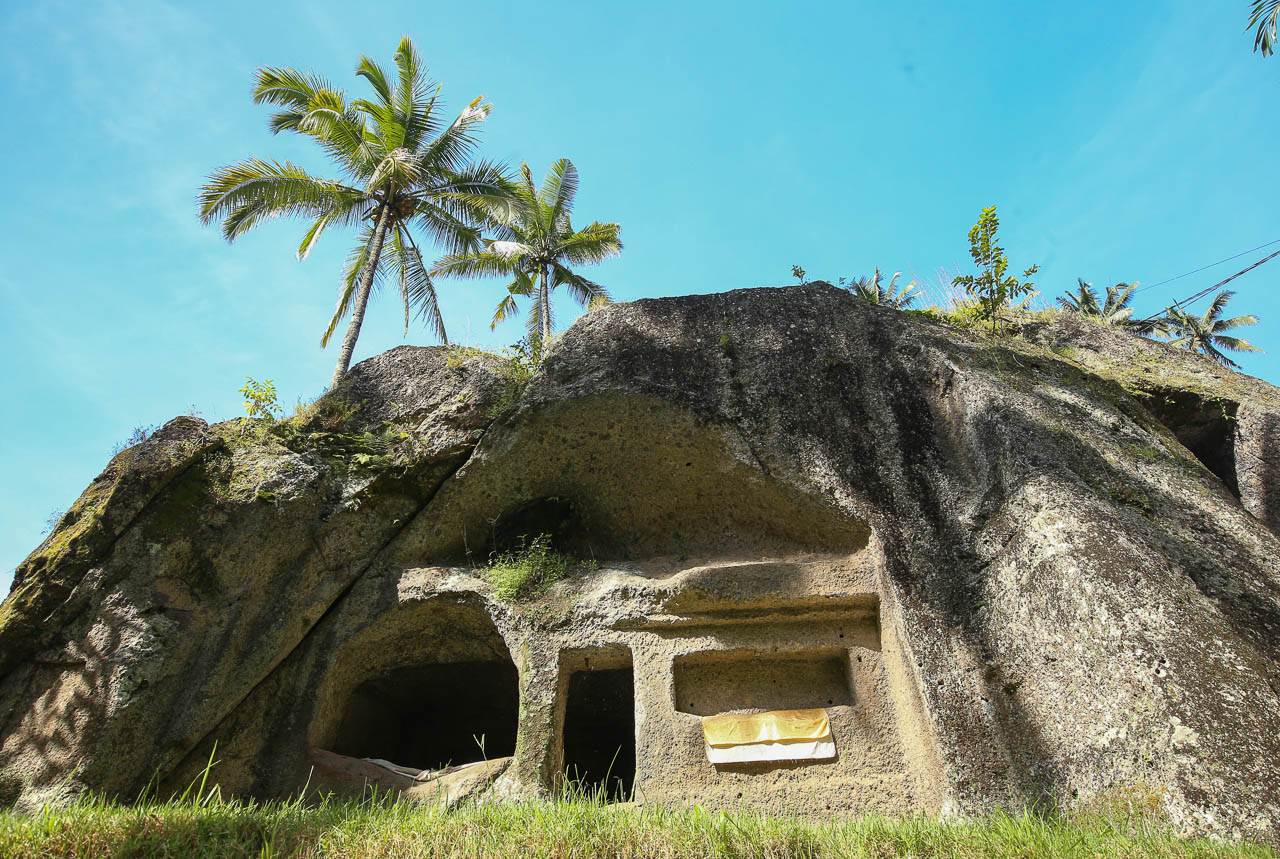
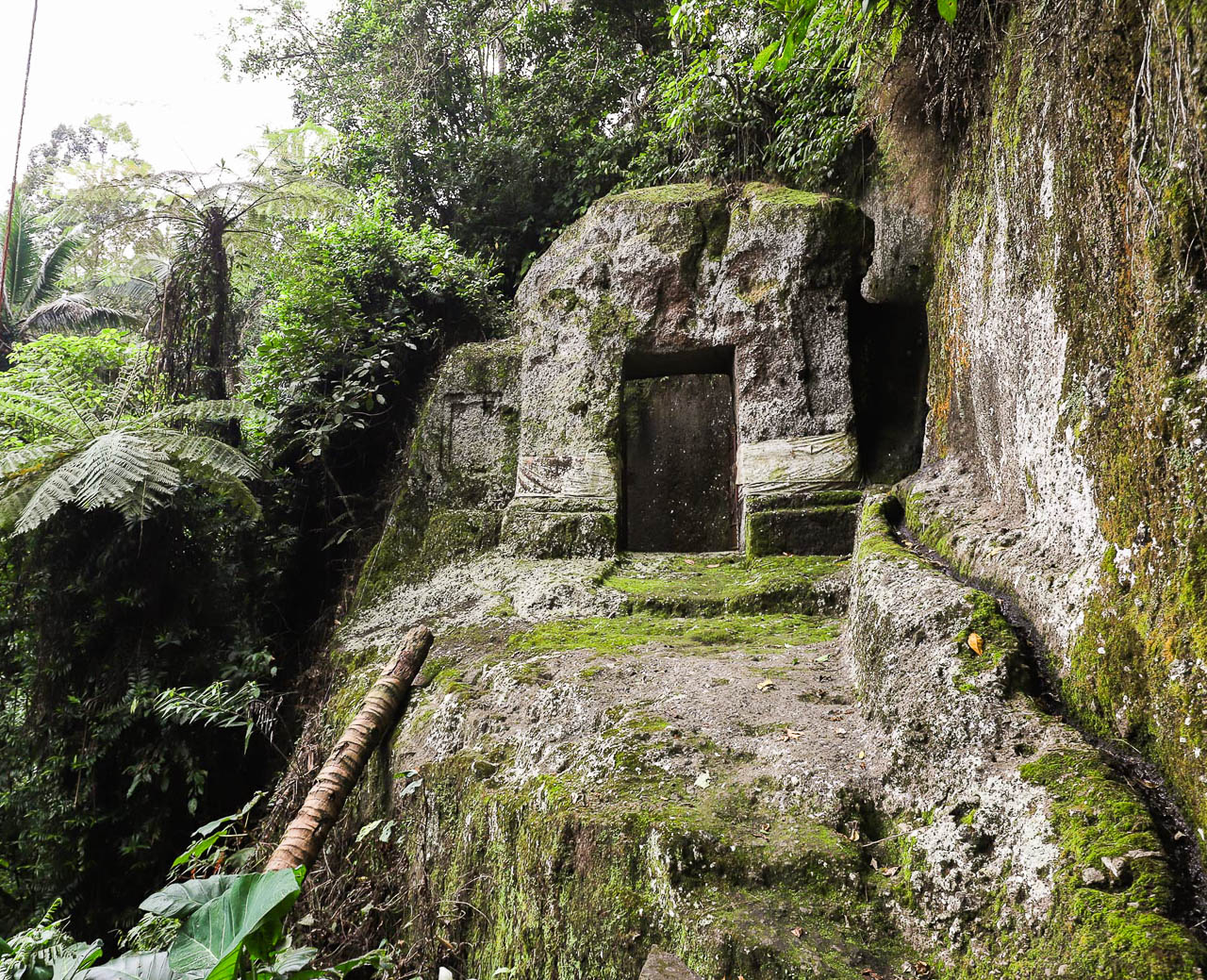
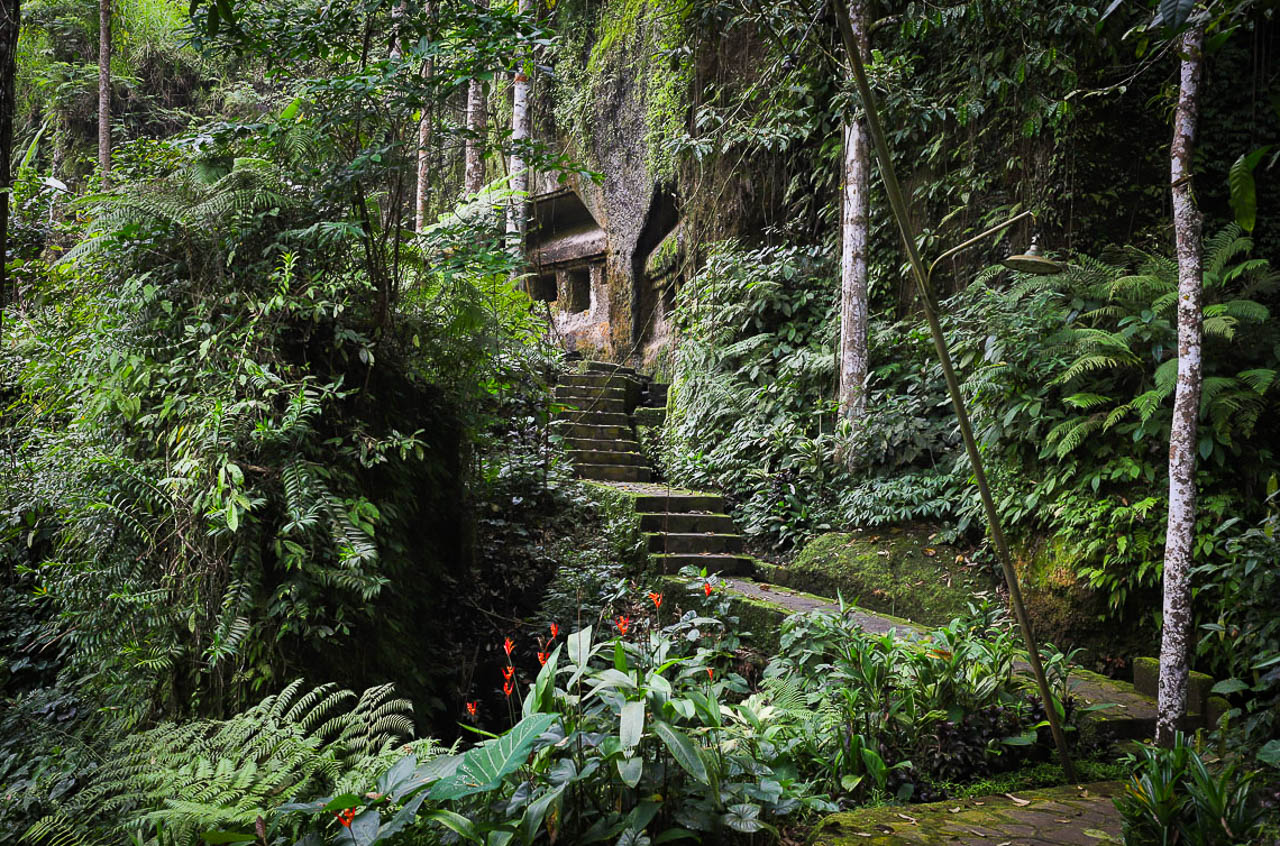
Often referred to in literature as The Tenth Tomb, this candi relief lies about two hundred meters downstream on the right bank of the river. It can be reached by following a paved pathway that branches off to the right before the stone gate of the main complex, leading down a series of steps. Although part of the UNESCO-recognized monument, this section is rarely visited, offering visitors a rare chance to linger in solitude and experience the site’s atmosphere undisturbed.
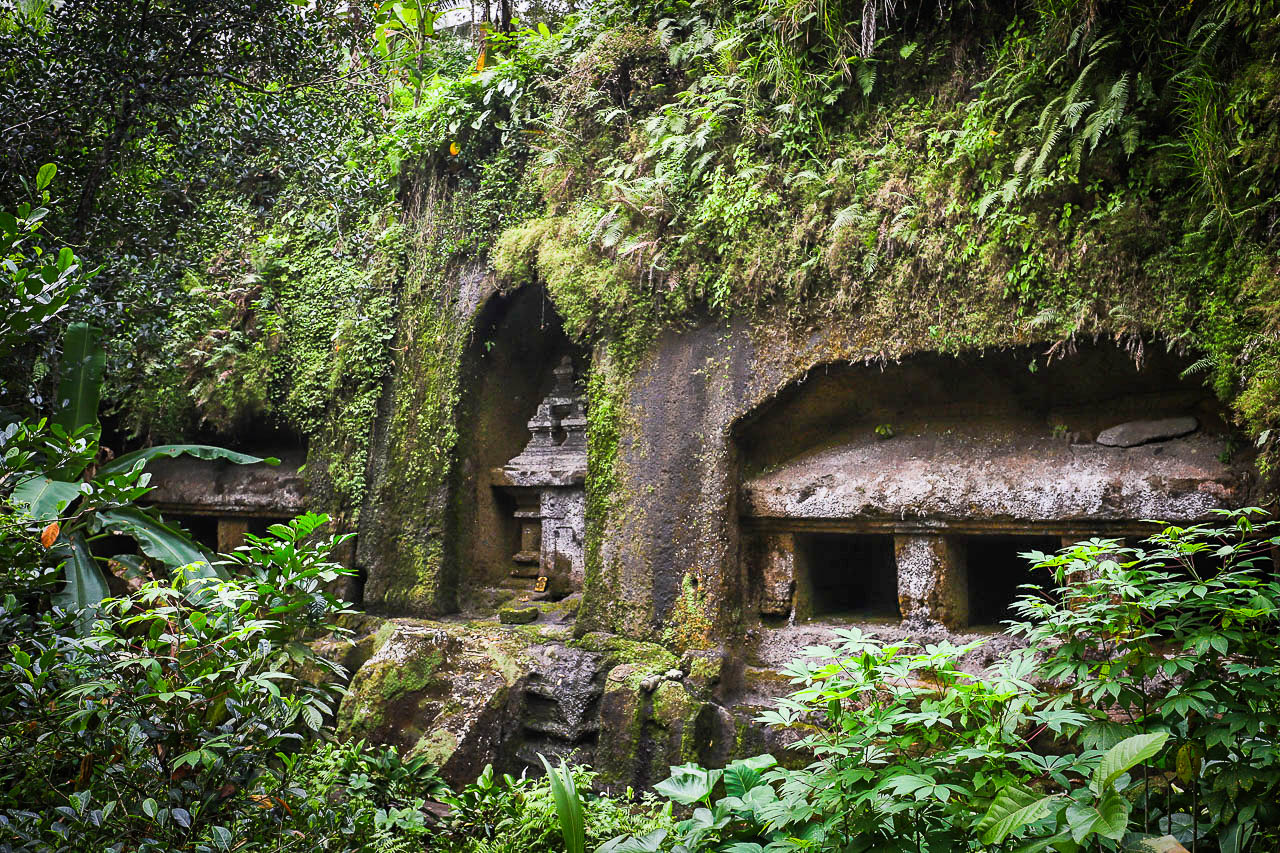
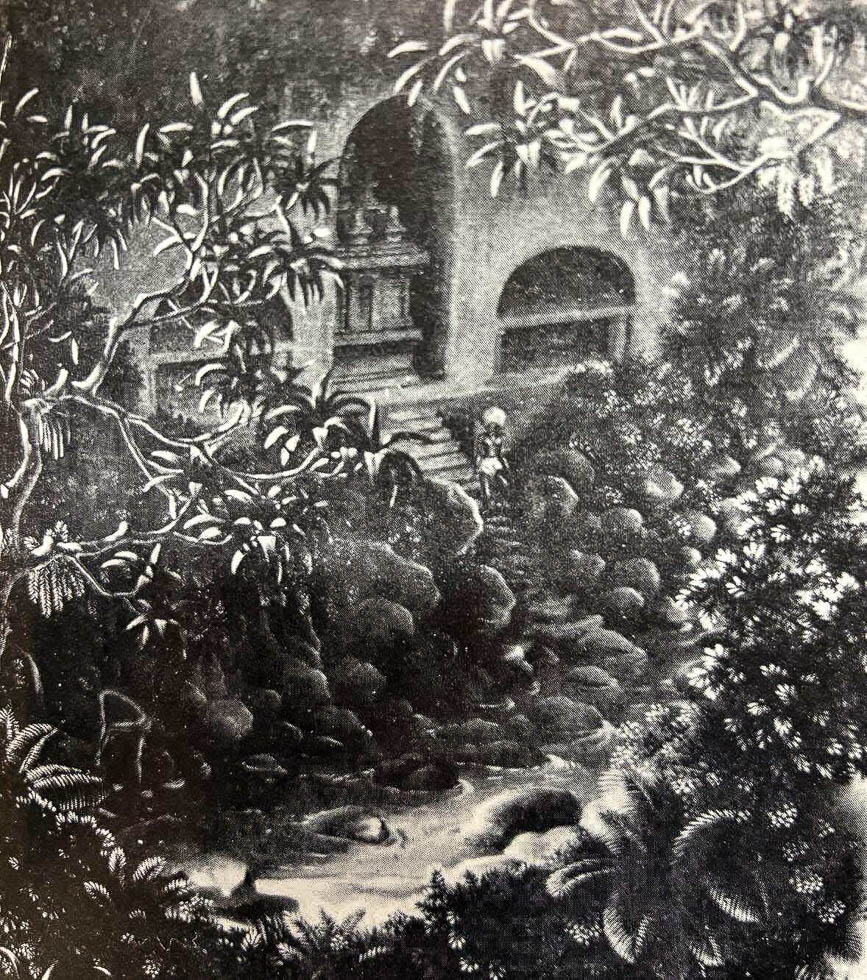
This tenth shrine is a bit smaller than the other nine. Like the other nine, this one is not an actual tomb, either, rather a monument. It seems to be a part of a hermitage—also called Geria Pedanda or the priest’s house —and is thought to commemorate either a high-ranking official or spiritual figure, not a member of the royal family. This part of the site closely resembles Candi Tebing Tegallinggah, another ancient rock-cut temple a few kilometers south in the same valley, and also brings to mind Jukut Paku, a smaller sanctuary south of Ubud. It shares certain features with Goa Garba as well, while the relief itself is reminiscent of the forms found at Candi Tebing Tinggi Tambahan, Candi Kerobokan, and Candi Kalebutan.
Bibliography
Ariana, I Gusti Gee Pengertian Pura di Bali. Denpasar: Projekt Pemeliharan dan Pengembangan Kebudayaan Daerah Bali, 1971
Davison, Julian, et al. Introduction to Balinese Architecture. Singapore: Periplus, 2003.
Granquist, Bruce Mapping Bali: Island, Culture, People. Singapore: Talisman, 2023.
Hering, Bob Candi and Pura. A Pictorial History. James Cook University of North Queensland, 1985.
Kempers, A. J. Bernet Ancient Indonesian Art. Amsterdam: C.P.J. Van Der Peet, 1959.
Kempers, A. J. Bernet Monumental Bali. Singapore: Periplus Editions, 1991.
Lansing, J. Stephen Perfect Order: Recognizing Complexity in Bali. Princeton University Press, 2006.
Mason, Victor Bali Bird Walks. Singapore: APA Publ. U. Höfer Press, 1992.
Miksic, John Ancient History. Indonesian Heritage Vol. 1. Singapore: Didier Millet, 2003.
Spitzing, Günter Bali. Tempel, Mythen und Volkskunst auf der tropischen Insel zwischen Indischem und Pazifischem Ozean. Köln: DuMont, 1983.
Soebadio, Haryati and Miksic, John et Al . eds. Art of Indonesia. New York: Vendome Press 1992.
Wijaya, Made Architecture of Bali. University of Hawai’i Press, 2002.
Nearby Temples
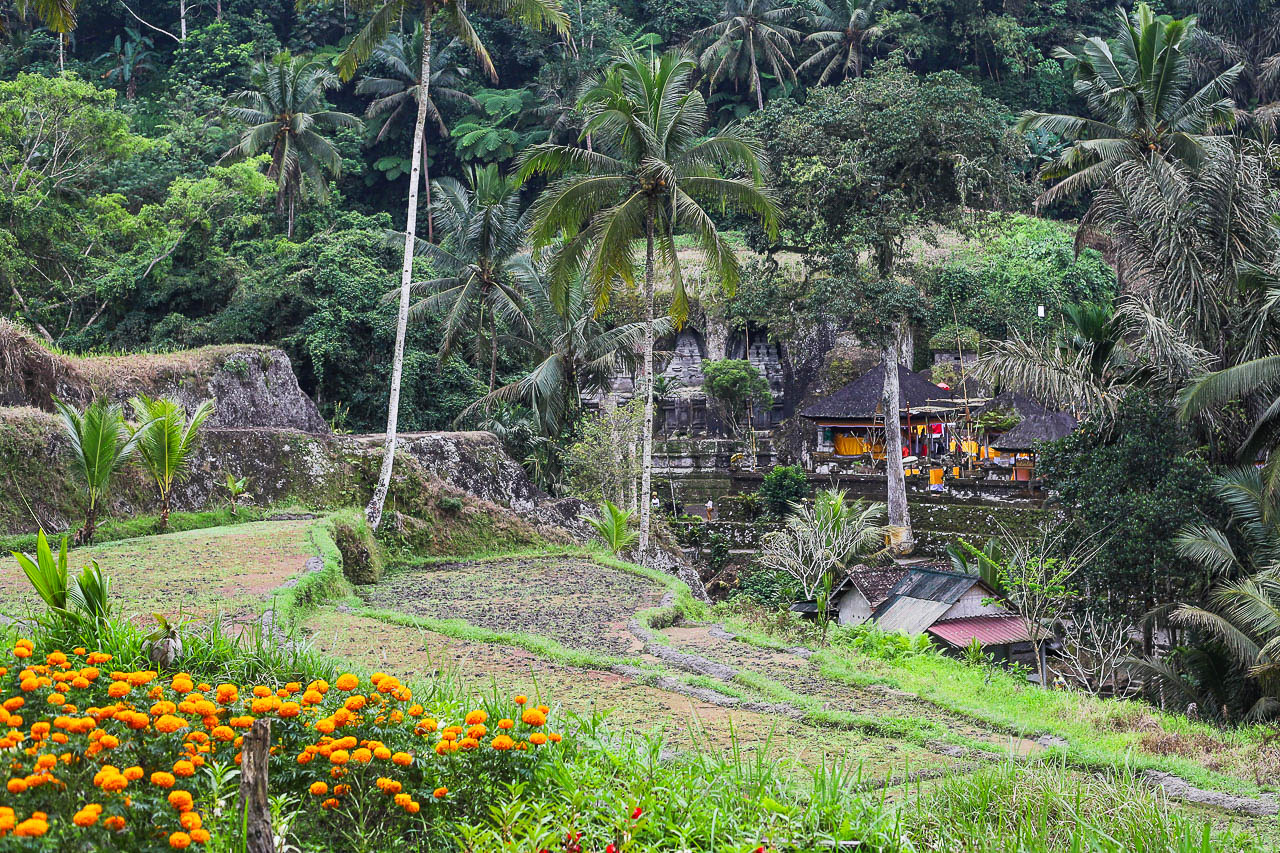
Pura Gunung Kawi is connected to many other temples in the Central Bali. Down the Pakerisan river valley there is row of similar, but smaller sites, like Candi Kerobokan,Goa Garba, and Candi Tebing Tegallingah. After a legend, all of them were carved out of the rock by the giant Kebo Iwa and all of them have reliefs of candi forms, several water channels and a specific atmosphere with the noise of the river and the smell of moss and the forest. The closest neighbors are Pura Mengening, Pura Tirta Empul, and Pura Pegulingan, reachable within two kilometers.
Previous temple:
Next temple:
Photos and text © 2025 Alida Szabo, unless otherwise noted.
