— The Temple Where the Rivers Meet —
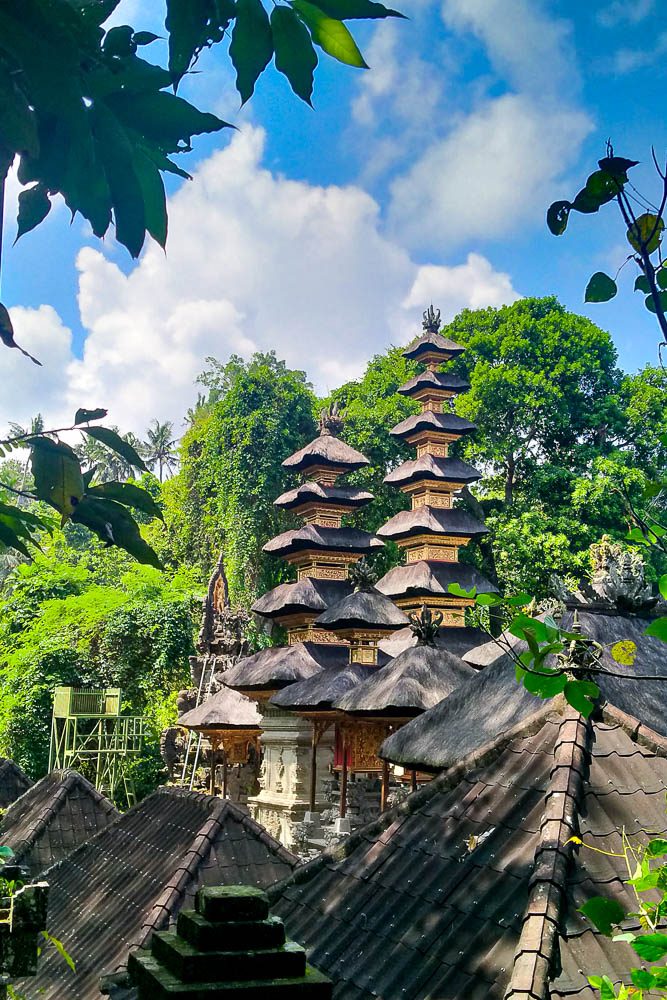
Meaning of its name: ‘Tempel of the Mountain of the Valley’, referring to either the Campuhan hill or mount Batur or both
Also called: PURA CAMPUHAN, TJAMPUHAN TEMPLE
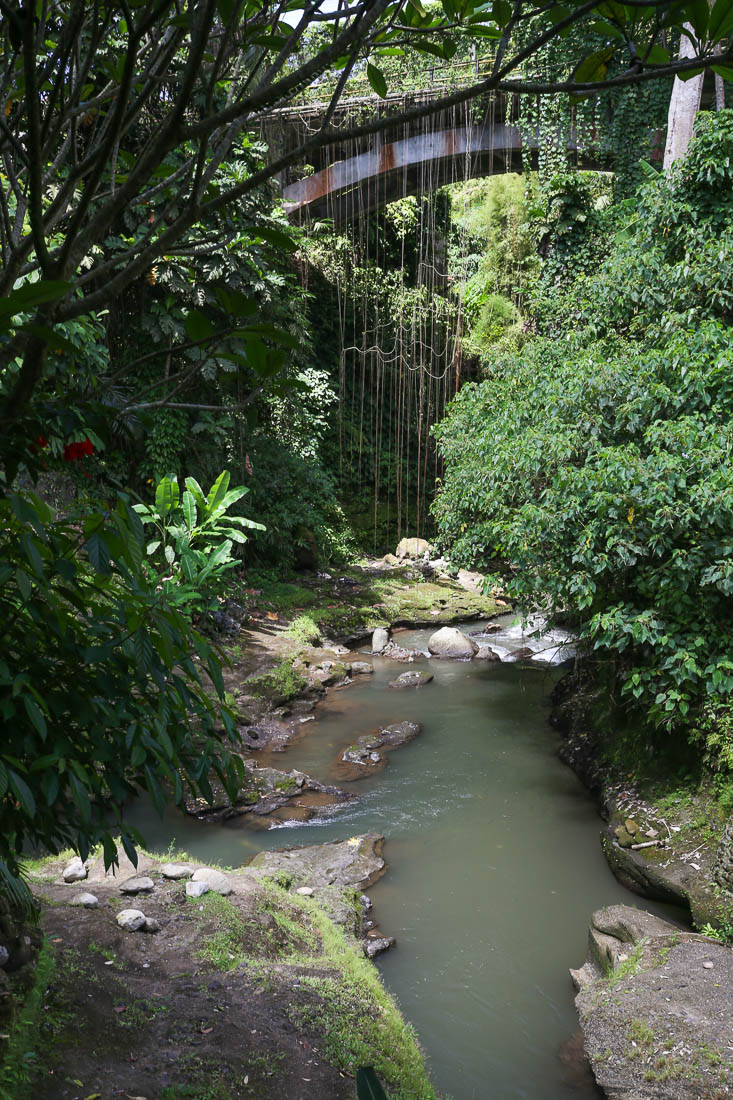
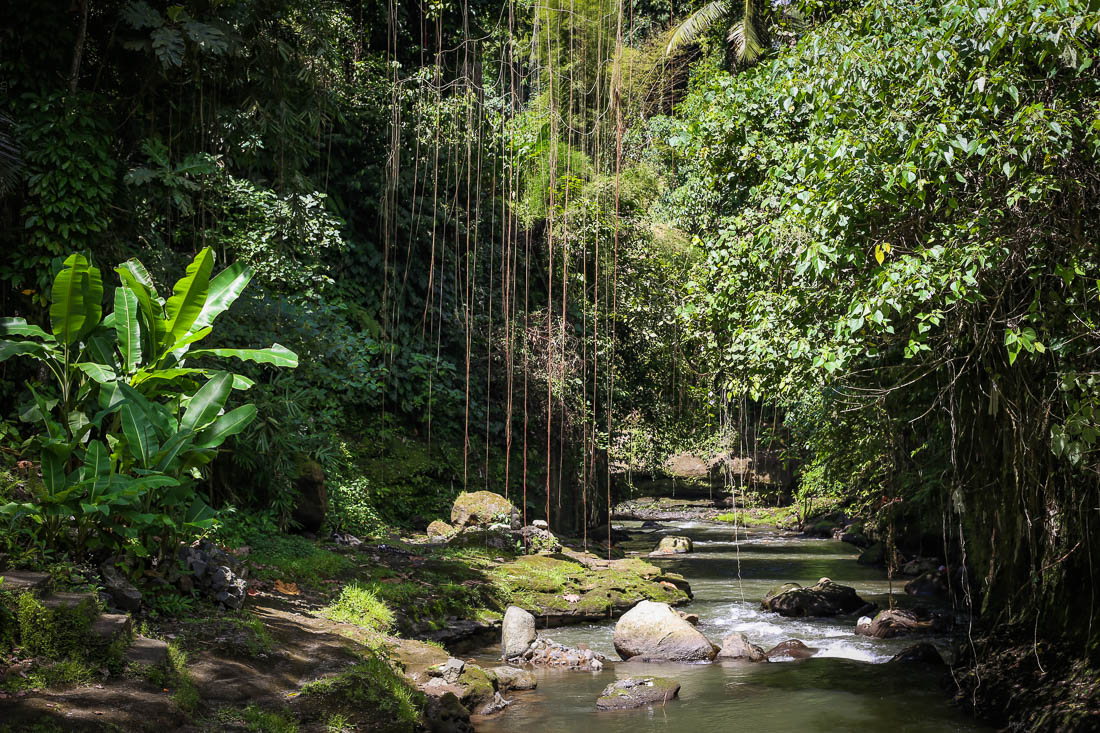
Location: At the confluence of two branches of the Wos (also called Uos, Oos) river in a deep gorge west of Ubud Palace, in the area called Campuhan.
Map: Jl. Raya Ubud No.23, Sayan, Payangan, Gianyar, Bali, Indonesia
Dates back to: 8ᵗʰ century
Region: Around Ubud
Requirements for visit: Seek permission before entering or admire it from the outside.
Accessibility: Located roughly seventy steps below Jalan Raya Ubud.
Legend of origin
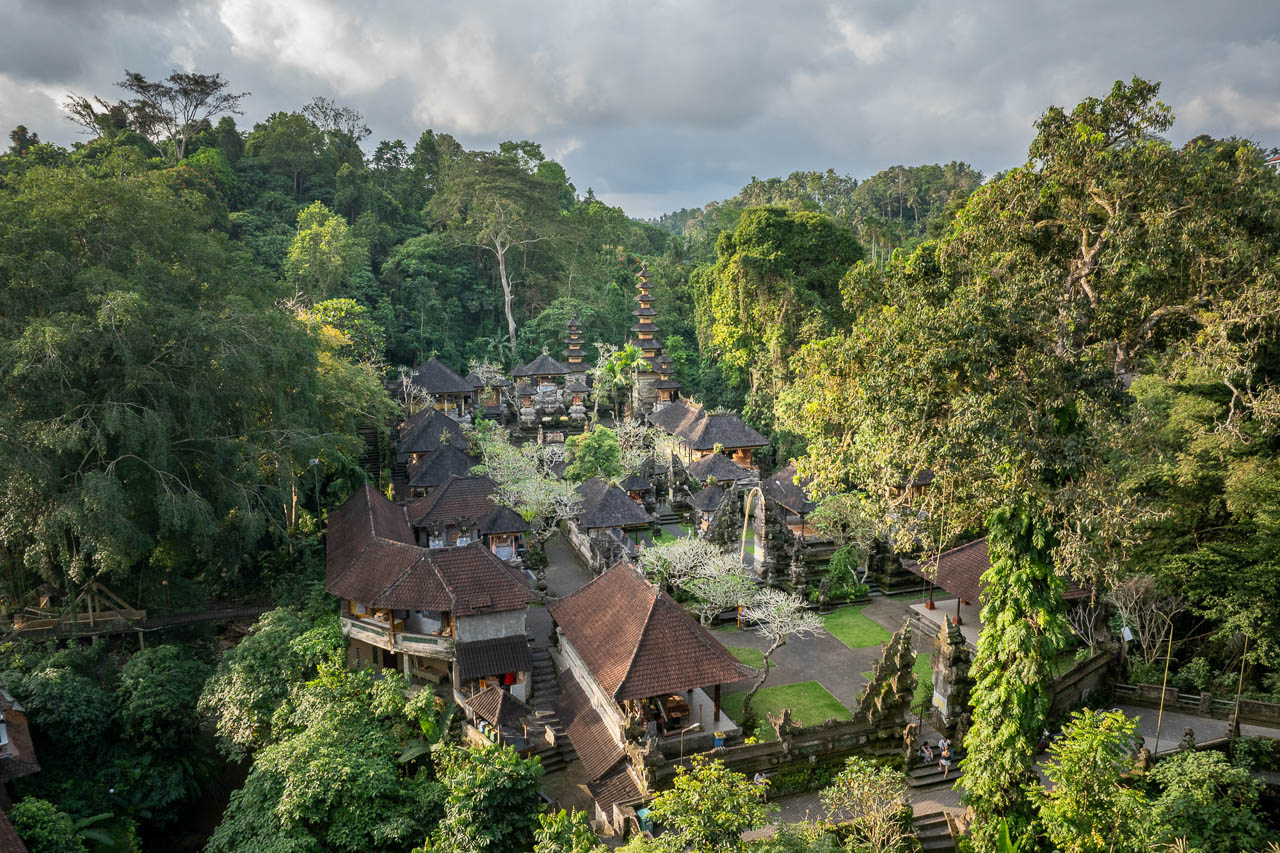
According to Balinese tradition, the legendary sage Rsi Markandhya began his journey to Bali from Mount Raung in the Banyuwangi area of Java in the 8ᵗʰ century. After founding Pura Besakih on Mount Agung, he continued westward toward the Campuhan area. When he arrived, he was struck by the beauty and spiritual potency of the hill, which he named Gunung Lebah. A stream called Wos Kiwa (“Left Wos”) flowed along its western side, while Wos Tengen (“Right Wos”) ran along the eastern side. These two branches of the Wos (sometimes spelled Oos or Uos) river merge in the southern part of the hill. Recognizing the site’s strong spiritual energy, Rsi Markandhya established a sanctuary here—today known as Pura Gunung Lebah.
Tradition holds that the surrounding rainforests were rich in powerful medicinal plants, making the area an ideal place for meditation, hermitage, and healing practices. In Old Balinese, the area was called ubad, meaning “medicine,” a term that later gave rise to the name Ubud, today Bali’s cultural heart. Based on lontar manuscripts, including the Markandhya Purana, the name Wos indicated also ancient settlements in the region.
After establishing Pura Gunung Lebah and cultivating the surrounding forest into a place for retreat, settlement, and agriculture, Rsi Markandhya continued his journey northward to the area now known as Taro village where he founded Pura Agung Gunung Raung. His influence is deeply embedded in Balinese Hindu history and local folklore, and he is remembered as a cultural hero whose teachings shaped the spiritual foundations of Bali.
Courtyards and rituals
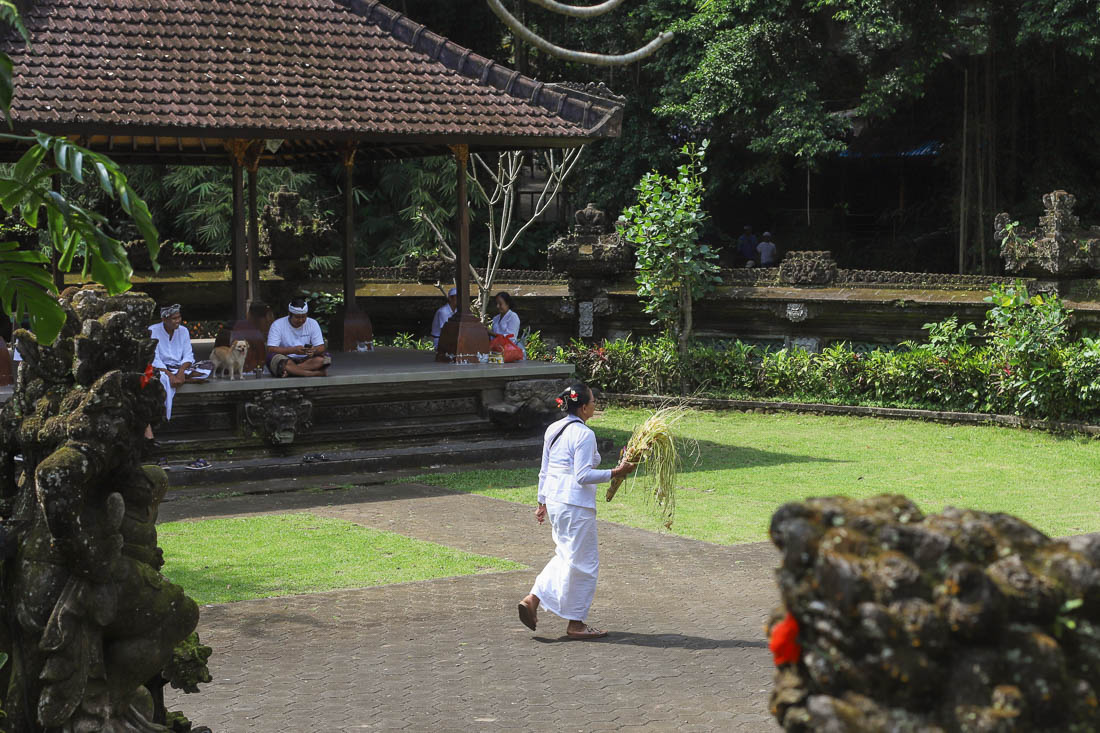
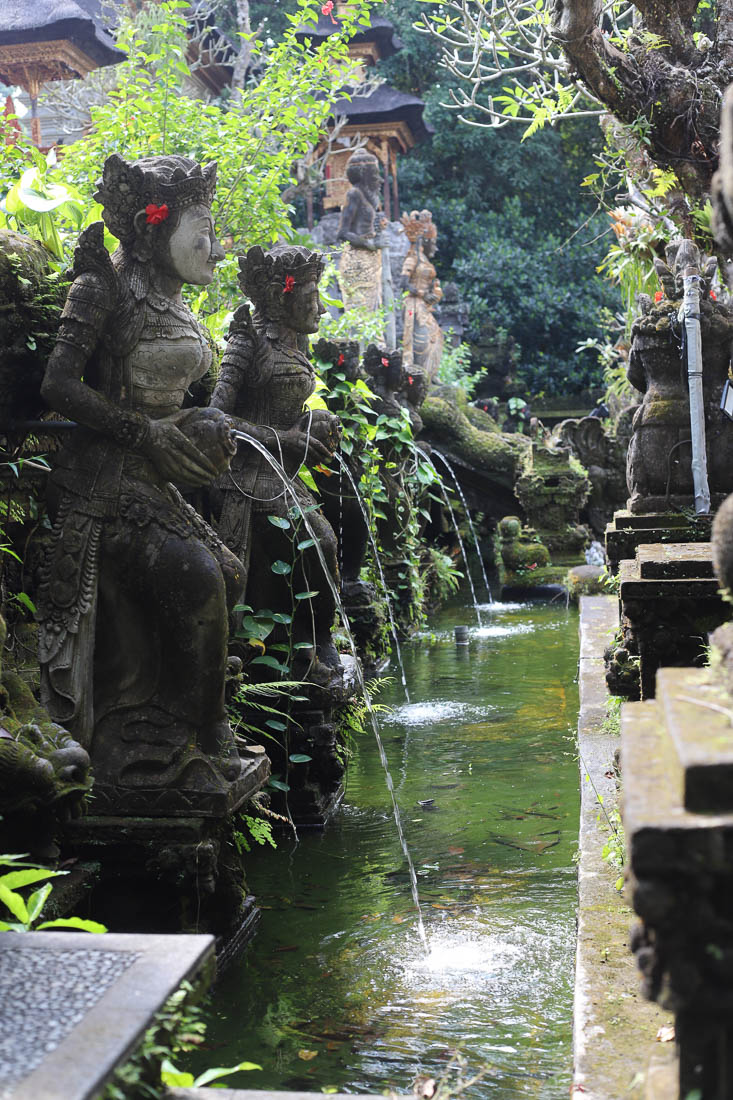
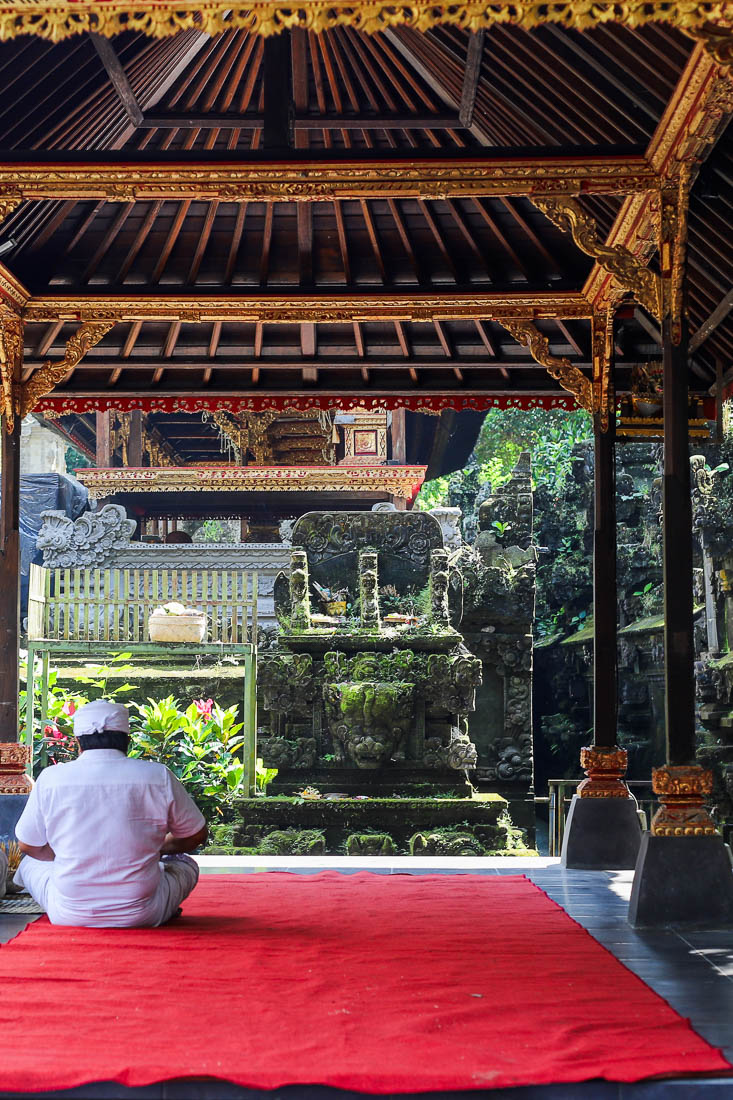
The temple has two distinct ritual functions. First, it serves as a clan temple (pura dadia) for the royal family residing in Ubud. Second, it is also a subak temple, which is why there is a single-tiered meru dedicated to Dewi Sri, the rice goddess.
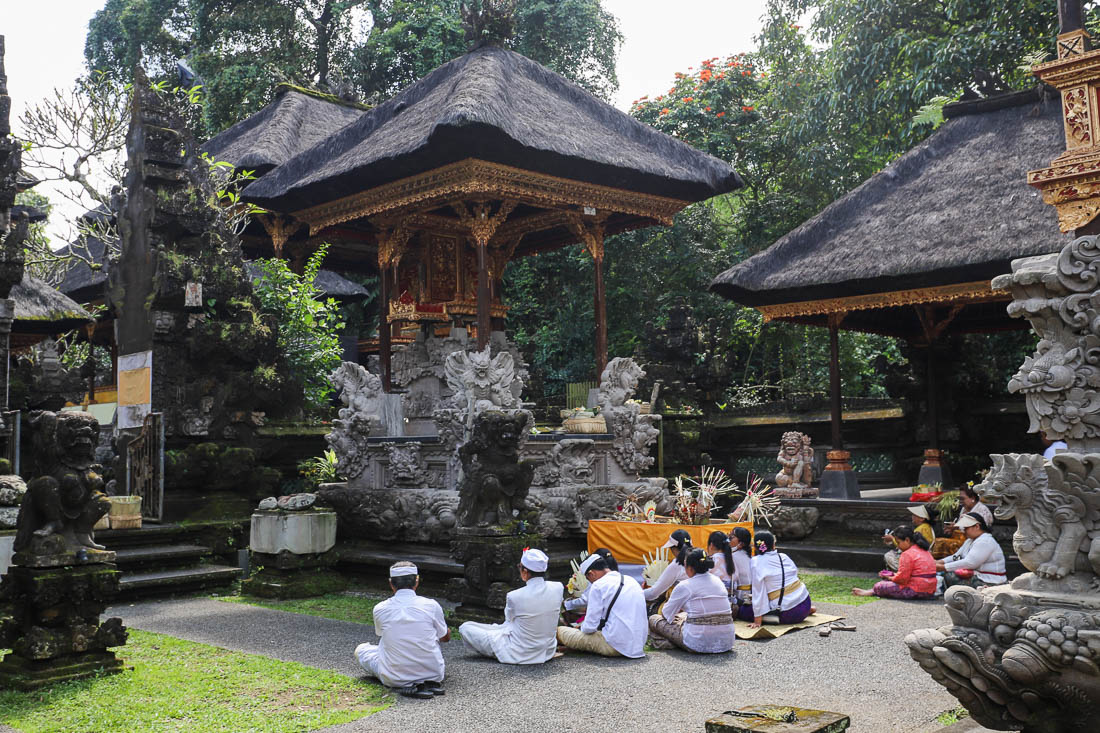
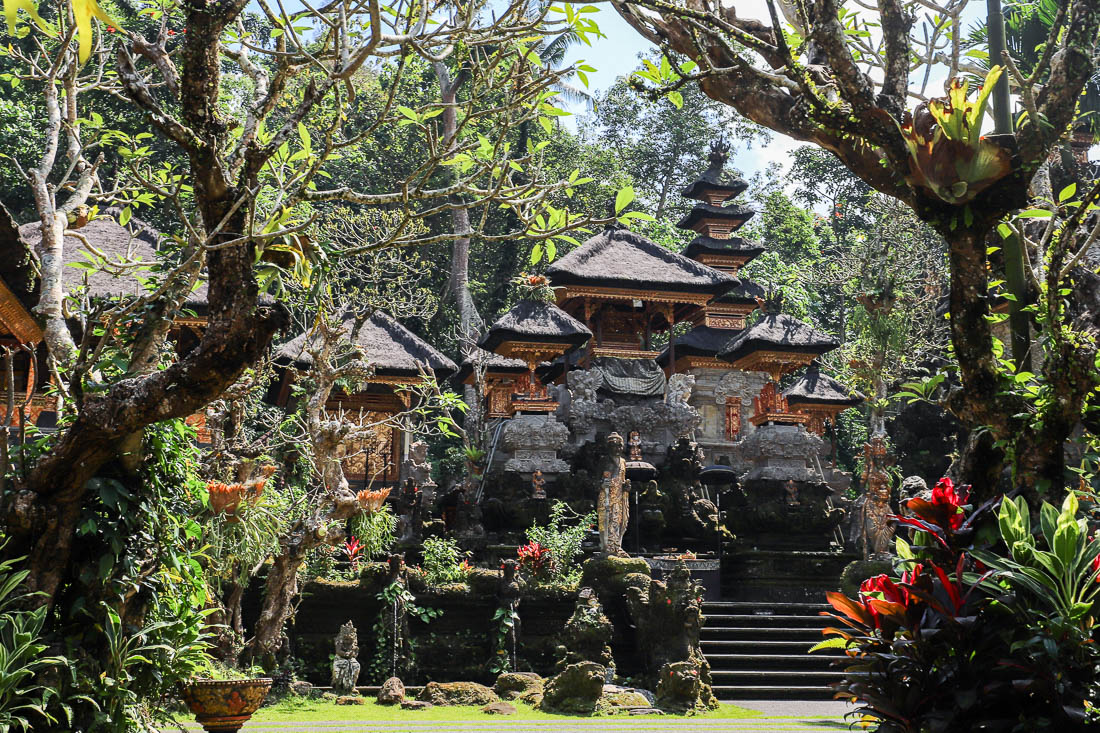
A seven-tiered meru, set upon a base of turtles and serpents, stands in the temple’s kaja-oriented third courtyard and is symbolically dedicated to Gunung Lebah—literally “the mountain that sits in the deep,” a name associated with Mount Batur. This sanctuary highlights the temple’s place within Bali’s wider sacred geography: the highland lakes, in Ubud that of Batur are regarded as the primordial sources of the waters that nourish the island’s rice fields, and the meru thus creates a symbolic link between the fertile river valley of Ubud and the volcanic mountain whose waters sustain agricultural life.
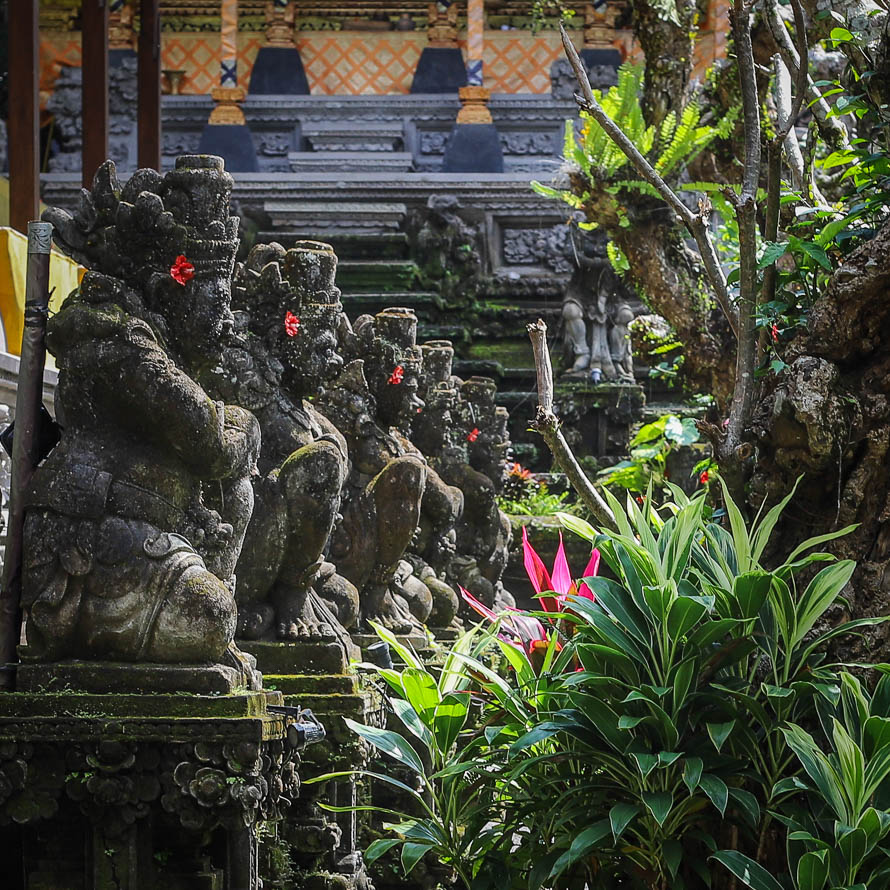
A barong figure, a kris sword, and a Hanoman mask belong to the temple’s sacred ritual objects. The Hanoman mask and the kris are kept in the palace (Puri Ubud) and brought to the temple for ceremonies, while the barong figure is housed in one of the temple’s pavilions. They embody ancestral forces and guardian spirits that are believed to safeguard the community. During major rituals, these sacred items are ritually awakened, purified, and carried in processions, allowing the divine presence they represent to interact with the human world.
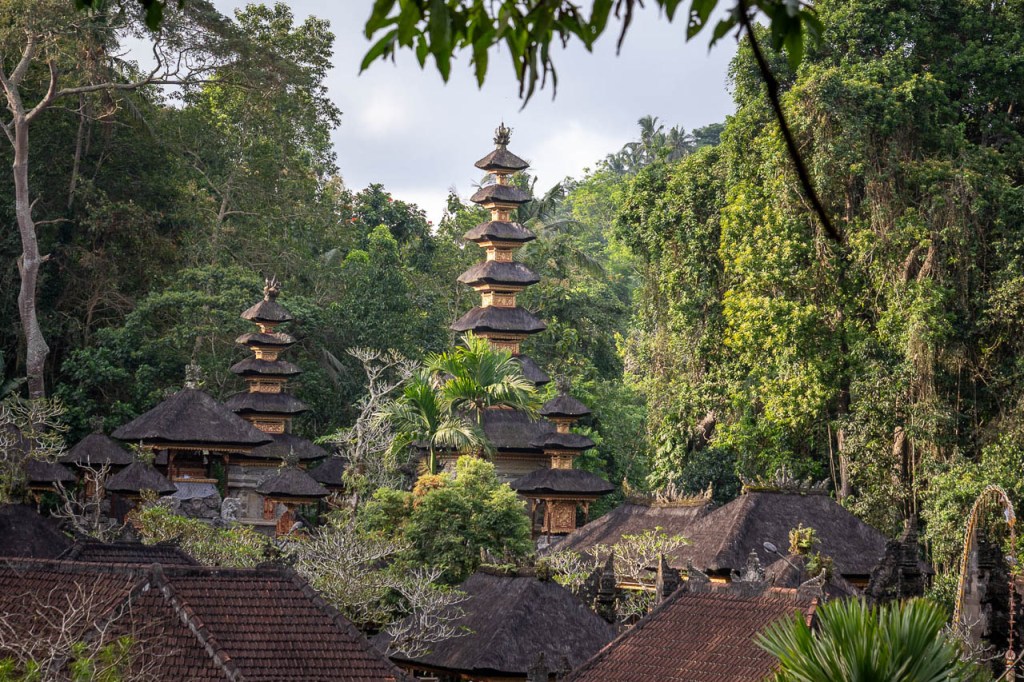
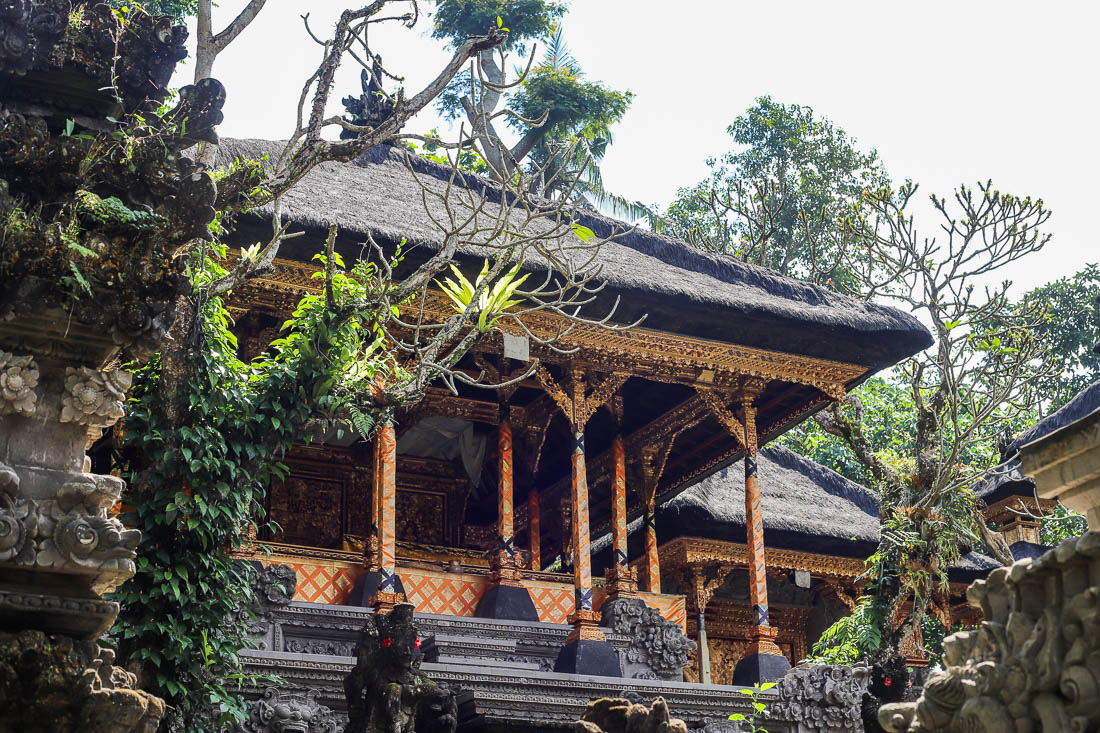

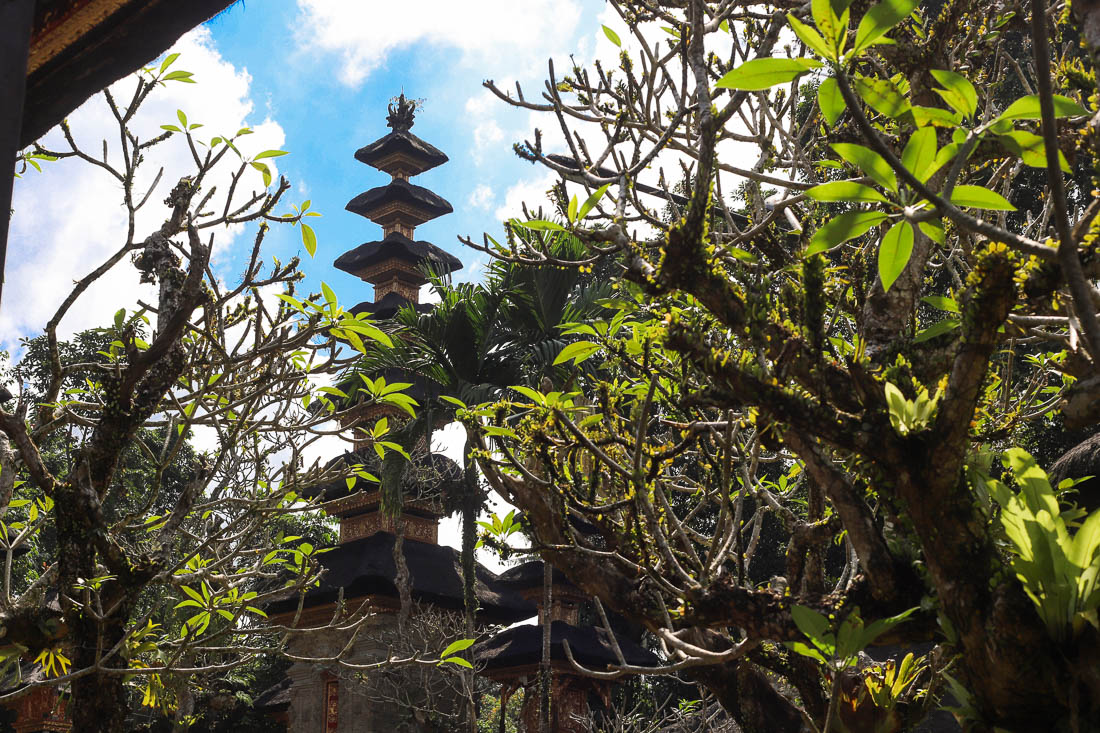
The most celebrated ceremony at Gunung Lebah is the temple anniversary, known locally as piodalan. It takes place during the full moon and consists of a series of elaborate purification and offering rituals, including Melasti (a purification procession to bring holy water), the collection and circulation of tirta (holy water) among related temples, Tawur Agung (a ritual to balance cosmic energies and purify the realm), and Mepada (ritual purification). A highlight is the symbolic descent of the temple’s Sesuhunan (ancestral spirit) deities to the nearby market, a rare procession in Bali. Local residents actively participate, creating vivid ceremonial processions.
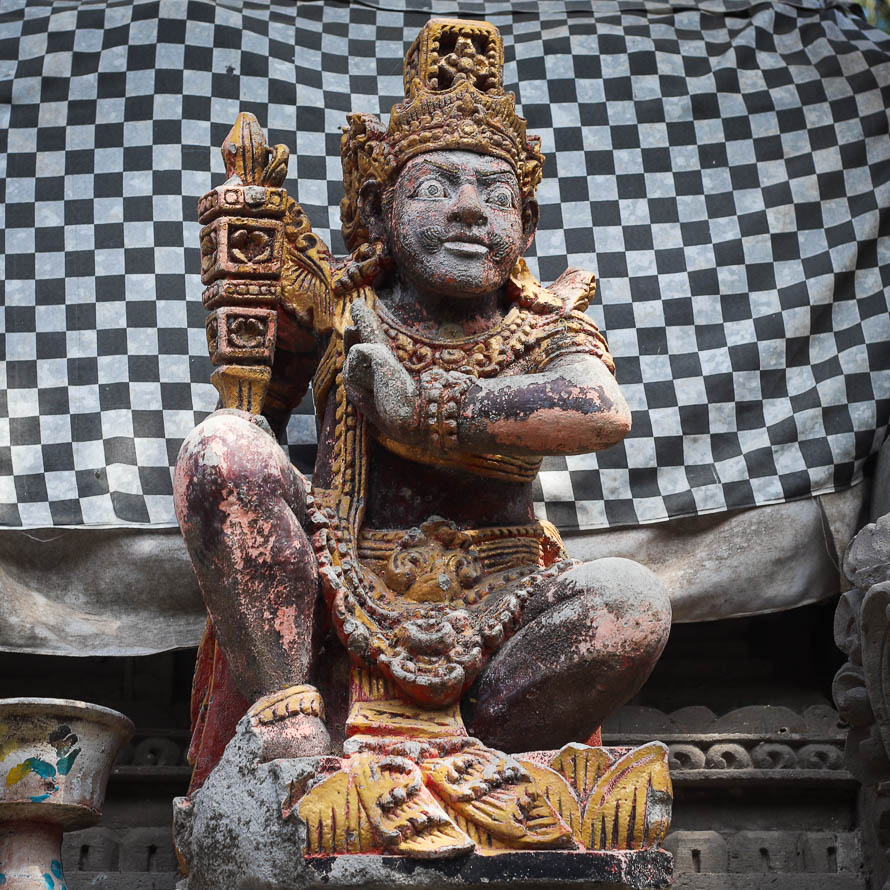
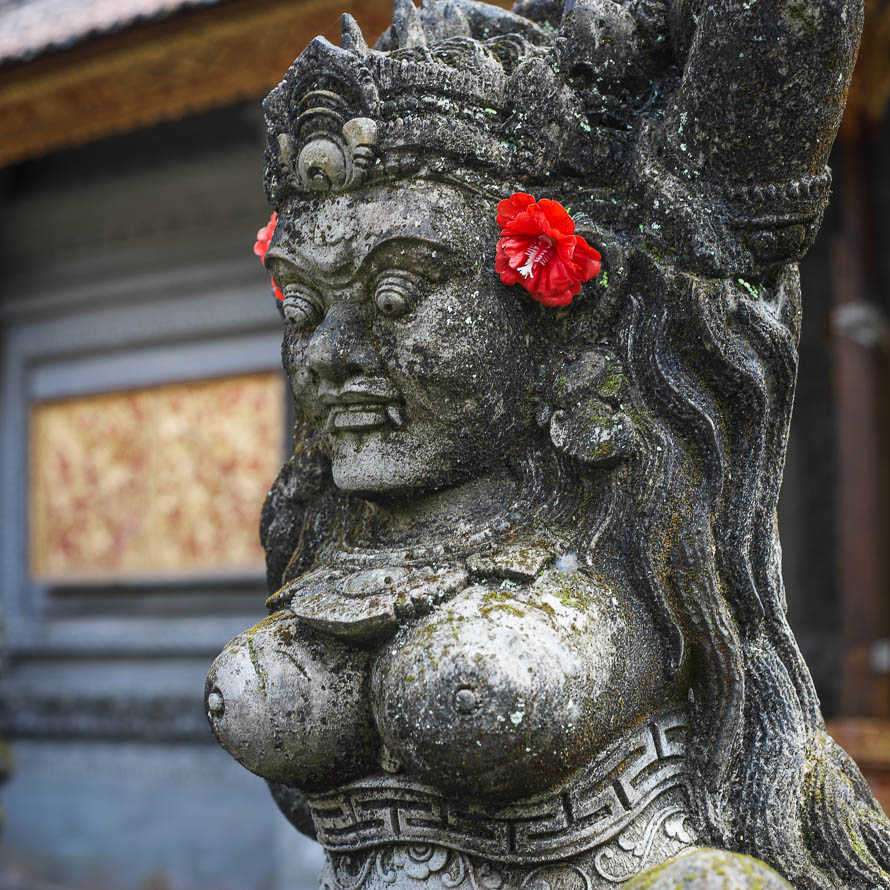
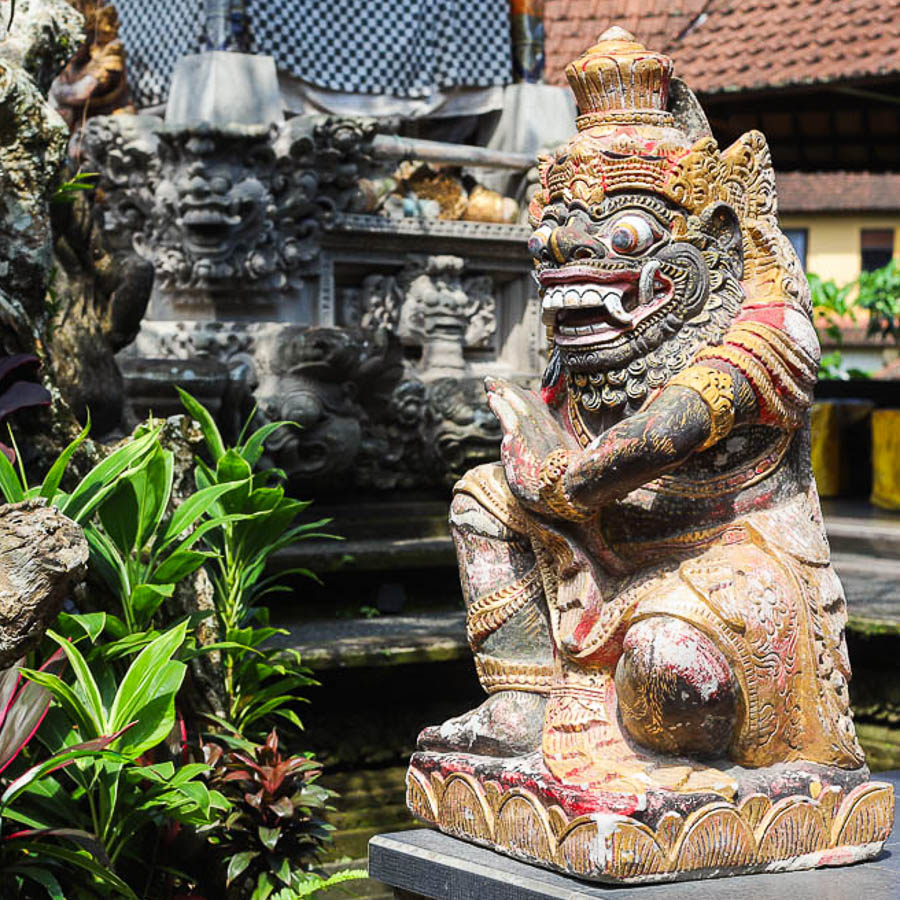
Inspiring Campuhan
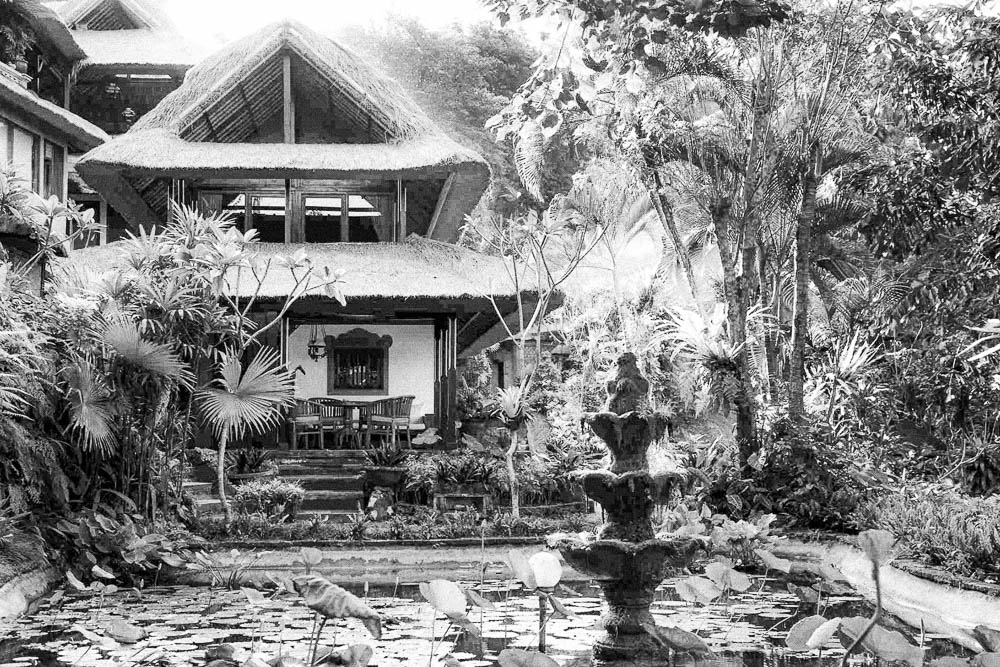
From the temple forecourt, you can see the Campuhan Hotel. This bungalow complex developed from the house Walter Spies once built there.
Walter Spies (1895–1942), a Russian-born German painter, musician, and cultural pioneer, first arrived in the Dutch East Indies in the early 1920s. After several years in Yogyakarta working as a musician at the Sultan’s court, he traveled to Bali in 1927. At that time, the island was known only within a small circle of artists, musicians, and anthropologists, and was still far removed from the mass tourism of later decades.
The royal family of Ubud—particularly Tjokorda Gde Agung Sukawati—welcomed him warmly and offered him a piece of land at Campuhan, on a ridge overlooking the confluence of the Wos rivers. Spies portrayed the landscape as deeply inspiring, a setting where the natural world, spiritual life, and artistic creativity appeared to meet and merge.
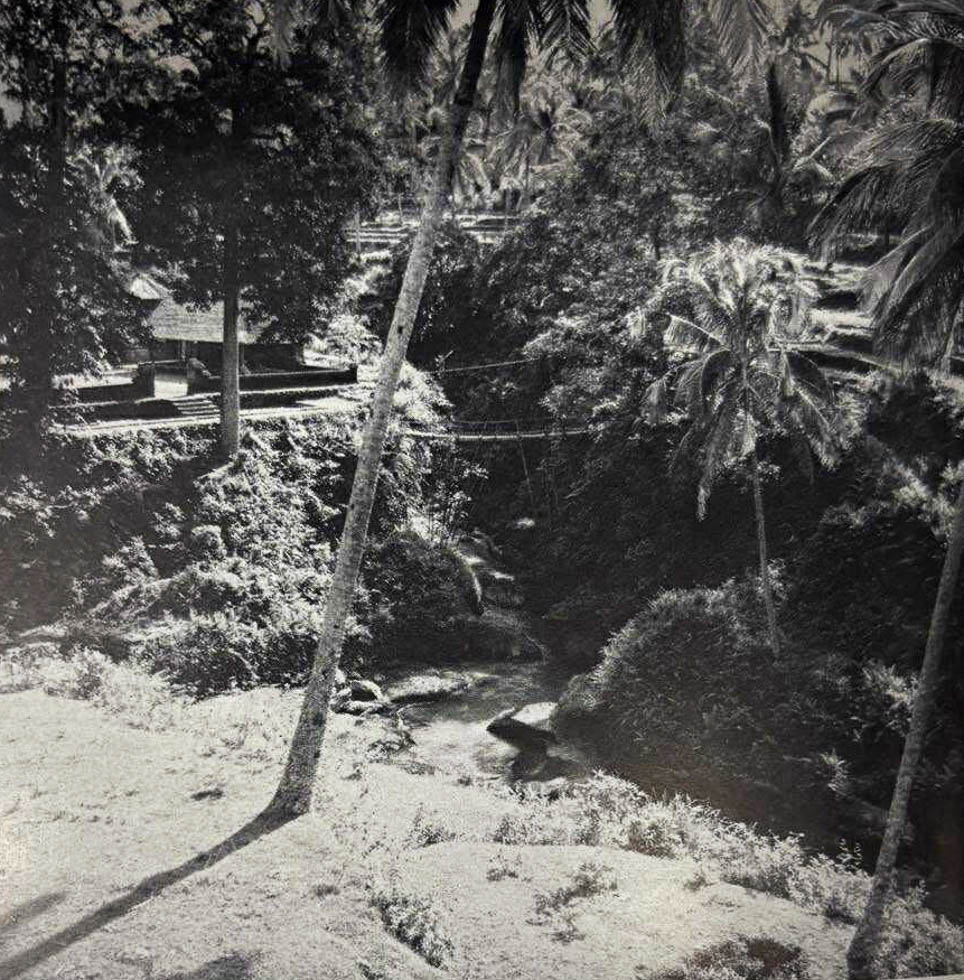
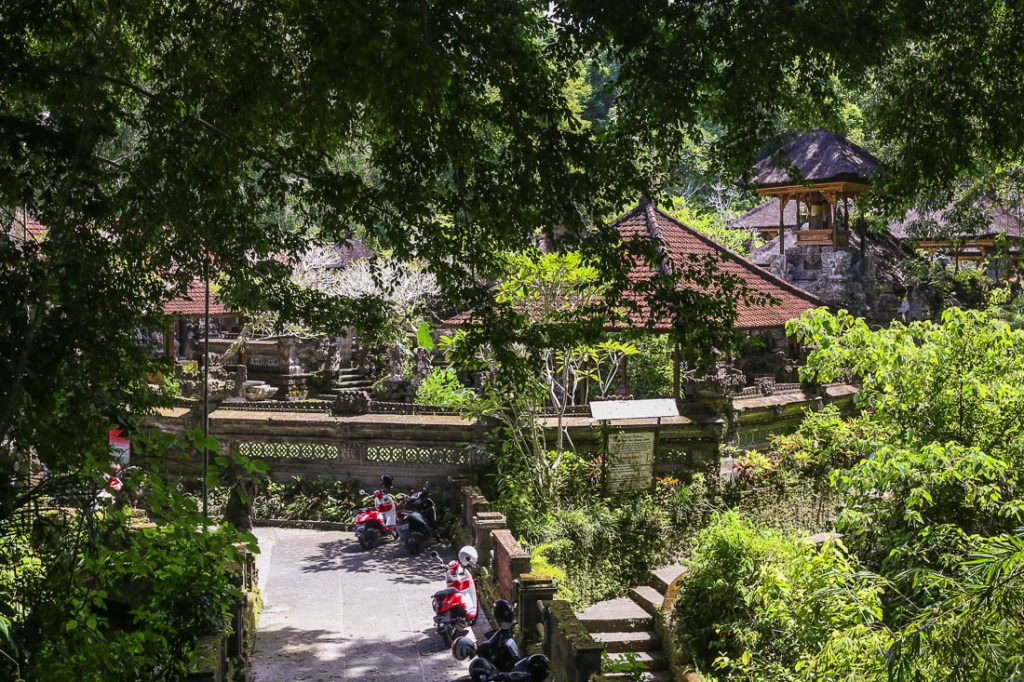
During the 1920s and 1930s, Spies’ home in Campuhan became a vibrant meeting point for artists, dancers, anthropologists, writers, and travelers from all over the world. He collaborated closely with Balinese painters and performers, encouraged new artistic developments, and played a key role in the emergence of modern Balinese art. He also worked with foreign artists and scientists—notably Miguel Covarrubias, Beryl de Zoete, Colin McPhee, Jane Belo, Arie Smit, Margaret Mead, Gregory Bateson—and contributed to films and travel literature that shaped the international perception of Bali.
His presence in Campuhan left a lasting cultural imprint. In the Campuhan Hotel, you can still visit the house where he once lived—before Ubud eventually became too busy for him and he moved to the quieter landscape of Sidemen.
Ancient spirits, present paths
Local legend speaks of the temple area as a liminal zone, a threshold where the spiritual and worldly realms intersect, believed to attract both benevolent and malevolent forces. There are myths of giants (raksasa) that once lived in the surrounding area. The lines between healing and the supernatural sometimes get blurry in the stories, the interplay of sacredness and the uncanny remains part of the living narrative of Gunung Lebah.
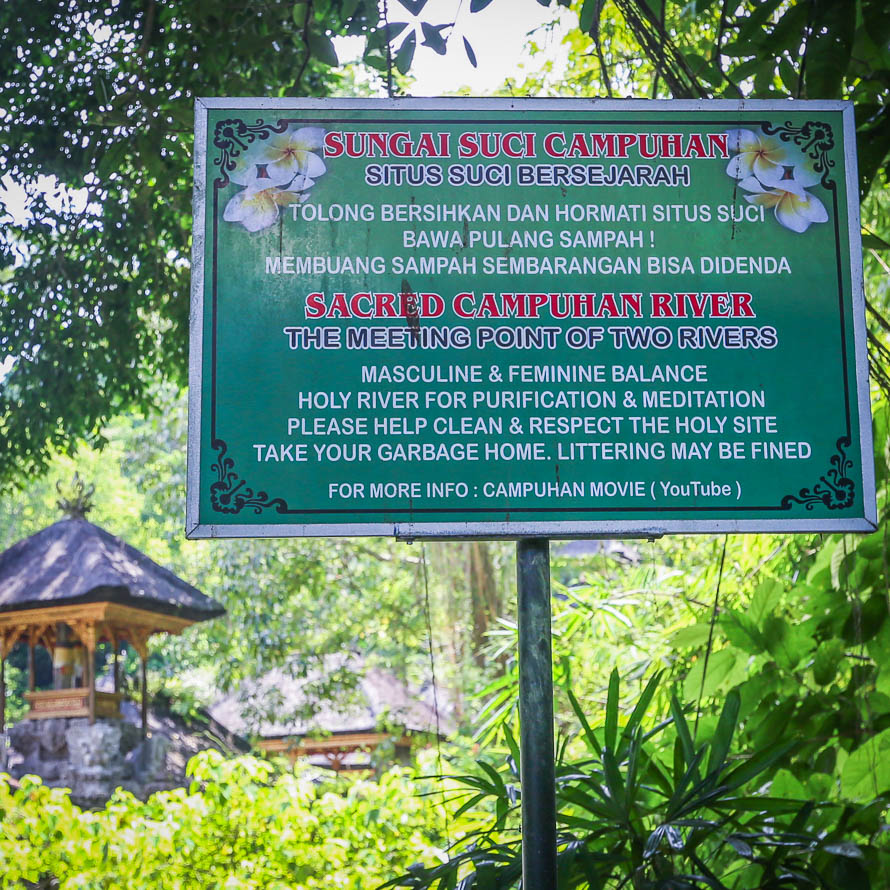
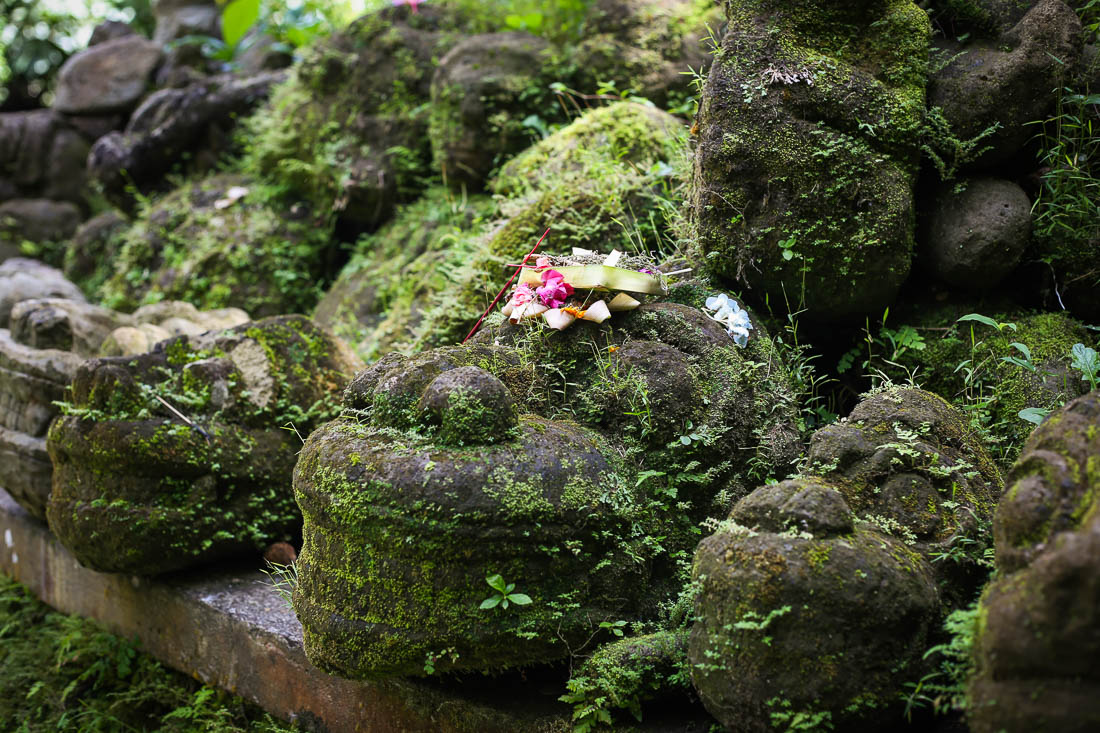
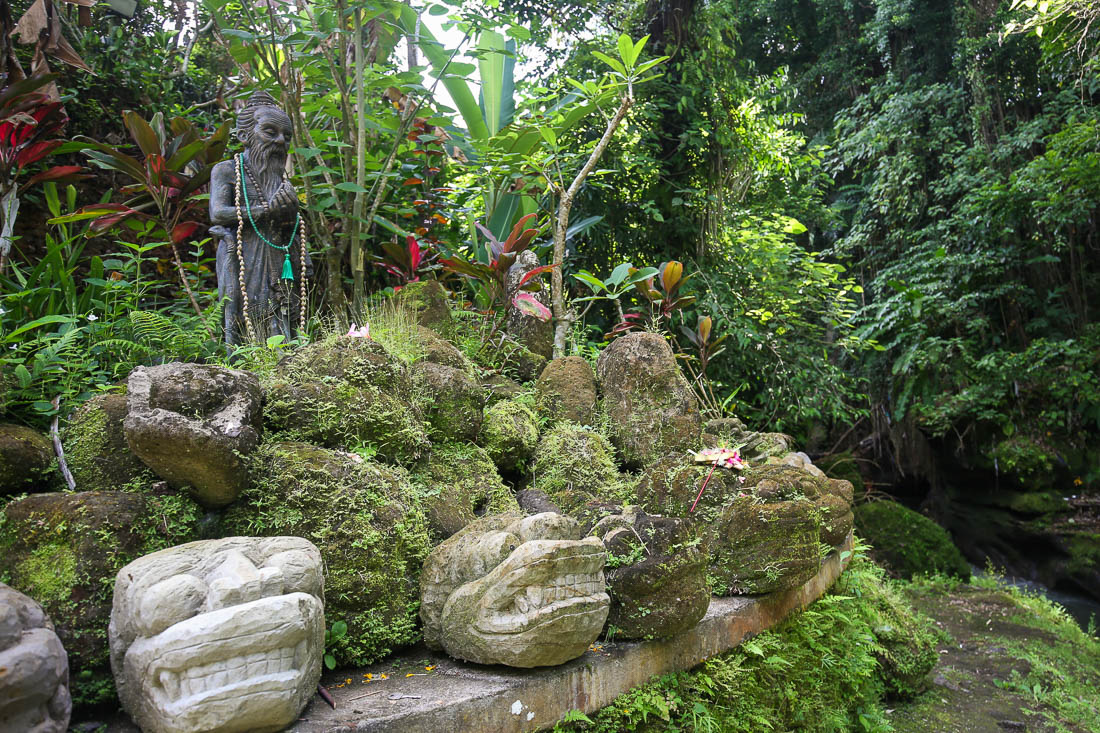
Today, the confluence is often visited by pilgrims for bathing or meditation. Two sculptors regularly work by the river, creating mask-like figures from stone. The walkway to the popular Campuhan Ridge Walk leads many foreign visitors to the temple’s outer walls, but the gates are opened only during ceremonies.
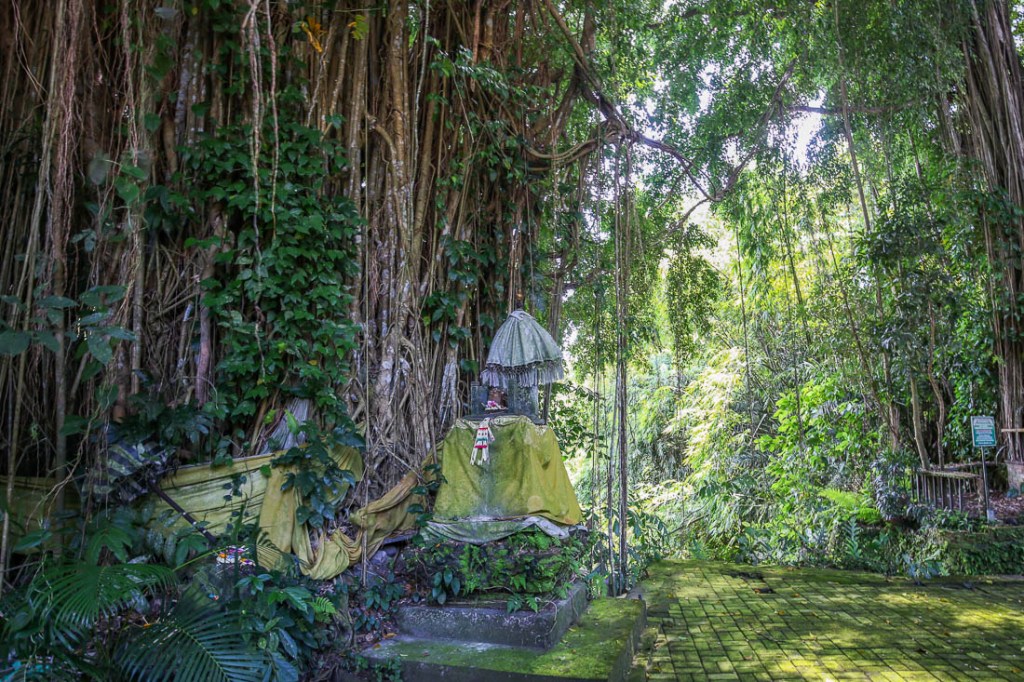
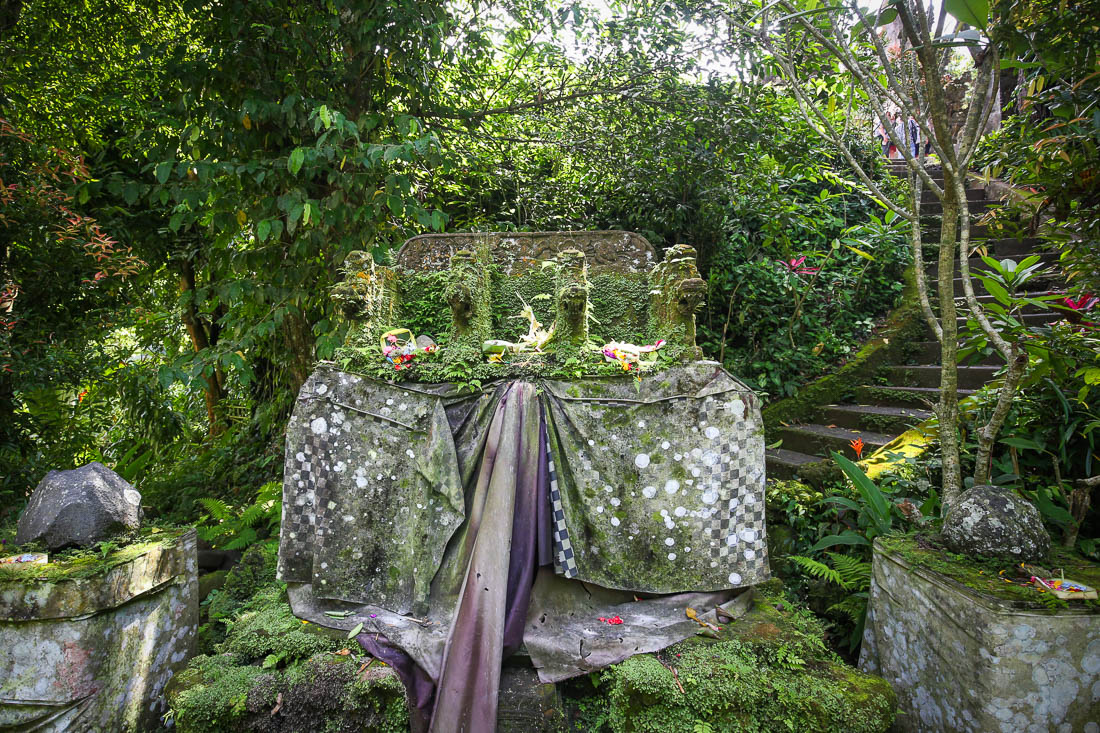
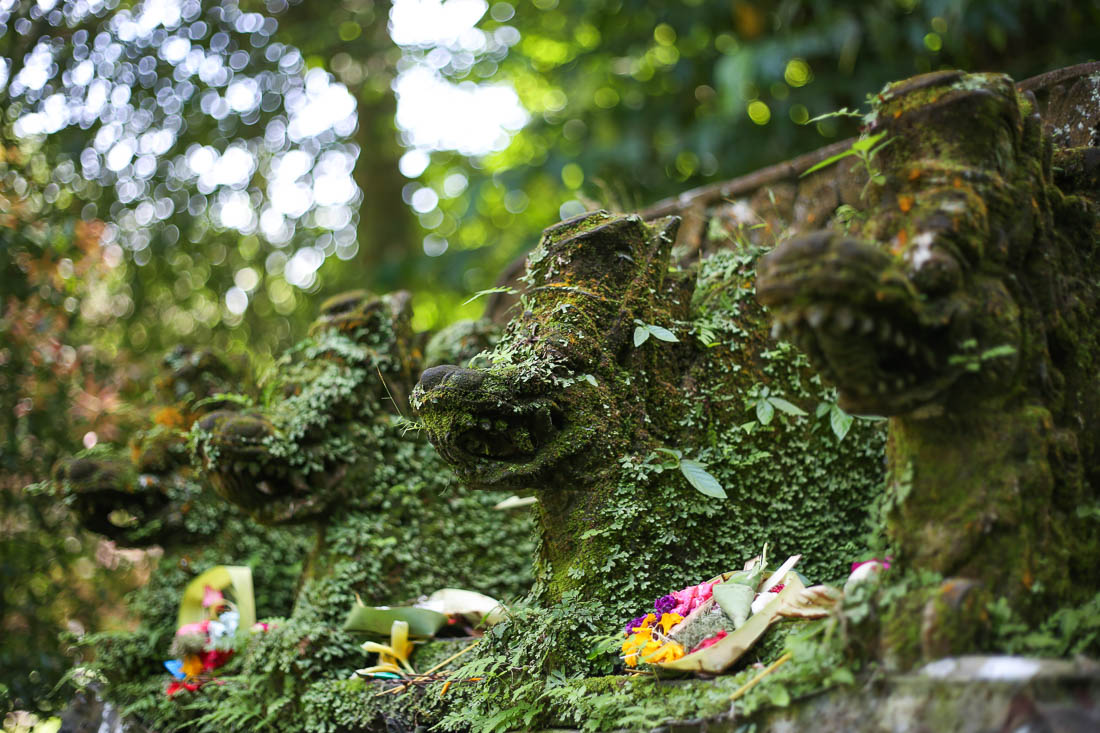
Bibliography
Kempers, A. J. Bernet Monumental Bali. Singapore: Periplus Editions, 1991.
Mason, Victor Bali Bird Walks. Singapore: APA Publ. U. Höfer Press, 1992.
Pistor, Romina Kunst als Moment : eine ethnologische Fallstudie mit Walter Spies. Berlin: Regiospectra Verlag, 2015.
Spitzing, Günter Bali. Tempel, Mythen und Volkskunst auf der tropischen Insel zwischen Indischem und Pazifischem Ozean. Köln: DuMont, 1983.
Stowell, John Walter Spies: A Life in Art. Jakarta: Afterhours Books, 2012.
Nearby Temples
The area around Ubud is extremely rich in historical temples and thousand-year-old rock-cut sanctuaries. Many of them are located in the regions surrounding Ubud, including Pejeng and East-Central Bali, and can be reached within an hour. Since Ubud lies in the heart of Central Bali, the further historical sites across the island—whether in West-Central Bali, East Bali, or even parts of South Bali—are accessible from here within a two-hour drive.
Previous temple:
Next temple:
Photos and text © 2025 Alida Szabo, unless otherwise noted.
