— Neighboring Lakeshore Temples in Songan —
Meaning of its name: “Head of Lake Batur”
Also called: PURA HULUNDANU SONGAN, PURA ULUN DANU BANGLI
Location: At the northwestern corner of Batur Lake.
Map: Songan, Kintamani, Bangli, Bali, Indonesia
Dates back to: 16ᵗʰ or 17ᵗʰ century, perhaps earlier
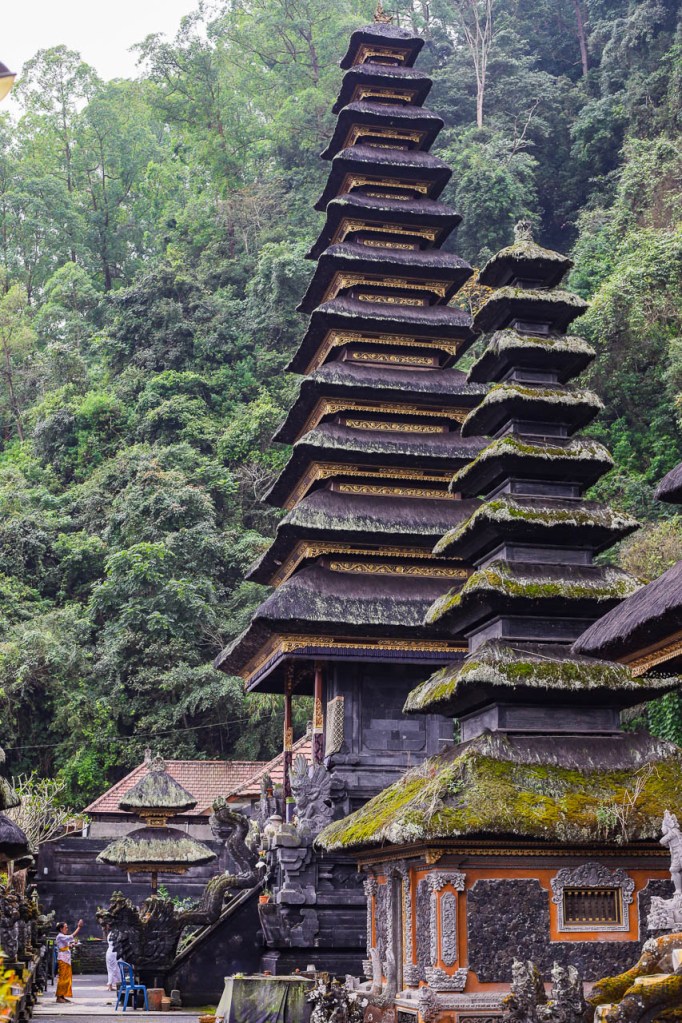
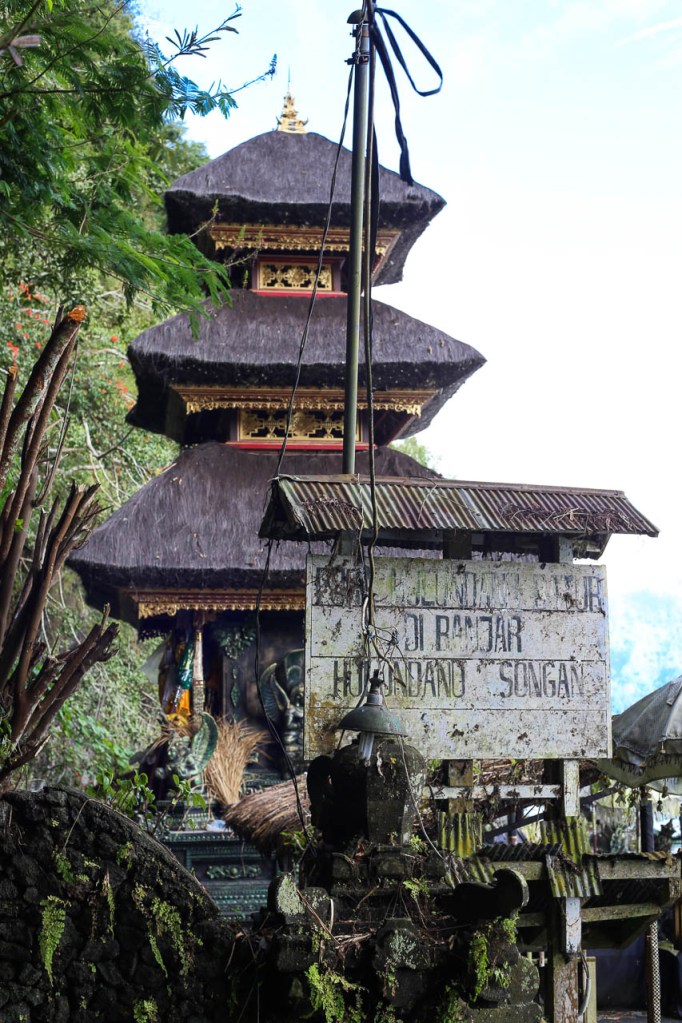
Main building: An 11-tiered meru for the lake-goddess Dewi Danu.
Region: Mount Batur
Theme: Water Temples
Requirements for visit: Try to seek permission before entering, wearing a sarong. Don’t enter the innermost courtyard.
Pura Hulundanu Batur
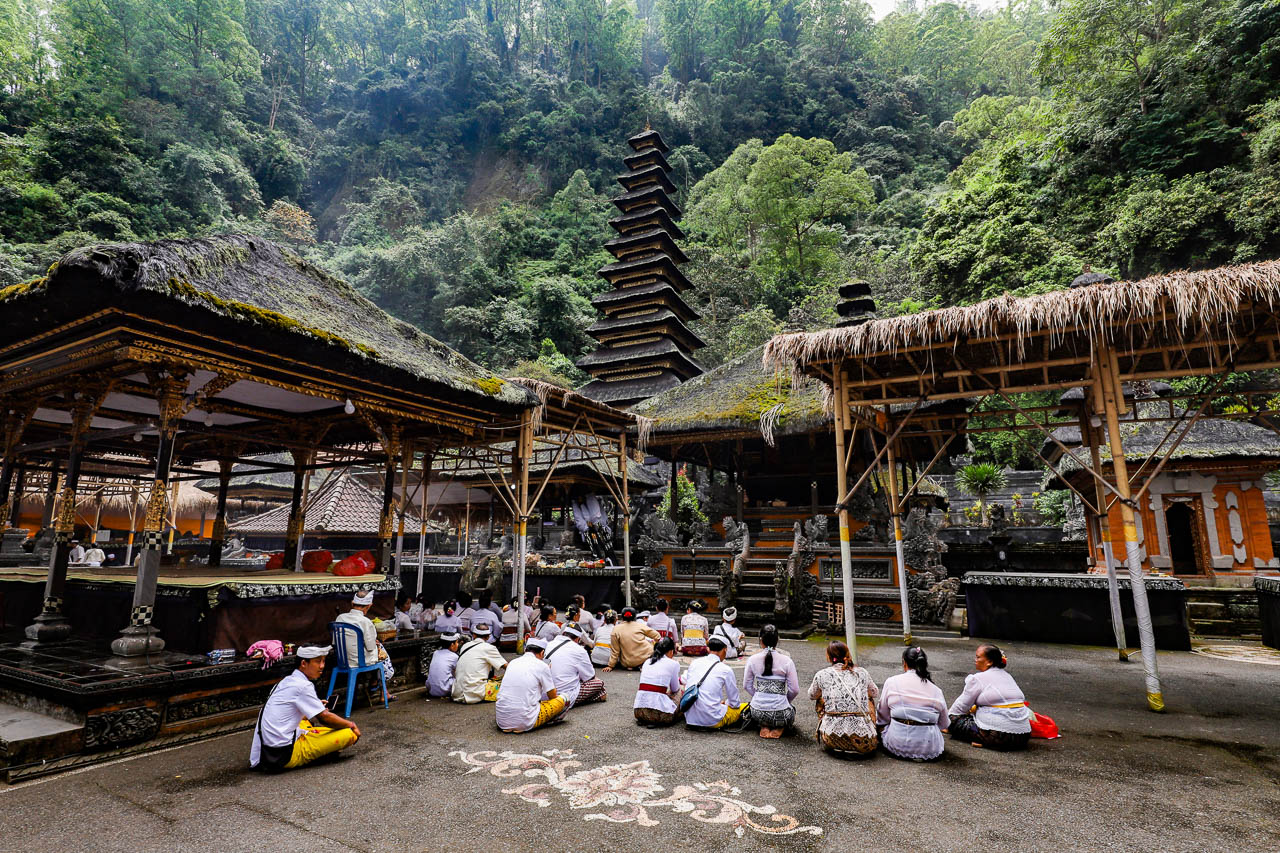
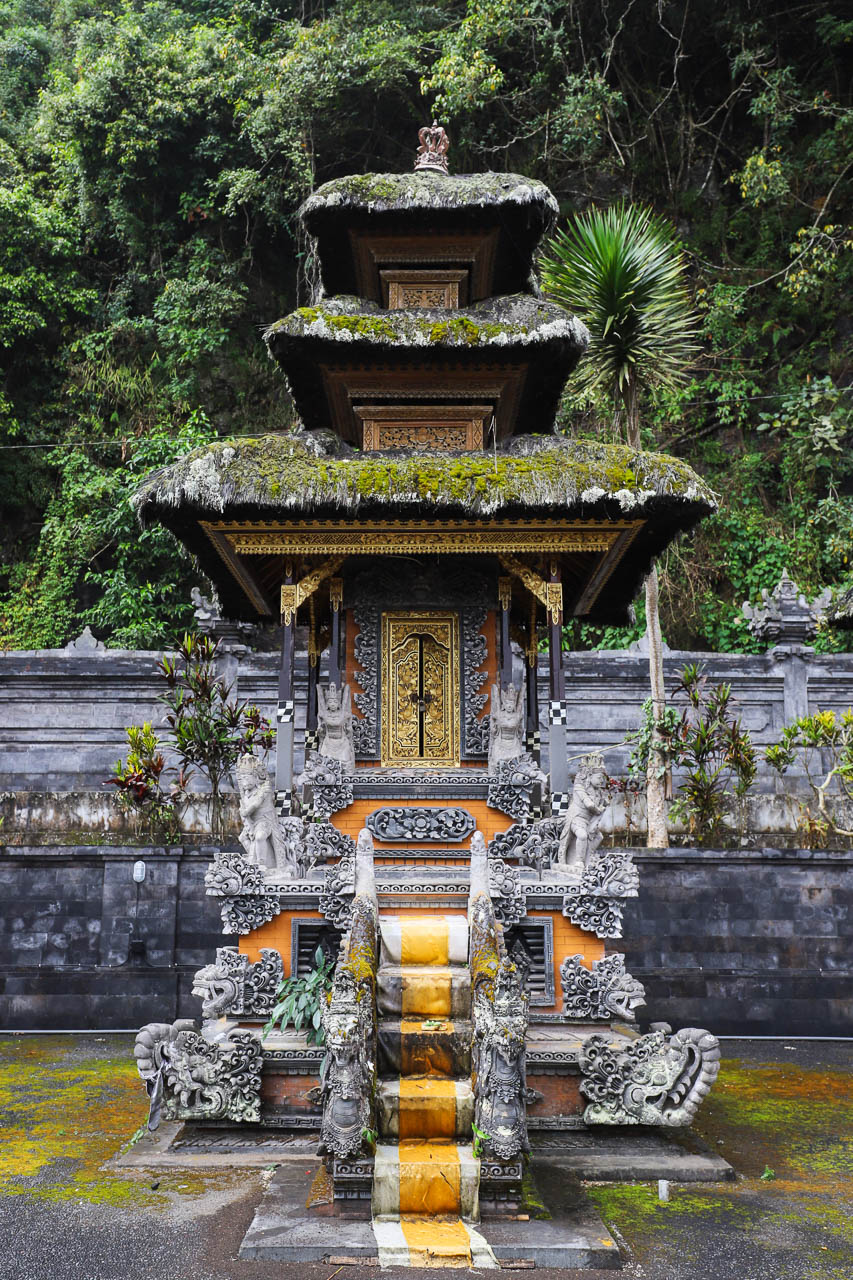
The road from Pura Jati along the lakeshore passes Toyabungkah, known for its volcanic hot springs, and ends at the northern tip of the lake where the waters meet the crater rim. Here, a temple stands built into the green caldera wall, distinct from the larger Pura Ulun Danu Batur, which was relocated to the southern crater rim a century ago.
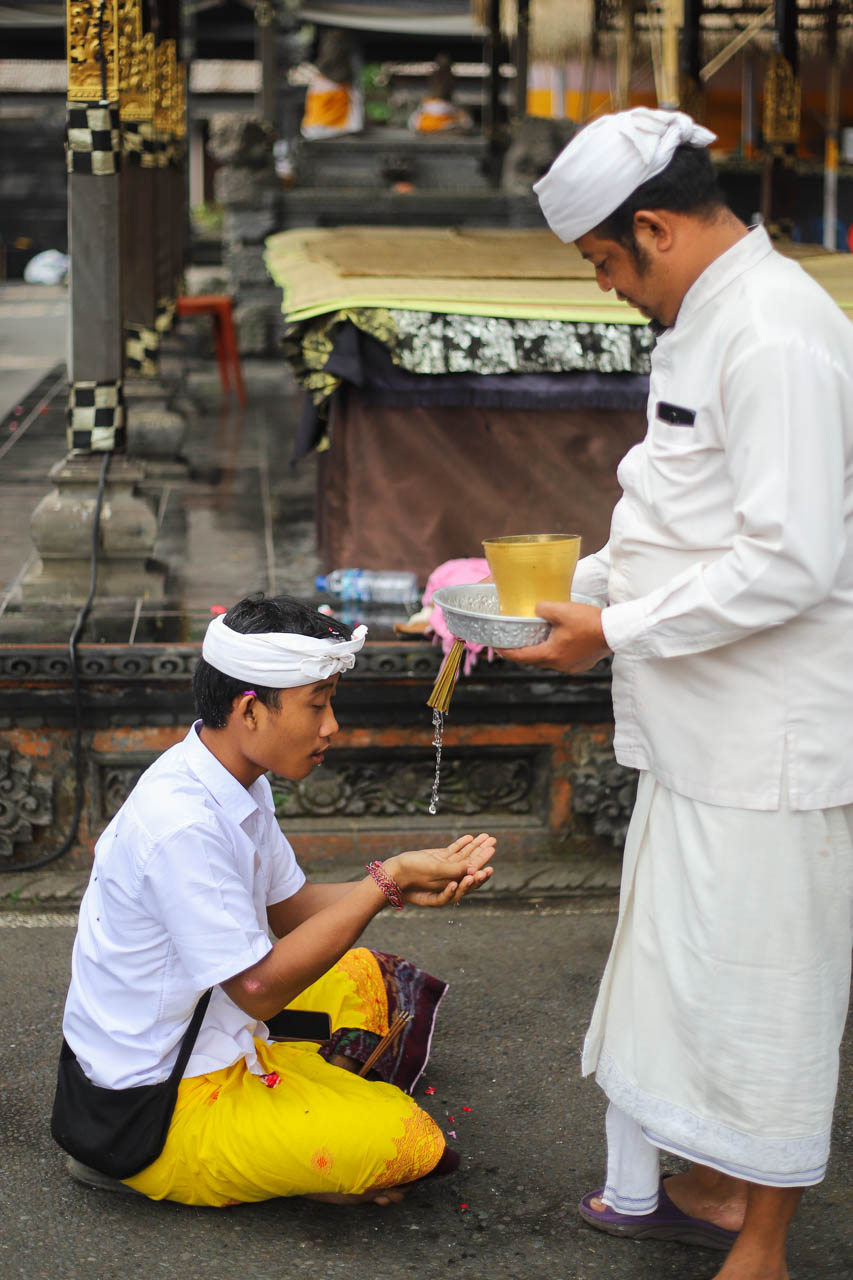
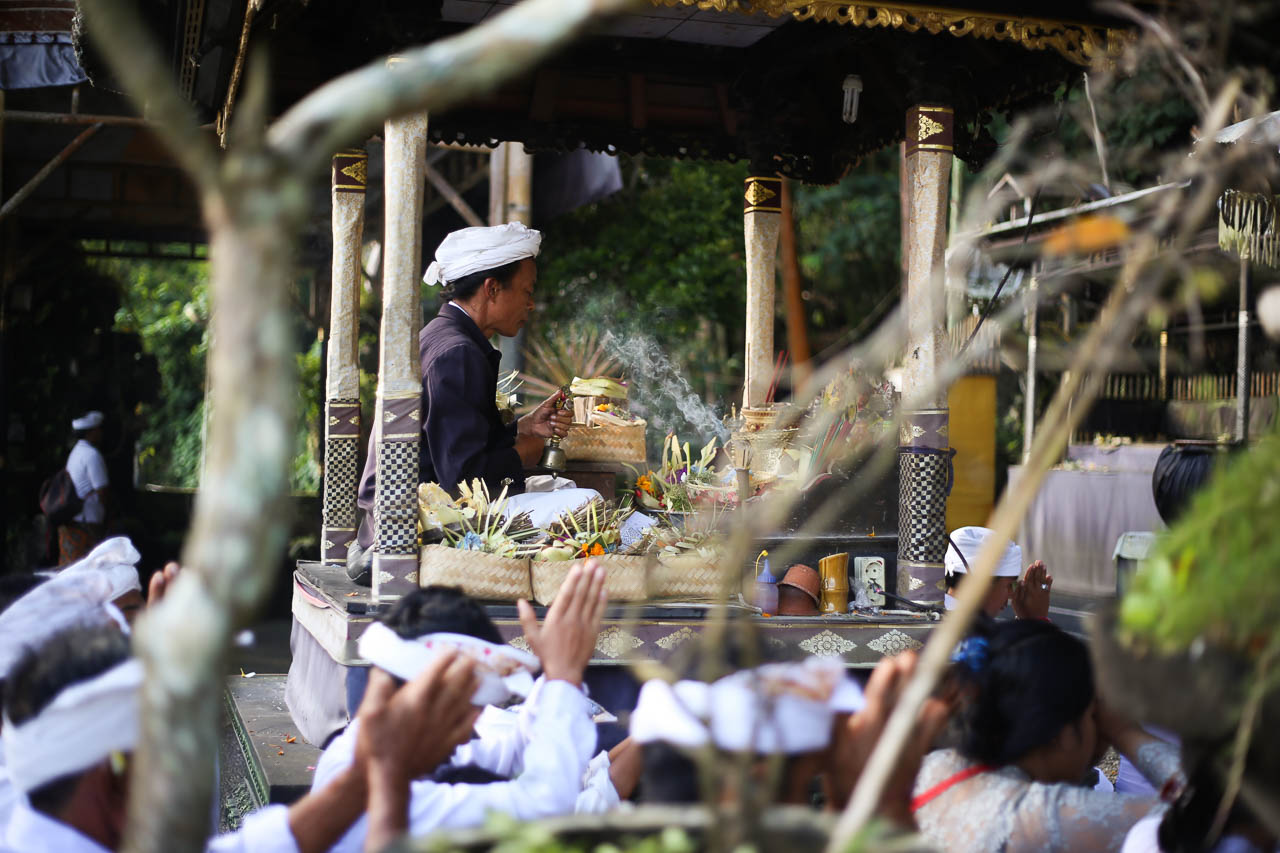
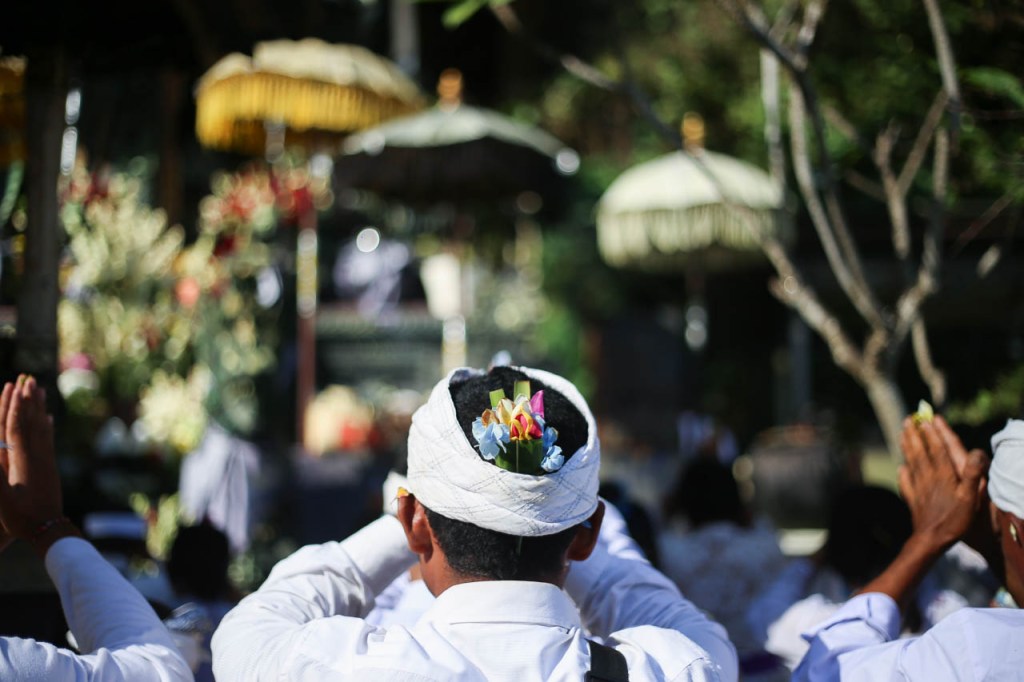
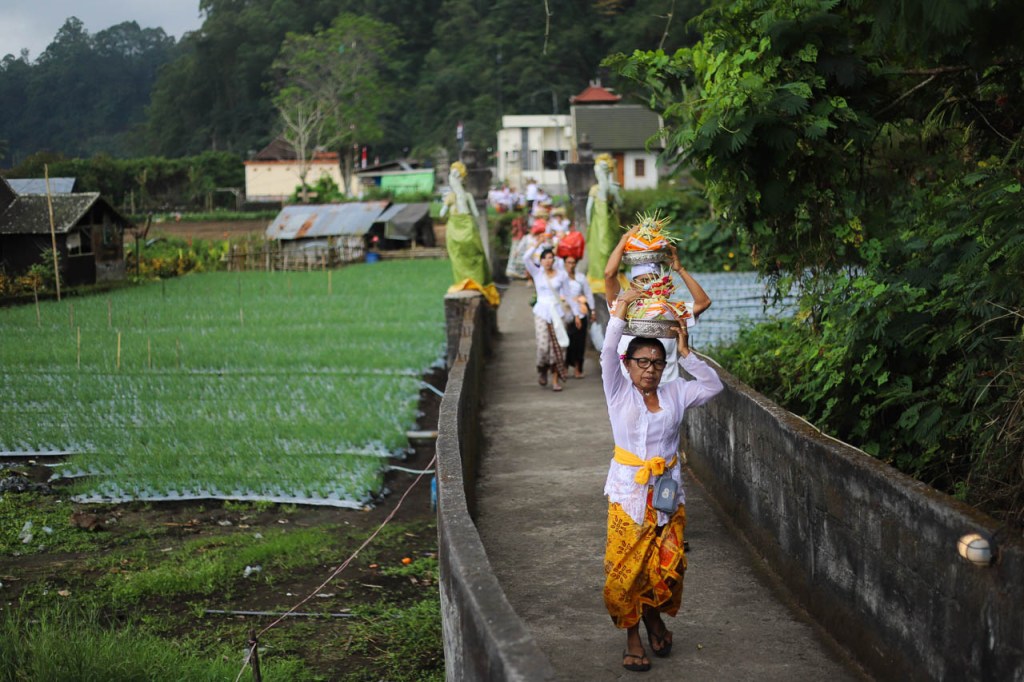
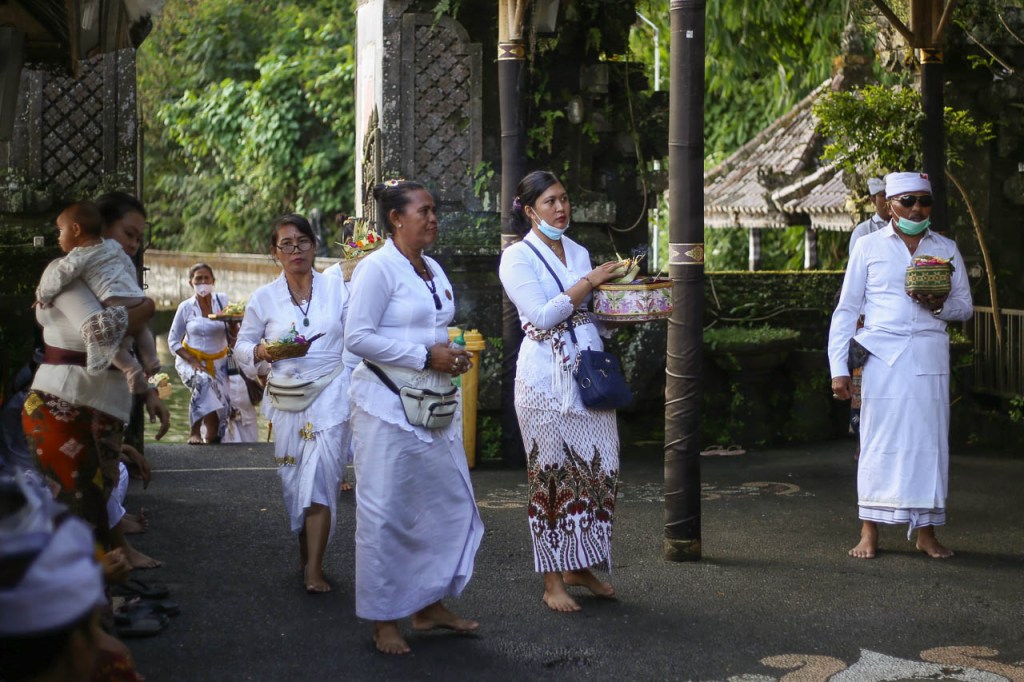
This temple is maintained by the villagers of Songan, whose community life centers on its stewardship. The anniversary of Pura Ulun Danu is celebrated on the fourth full moon of the Balinese calendar (usually in September or October), while every ten years the temple hosts the grand Panca Wali Krama ceremony.
Rival Claims over Dewi Danu
During the twentieth century, persistent rivalry developed between this temple and Pura Ulun Danu Batur, the latter recognized as the principal sanctuary of Dewi Danu and a major Pura Kahyangan Jagat. As Pura Ulun Danu Batur (up on the caldera rim) began claiming authority over the lake’s headwaters—traditionally managed by Songan—many irrigation societies (subak) shifted their allegiance, reducing Songan’s ritual patronage and offerings. Scholarly sources note that disputes over ritual control and resource allocation remain unresolved.
Rice farmers from the subaks continue to support the temple financially and attend its major ceremonies, illustrating the deep link between agricultural practices, religious life, and communal obligations in Balinese society.
Temple Layout
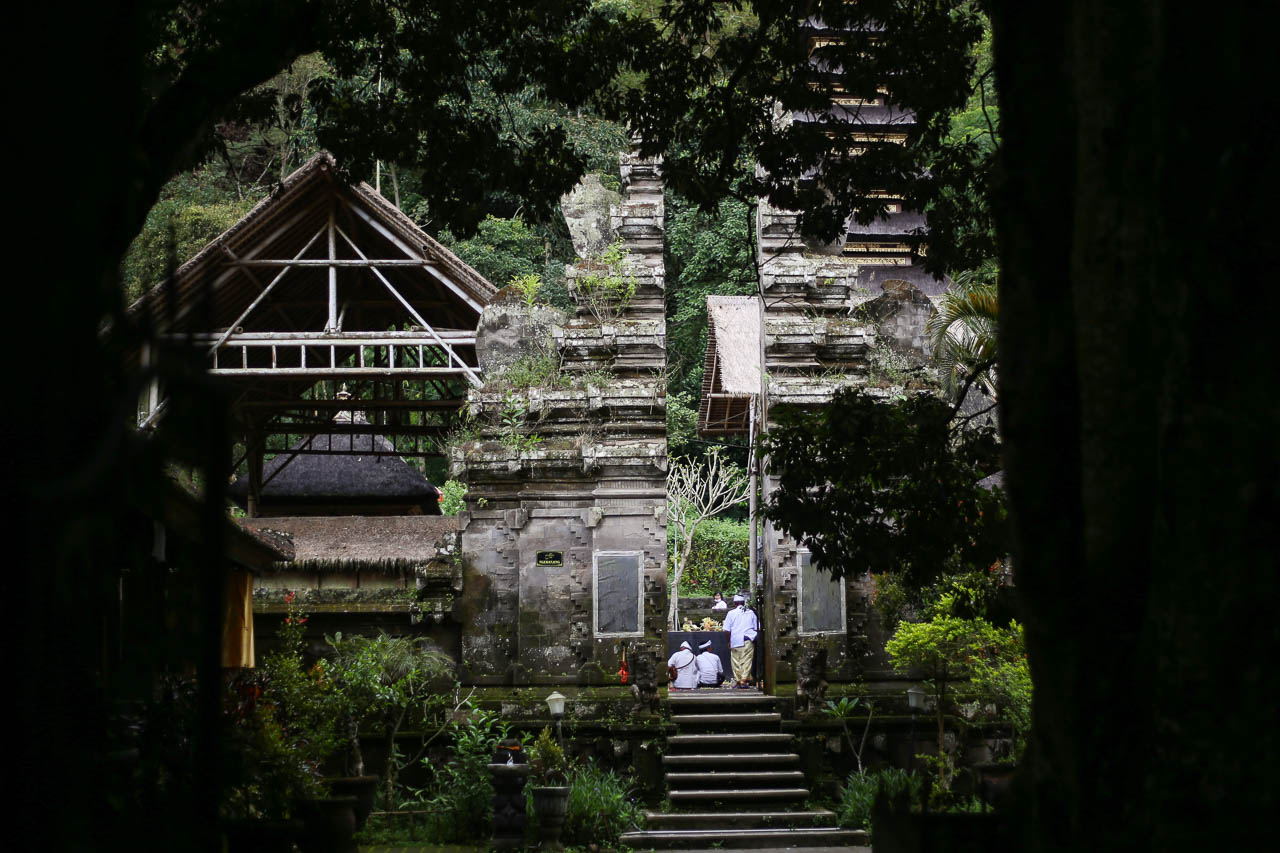
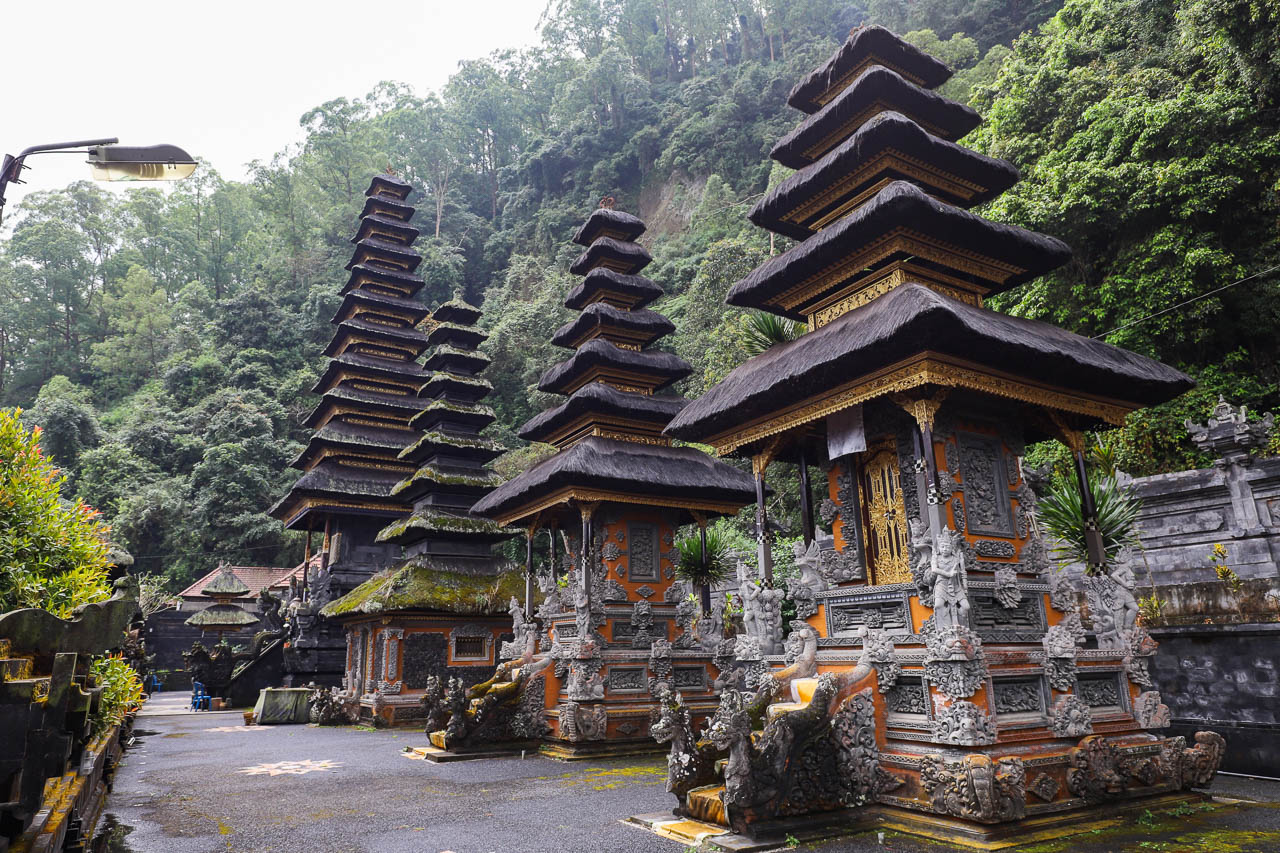
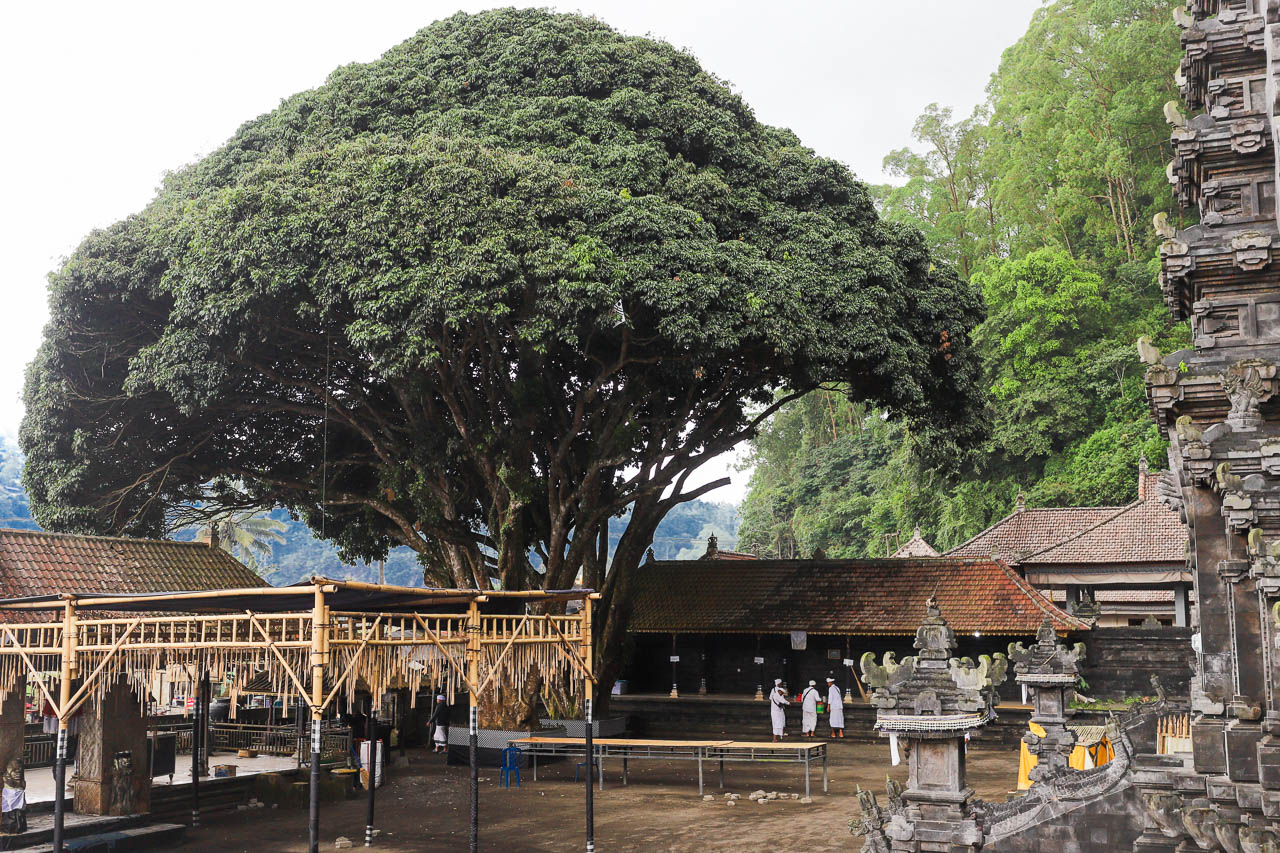
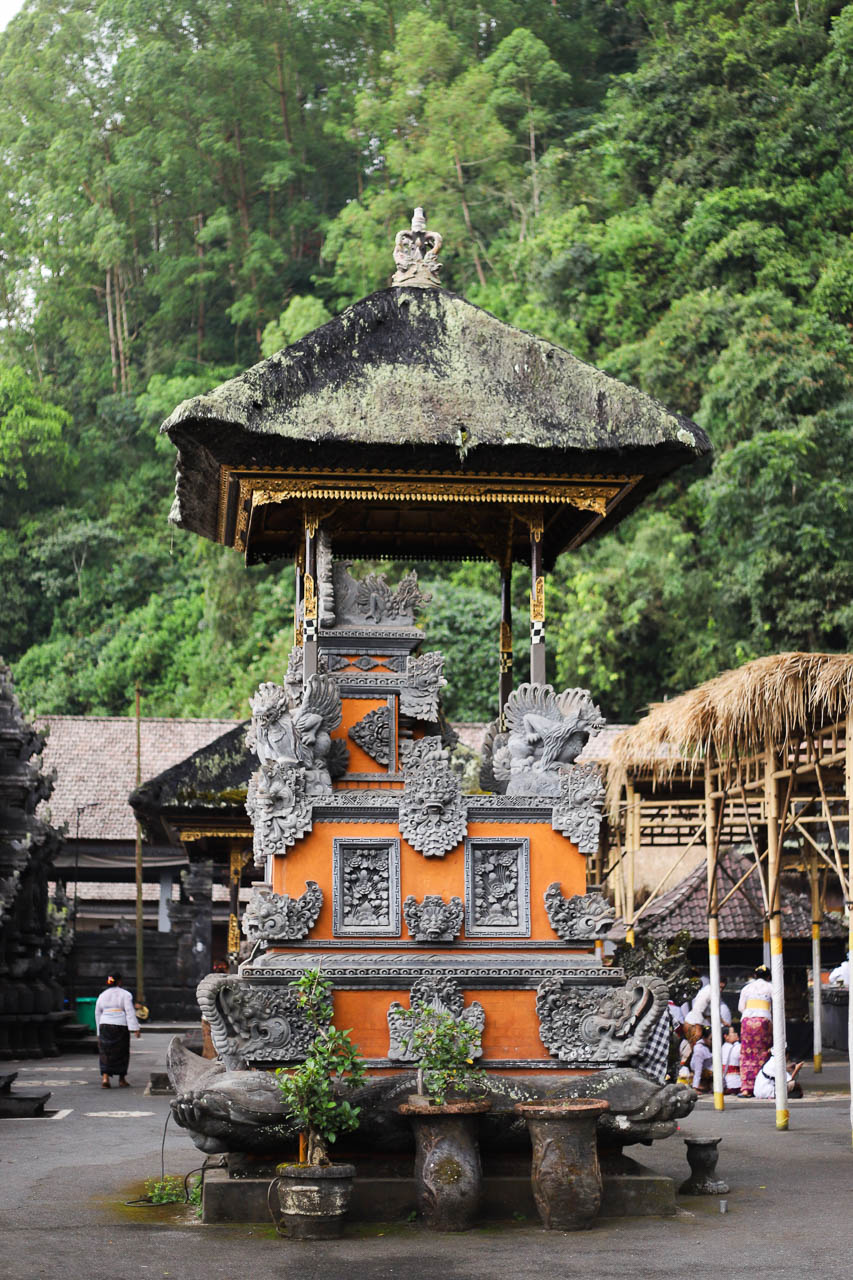
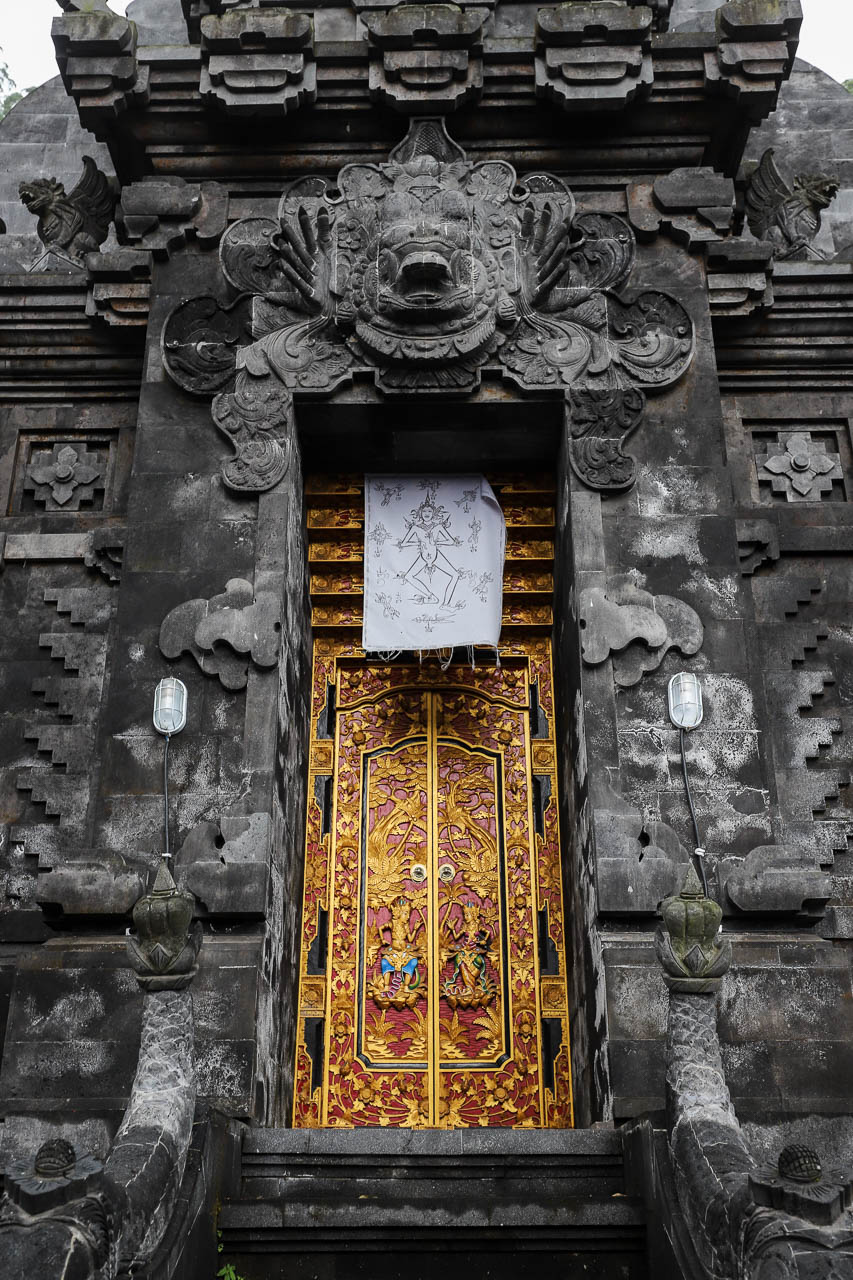
Following typical Balinese design, the temple complex features three courtyards: outer, middle, and inner, in this temple arranged left to right. The narrow inner sanctuary, set against an overgrown cliff, contains seven meru shrines that increase in height from south to north, with an eleven-tiered shrine dedicated to Dewi Danu at the northern end. The middle court hosts ritual pavilions such as Padmasana, Paruman Alit, Bale Peselang, and Gedong Dalem. The spacious outer courtyard is designed for gatherings and incorporates a drum tower (bale kulkul) at the southwest and two large shade trees at the northwest corner.


Pura Tirta Hulundanu
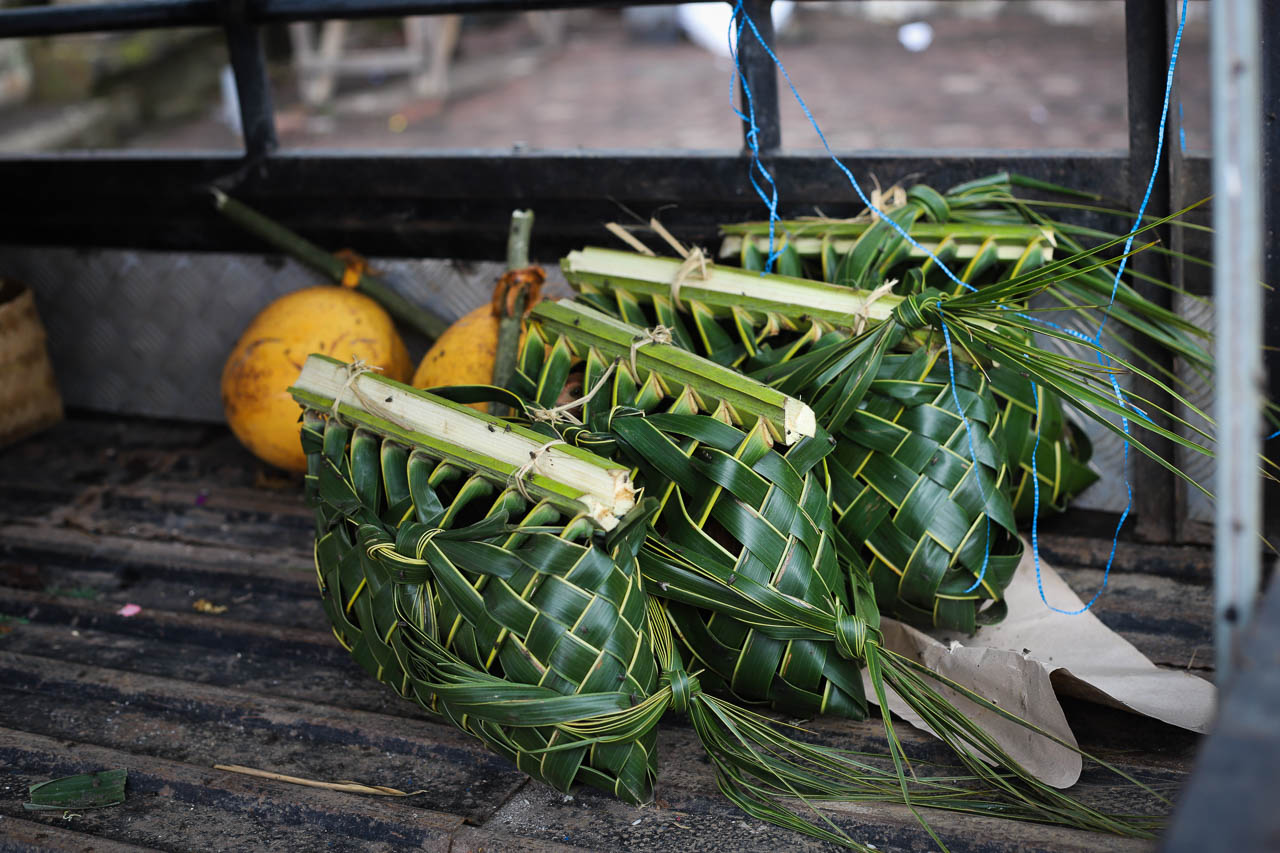
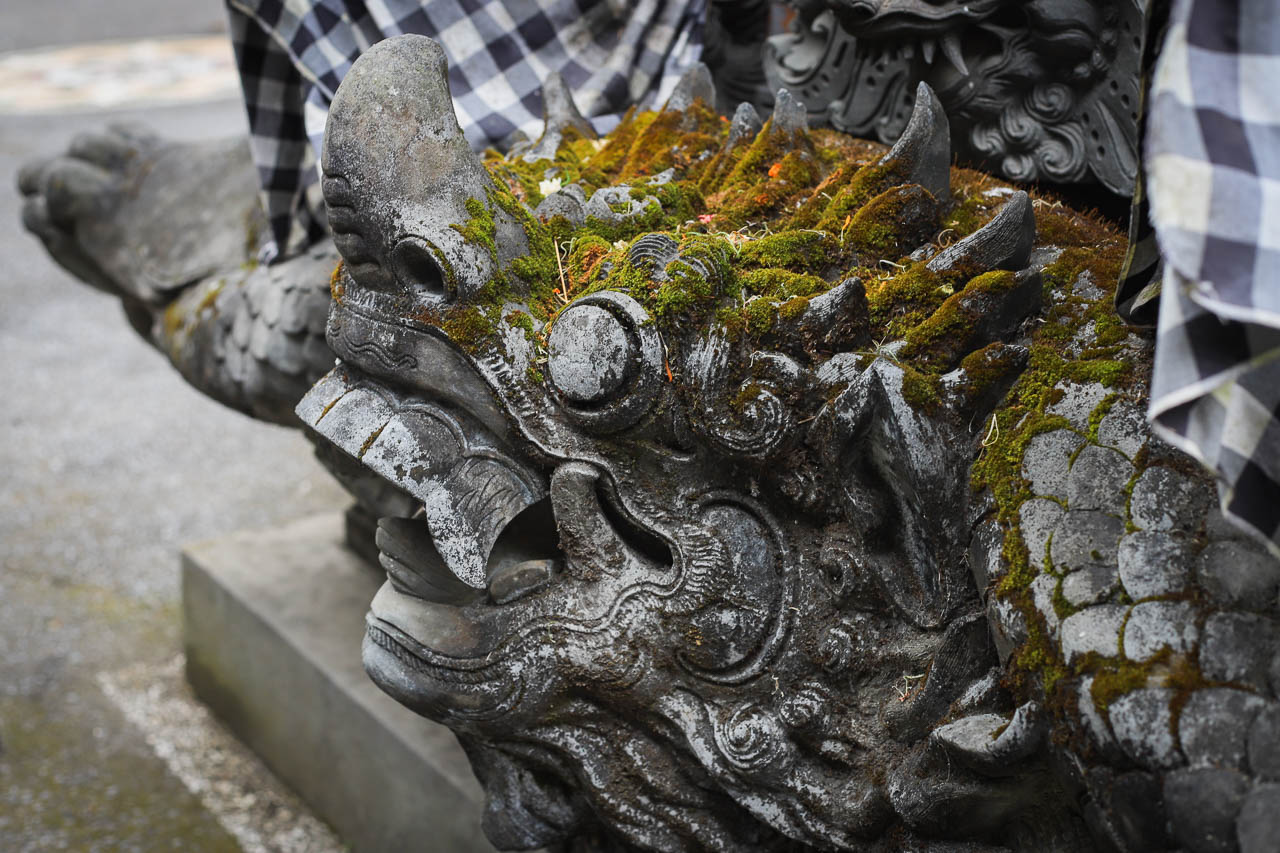
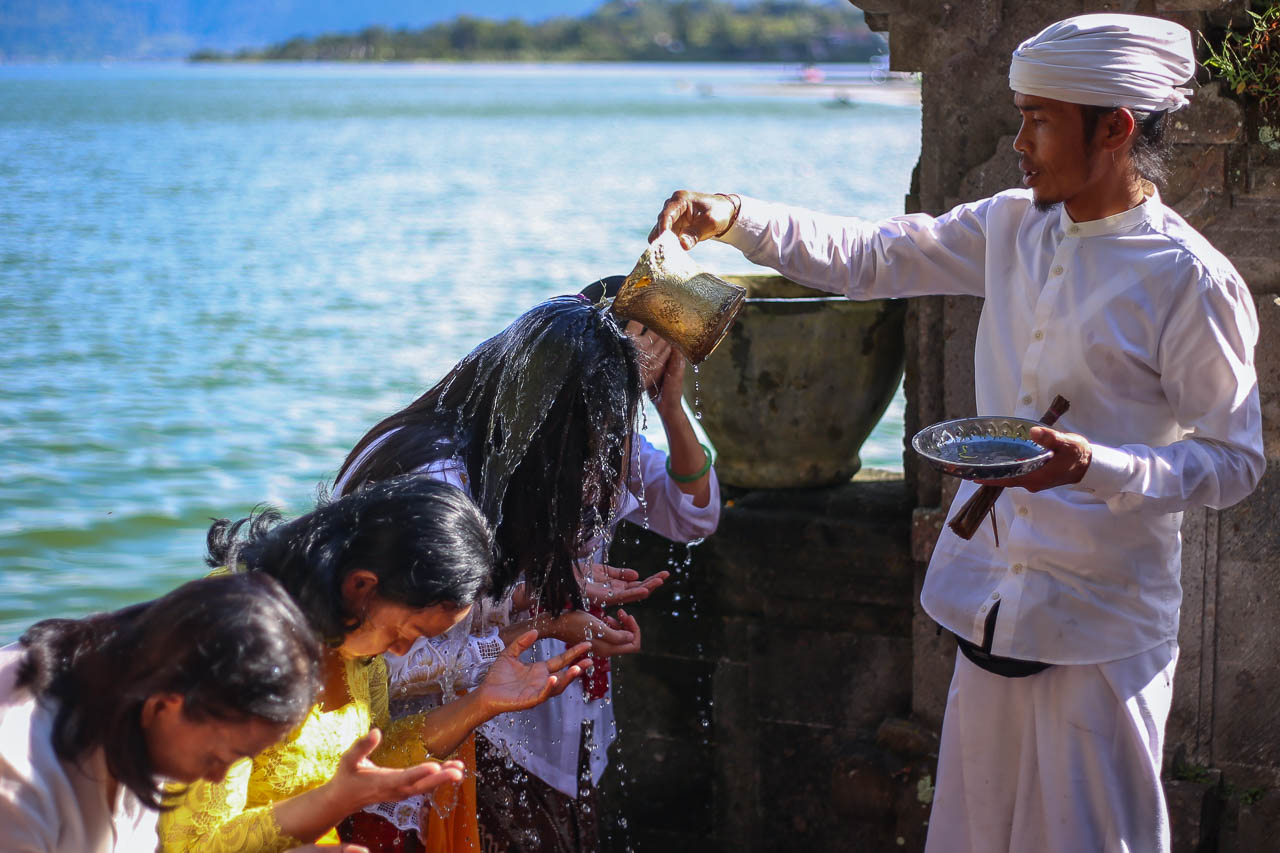
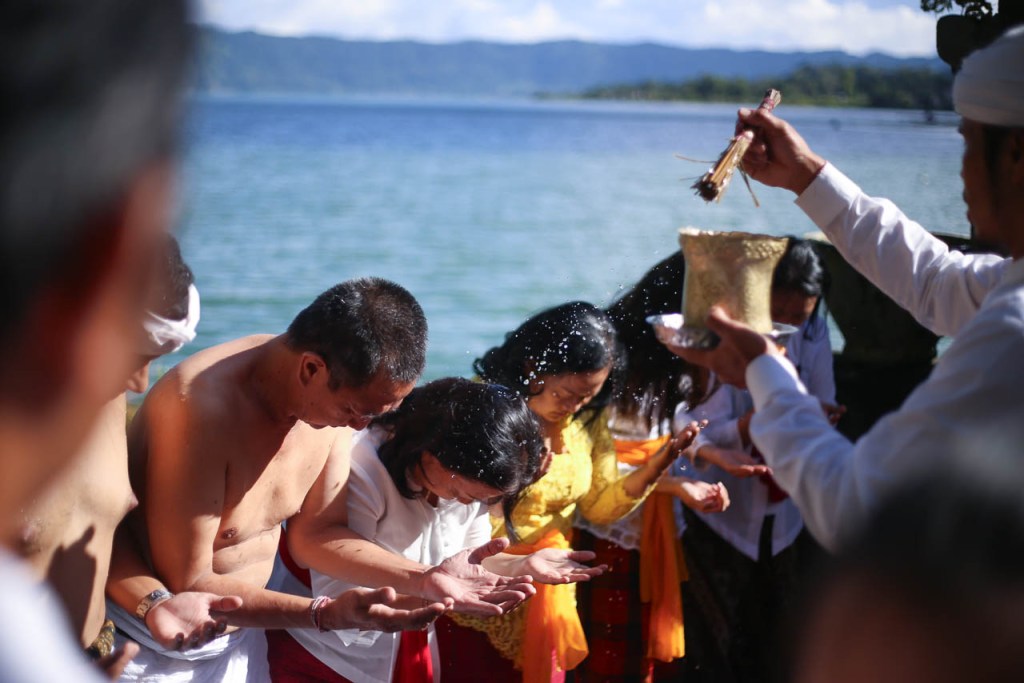
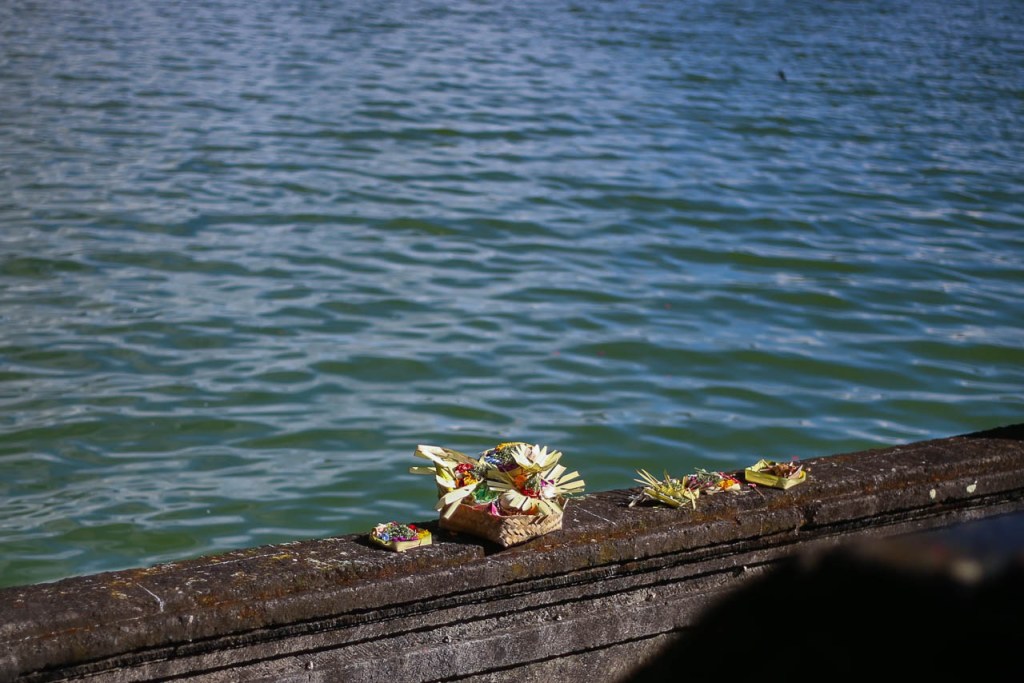
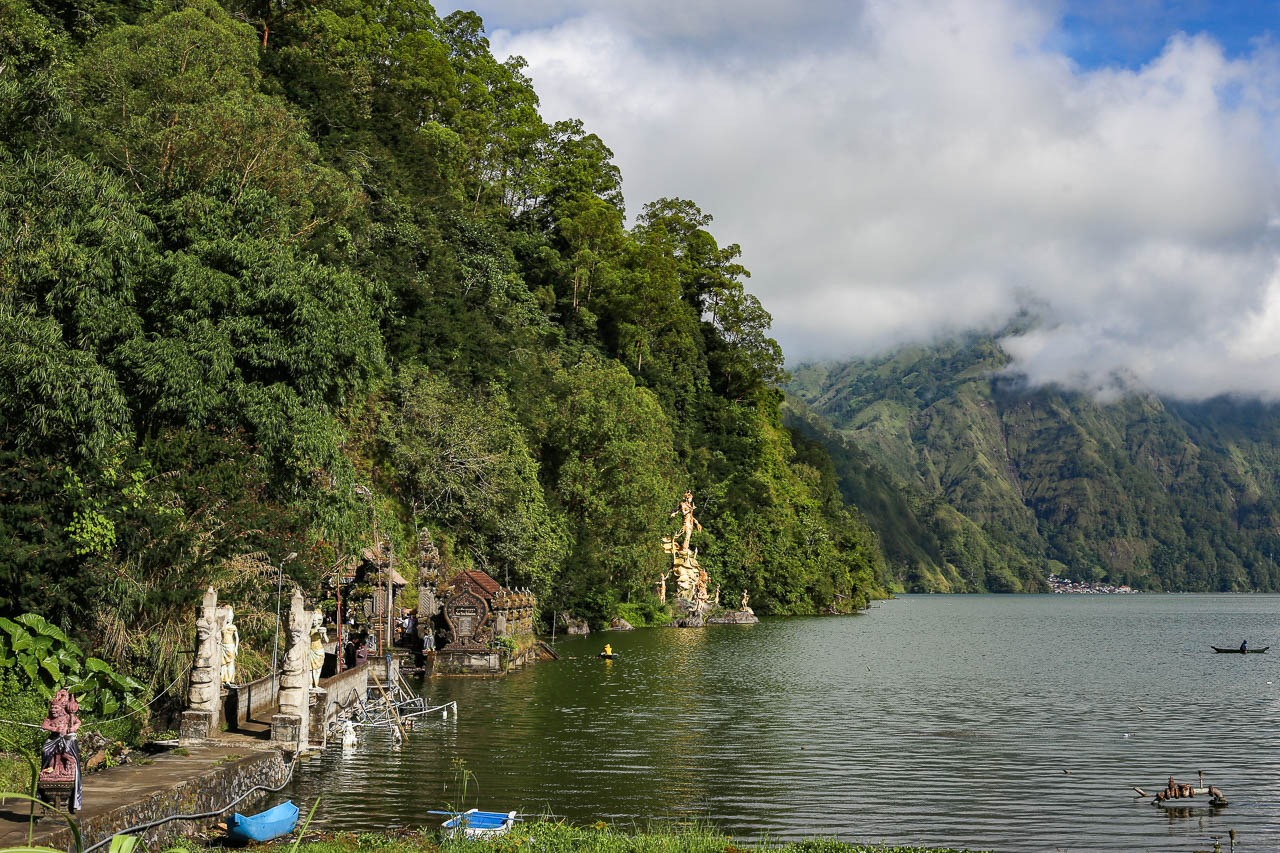
After praying at Pura Hulundanu Batur, visitors proceed to this neighboring temple dedicated to holy water (tirta). Built just 50 meters away, directly on the lake, it occupies a strikingly beautiful setting. Though modest in size, it is of great importance as the source of holy water drawn from Lake Batur and carried by Balinese people to many parts of the island. Bathing in the lake is forbidden, and even touching the water—especially with the feet—is considered a serious violation of its sanctity. Visitors wishing to enter should wear a sarong and respectfully ask for permission.


Bibliography
Haer, Debbie Guthrie, Morillot, Julliet and Toh, Irene Bali, a Traveller’s Companion. Singapore: Didier Millet, 2007
Lansing, J. Stephen. Perfect Order: Recognizing Complexity in Bali. Princeton and Oxford: Princeton University Press, 2006.
Oriental Architecture Pura Ulun Danu Batur Songan, https://www.orientalarchitecture.com/sid/1707/indonesia/bangli-regency-bali/pura-ulun-danu-batur-songan
Reuter, Thomas A. Custodians of the Sacred Mountains: The Ritual Domains of Highland Bali. Hawaii: University of Hawaii Press, 2022.

Nearby temples
It is possible to reach Pura Balingkang from Songan, but only by motorbike. The road is steep and winding, leading up to a small plateau or the inner caldera rim and Pinggan village, on the northern side of Mount Batur. Be prepared for rapidly changing weather—rain and fog can appear several times a day—but the spectacular views more than make up for it.
You have probably reached the crater lake by descending from Penelokan village on the outer caldera. Along the way, you may have passed Pura Jati, with its lakeside temple Pura Segara Ulundanu, built on the water. On the far less visited side of the lake lies Trunyan, with its peculiar temple Pura Pancering Jagat.
To visit the other temples in the Batur region, you will need to leave the crater and drive back up to the caldera rim. The Geological Museum in Penelokan gives you a good summary of the regions geology and culture.
Previous temple:
Next temple:
Photos and text © Alida Szabo
