— The Temple Of Fire and Water —
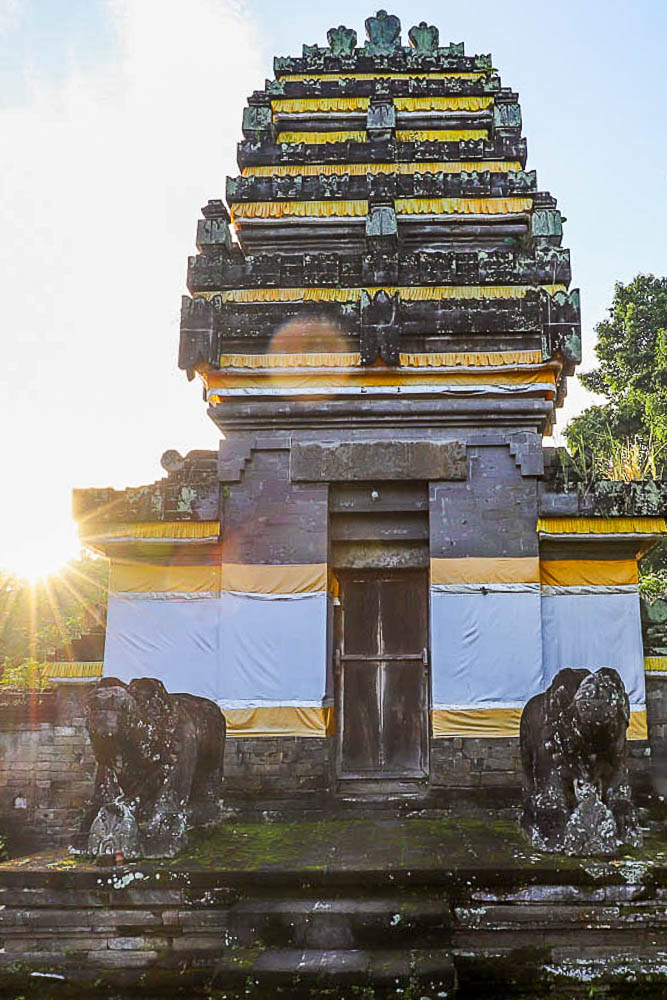
Meaning of its name: “The ancestral presence (hyang) descends (tiba means ‘arrive’)”.
Also called: PURA HYANG THIBA
Location: At the southern edge of Desa Adat Sakah, north of Batuan village, approximately 100 metres west of the Patung Bayi (the large baby statue) intersection.
Map: Jl. Raya Sakah, Batuan Kaler, Sukawati, Gianyar, Bali, Indonesia
Dates back to: 9ᵗʰ century
Main features: Gateway from the 14ᵗʰ century
Region: Around Ubud
Visiting: As a cultural heritage site (cagar budaya), the temple is generally open to visitors. Please bring your own sarong. Small donations are welcome.
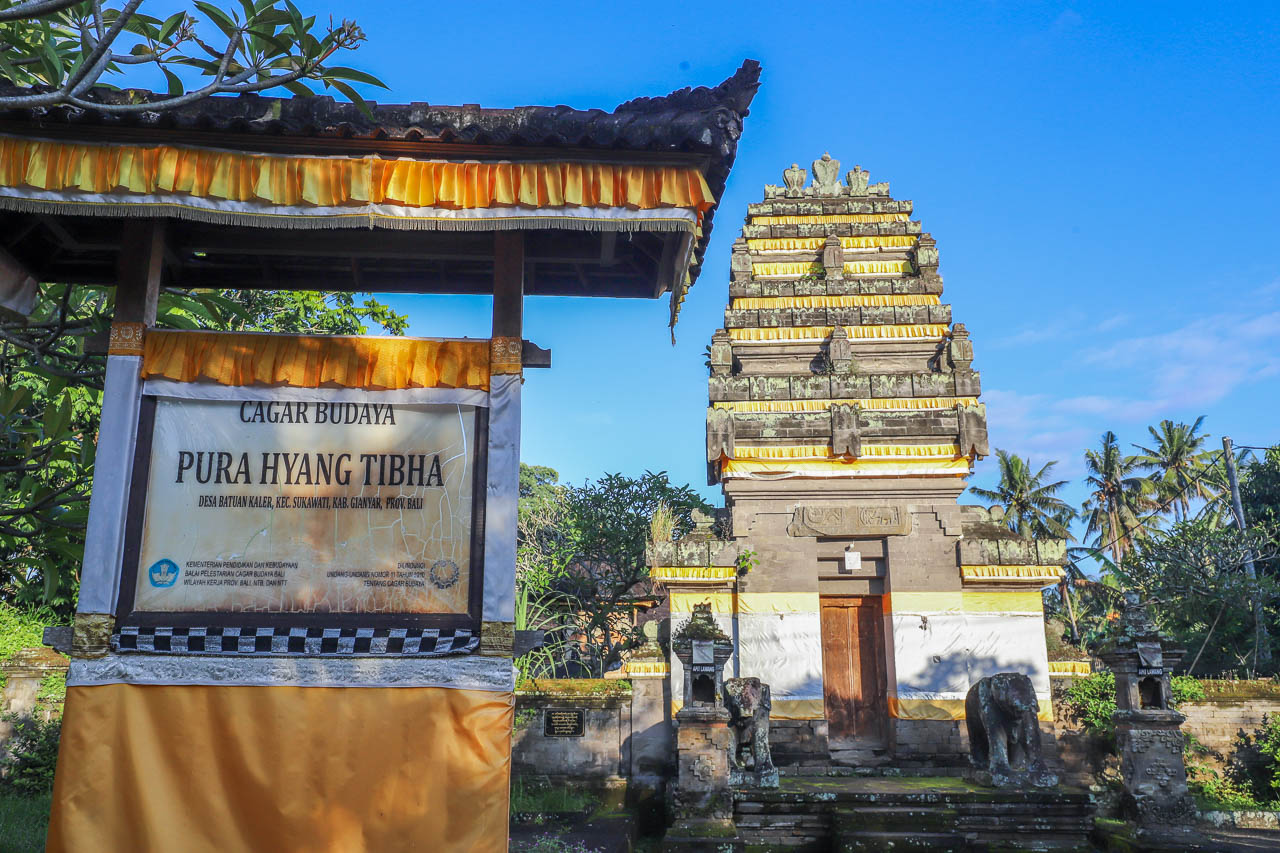
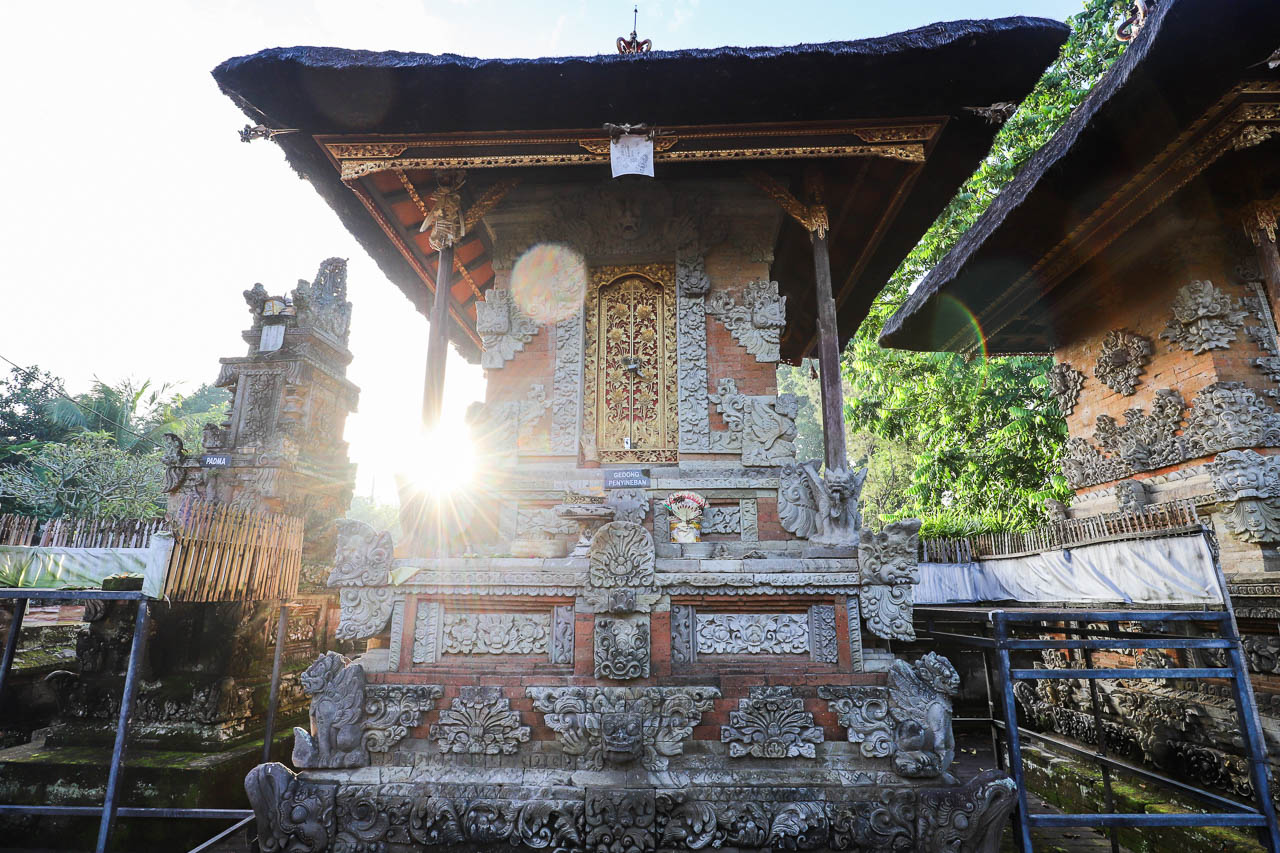
Pura Hyang Tiba is a Hindu temple with an additional small water sanctuary on the northern edge of Batuan’s ritual landscape, also called the Batuan-Sakah cluster, a dense network of shrines along rivers and historic irrigation corridors. Likely founded in the 9ᵗʰ century, it is closely connected to Pura Puseh Canggi and Pura Puseh Batuan, forming a small constellation of ancient shrines. The complex combines an old hill-temple and a historical gateway ensemble with a beji (holy spring) used for melukat purification, all embedded in the subak rice-terrace landscape.
Historical setting
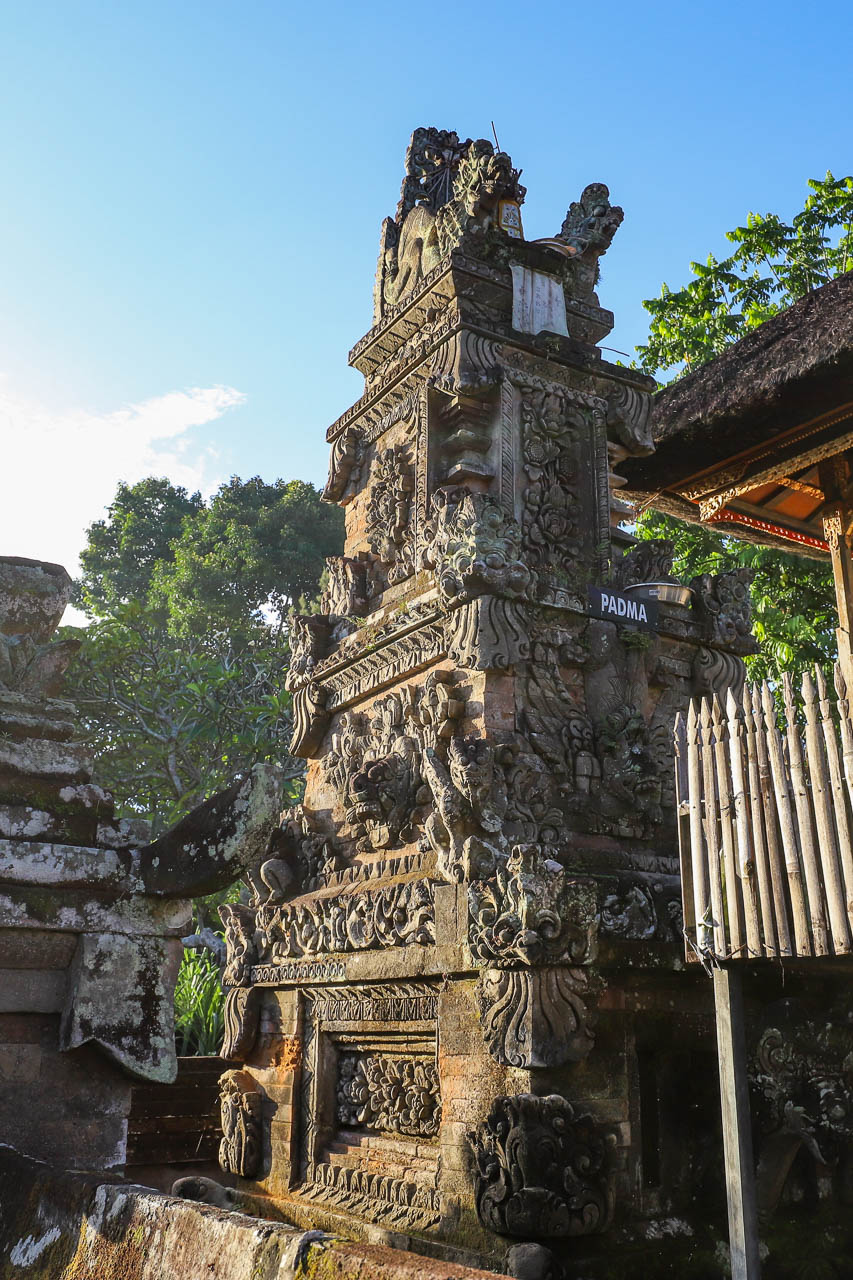
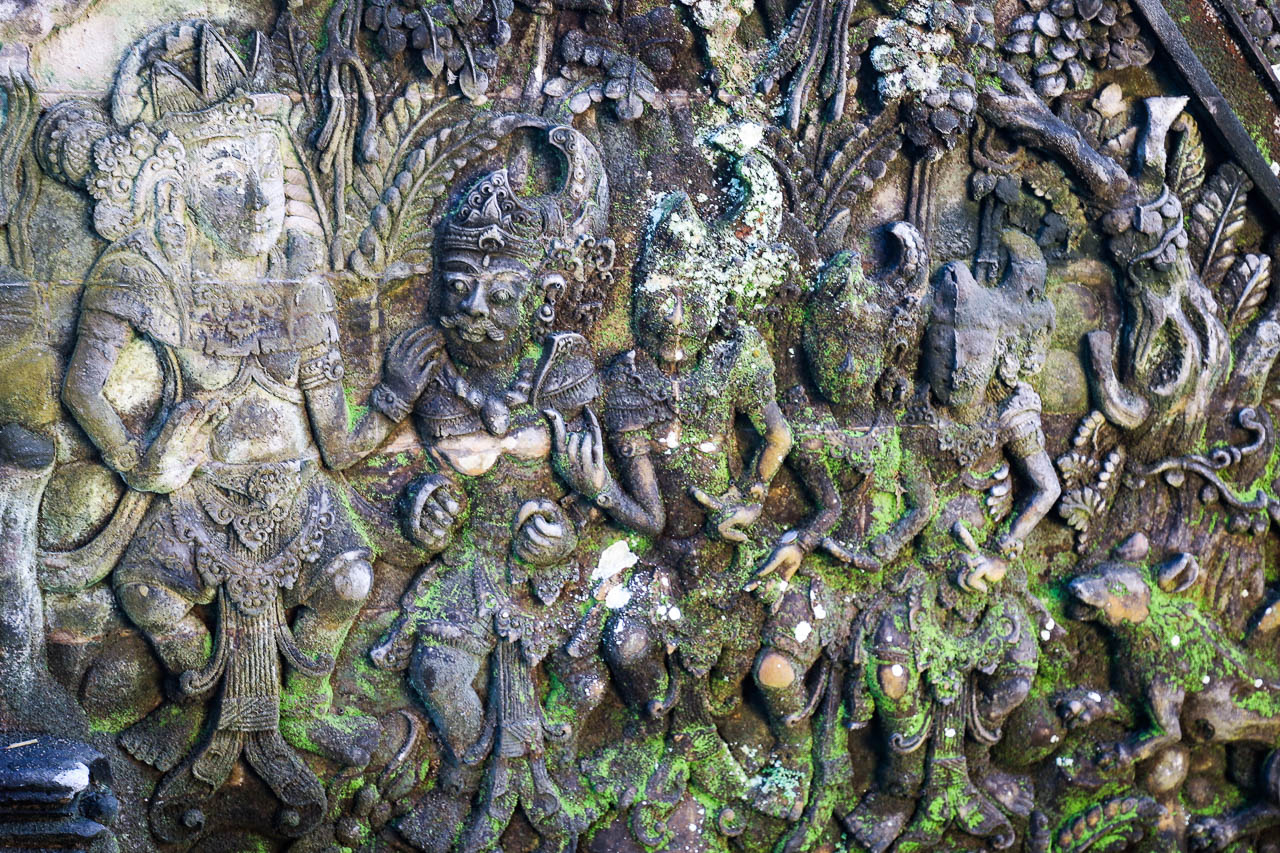
Local texts and inscriptions associate its origins with the era of Sri Haji Dharmawangsa (late 9ᵗʰ–10ᵗʰ century), marking it as one of the oldest temples in the area. A later inscriptional chronogram (candra sengkala) on the pedestal of the gate-guardian elephants symbolises (with the signs crescent moon, eye, bow and arrow, and elephant) the year 1258 of the Saka calendar (1336 CE), which records another major building phase, indicating continued elite or royal attention into the 14ᵗʰ century.
Architecture and sculptures
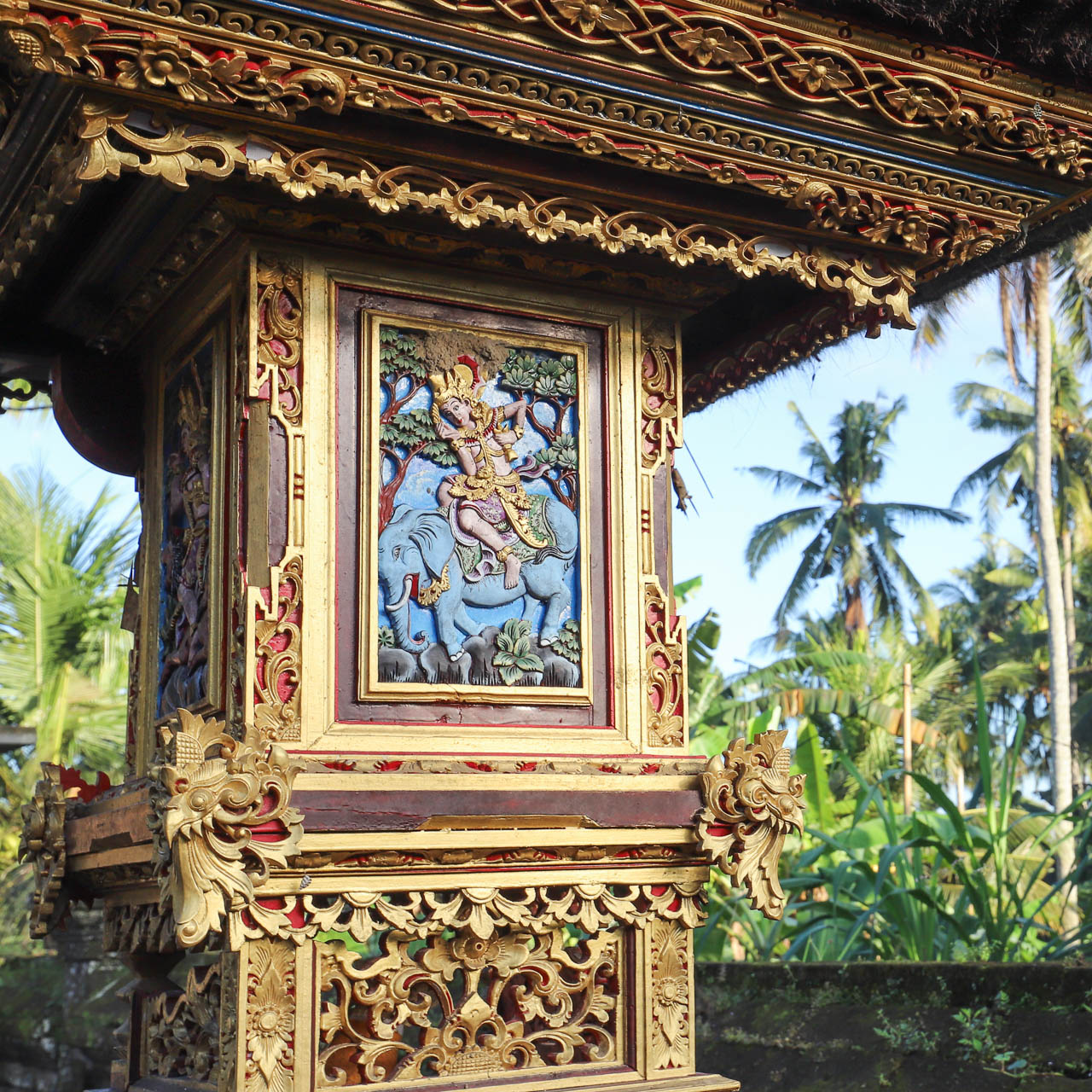
The cow statues referencing Nandi that flank the western side of the old gate (see first image) indicate a Shaivite orientation—Nandi being the mythical animal of Shiva—and connect the temple to broader networks of Shiva worship, while remaining rooted in local Balinese aesthetics.
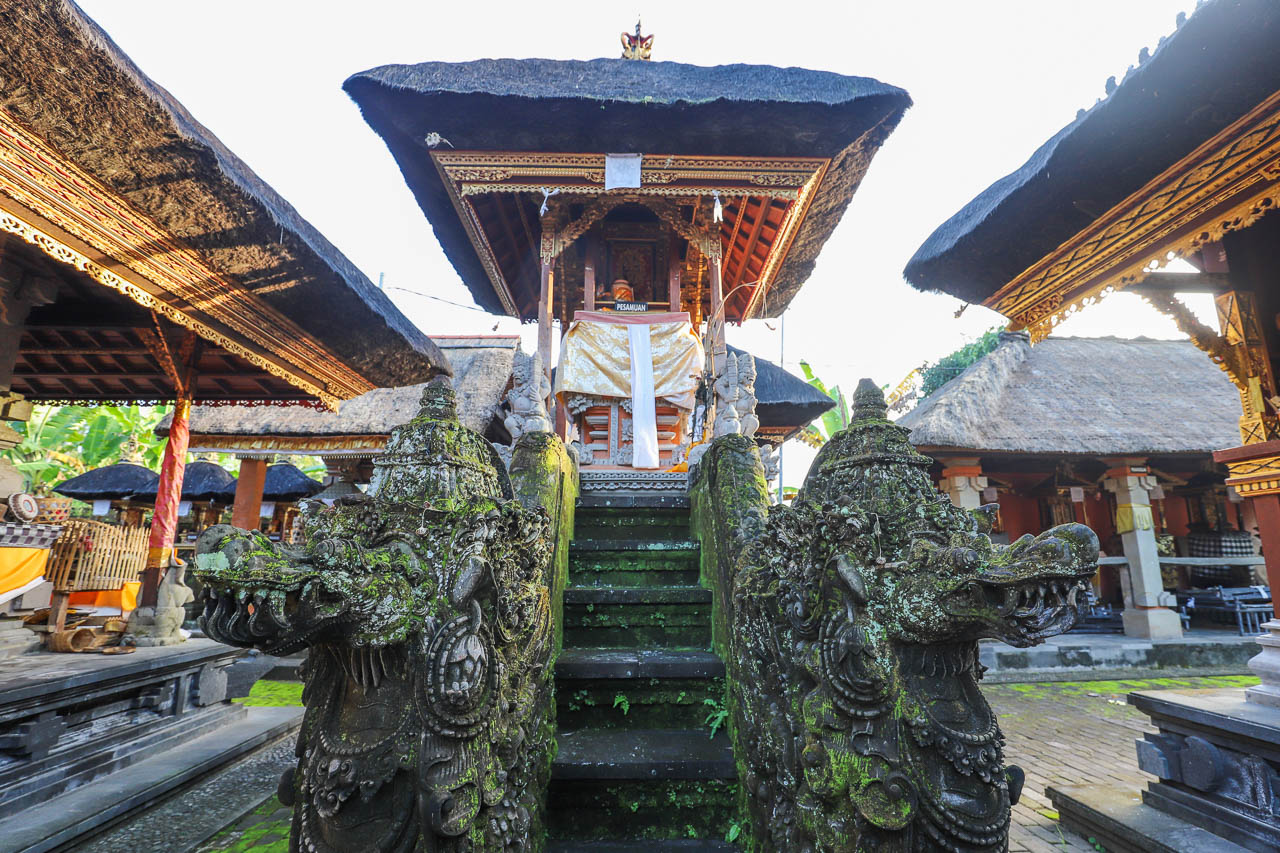
The central zone is split into northern and southern areas divided by a candi bentar (split gate). Its staircase is carved with naga motifs, signalling protection and the passage between ritual realms.
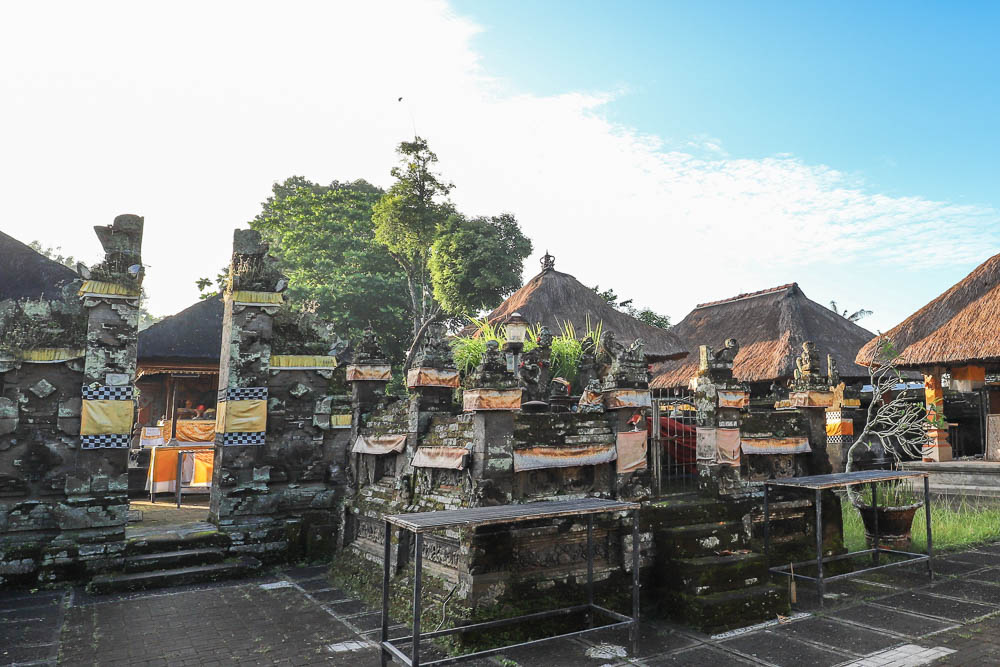
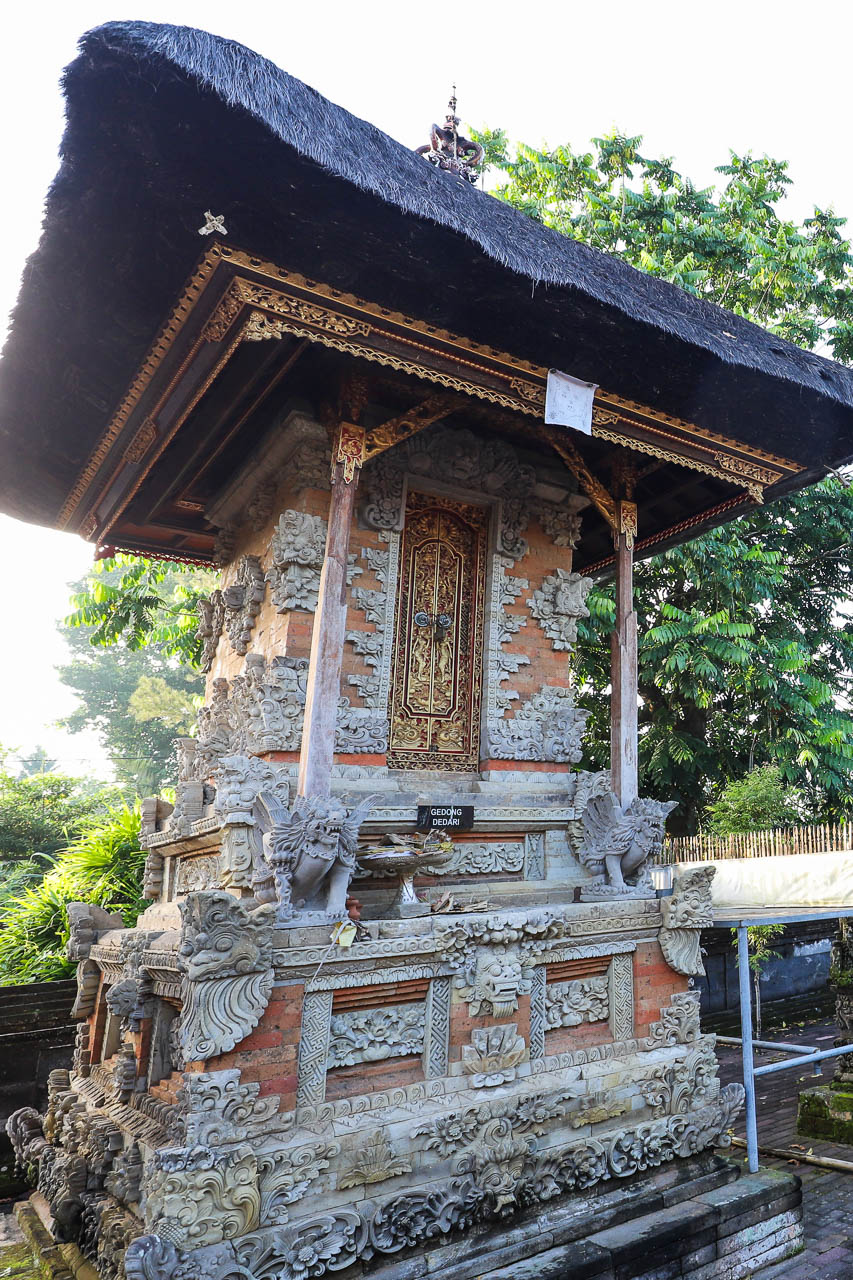
The main shrine in the southern part of the central courtyard, Pelinggih Ratu Hyang Api, is dedicated to a divine aspect of fire. Fire is understood here as a powerful force of purification and transformation, capable of burning away impurities and providing protective, destructive energy when needed.
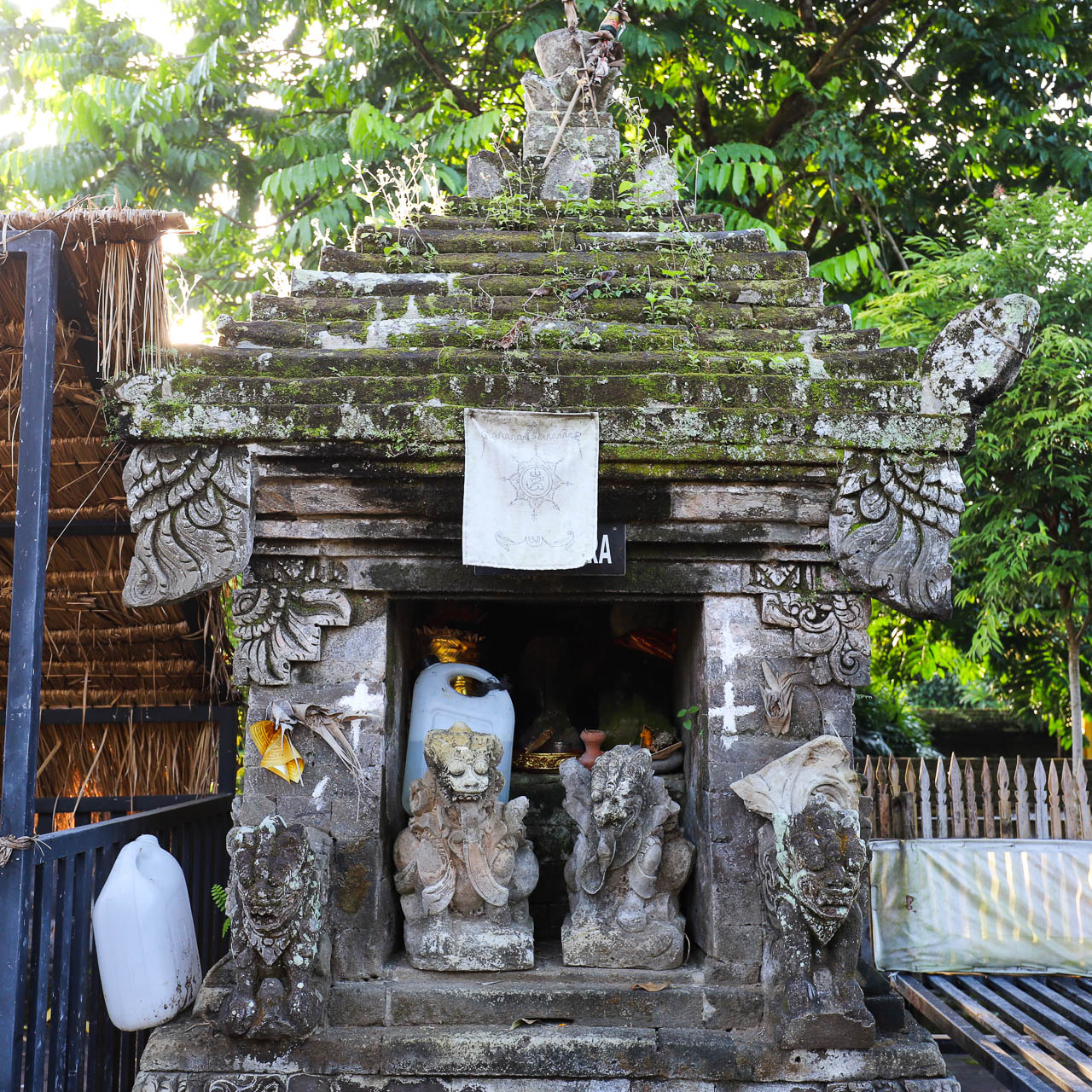
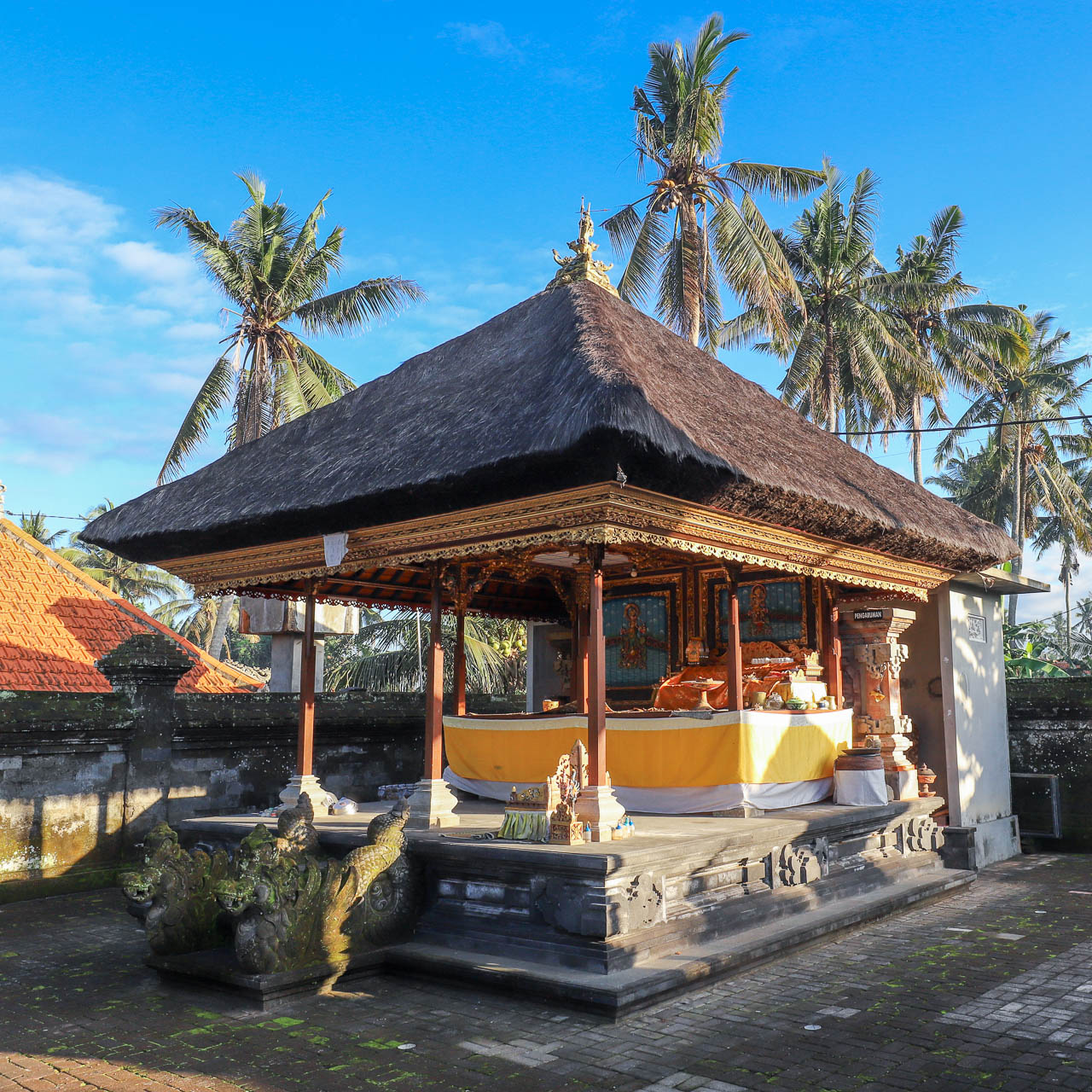
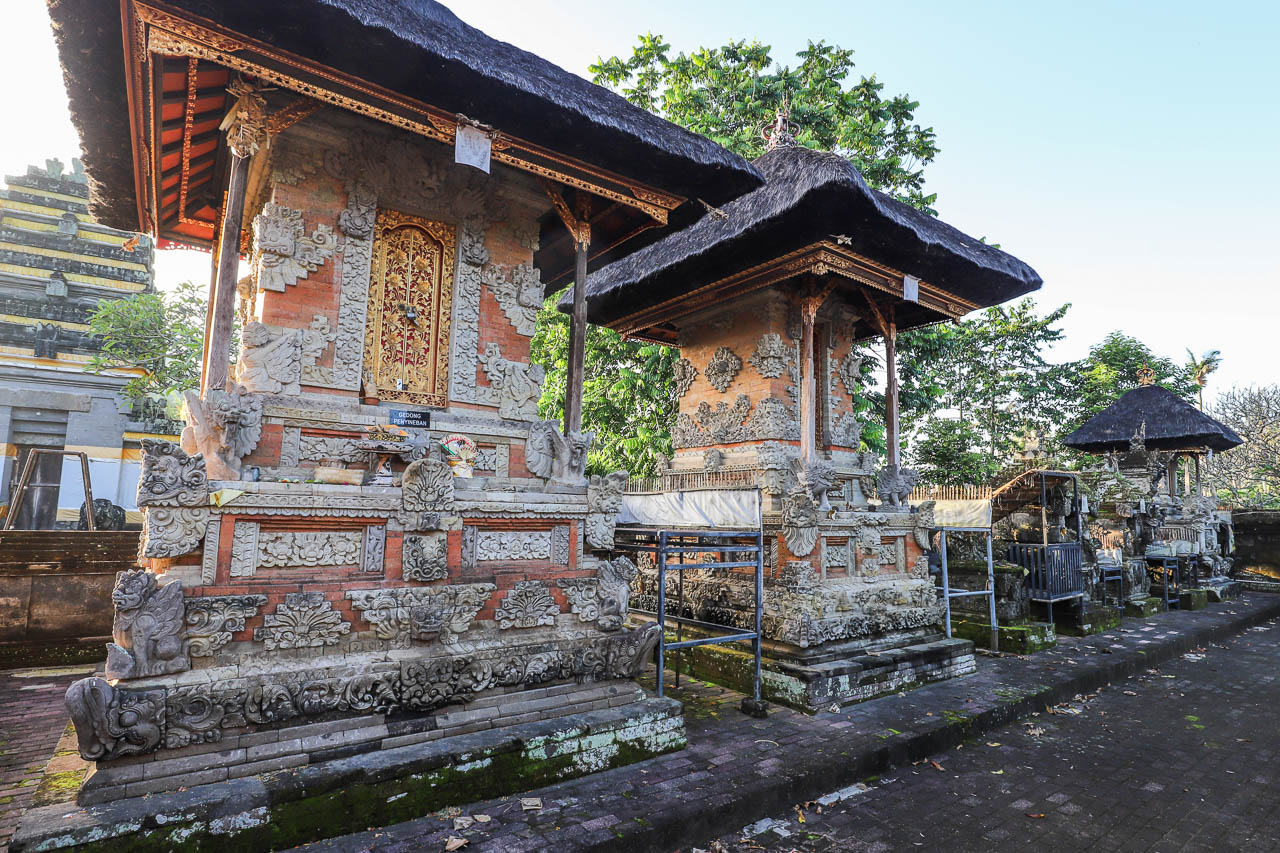
Water spring
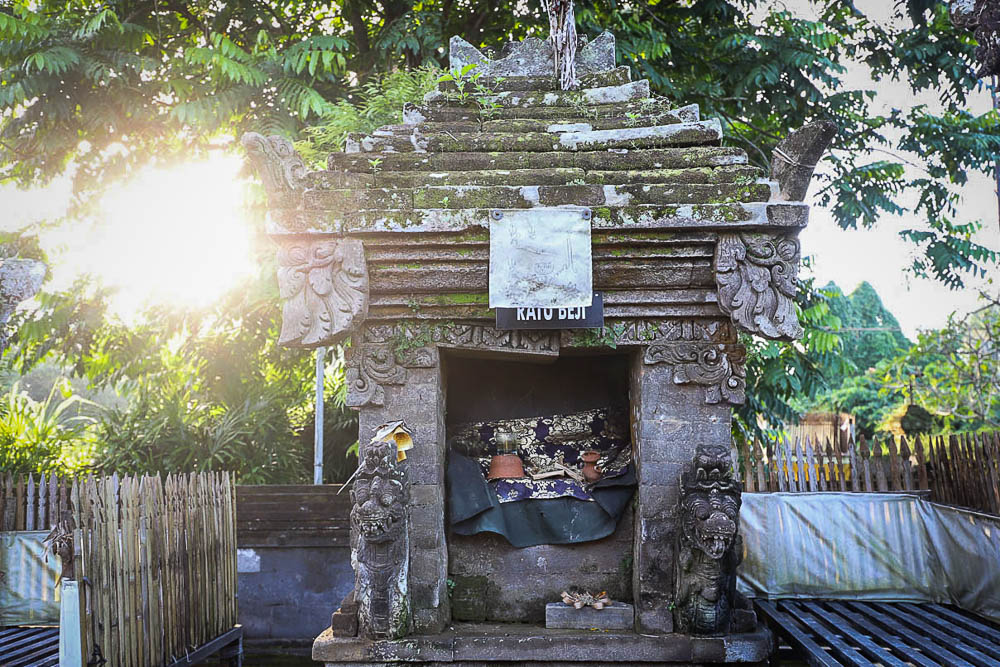
From the south of the central courtyard, a small path leads downslope west through rice terraces to the beji (spring) behind the main temple. The spring features two principal spouts feeding into a small river that flows toward the estuary, extending the temple’s sacred influence along the watershed. The beji is a site for melukat, where worshippers bathe under the spouts for spiritual purification.
Together, the upper shrines and lower water source create a fire–water polarity (Ratu Hyang Api above, the beji below) within one integrated ritual unit.

Nearby temples within the Batuan-Sakah cluster
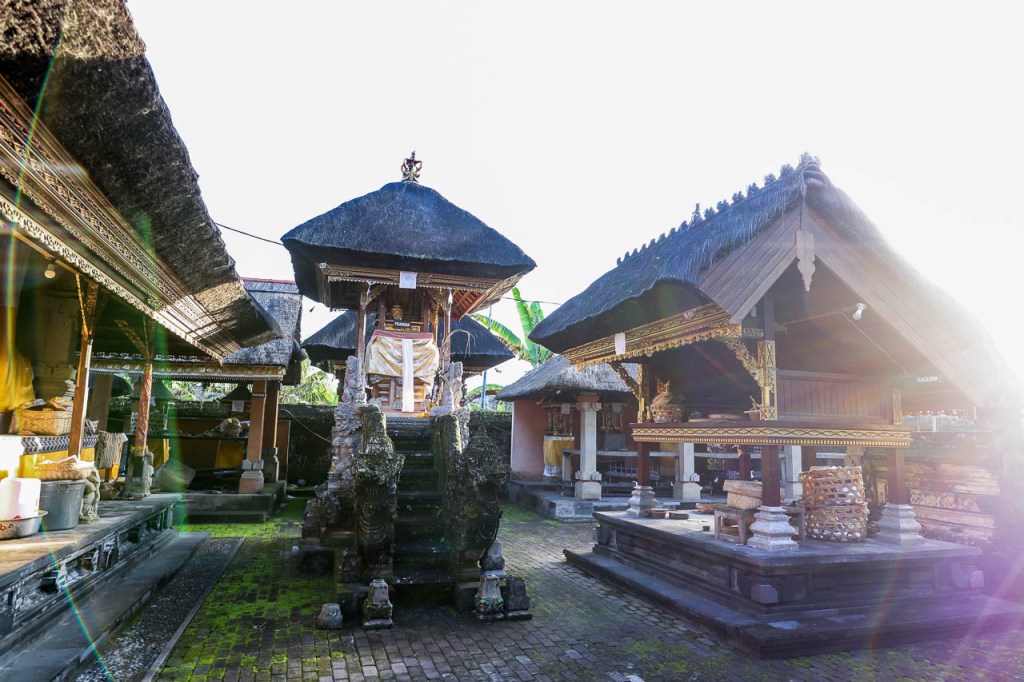
Local tradition and historical sources position Pura Hyang Tiba in a triadic relationship with the nearby Pura Puseh Canggi and Pura Puseh Batuan, forming part of a corridor of early sacred sites whose oldest inscriptions date to the 10ᵗʰ century. The area is frequently understood as an early centre of Balinese Hindu development, visible in the rich concentration of early stone carvings, gateway forms, and shrine types that precede or differ from later classical temple designs.
Bibliography
Exelby, Narina and Eveleigh, Mark Verborgenes Bali. Berlin: Jonglez Verlag, 2024.
Natha, Wiswaprayadnya Exploring Pura Hyang Tiba Batuan: A Sacred Site of Ancient Balinese Heritage 11.11.2024. https://budayabali.com/exploring-pura-hyang-tiba-batuan-a-sacred-site-of-ancient-balinese-heritage
Ramelan, Wiwin Djuwita Sudjana (Ed.) Candi Indonesia. Seri Sumatera, Kalimantan, Bali, Sumbawa. Jakarta: Direktorat Pelestarian Cagar Budaya dan Permuseuman, 2014.
Previous temple:
Next temple:
Photos and text © 2025 Alida Szabo
