— The Oldest and Highest Temple of Bali —
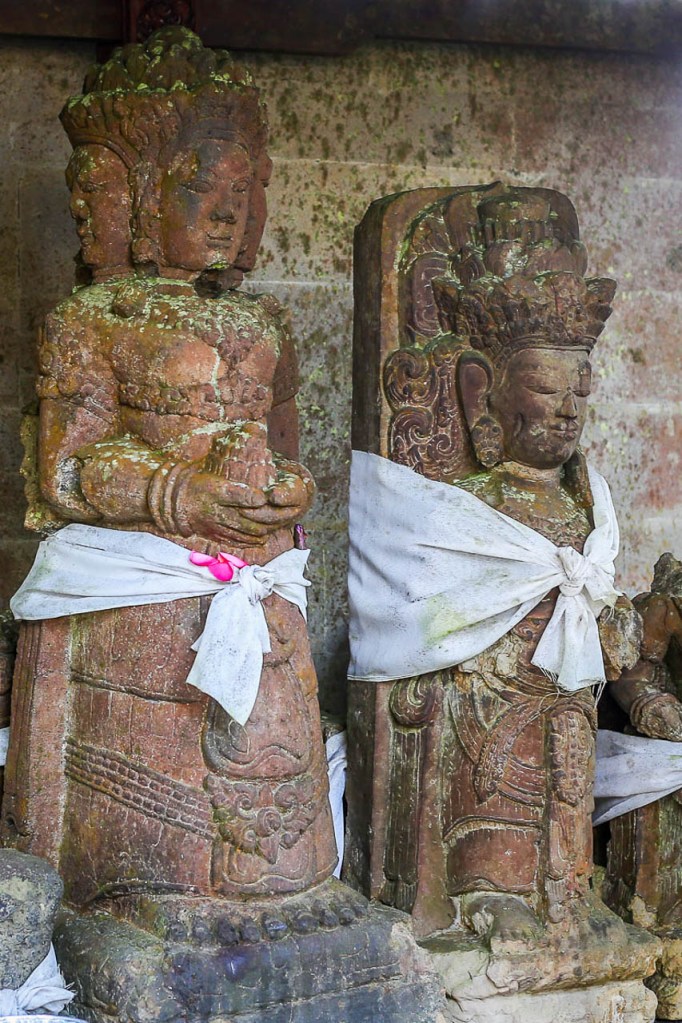
Meaning of its name: “Temple at the Summit of Mount Penulisan”. Penulisan means ‘writing’, which might refer to the ancient inscriptions found at the temple.
Also called: PURA PENULISAN, PURA PUCAK PENULISAN, PURA SUKAWANA, PURA TEGEH KAHURIPAN, PURA TEGEH KORIPAN. Tegeh is a Balinese word meaning “height”. Kahuripan/koripan means ‘life’ or ‘living’. Pura Tegeh Kahuripan can be translated as “a sacred place of higher life”.
Location: At the highest point of the gigantic crater wall of Mount Batur, 1745 meters above sea level.
Map: Sukawana, Kintamani, Bangli, Bali, Indonesia
Dates back to: Earlier than 11ᵗʰ century
Main features: Historic statues
Region: Mount Batur
Theme: Mountain Temples
The Summit Sanctuary
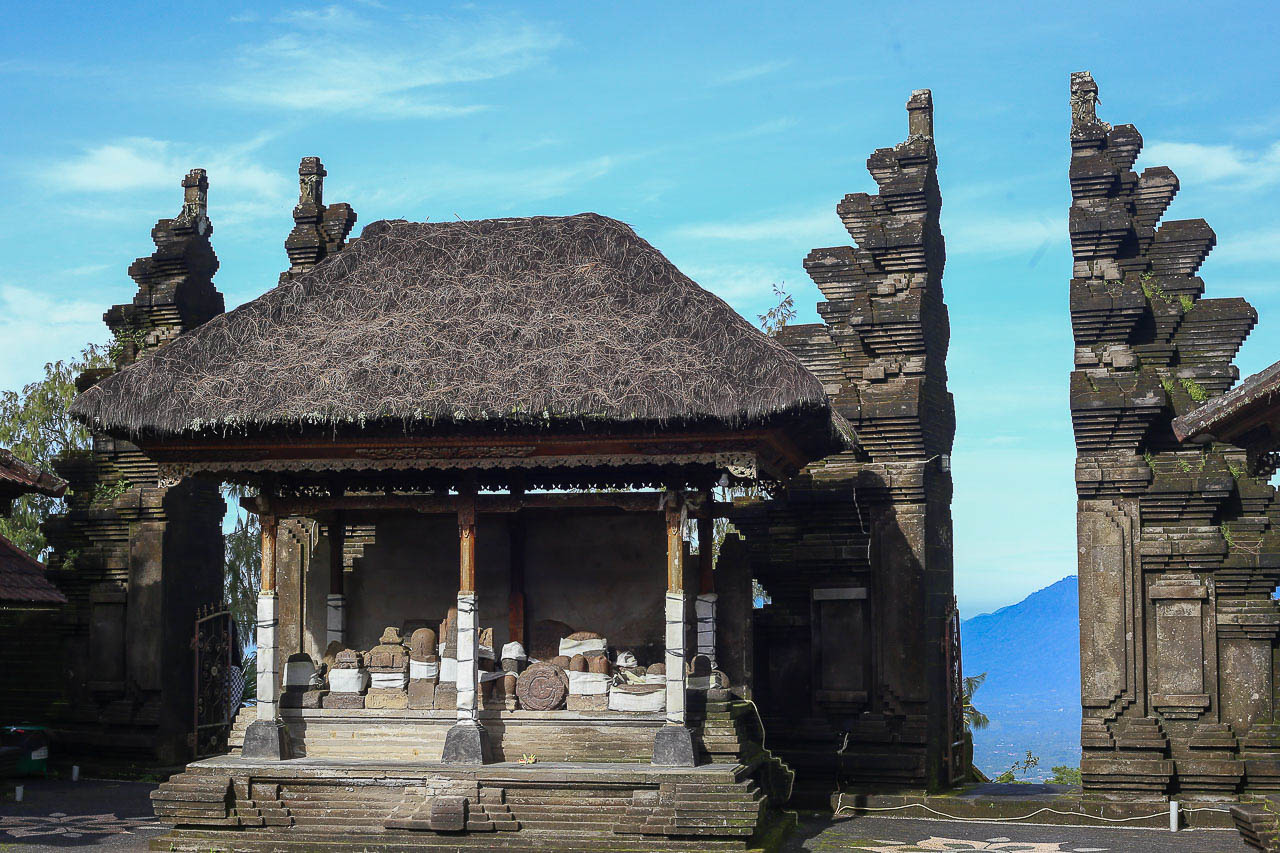
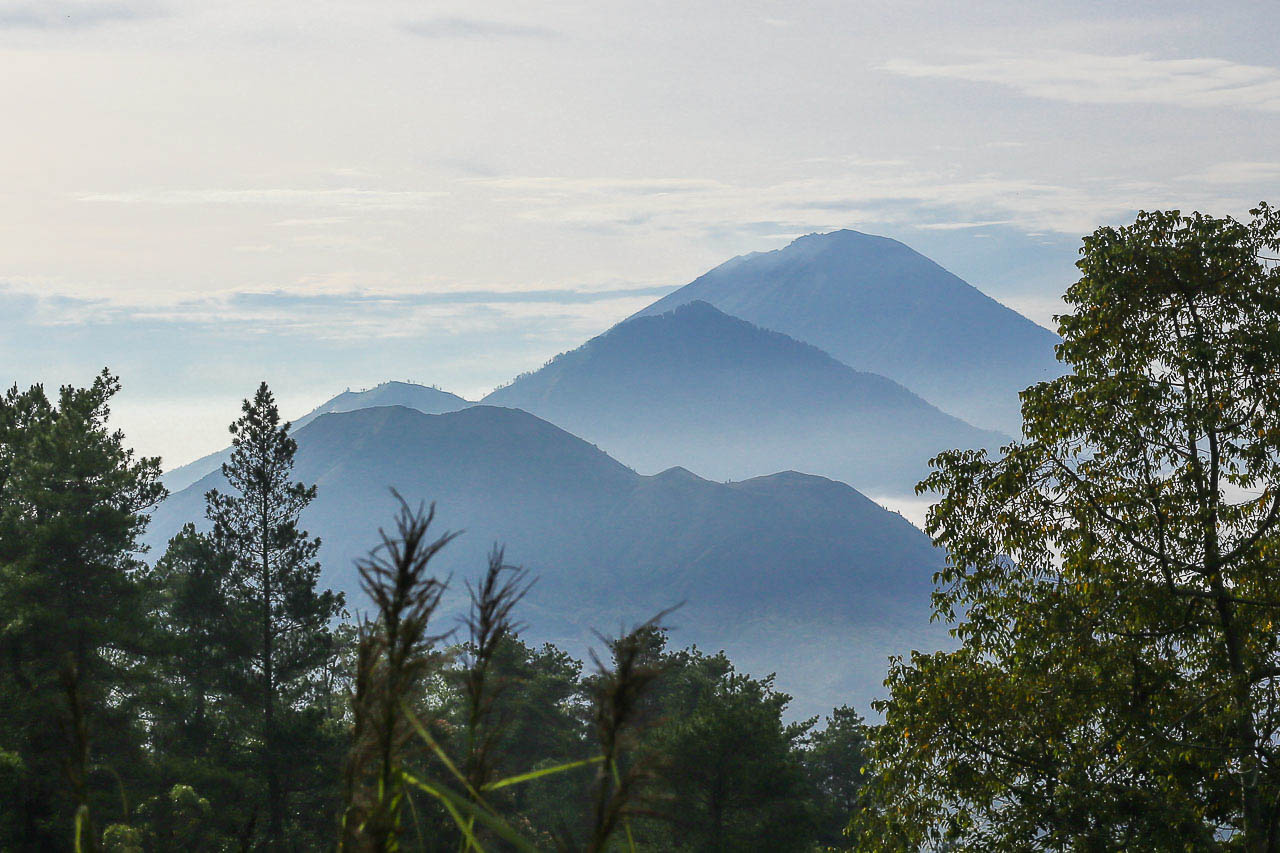
Pura Puncak Penulisan — also called Pura Tegeh Koripan — is Bali’s highest major temple. It is built at approximately 1,745 meters above sea level on the summit of Mount Penulisan, along the rim of the ancient Mount Batur caldera on the road connecting Kintamani — and with that also Central Bali — with Singaraja on the north coast. Because of its altitude and location, the temple is not only spiritually prominent but also marks a natural watershed divide, separating Bali’s north–south water flows. Its position is considered to be auspicious: it is in the elevated direction of kaja from both South and North Bali.
Architectural Cosmic Order
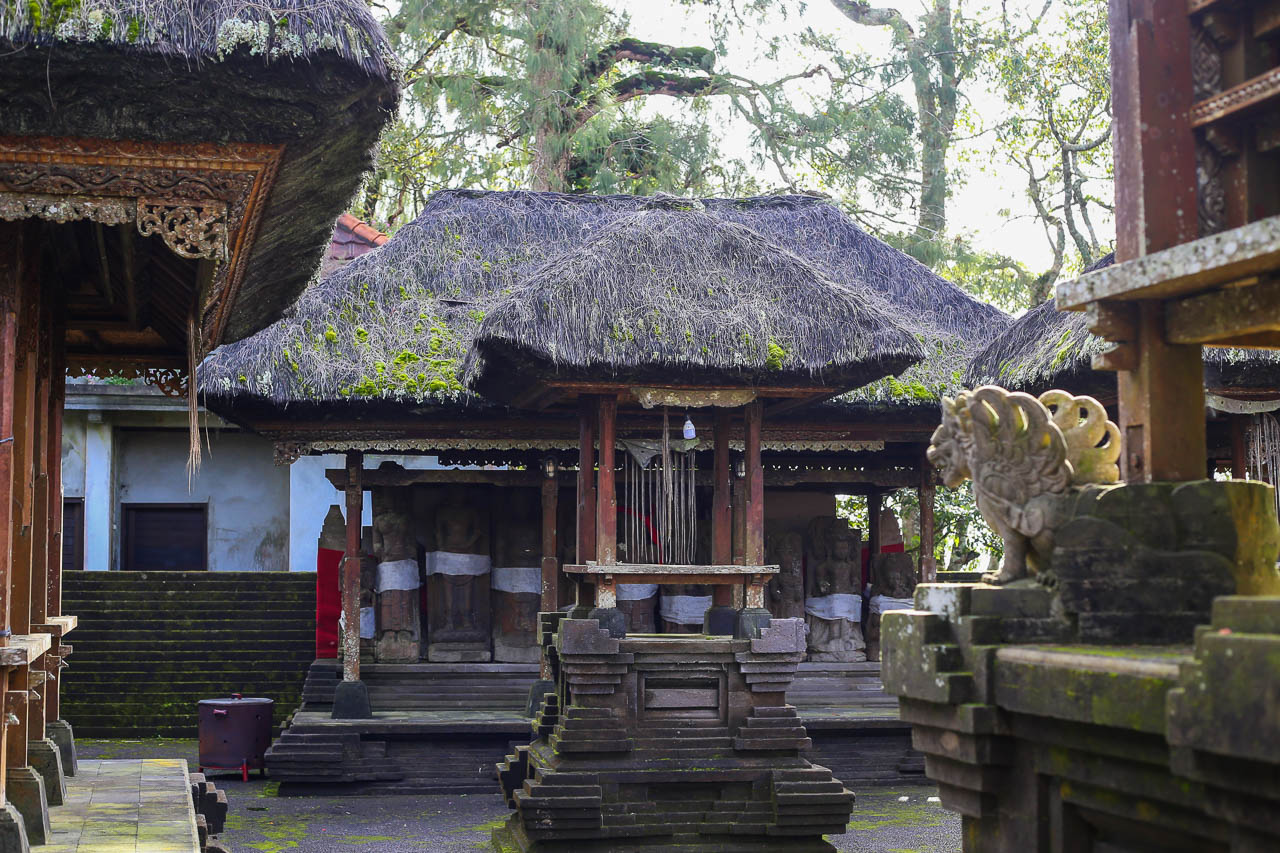
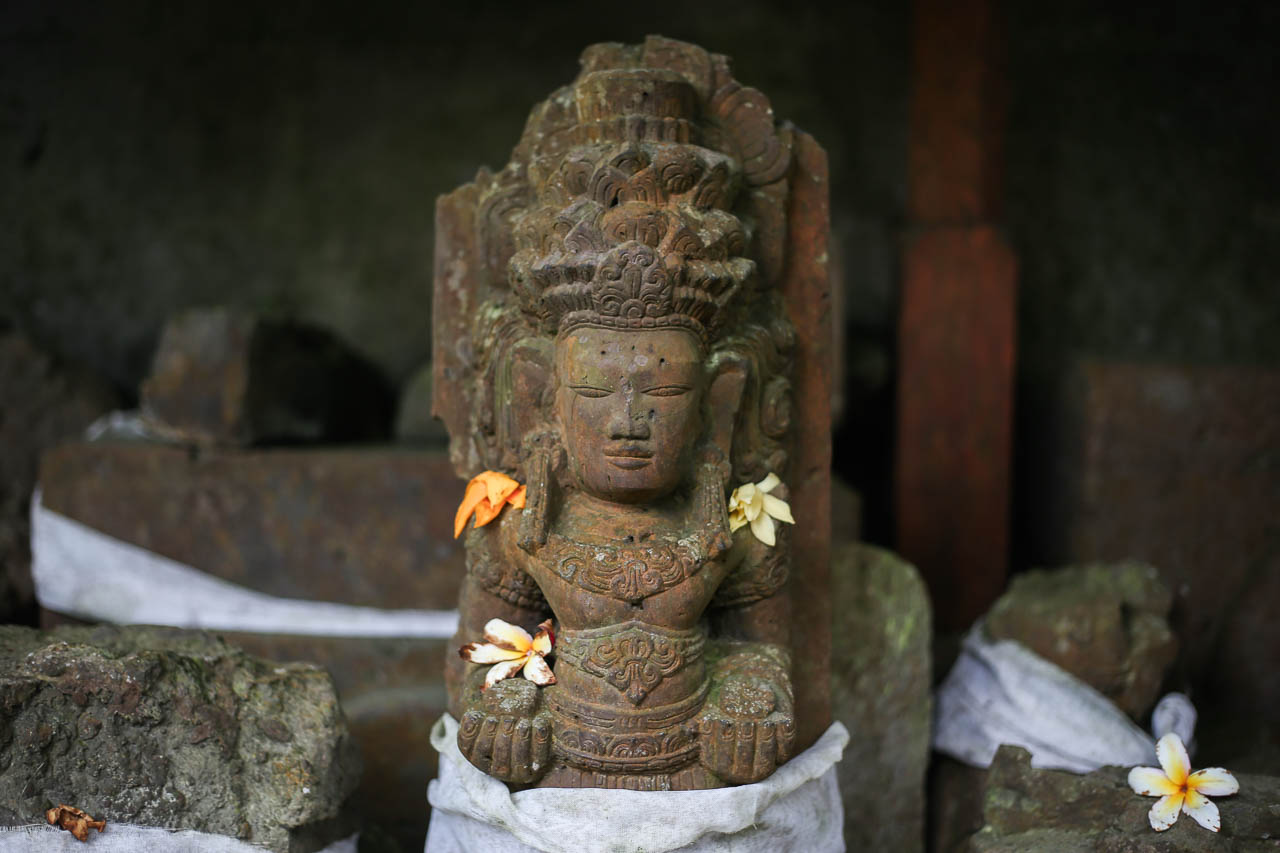
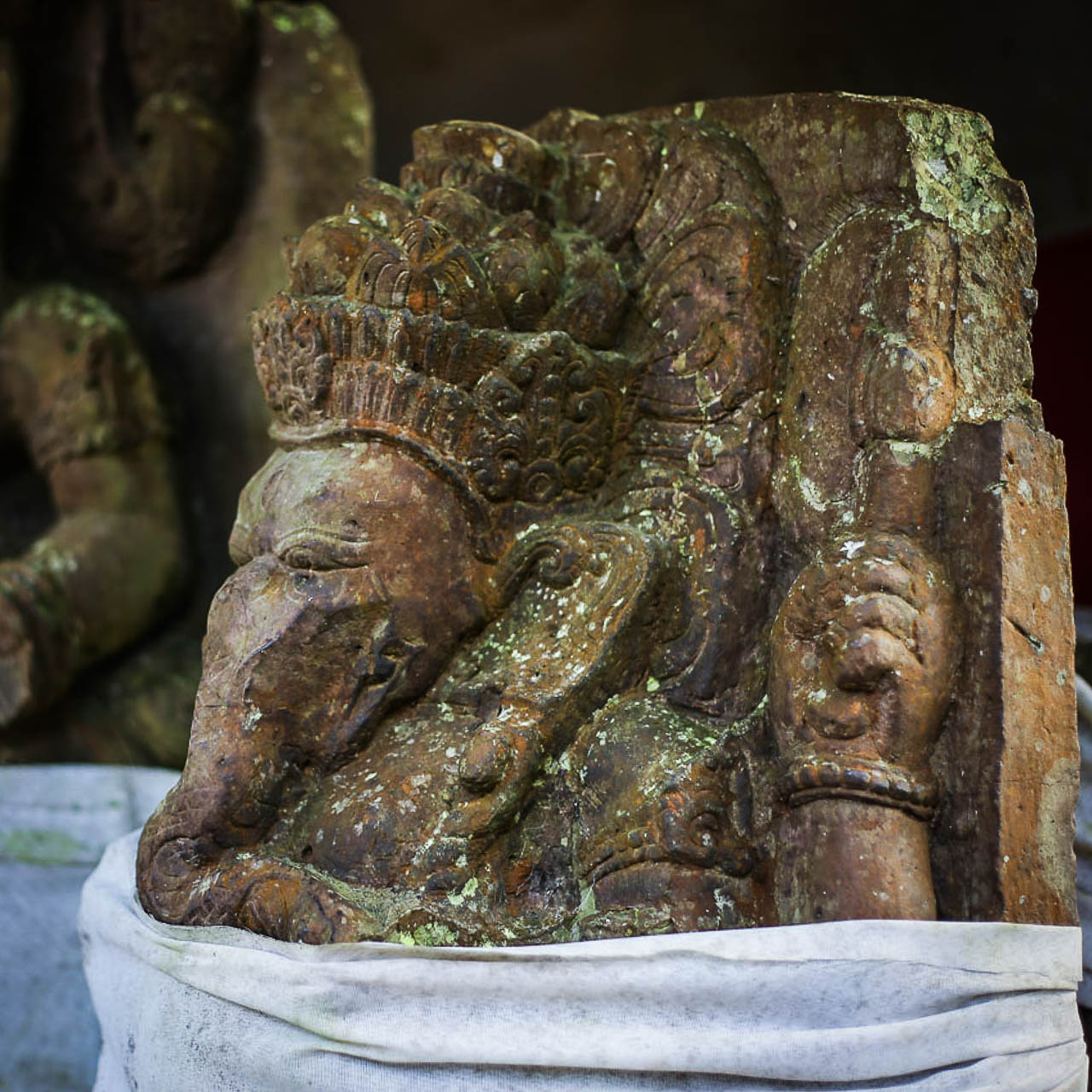
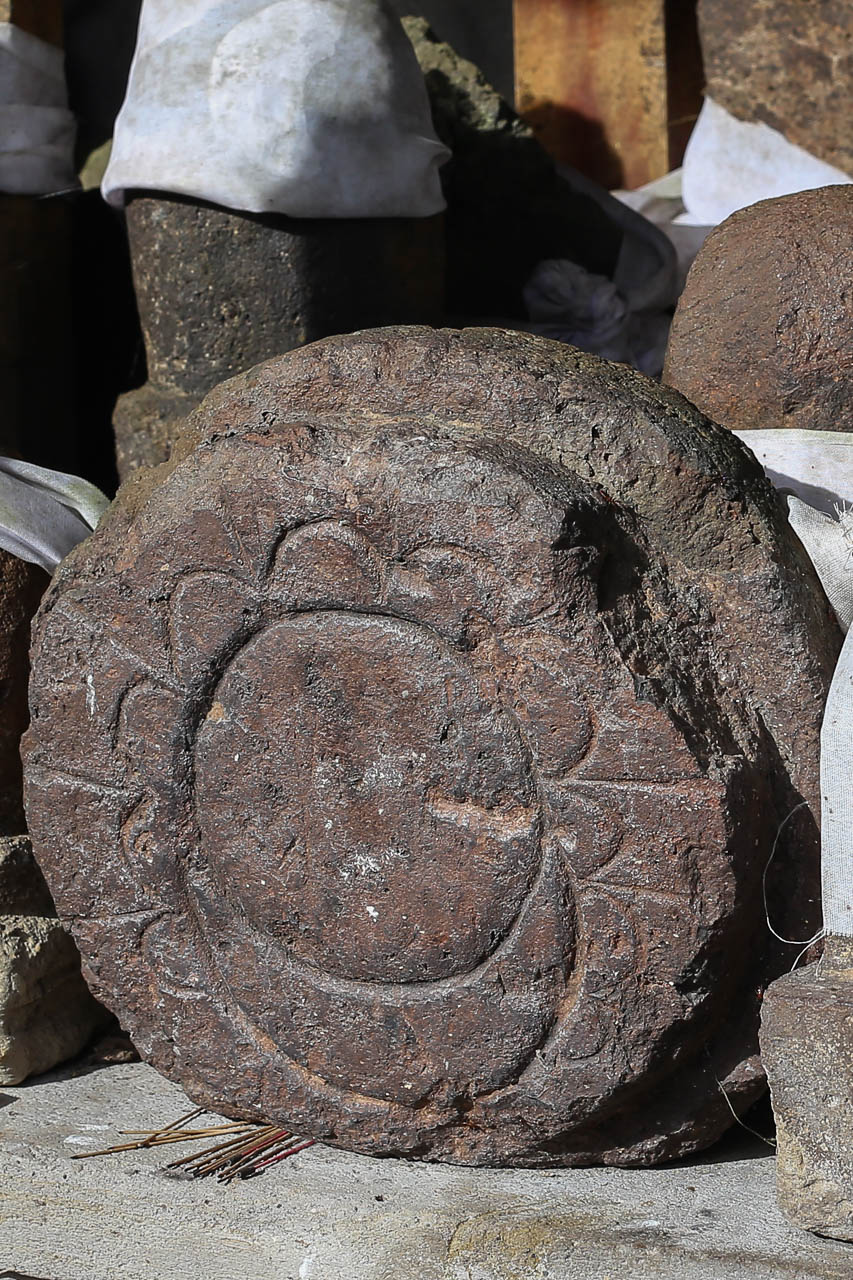
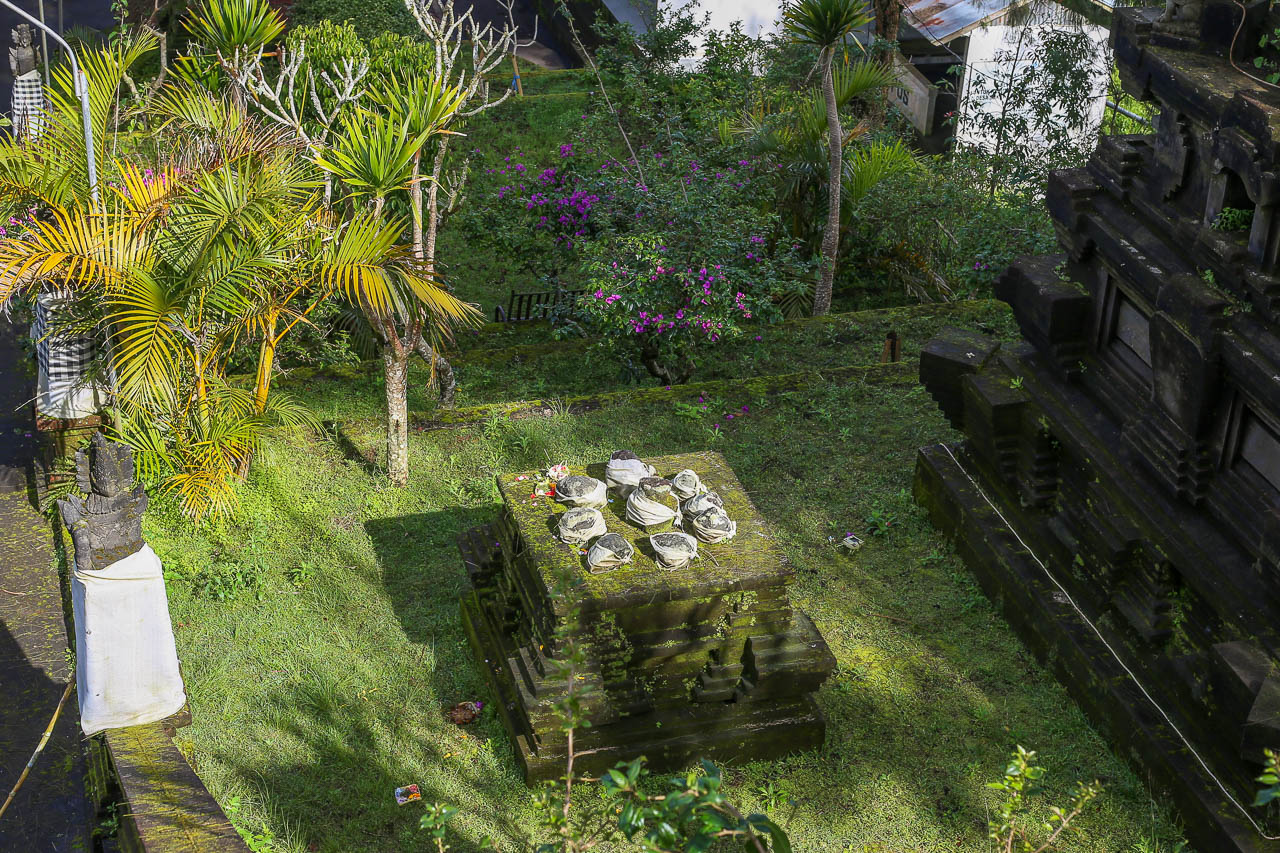
Pura Puncak Penulisan architectural form follows the punden berundak layout: it has a terraced, stepped structure, following the natural topography of a hill, typical of archaic Indonesian sanctuaries. It comprises seven ascending terraces, thought to symbolize the seven layers of the cosmos (sapta loka), which embodies the symbolism of elevation as spiritual ascent. The main temple is to be found on the highest level, reached by a long flight of stairs. Archaeological evidence suggests that the site has been sacred since the Bronze Age, with continuous use into the modern era. Statues and fragments found here date back to at least 1011 CE (Saka 933), and inscriptions link the site to early state formations and kings such as Udayana Warmadewa and Anak Wungsu.
Ancestral Memory
The temple is closely tied to political and dynastic history: it served as a gathering place for state and lineage rituals. Pura Puncak Penulisan was regarded as the mountain counterpart of Pura Penataran Sasih in Pejeng, and thus linked to the ancestor cult of the Pejeng dynasty.
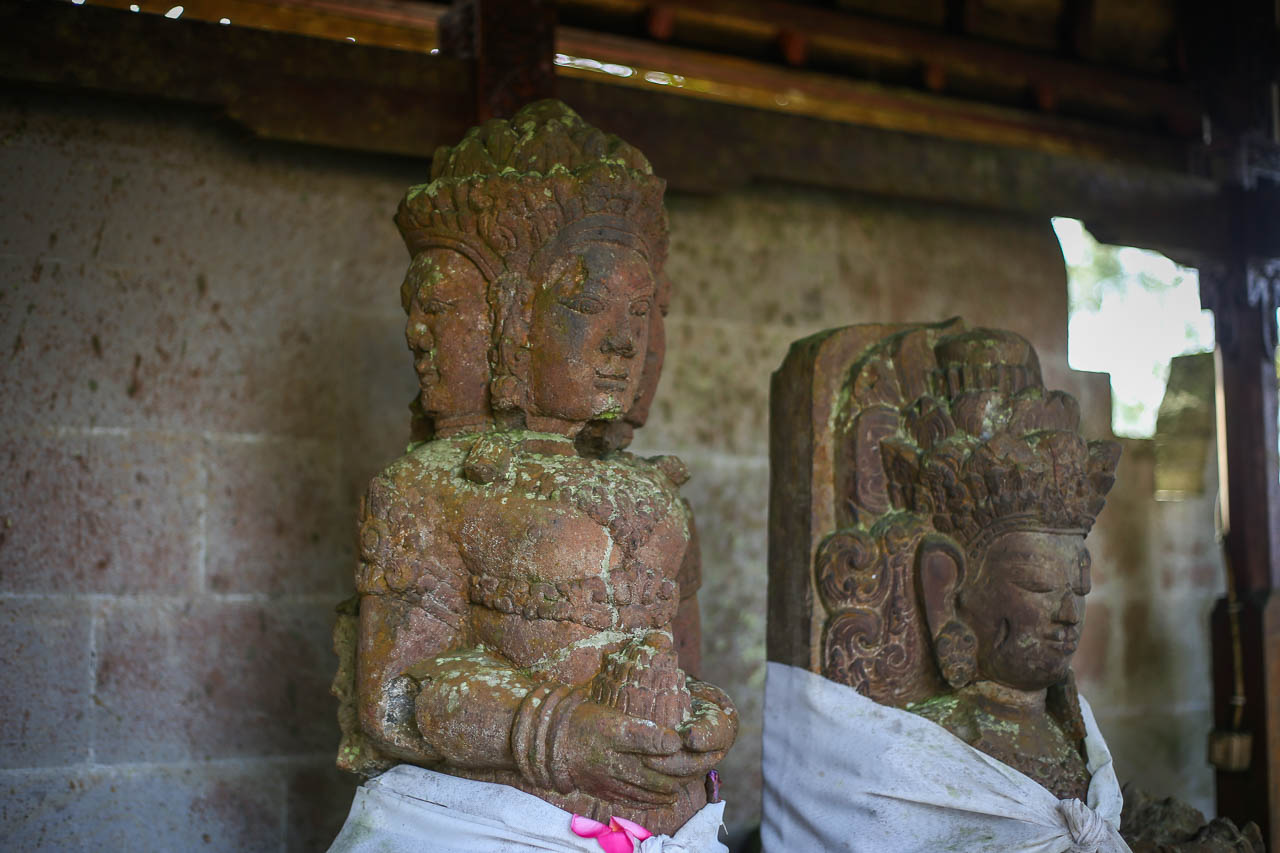
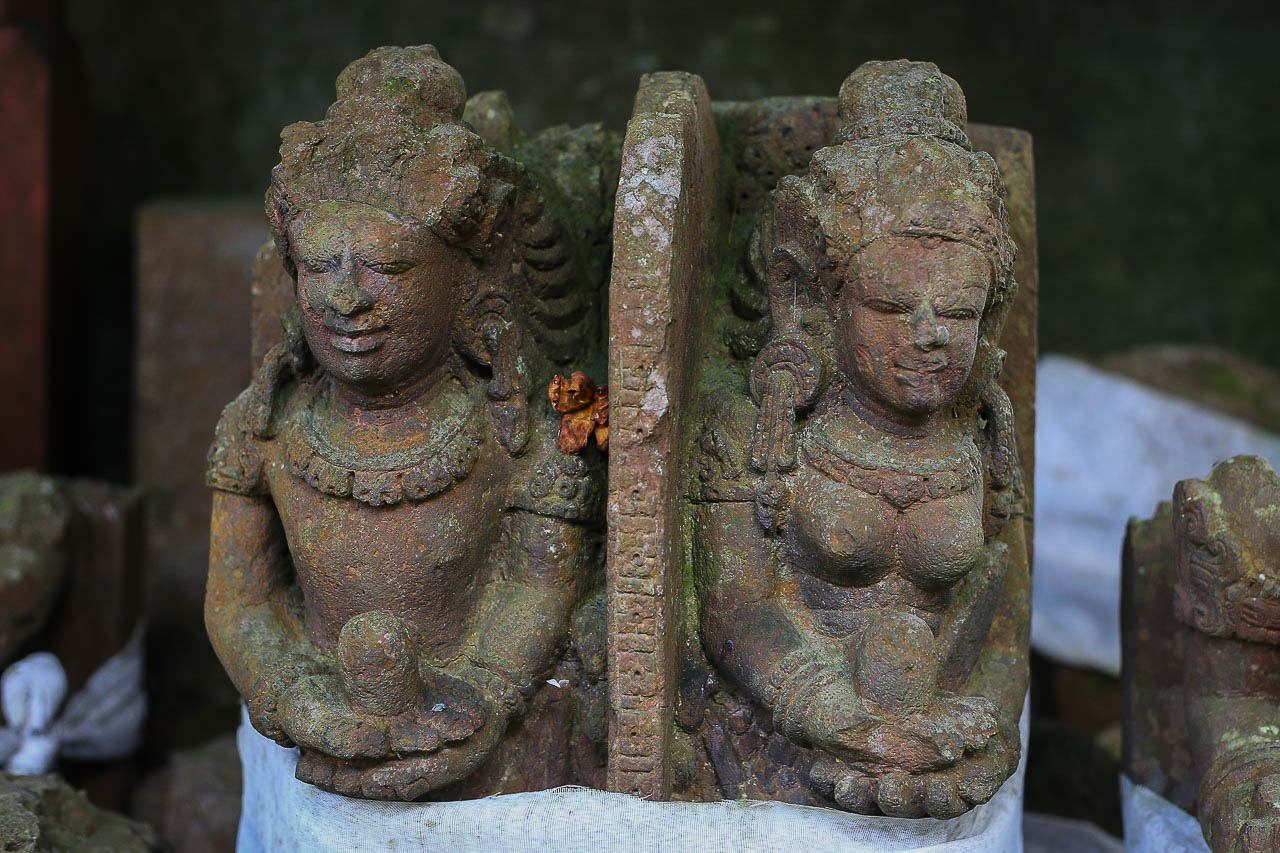
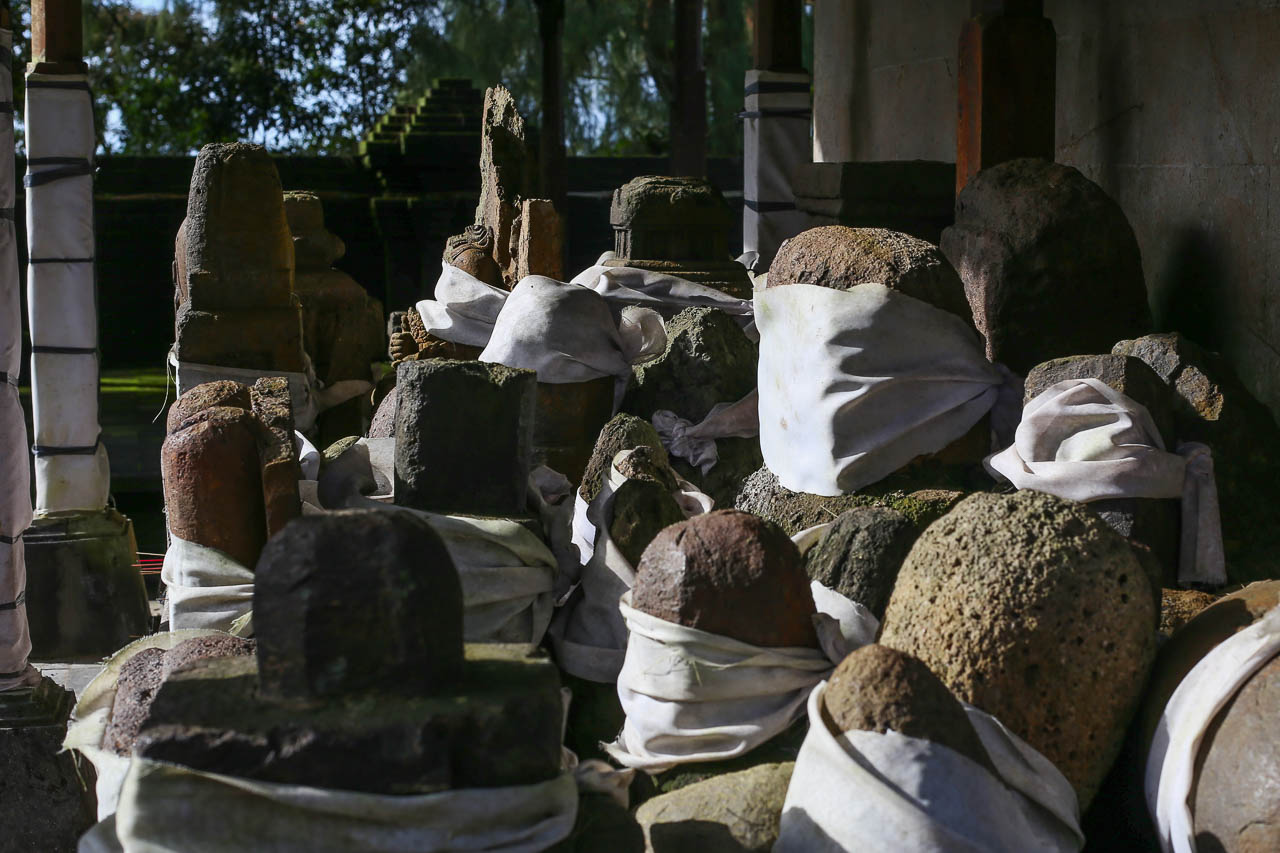
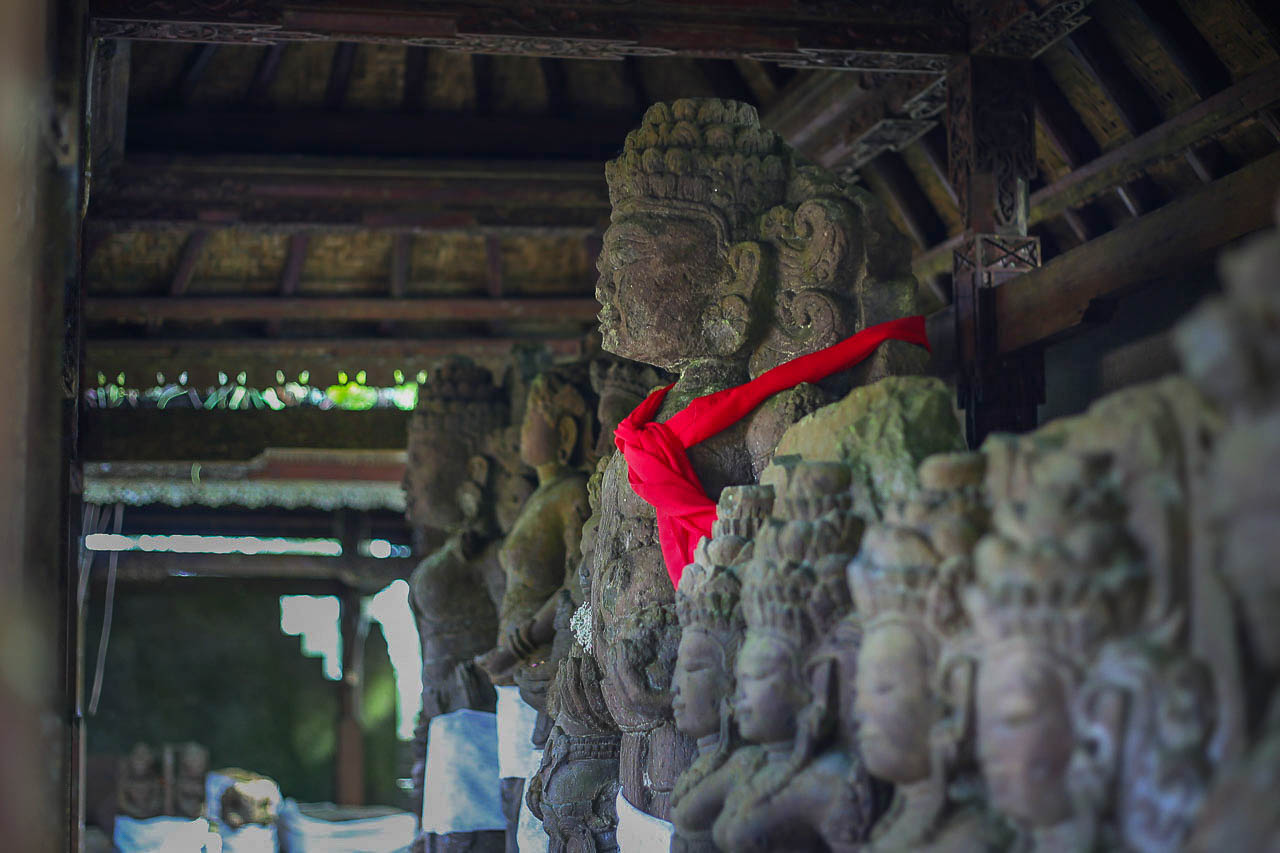
Some of the many ancient statues are of royal lineage and bear inscriptions indicating their consecration dates. The figure of Queen Bhatari Mandul, the consort of King Anak Wungsu, is dated to 1077 CE. Its inscription in the Kadiri Quadrate script closely resembles those found at Pura Gunung Kawi, which helped to date that site to the same period, the 11ᵗʰ century.
Water, Myth, and Ecological Significance
Penulisan’s spiritual significance is inseparable from its ecological roles. Streams that begin near Penulisan feed into Lake Batur, which is central to Bali’s famous subak system of irrigation. Thus the water flowing off Penulisan becomes part of a larger network of water management, feeding rice fields and sustaining livelihoods. In local myth, Penulisan is often seen as a primary source of life — not only water but spiritual sustenance. Legends speak of subterranean channels or tunnels, linking Penulisan to distant sacred sites, reinforcing Bali’s sense of a sacred geography: mountains, volcanoes, lakes, and human systems are woven together in myth and religious practice.
Bali Aga Identity
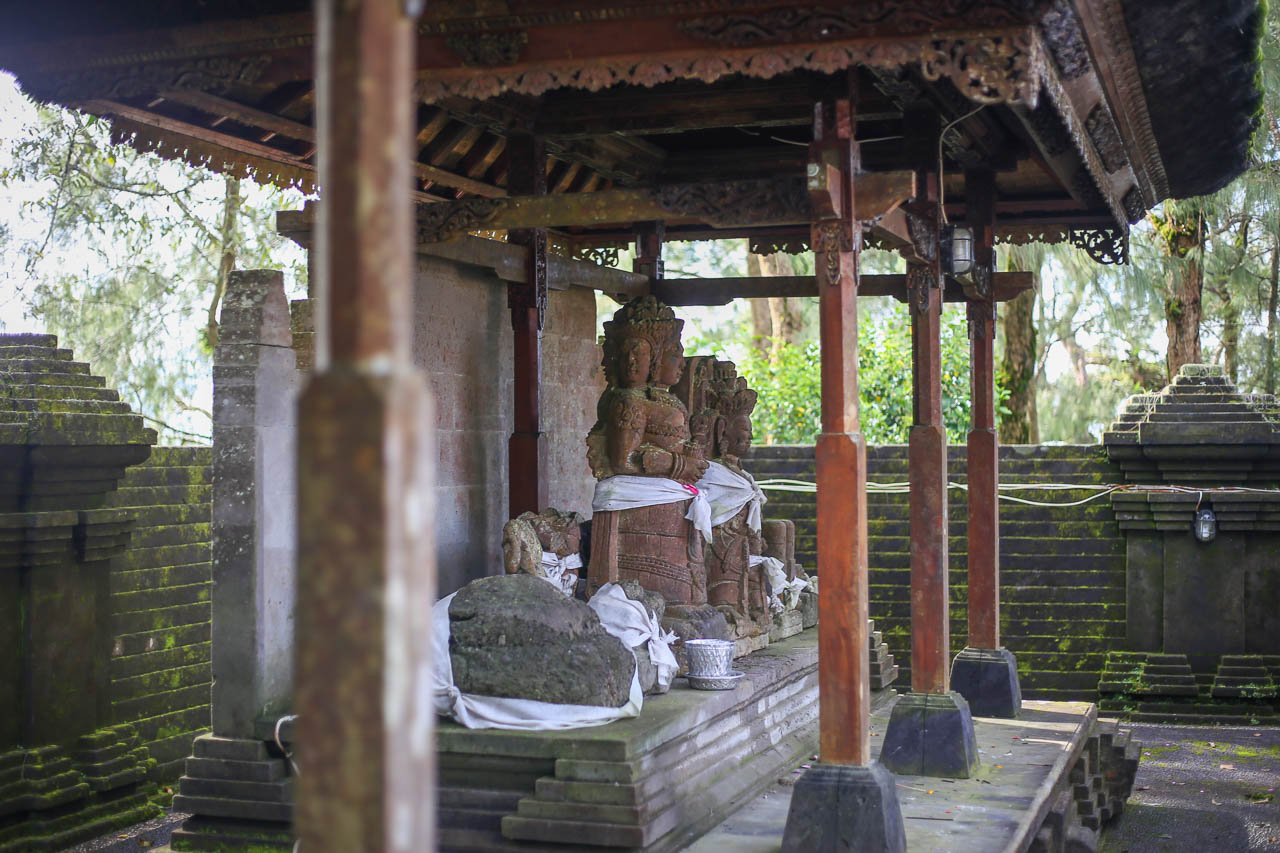
Considering its importance, you might be surprised as you walk up the stairs to find a small, simple temple — not at all grand or representative — with few carvings or ornaments. Pura Puncak Penulisan diverges in meaningful ways from standardized Balinese temple architecture. It lacks a padmasana (throne shrine), meru‑style tiered pagodas, and the Palinggih Ratu Pucak (the supreme deity’s fixed seat), all common in later temples. Local priesthood explains that the mountain itself is the deity’s throne, the summit is its symbolic meru. This aligns Penulisan with the Bali Aga tradition: older, pre‑Majapahit spiritual institutions that maintain distinct ritual practices, oral histories, and village autonomy.
Pura Puncak Penulisan is central to a network of banua — ritual alliances of Bali Aga villages that connect many highland communities through shared worship and ceremonies. These alliances are as symbolic as they are practical: all villages contribute materials, labor, ritual ingredients, and share ritual leadership of their common temples.
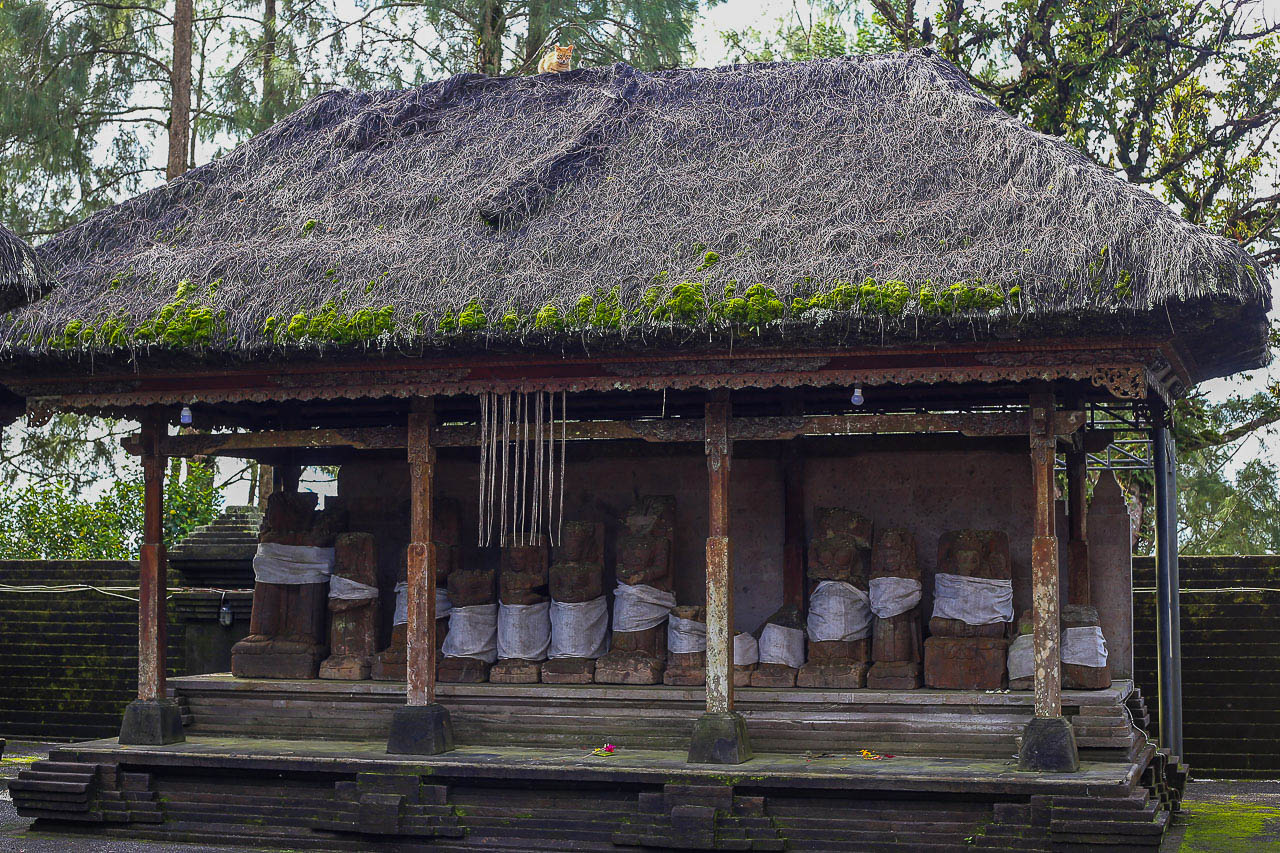
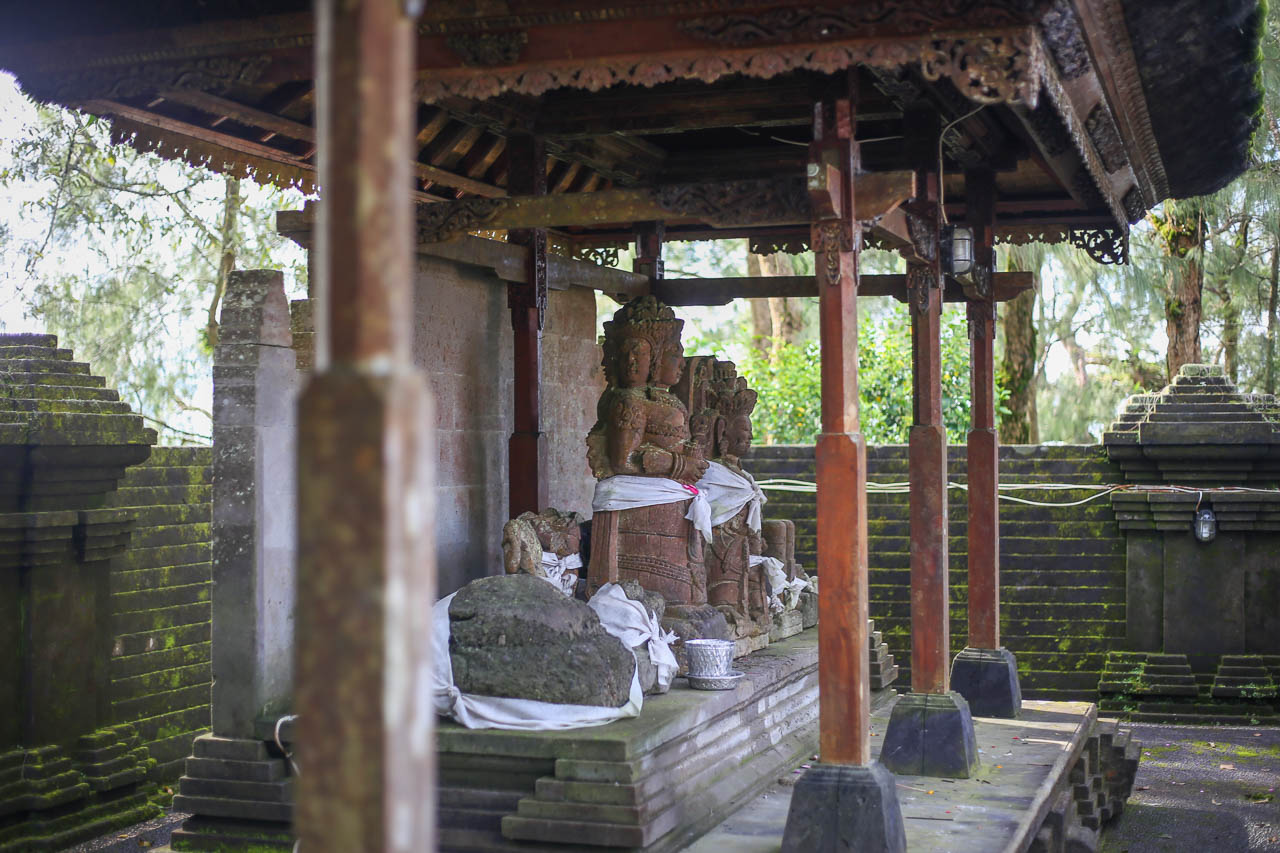
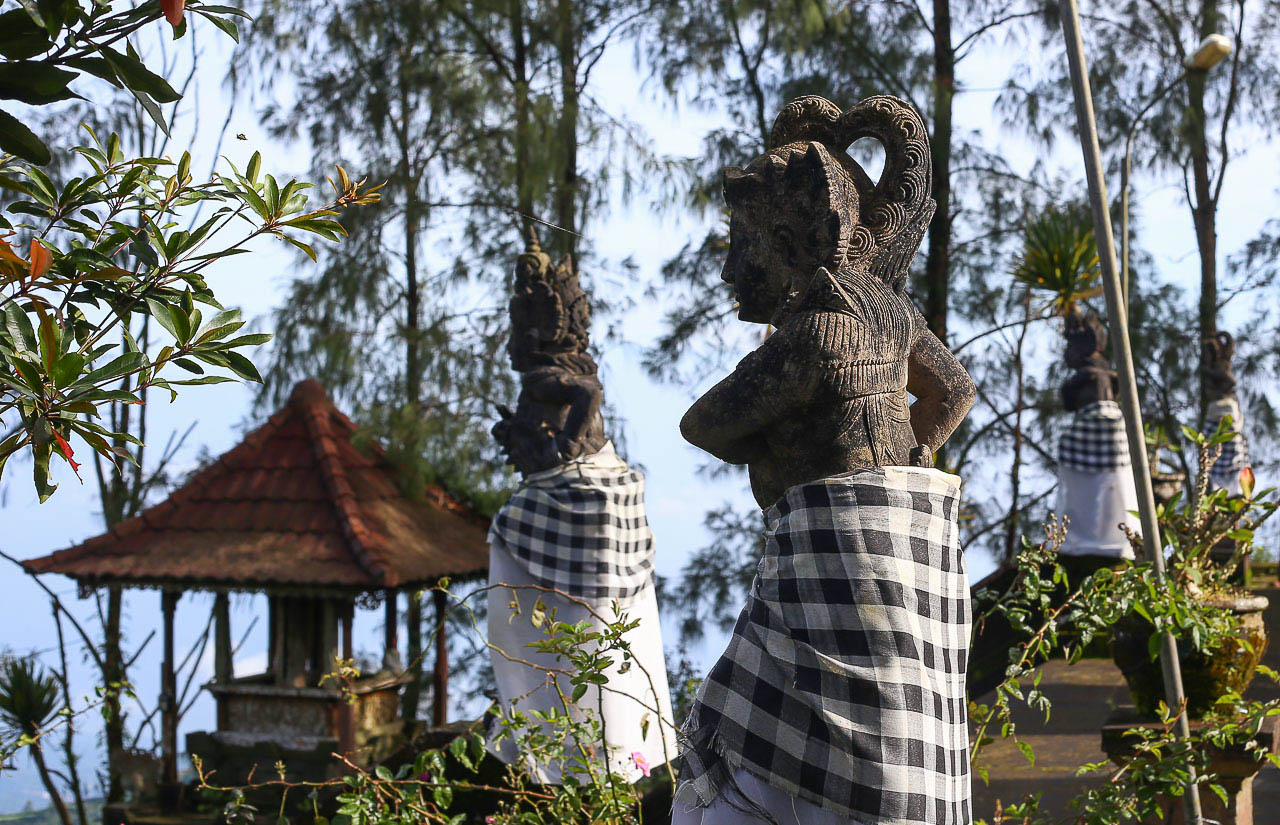
The temple’s significance rises through these banua village-alliances: it is both a spiritual axis (in cosmological, mythic, ecological senses) and a social institution, pulling together communities across diverse terrain. Rituals tied to Penulisan, especially those marking agricultural cycles, ancestral remembrance, and festivals, serve to renew social cohesion and affirm shared identity among the Bali Aga and neighboring communities. As a banua temple Pura Puncak Penulisan connects 30 villages and their around 33.000 inhabitants.
Context Today
Pura Penulisan being the regional temple of highland Balinese with Bali Aga tradition, it can be surprising that nowadays thousands of people from South Bali also attend the temple festivals. Some suggest that this is exactly because Pura Puncak Penulisan, like Pura Dalem Balingkang and a few other temples in the northern mountains, are associated with the Bali Aga tradition, offering a more indigenous ancestry to relate to. For many, this represents a more appropriate foundation for Balinese identity within an increasingly Java-centric nation-state, compared to the so-called ‘Bali Majapait’ temples (such as Pura Besakih, Pura Taman Ayun or Pura Luhur Uluwatu), which are rooted in the religious tradition of the Javanese Hindu Majapahit Kingdom of the 13ᵗʰ to 16ᵗʰ centuries.
The broader Mount Batur caldera area, including Lake Batur, has official recognition from UNESCO. Since 2012, the caldera is part of the Global Geopark Network, and Lake Batur is recognized as a World Heritage site for its role in sustaining the subak irrigation system.
While some European archaeologists were kept away from the temple by armed guards in the 19th century, today visitors may freely access this sacred site. It is advisable to seek permission before entering, behave respectfully, and wear a sarong and sash if you wish to go up the temple hill.
Bibliography
Hauser-Schäublin, Brigitta & I Wayan Ardika. Burials, Texts and Rituals: Ethnoarchaeological Investigations in North Bali, Indonesia. Universitätsverlag Göttingen, 2008.
Hobart, Angela and Ramseyer, Urs and Leemann, Albert The Peoples of Bali. Oxford and Cambridge: Blackwell Publishers, 1996.
Kempers, A. J. Bernet Monumental Bali. Singapore: Periplus Editions, 1991.
Lansing, J. Stephen Perfect Order: Recognizing Complexity in Bali. Princeton University Press, 2006.
Raharja, I Gede Mugi. Heritage, Knowledges and Memories on Pura Penulisan Architecture Bali at Ancient Mount Batur Caldera Area. Cultura. International Journal of Philosophy of Culture and Axiology 15(1)/2018: 85-101., 2018.
Reuter, Thomas The House of Our Ancestors. Precedence and dualism in Highland Balinese Society. Leiden: KITLV Press, 2002.
Reuter, Thomas. The Banua of Pura Pucak Penulisan: A Ritual Domain in the Highlands of Bali. Review of Indonesian and Malaysian Affairs. 32. 55-109., 1998.
Spitzing, Günter Bali. Tempel, Mythen und Volkskunst auf der tropischen Insel zwischen Indischem und Pazifischem Ozean. Köln: DuMont, 1983.
Previous temple:
Next temple:
Photos and text © 2025 Alida Szabo
