— At the Crossroads of Artistic Legacy and Ritual Tradition —
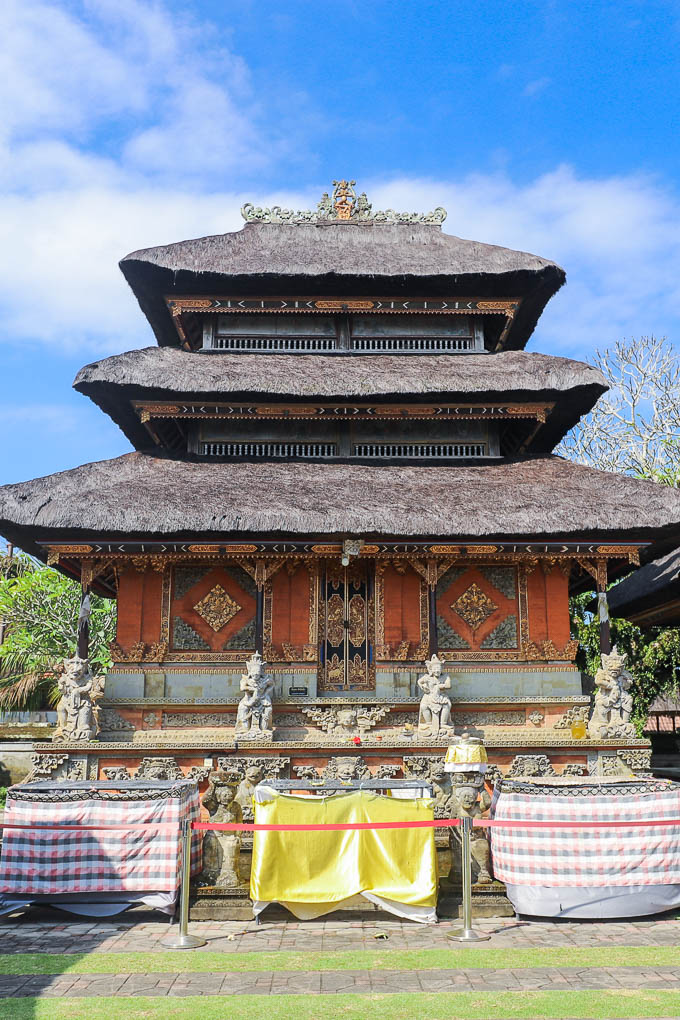
Also called: PURA PUSEH DESA BATUAN, BATUAN TEMPLE
Location: About ten kilometers south of Ubud, on flat land
Map: Batuan, Sukawati, Gianyar, Bali, Indonesia
Dates back to: 11ᵗʰ century
Main features: Gate from the 14ᵗʰ century, sculptures
Region: Around Ubud
Requirements for visit: Entrance fee (2025): IDR 50,000, with sarongs included.
Accessibility: Easily accessible.
Batuan village

Batuan village is widely recognized for its traditional Balinese painting style and batik production. The concentration of Brahman families and artistic lineages has made Batuan an important node within South Bali’s religious and artistic networks. The village gained international recognition in the 1930s through the distinctive style of its painters who, curated and documented by Margaret Mead and Gregory Bateson, depicted and preserved many aspects of everyday life in their works.
Pura Puseh Batuan is part of Batuan’s Tri Kahyangan temple triad: pura desa (village temple), pura puseh (temple of origin), and pura dalem (temple of the dead). Within this system, the pura puseh is dedicated to Vishnu as preserver and to the deified founders and ancestors of the village, linking cosmology with local genealogy. Pura Puseh is thus not only a shrine to Hindu deities but also a ritual center where the honoring of common ancestry affirms collective belonging and continuity.
Historical background
It is one of the best-preserved village temples in south-central Bali. An inscription at the site dates the founding of Batuan and its temple complex to 944 Saka (around 1020–1022 CE), making Pura Puseh Batuan over a thousand years old. The temple is associated with the Warmadewa dynasty and the religious reforms of Mpu Kuturan, who systematized the Tri Kahyangan village temple concept in early 11ᵗʰ‑century Bali.
Over the centuries, the temple witnessed shifts from Balinese kingdoms to Dutch colonial rule while remaining a locus of local authority and identity. By the 17ᵗʰ century, Batuan had become a center for high caste (Brahman) families both of the Shiva (Shivite Hindu) and the far less prevalent Buddhist sect.
Architectural evidence and statues suggest continuous use and periodic rebuilding from as early as the 10ᵗʰ–13ᵗʰ centuries, with later additions in the 18ᵗʰ century and a documented restoration in 1992.

Layout and architecture
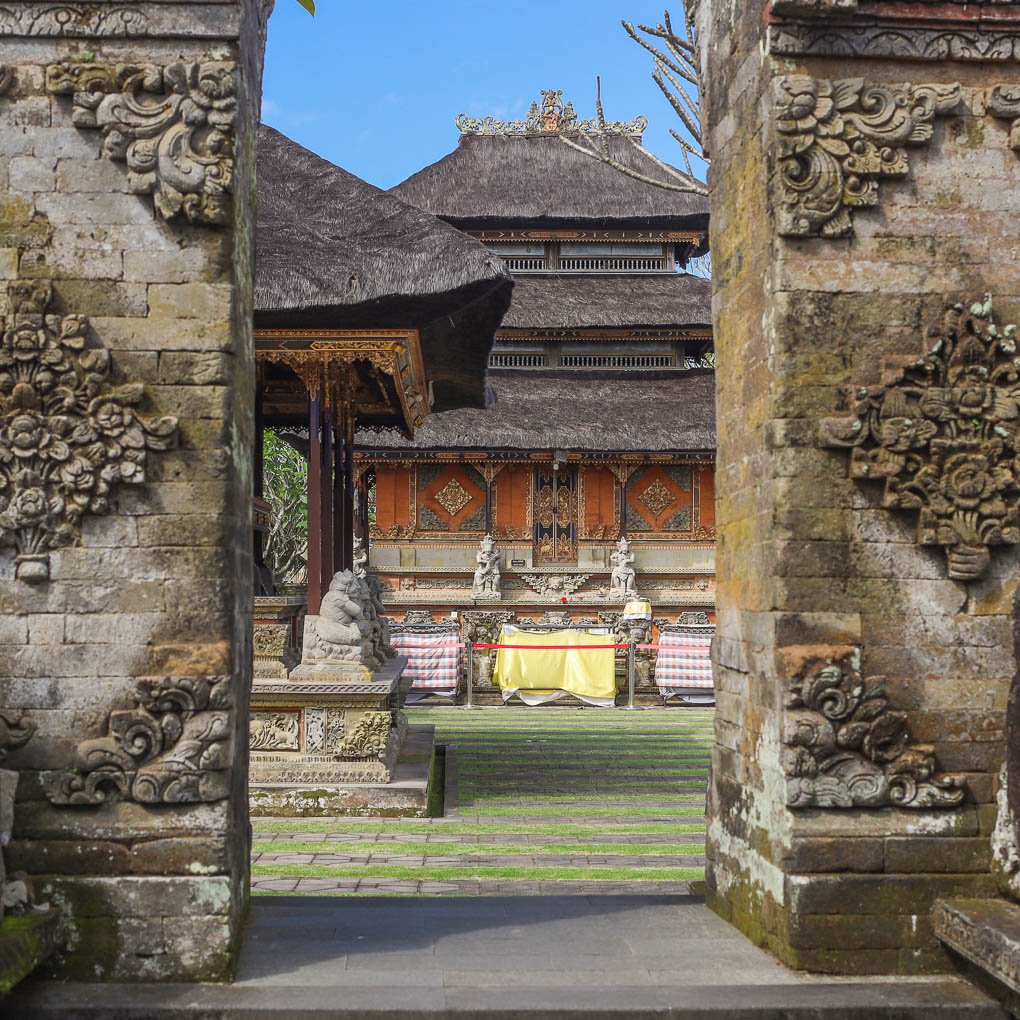
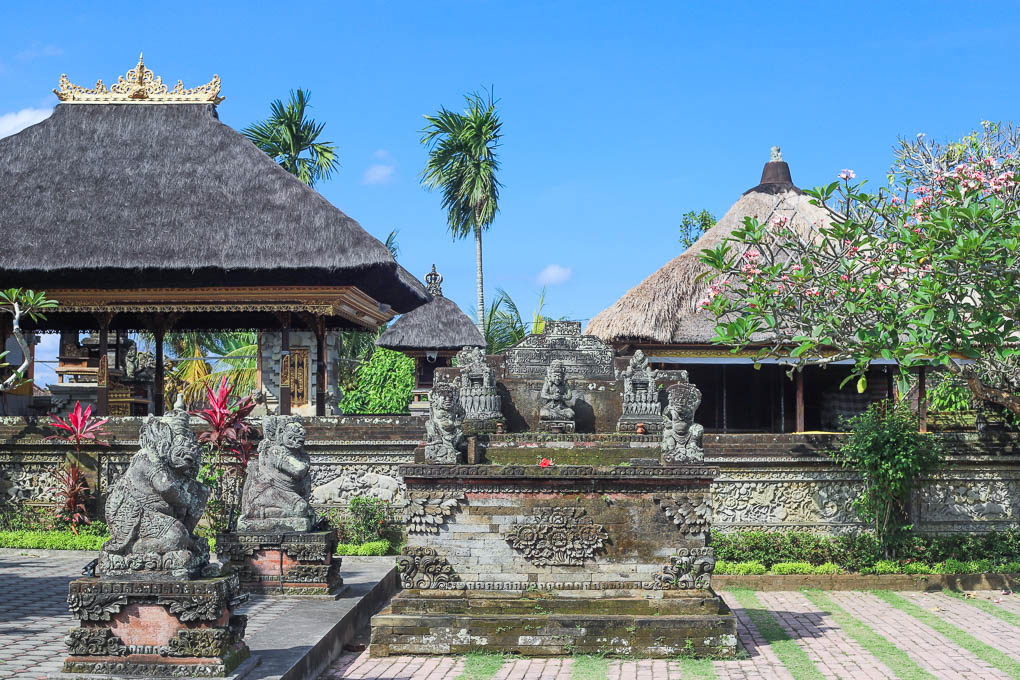
The complex follows Asta Kosala Kosali principles of Balinese sacred architecture, with a sequence of outer, middle, and inner courtyards (jaba pisan, jaba tengah, jeroan) separated by elaborately carved gates.
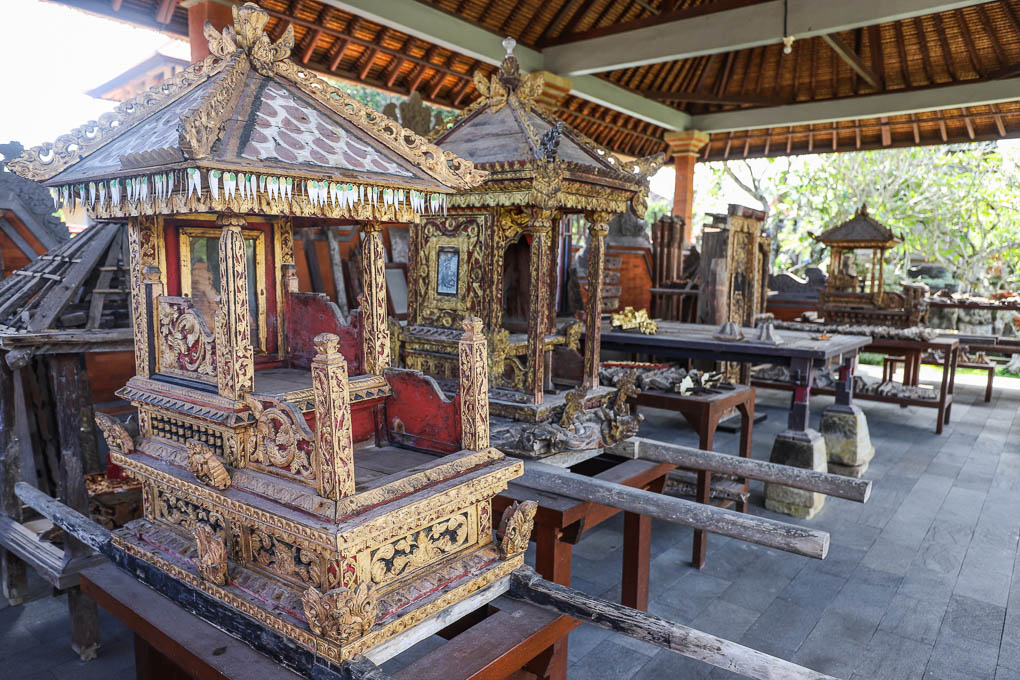
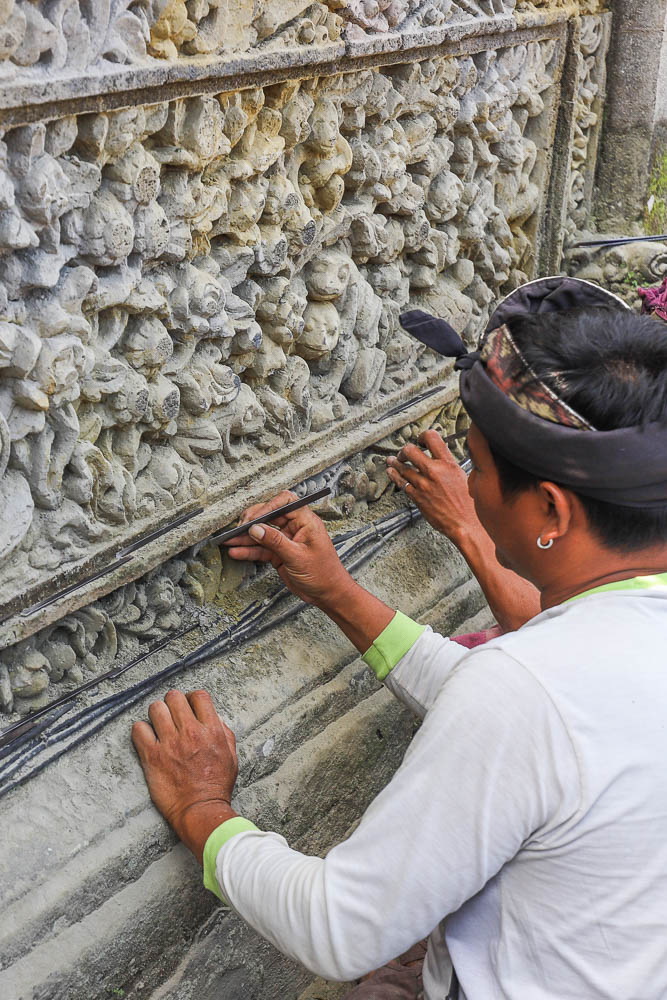
Within the inner courtyard stand meru shrines with multiple thatched roofs, a padmasana shrine for Sang Hyang Widhi, various bale (pavilions) for offerings and priestly functions, and a kori agung gate symbolizing the passage of deities into the sacred space. Roofs are traditionally made from black palm fiber, while dense sandstone bas-reliefs cover walls, platforms, and shrines with mythological figures, demons, animals, and ornamental foliage.
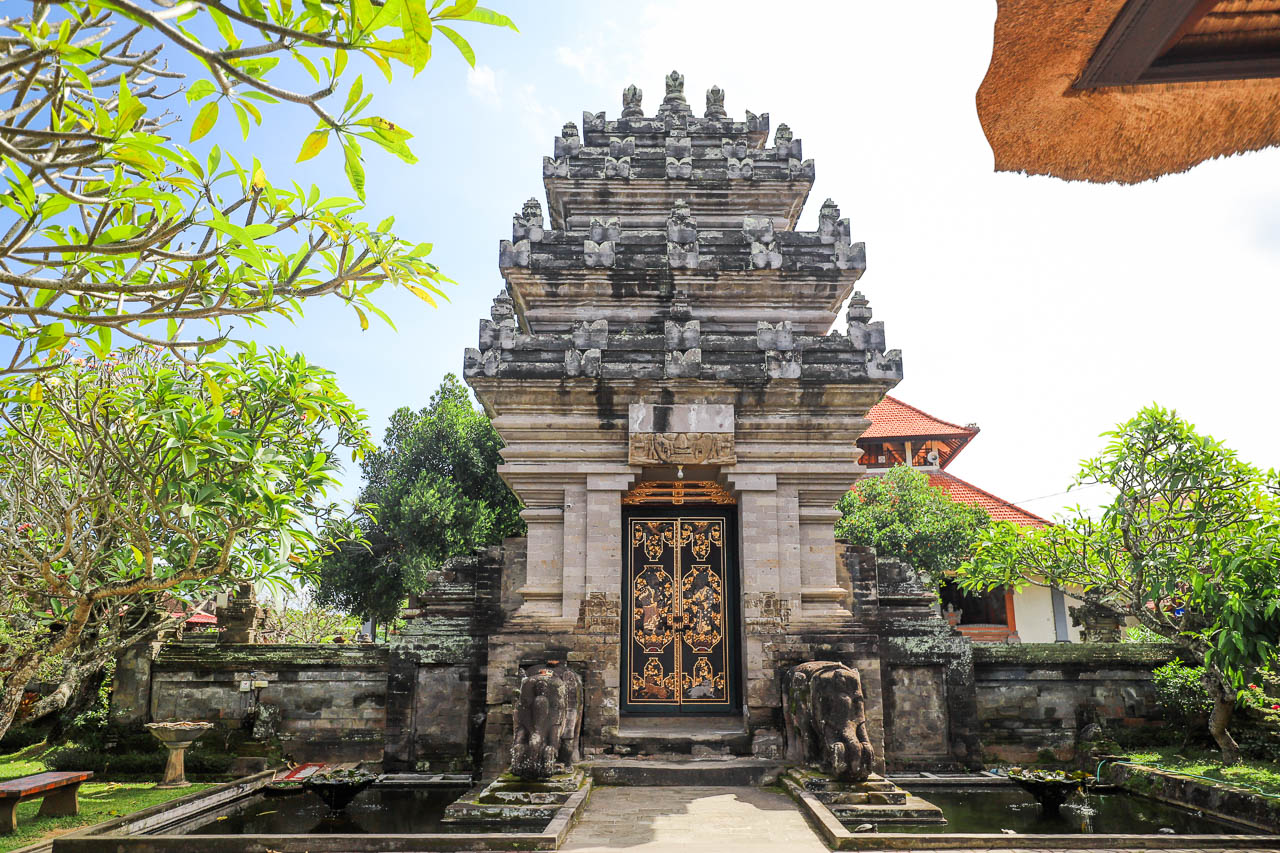
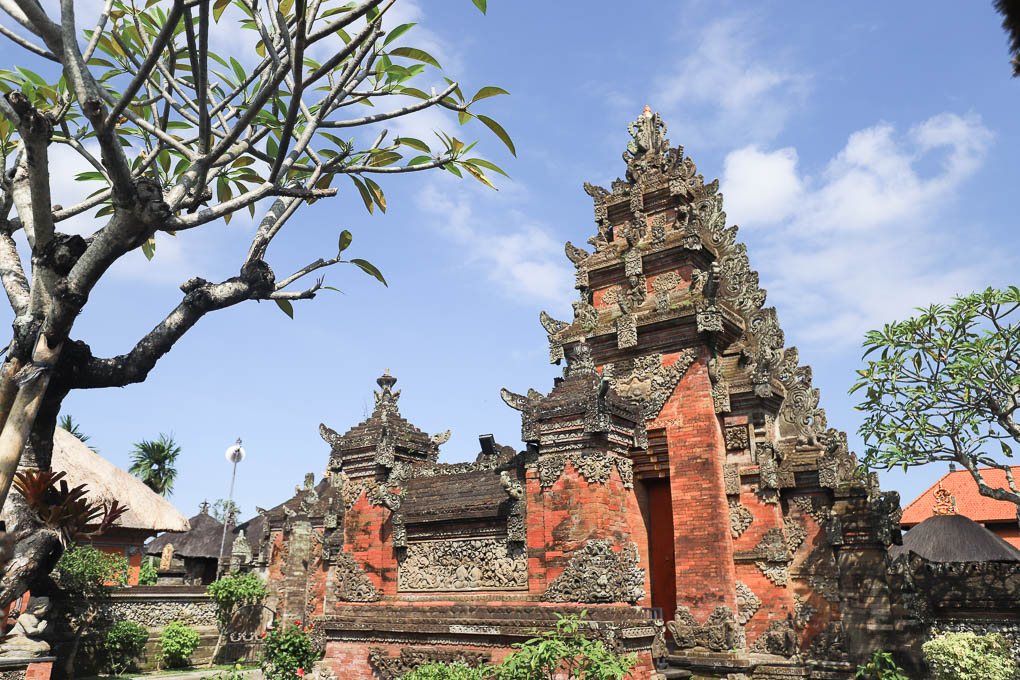
The temple’s west gate, restored only in 1992 after suffering damage in the 1917 earthquake, likely dates to the 13ᵗʰ–14ᵗʰ centuries and displays features similar to the gates of nearby Pura Puseh Canggi and Pura Hyang Tiba. After the earthquake, the temple was reoriented along a north–south axis, which significantly reduced the importance of the former west-facing gate in the northwest corner, even though it had served as the main entrance for many centuries. The reason for this reorientation remains unclear.
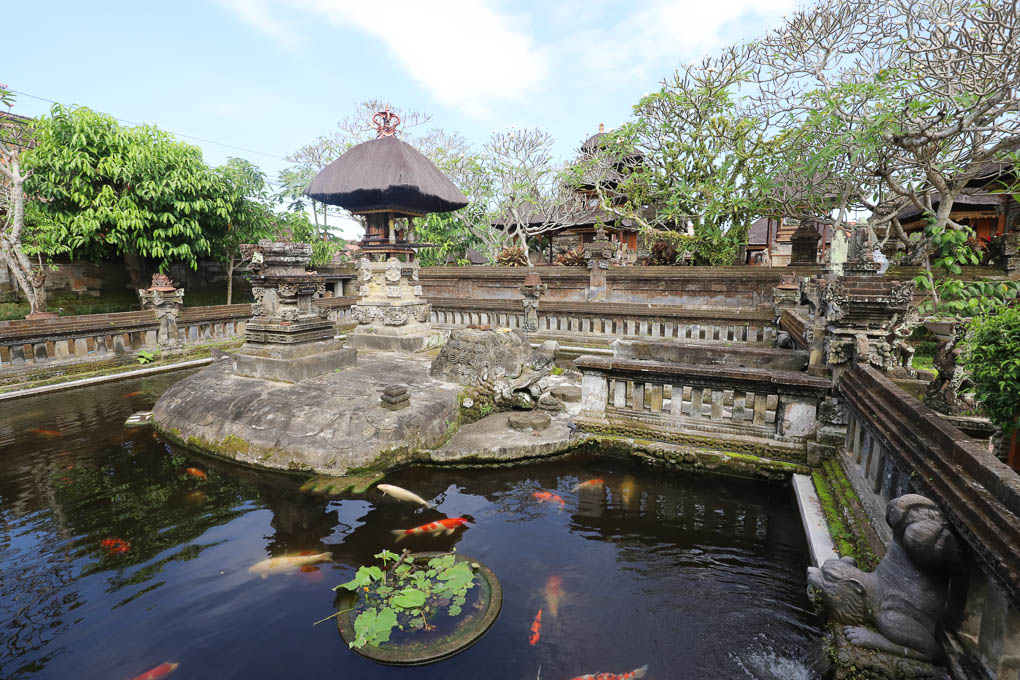
The back side of the temple is an unusual water garden, with a huge doorway on the west reminiscent of Javanese candi (or Balinese prasada) buildings. A pond has been restored not long ago since its collapse in the earthquake of 1917. At the center of the koi pond is Bedawang, the cosmic turtle upon whom the universe rests.
Sculptures and iconography
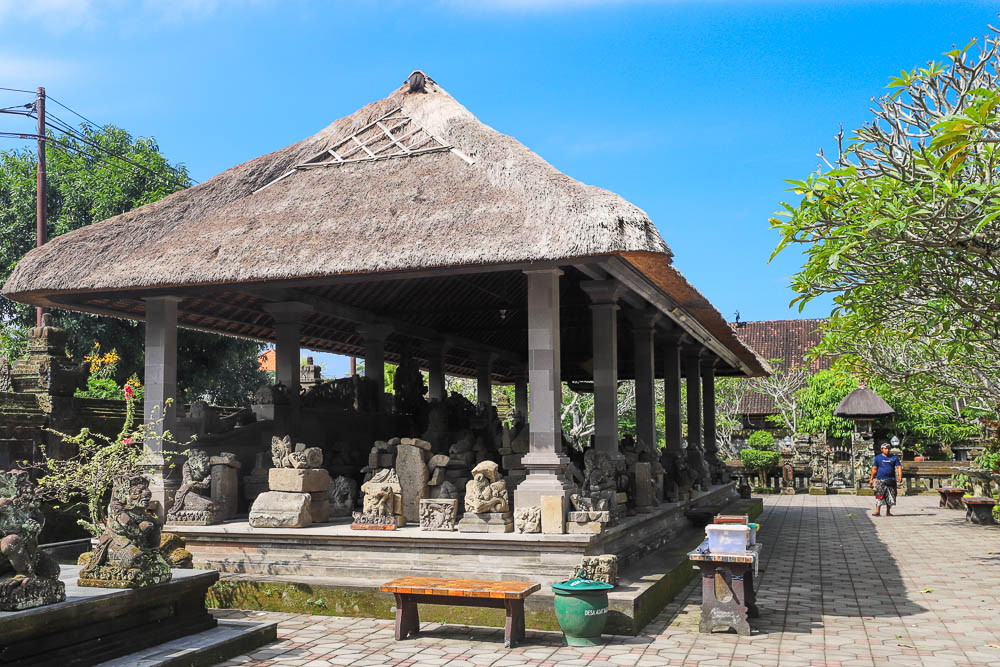
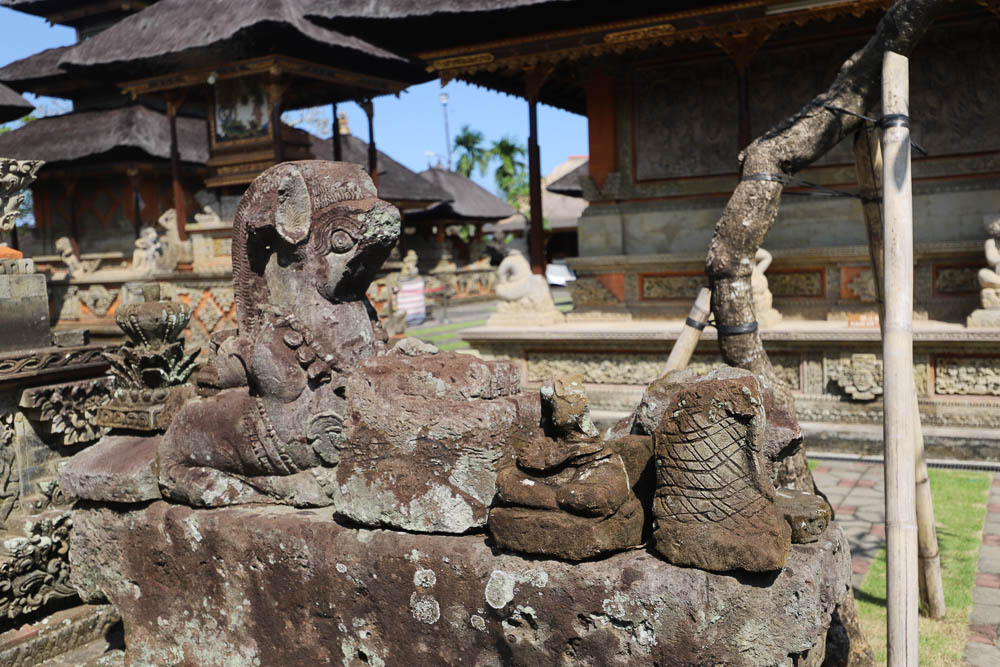
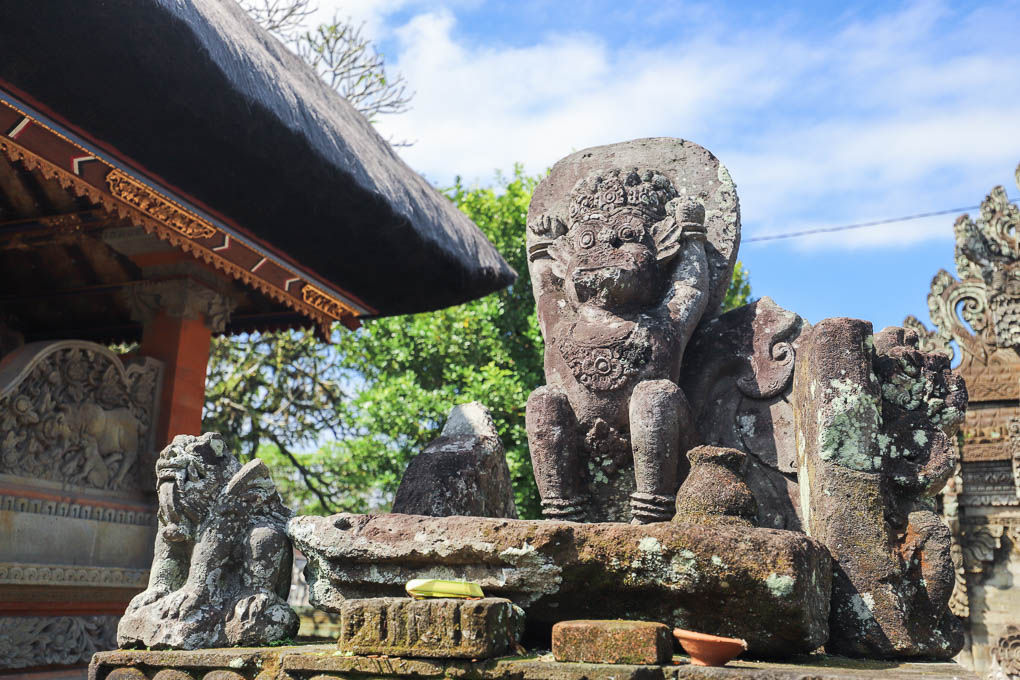
The temple is noted for an unusually rich collection of stone sculptures, many considered very old. These include dwarapala guardian figures, anthropomorphic embodiment statues, animal figures, phallic symbols, and grotesque demon images (often associated with the concept of time and destructive forces). This iconography shows a layering of older, possibly pre‑Hindu or early Hindu elements with later classical Balinese styles.

The temple also preserves statues of Ida Betara Siwa and Ida Ratu Saung, which may date from between the 9th and 14th centuries. Both statues are considered highly sacred and remain inaccessible even to researchers; they have never been photographed and are kept under strict custody by the temple’s head priest.

Contemporary use
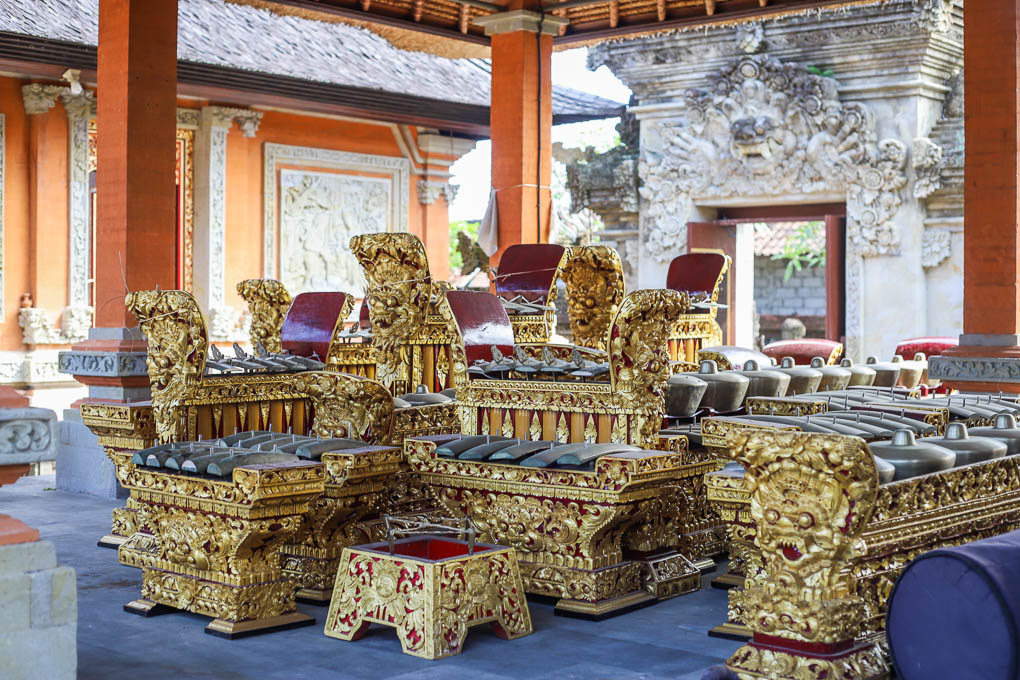
As the pura puseh and pura desa, the temple is a focal point for village festivals, odalan (temple anniversary), and rites that mark agricultural and life‑cycle events. During major ceremonies, the large outer hall fills with towering gebogan offerings of fruit and flowers, while gamelan orchestras accompany processions and dances in the courtyards.
In its current form, the temple honors five major niskala (non-material) deities, collectively known as the betara-betara, as well as numerous so-called “lesser” gods and demonic beings referred to as the buta-buta. The five principal deities are: Ida Betara Puseh, the deity of the sacred realm of Batuan; Ida Betara Desa, representing the primordial ancestors of the community; Ida Sanghyang Aji Saraswati, a female deity who manifests in the copper inscription of a royal edict (for this reason, she is also known as Ida Betara Prasasti, the goddess of the inscriptions); Ida Betara Rambut Sedana, a dual deity embodied in old Chinese-style coins and associated with both commercial and agricultural prosperity.
These deities are honored twice a year during major temple ceremonies: the odalan, held every 210 days according to the Balinese calendar, and Taur Kasanga, which takes place once each lunar year in the ninth month.
Special dress codes and ritual purity rules apply; residents maintain the complex collectively, reflecting the temple’s place within the customary village (desa adat) system.
The temple is also known for its gambuh dance performances, held on the 1st and 15ᵗʰ of each month.

Visiting
The temple is part of many tourist itineraries and is often crowded with visitors. Some consider it the most beautiful temple in the area. To fully appreciate it, try to avoid the hottest hours of the day, as there is little shade.
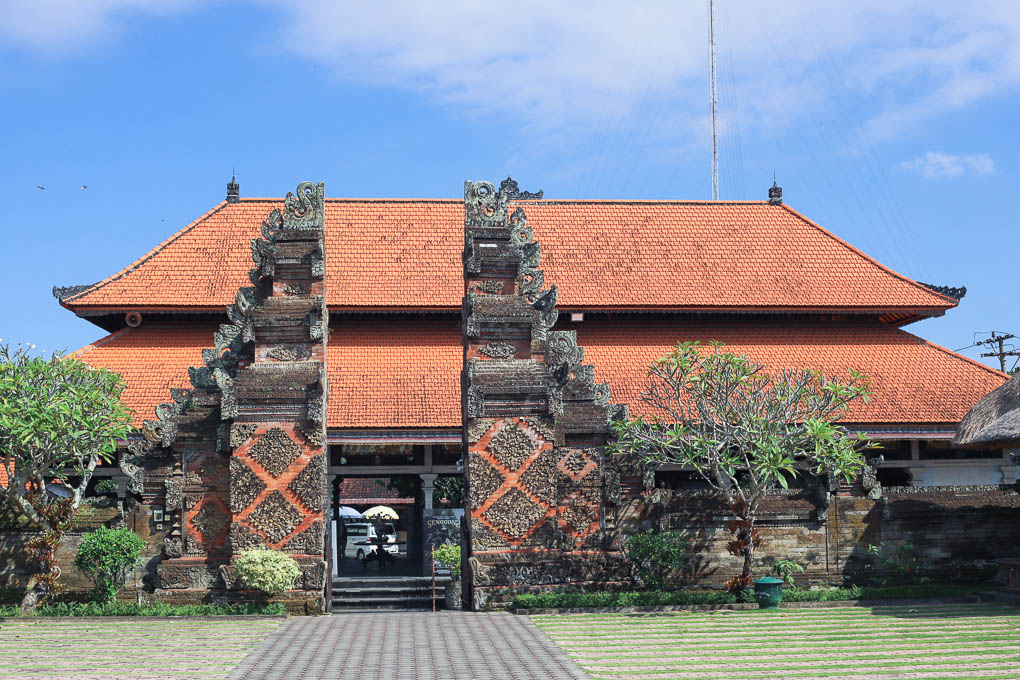
There are official opening hours (from 8 am to 5 pm) and an entrance fee (IDR 50,000 in 2025). Tickets can be purchased at the large meeting hall on the opposite side of the road. Sarongs can also be borrowed there.
Bibliography
Geertz, Hildred. The Images of Power. Balinese Paintings Made for Gregory Bateson and Margaret Mead. Honolulu: University of Hawai‘i Press, 1994.
Geertz, Hildred. The Life of a Balinese Temple: Artistry, Imagination, and History in a Peasant Village. Honolulu: University of Hawai‘i Press, 2004.
Geertz, Hildred. Storytelling in Bali. Leiden: Brill, 2017.
Haer, Debbie Guthrie, Morillot, Julliet and Toh, Irene Bali, a Traveller’s Companion. Singapore: Didier Millet, 2007
Winarti, Ni Nyoman Sri (Ed.) Dharmaning hasta kosali. Arsitektur Tradisional Bali. Denpasar: Dharma Pura, 2011.
Nearby Temples
From Pura Puseh Batuan, the closest temples are the lesser-known Pura Puseh Canggi and Pura Hyang Tiba, as well as Pura Puseh Pakraman Blahbatuh with its distinctive Kebo Iwo head. Several other remarkable historical temples can be reached within a twenty-minute drive, including the famous Goa Gajah and numerous sites in the EAST CENTRAL BALI and PEJENG regions.
Previous temple:
Next temple:
Photos and text © 2025 Alida Szabo.
