– The Missing Link between Candi Architecture and Temple Gateways –
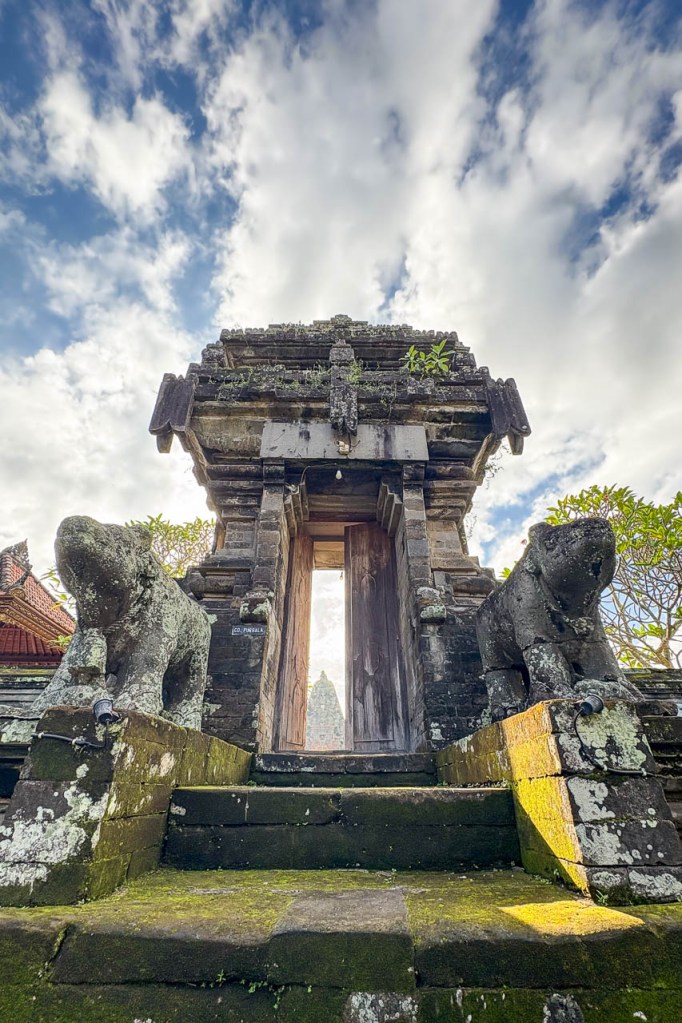
Also called: PURA PUSEH CANGI, PURA DESA GANGGANGAN CANGI, CANGGI GATEWAY
Meaning of its name: The origin temple of Canggi.
Location: In the Sakah-Batuan area, southeast of Ubud, southwest of Gianyar.
Map: Jl. Cangi, Batuan Kaler, Sukawati, Gianyar, Bali, Indonesia
Dates back to: Late 10ᵗʰ to early 11ᵗʰ century
Most interesting buildings: A massive gate, a large collection of sculptures.
Region: Around Ubud
Requirements for visit: Bring your own sarong.
The gateway
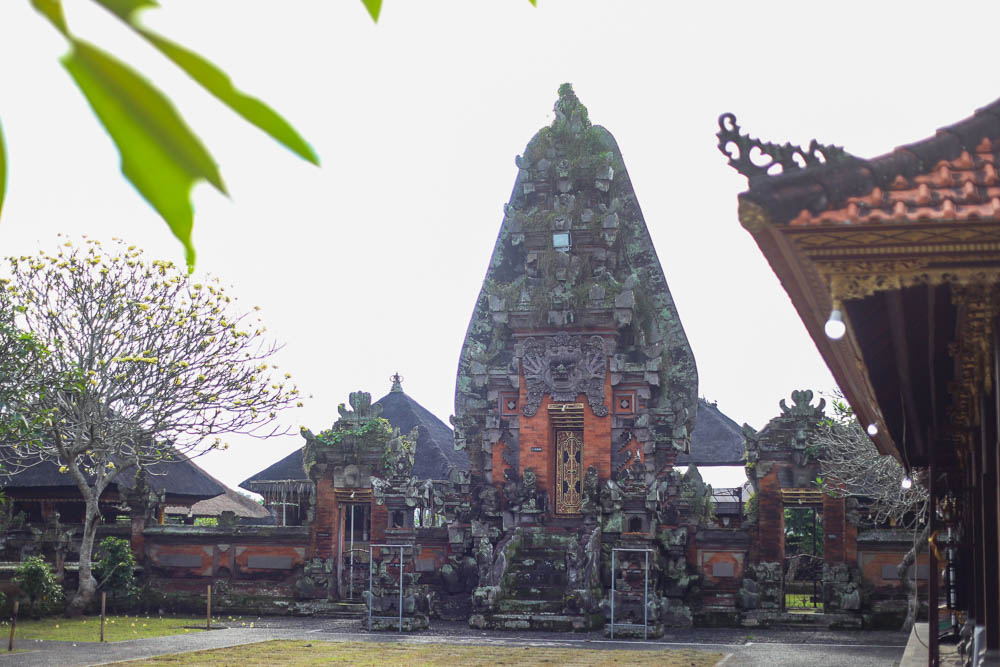
Although it resembles a Javanese candi, it is a Balinese temple portal. This site provides insight into the cultural and architectural connections that span the first half of the last millennium.
The architectural remains of Pura Puseh Canggi can be divided into three main categories: the monumental gate structure (gapura / kori agung), the surrounding enclosure wall, and a collection of loose archaeological finds.
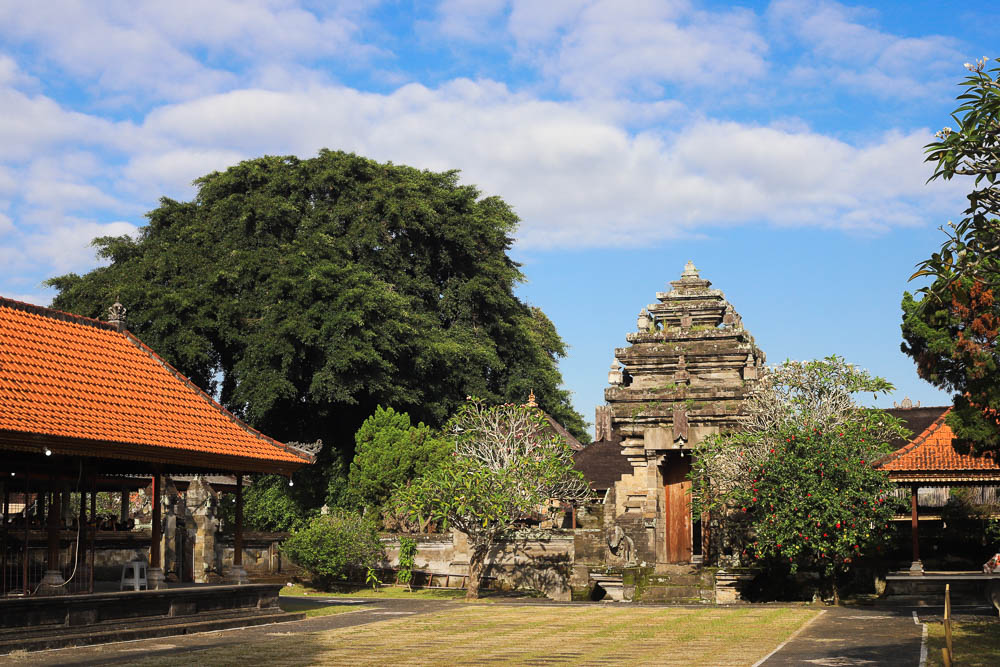
The Canggi Gateway is a stone entrance structure located within the Batuan–Sakah ritual landscape, consisting of Pura Puseh Canggi, Pura Hyang Tiba and Pura Puseh Batuan. Its age and stylistic features closely parallel those of the gateways at these two other temples, all of which belong to the same cultural and architectural cluster.
Archaeological and inscriptional evidence suggests an initial construction phase in the late 10ᵗʰ century to early 11ᵗʰ century, during the Warmadewa–Udayana era, followed by significant restructuring and the addition of decorative elements during the Majapahit period (13ᵗʰ–14ᵗʰ century), when formalized split and roofed gates became widespread across Bali.
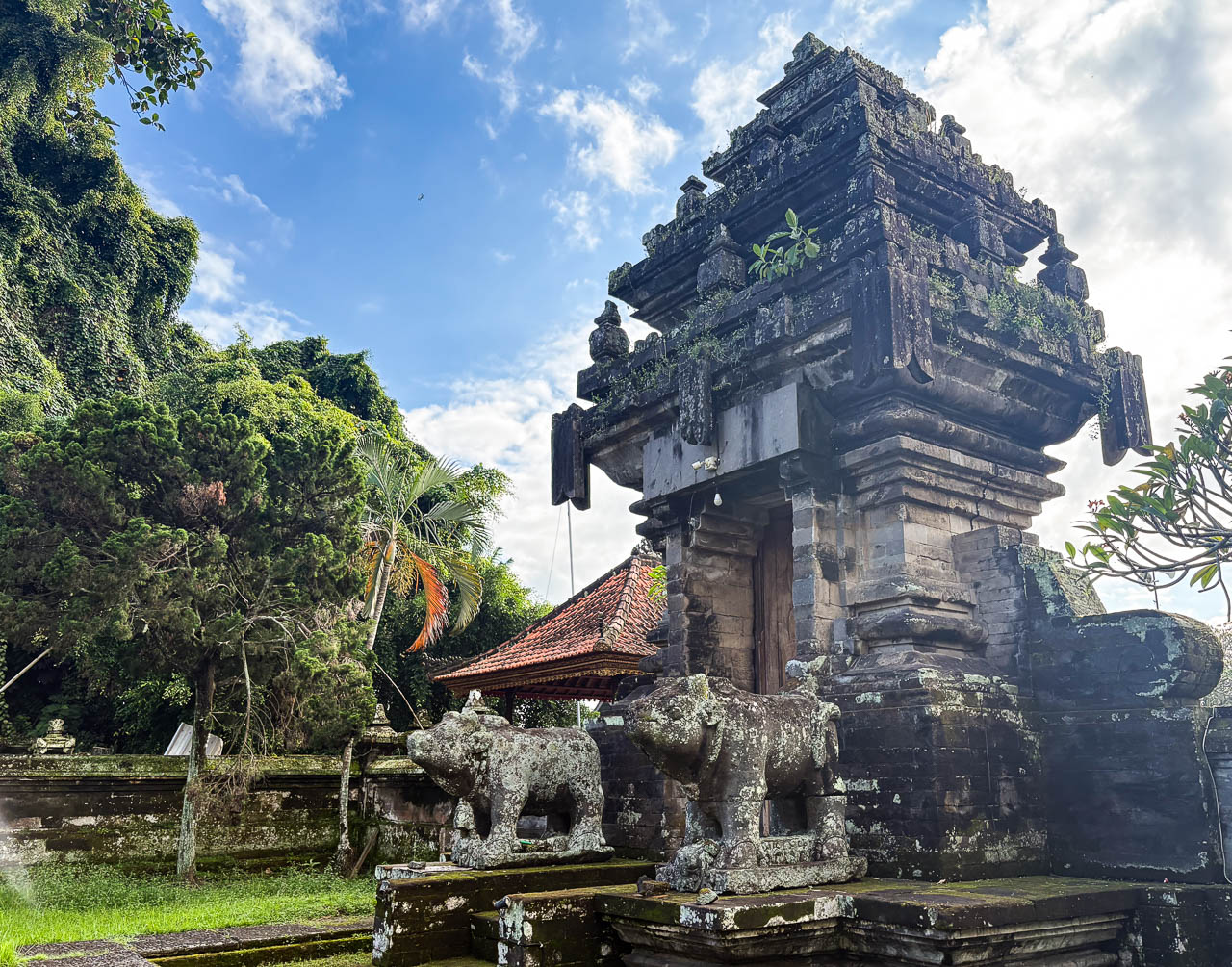
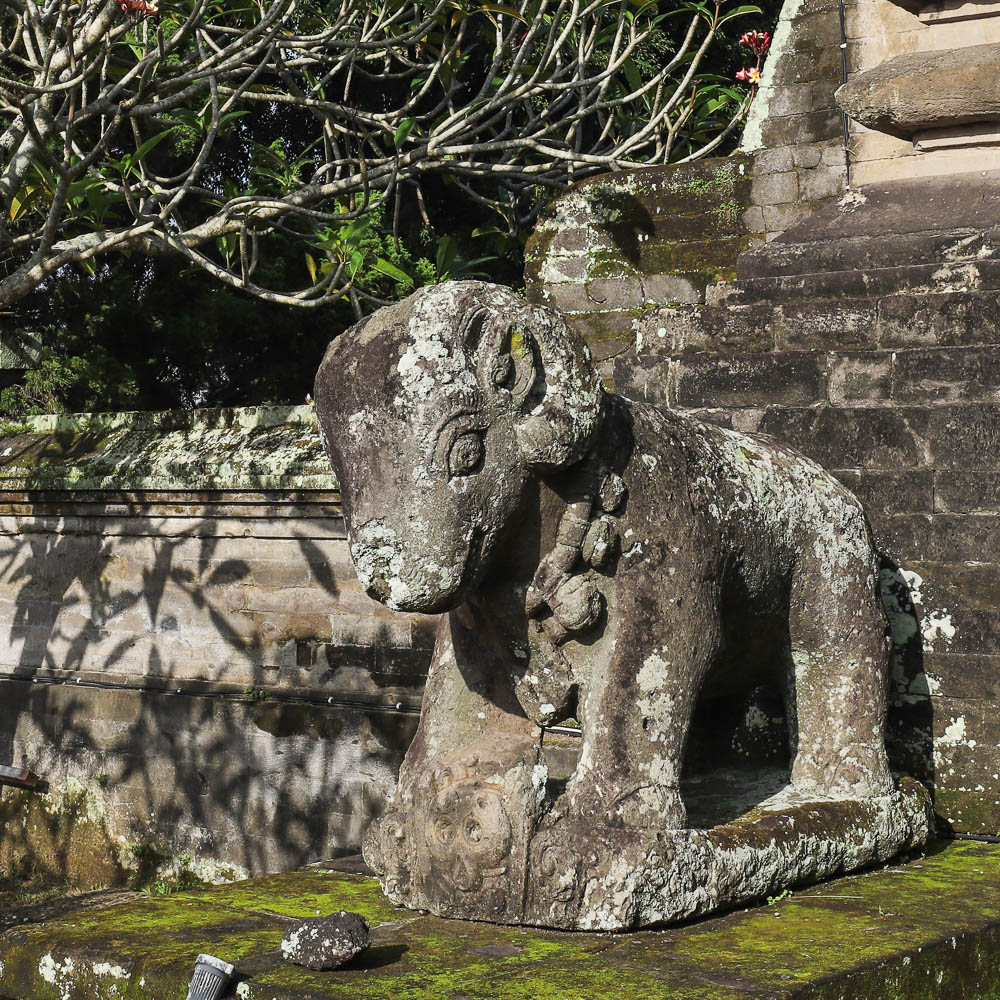
The gateway links the outer courtyard (jaba pisan) with the middle courtyard (jaba tengah). It measures 11.34 m in height and 7.65 m in width, with a passage opening of 1.70 m and an inner wall width of 2 m. At the foot of the structure, above the base platform, stand two pairs of zoomorphic guardian figures: Nandi (the bull of Shiva) and a sheep or goat, an unusual but locally consistent combination also to be found at Pura Hyang Tiba and Pura Puseh Batuan. The base on the western side of the gate is noticeably wider than that on the eastern side.
Flanking the passage are circular ornaments interpreted as stylized Garuda wings, while the roof rises in tiered stages, each level smaller than the one beneath it. Architecturally, the portal belongs to the Balinese candi bentar / paduraksa tradition, whose forms crystallized under the Singhasari–Majapahit era and ultimately derive from earlier Hindu temple prototypes (candi, pronounced chan-dee) of Central Java (7ᵗʰ–11ᵗʰ century). Such gateways typically feature a protective Kala or Bhoma head above the opening and makara sea serpents as guardians at the base of the stairs. In Central and East Javanese temples, the dwarapala guardian figures are often separated from the temple base and appear as pairs of miniature giants or monster-like anthropomorphic figures.
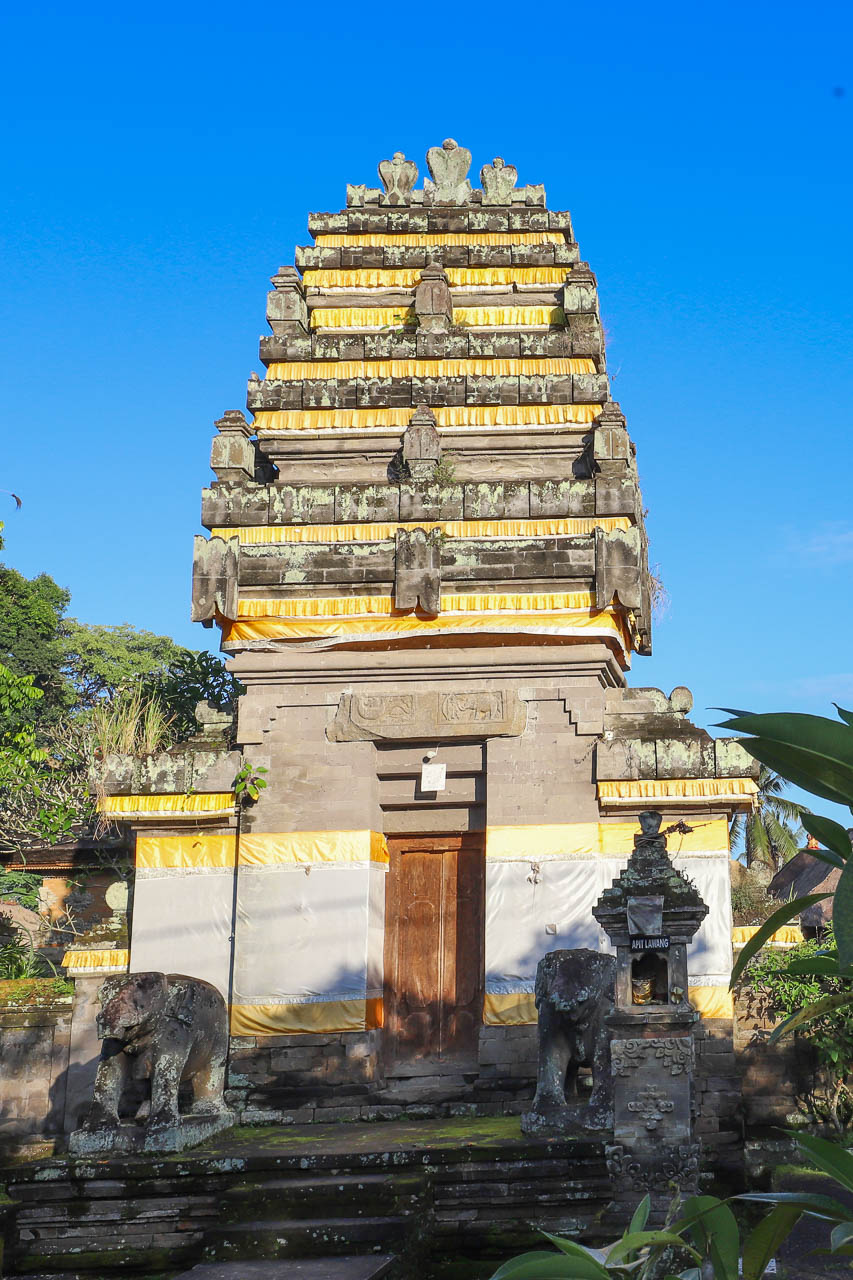
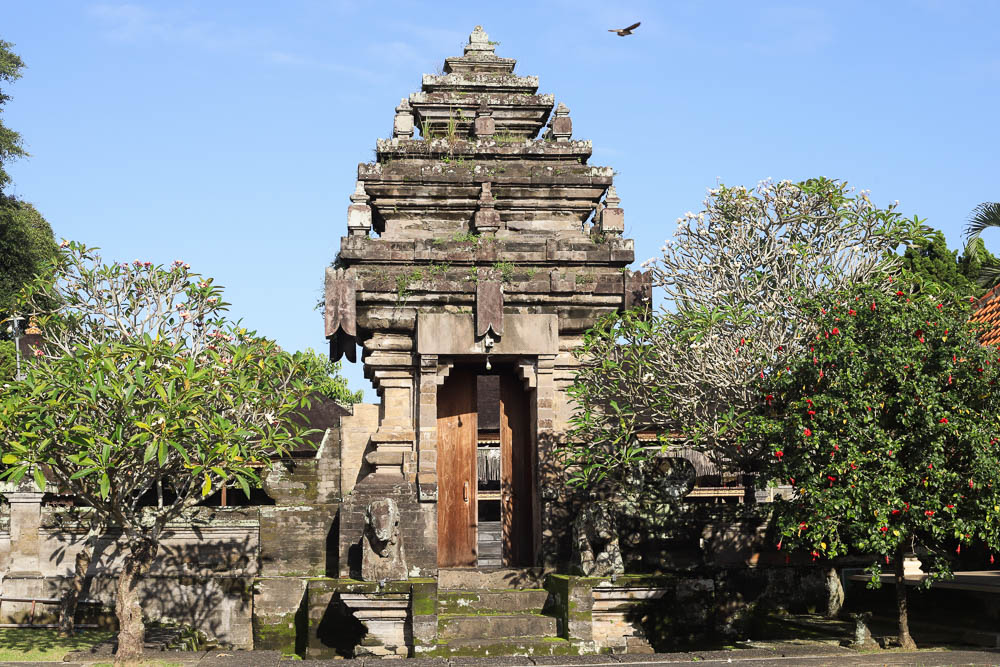
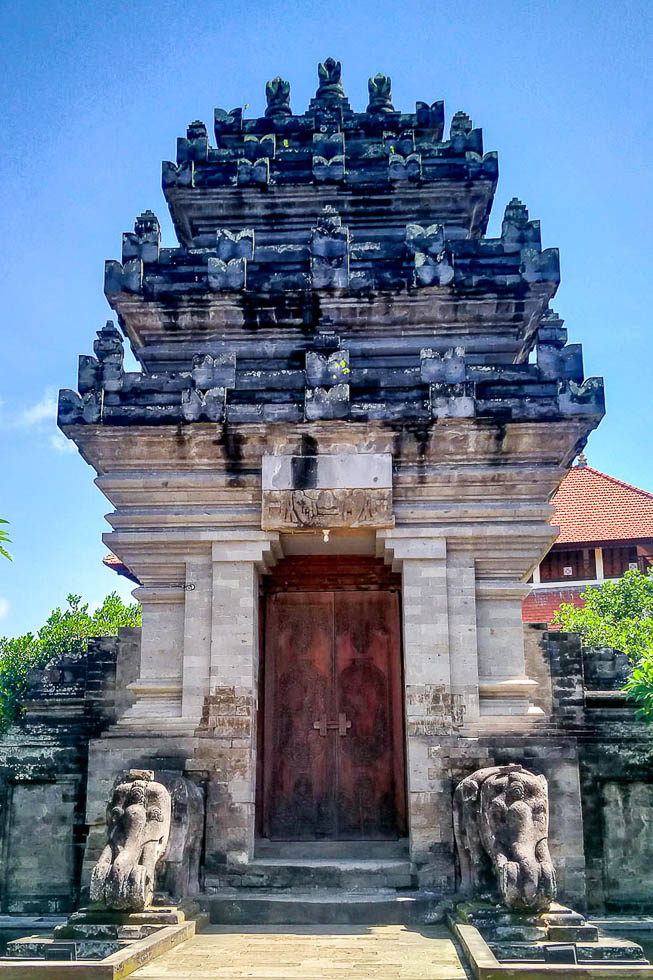
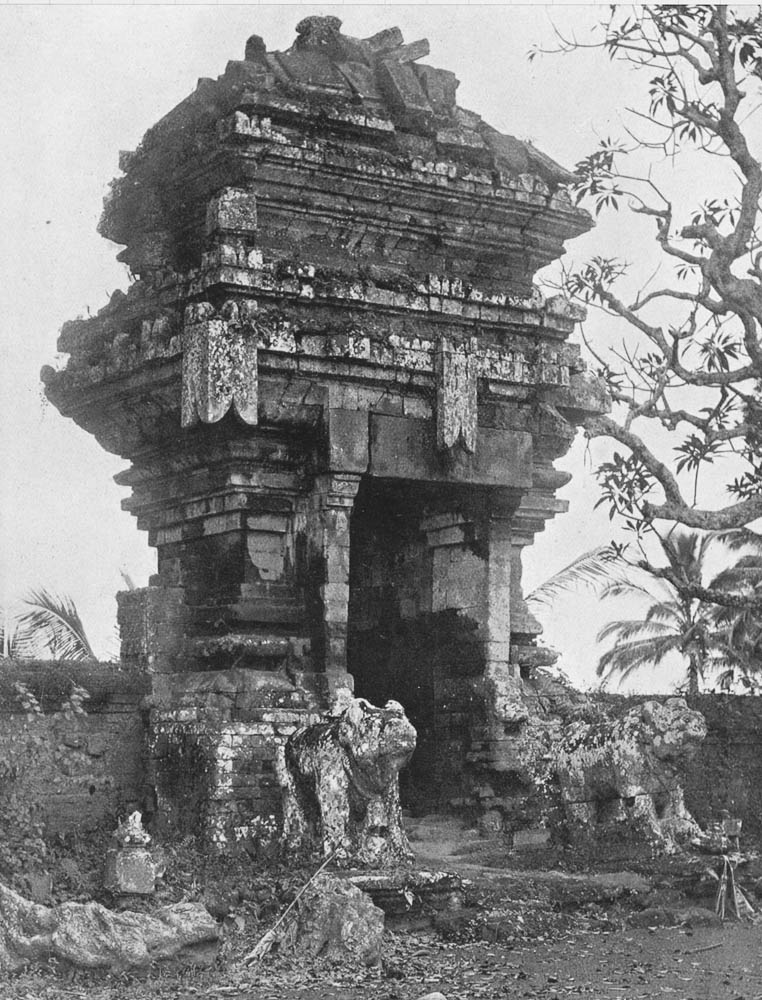
While the Canggi Gateway does not preserve its sculptural program in full, comparative evidence from Pura Puseh Batuan—with its Bhoma head, Viṣṇu on a bull, elephant balustrades, and Shiva among skulls—indicates that the region shared a dense mix of Shaiva- Vaishnava (belonging to the cult of Shiva and Vishnu) iconography. The Canggi portal is understood as part of this same visual unit, where guardian figures, vegetal scrolls, and possibly narrative reliefs would once have communicated doctrinal themes, and protective powers to devotees passing inward, though most of these ornaments have now disappeared.
The zoomorphic guardians at Canggi—Nandi bulls and sheep—are especially notable. Both here and at Pura Hyang Tiba, the animals bear carved skull (tengkorak) motifs on their forelegs, a detail Balinese archaeologists interpret as evidence of Bhairava-oriented Shaiva tantrism flourishing in Bali from the 13ᵗʰ century onward.
The statues themselves exhibit the simplified anatomy, stiff posture, and stylized features characteristic of Bali Madya (around the 14ᵗʰ-18ᵗʰ century CE) devotional sculpture.
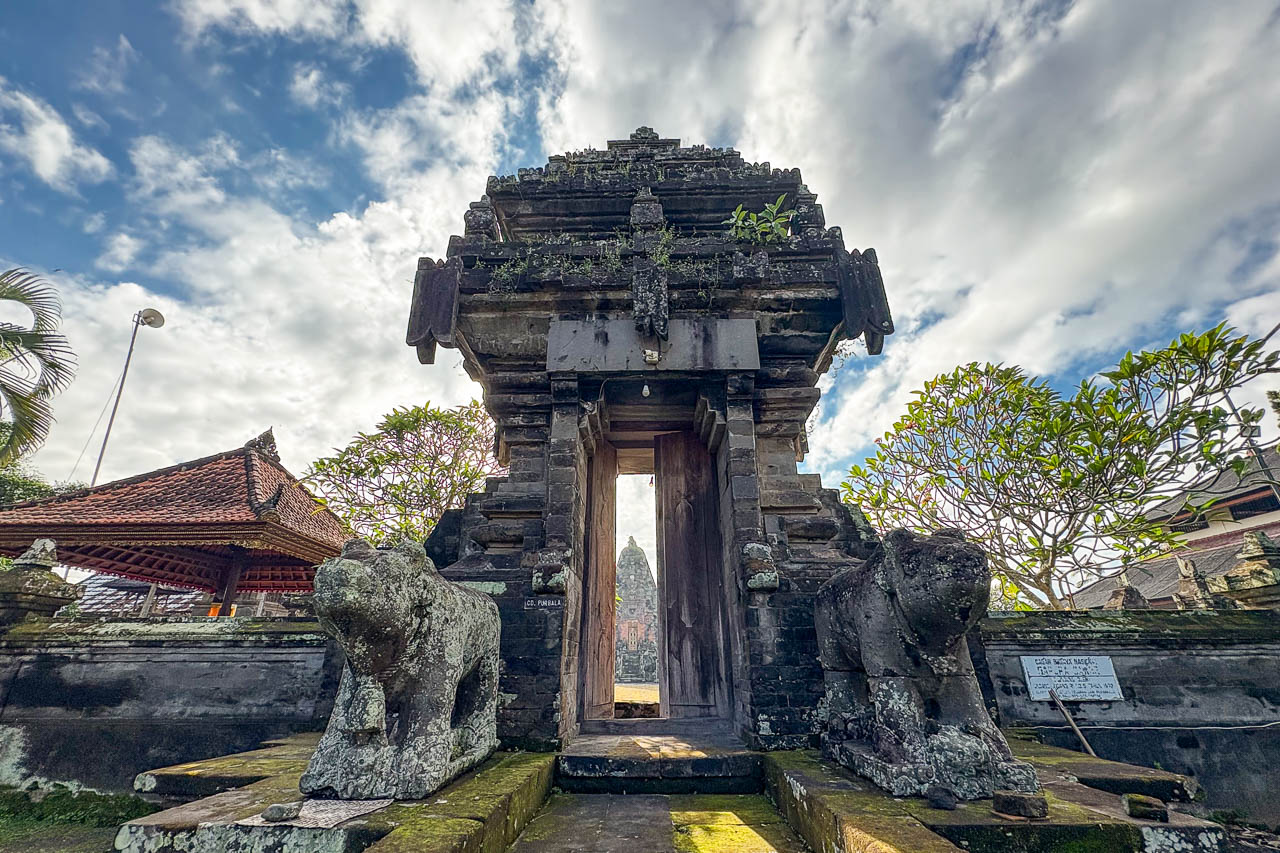
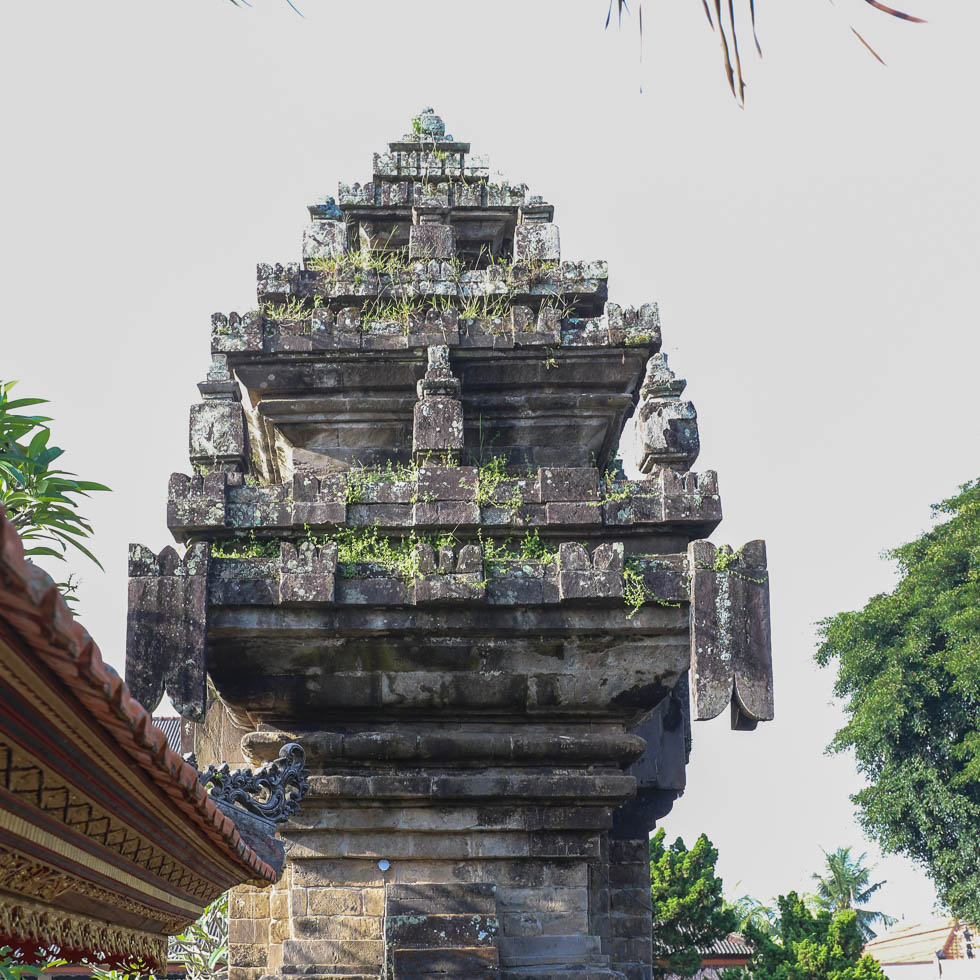
Beyond its architectural role, the gateway functions as a ritual threshold. During major ceremonies such as the odalan, divine forces are ritually invited to enter the inner shrine complex. The gate therefore choreographs both human processions and divine movement, reinforcing the spatial hierarchy of the temple.
Sculptures
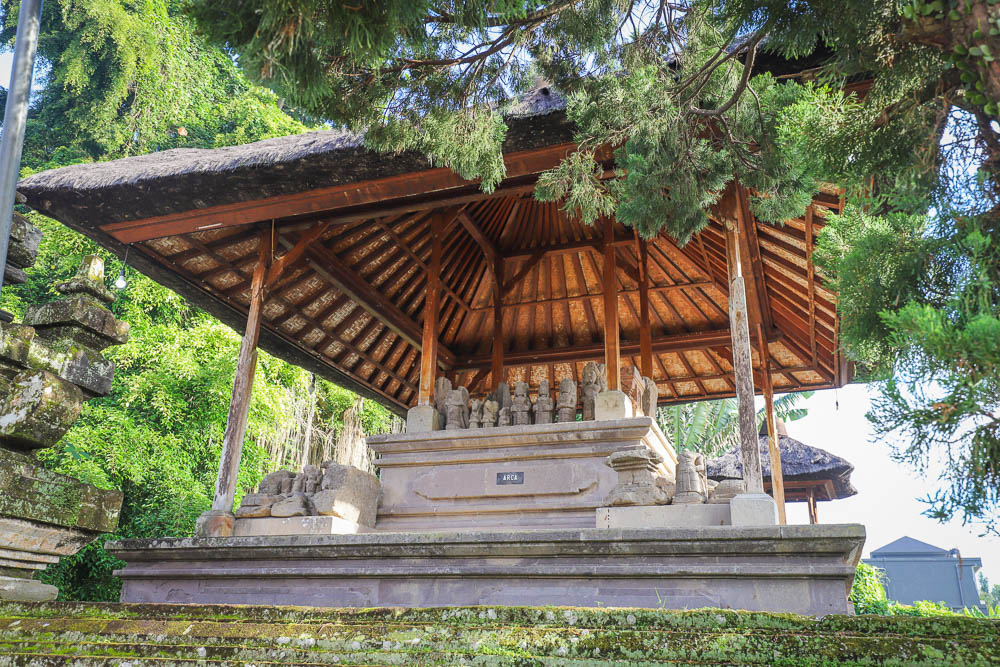
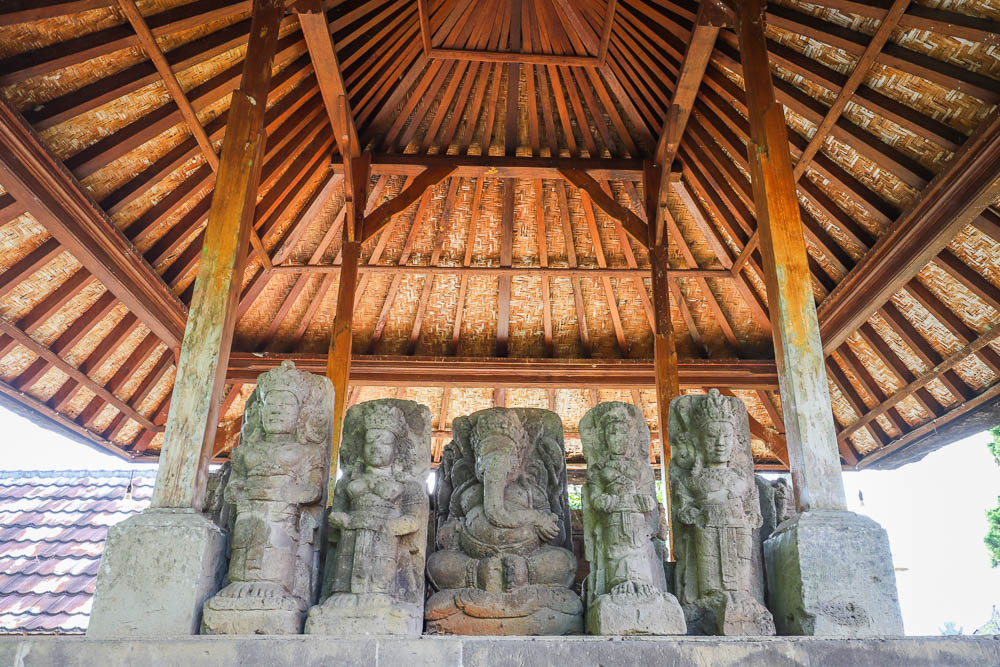
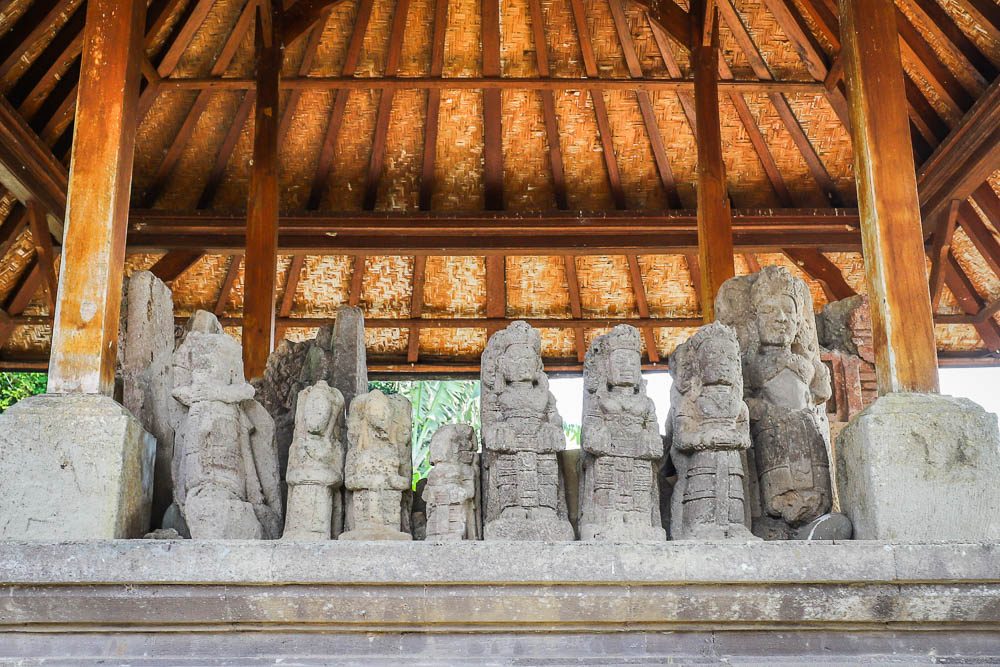
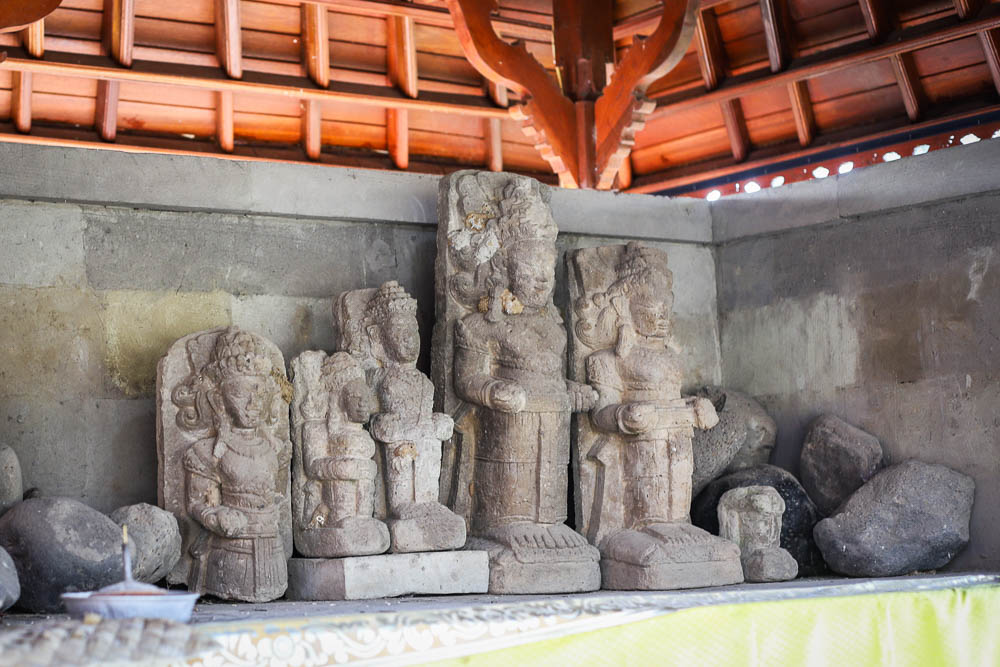
A total of 97 loose artifacts were recovered from the temple courtyard, ranging from intact to fragmentary condition. The majority are anthropomorphic figures, accompanied by a Ganesha statue and several animal sculptures. The assemblage provides insight into the temple’s long history of ritual activity and artistic production, reflecting multiple phases of use and reconfiguration.

Visiting
The temple can be entered from the south side, where one of the gates is usually open or can be opened. Visitors are encouraged to seek permission before entering; however, if no one is present, it is generally acceptable to go in. Please bring your own sarong and put it on before entering the temple grounds.
Bibliography
Anom, I G.N. (Ed.) Hasil Pemugaran Benda Cagar Budaya PJP I. Jakarta: Departemen Pendidikan dan Kebudayaan, 1997.
Goris, Roelof and Dronkers, P. L. Bali: Atlas Kebudajaan; Cults and Customs; Cultuurgeschiedenis in Beeld. Jakarta: Pemerintah Republik Indonesia, 1950.
Moojen, Pieter Adriaan Jacobus Kunst op Bali : inleidende studie tot de bouwkunst Den Haag: Adi Poestaka, 1926.
Ramelan, Wiwin Djuwita Sudjana (Ed.) Candi Indonesia. Seri Sumatera, Kalimantan, Bali, Sumbawa. Jakarta: Direktorat Pelestarian Cagar Budaya dan Permuseuman, 2014.
Spitzing, Günter Bali. Tempel, Mythen und Volkskunst auf der tropischen Insel zwischen Indischem und Pazifischem Ozean. Köln: DuMont, 1983.
Nearby temples
Apart from the aforementioned Pura Hyang Tiba and Pura Puseh Batuan, which are located nearby, Pura Puseh Blahbatuh and Pura Bukit Dharma Durga Kutri are easy to reach, and a short five-minute drive from these temples take you to the southernmost rock-cut temple in the Pakerisan Valley, Candi Tebing Tegallinggah, approximately twenty minutes from Pura Puseh Canggi.
Previous temple:
Next temple:
Photos and text © 2025 Alida Szabo
