— Water, Asceticism, and the Sounds of Nature —
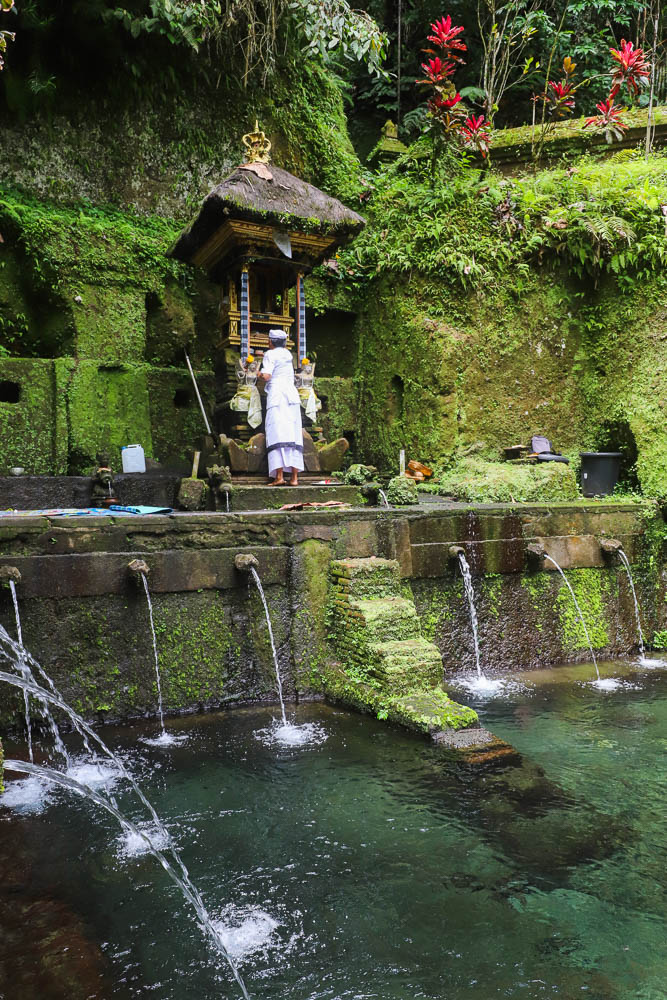
Location: On the western side of Kepitu hamlet, in Kenderan village, set deep within the ravine of the Tukad Kungkang River.
Map: Kedisan, Tegallalang, Gianyar, Bali, Indonesia
Dates back to: 10ᵗʰ century
Main features: Water spouts, pools and meditation caves.
Region: Around Ubud
Requirements for visit: Wearing a sarong to enter the pura and the area of the water spring.
Accessibility: Challenging to find. About a hundred steps lead down to the valley.
The place of peaceful meditation
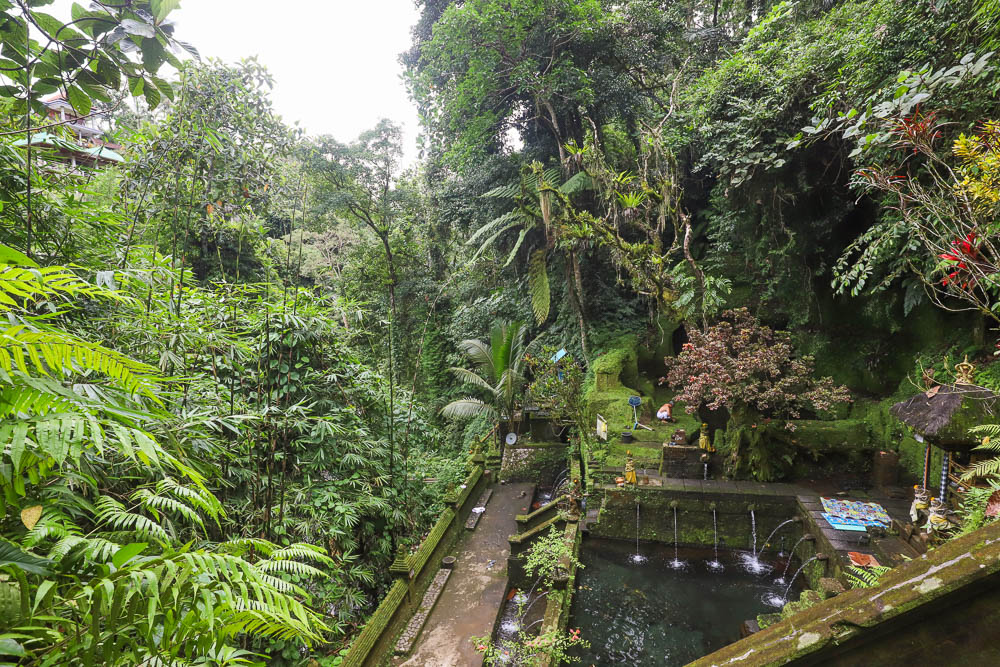
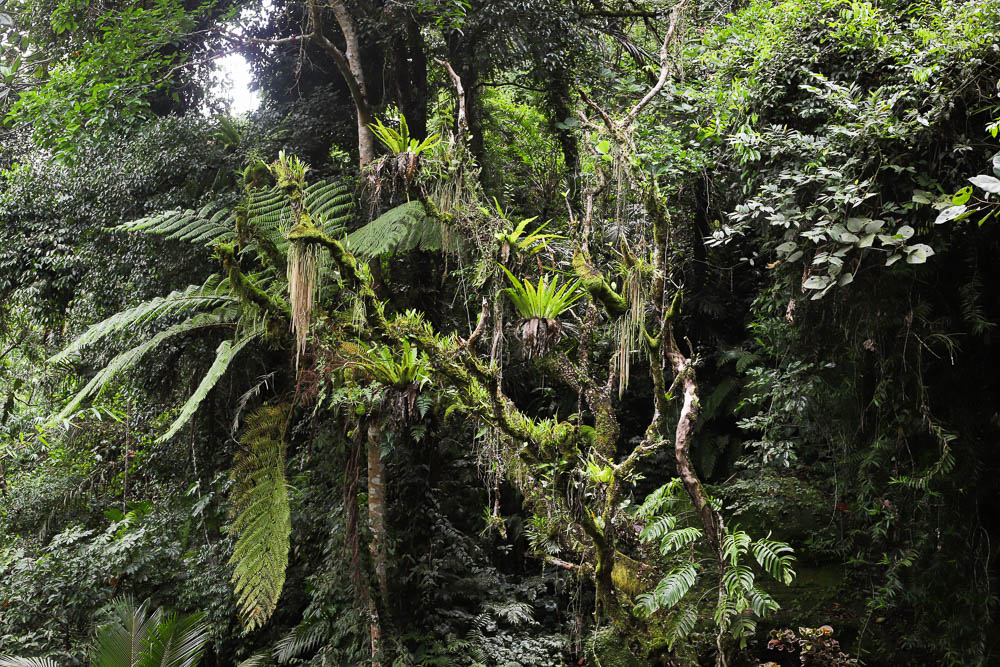
Hidden deep in a narrow river ravine north of Ubud, Pura Telaga Waja is one of Bali’s most secluded and spiritually intense water temples. Reached by a footpath through rice fields and a descent of numerous stone steps, the site feels distinctly removed from everyday life. The sound of flowing water, birdsong, and the dense greenery of the ravine create an atmosphere long associated with meditation, retreat, and inner purification.
Unlike many well-known water temples, there are no crowds, no staged performances, and no visual markers designed for spectators. The site is maintained by the residents of Banjar Kepitu as a purbakala—an ancient heritage place—where spiritual function clearly outweighs public display. This careful limitation of access helps preserve the temple’s atmosphere of inwardness, allowing the ravine to remain a space of listening rather than looking.
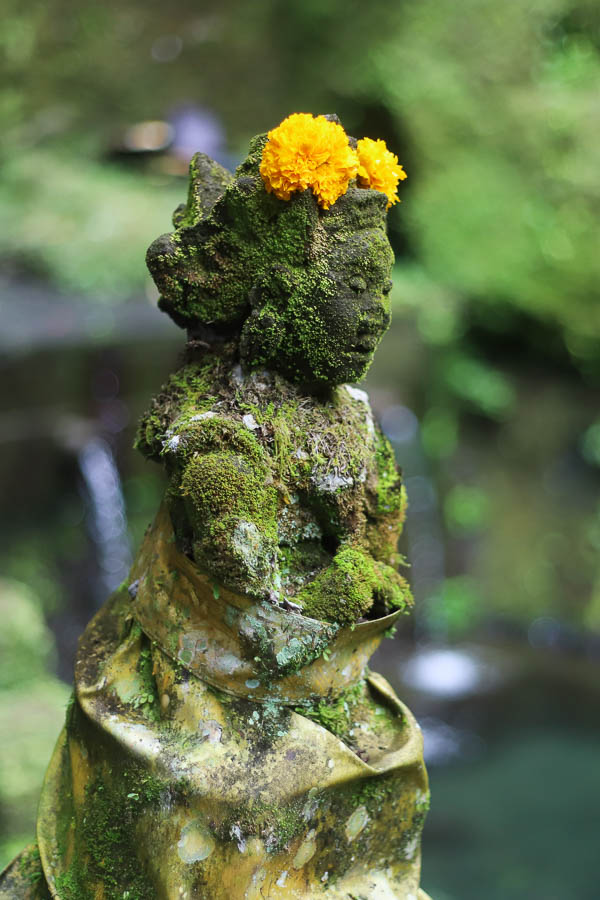
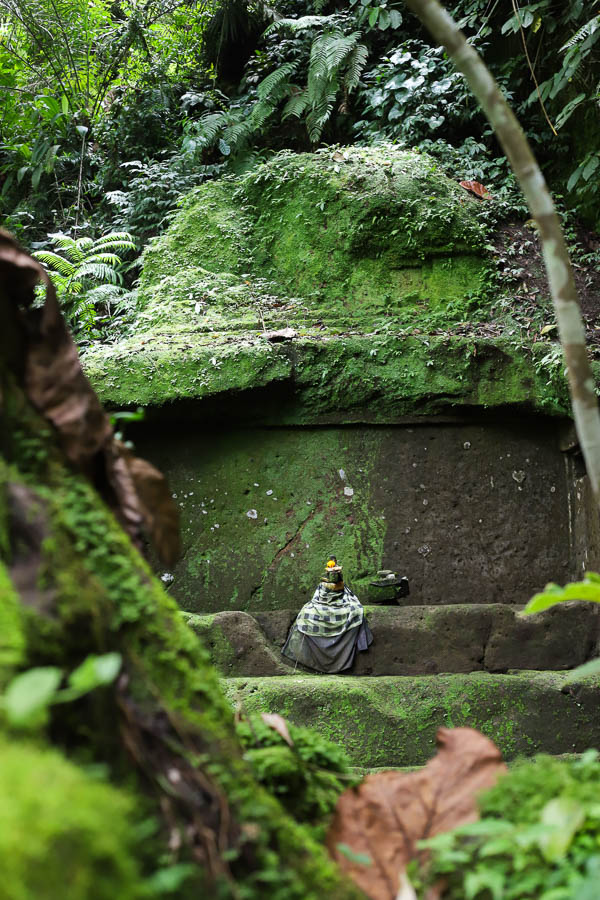
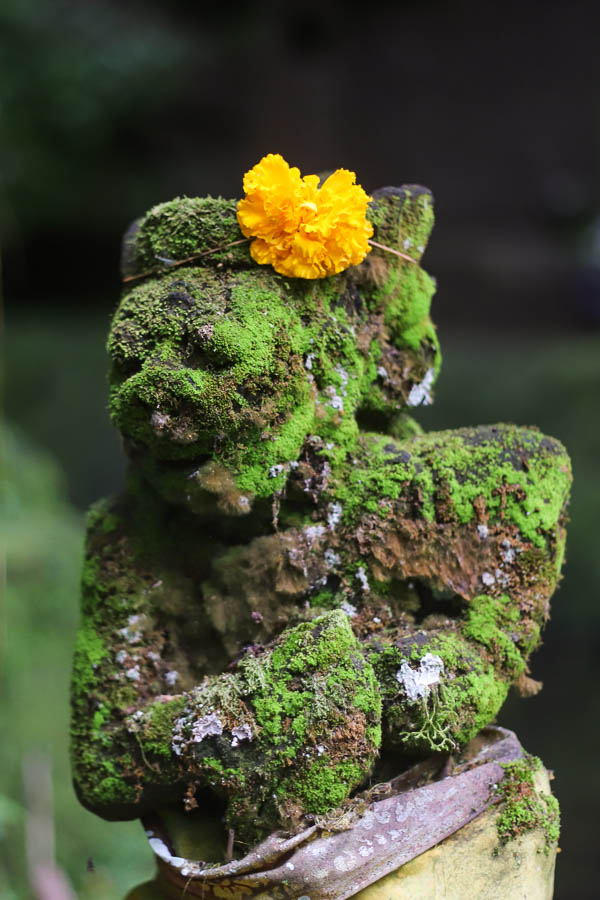
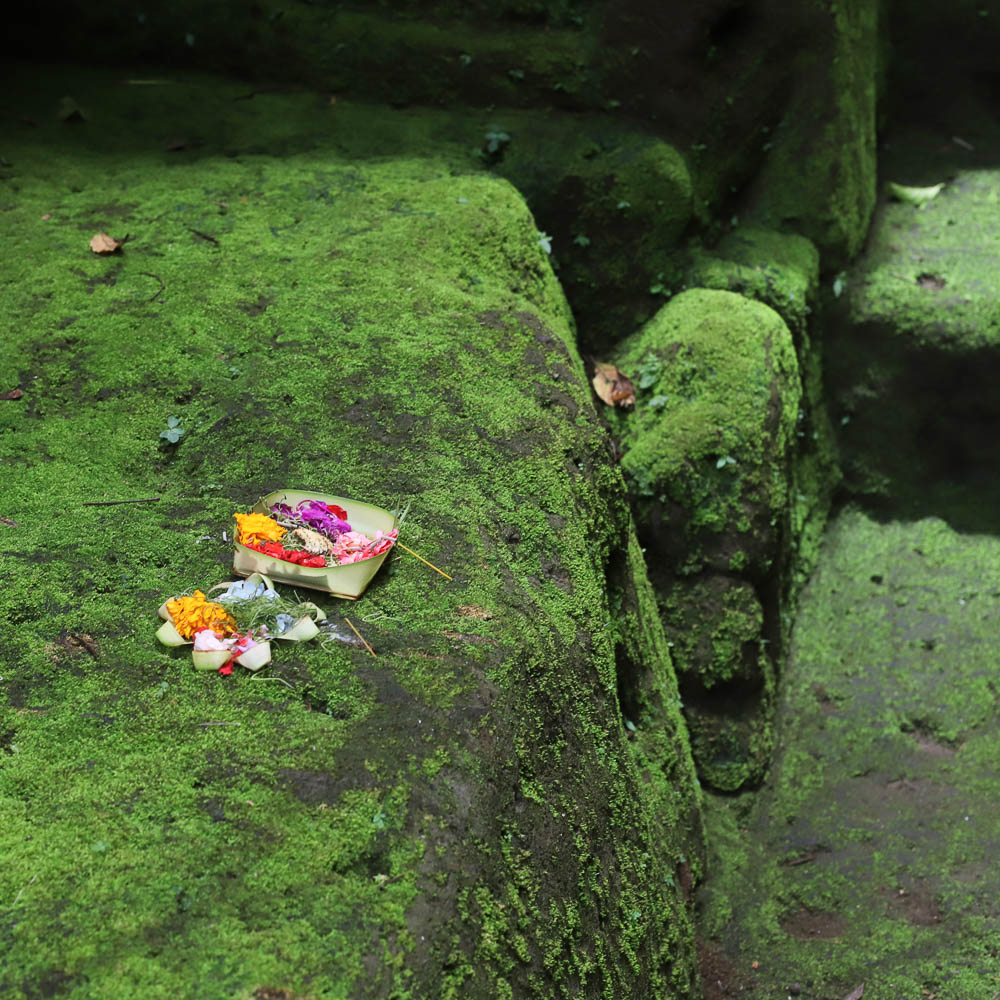
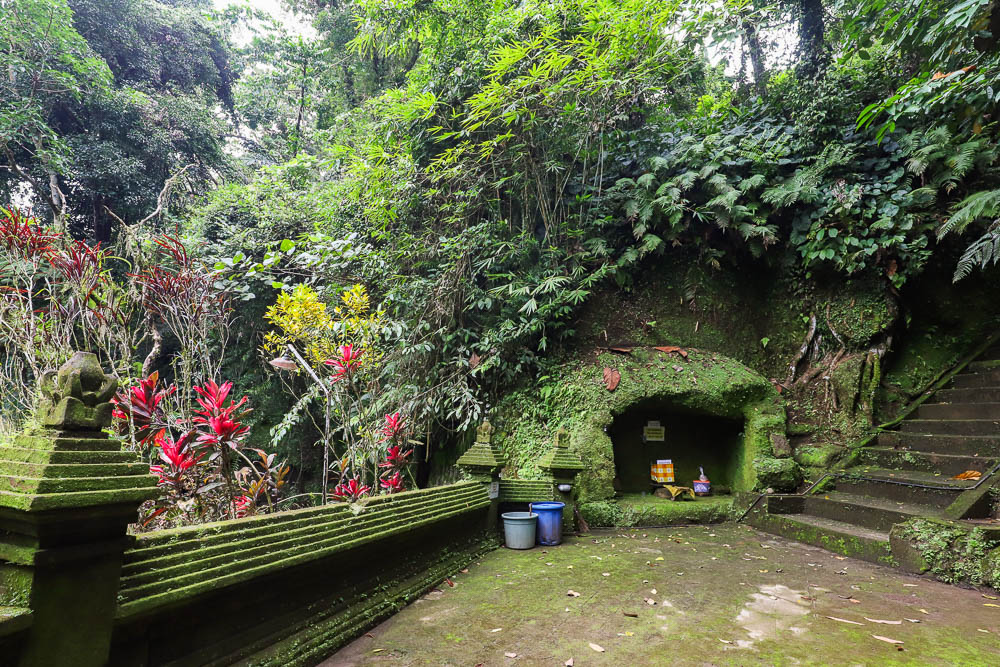
The natural setting reinforces this ethos. The river below continues to supply water to the wider Ubud area, reminding visitors that the temple is embedded in everyday ecological systems as much as in ritual cosmology. Moss-covered stone, damp steps, and shaded paths require slow, attentive movement.
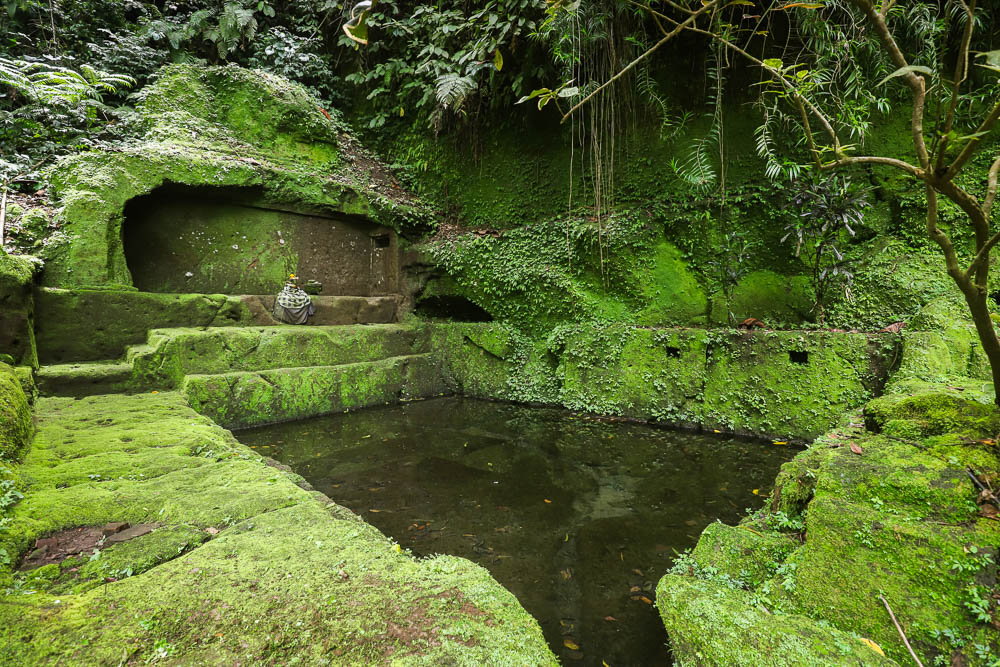
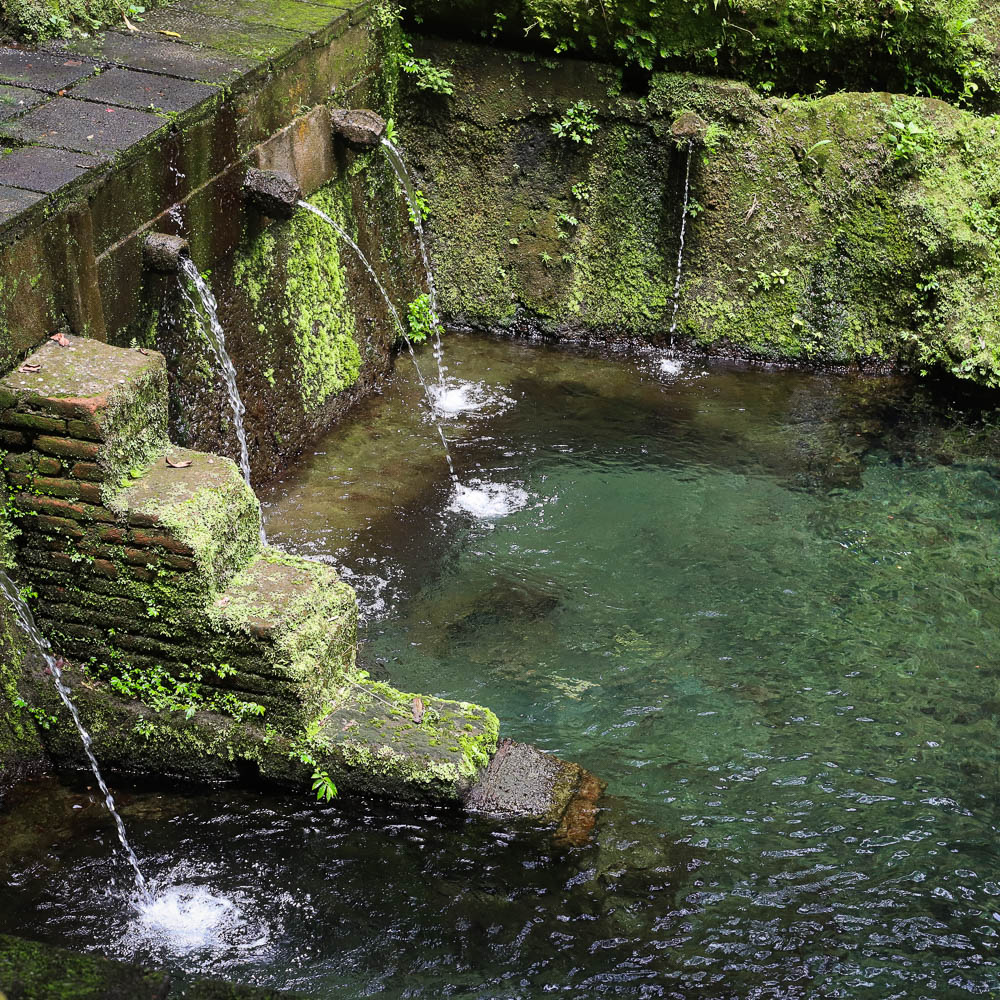
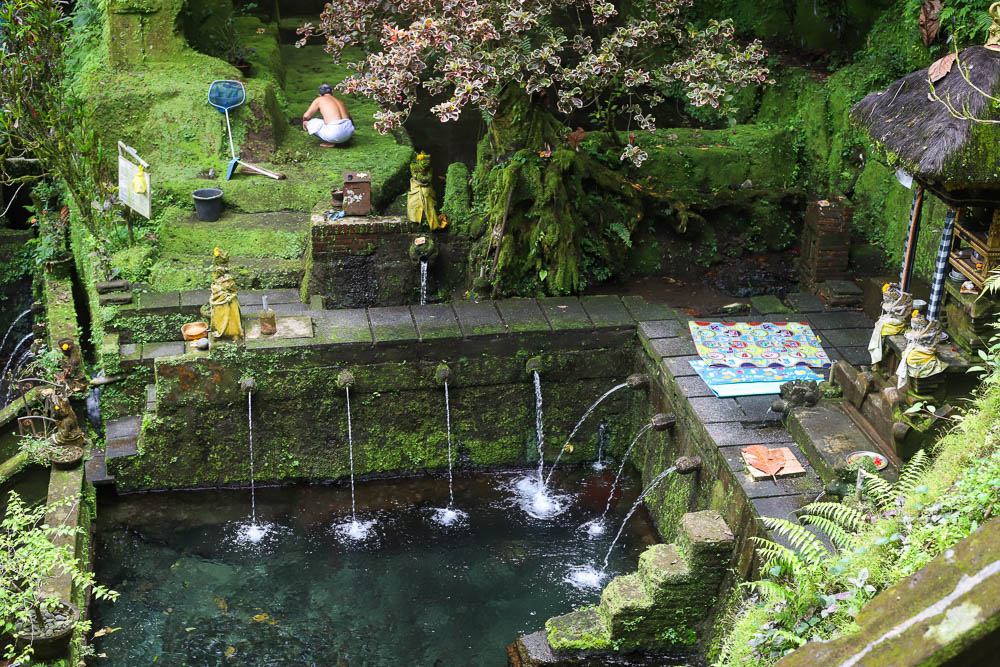
Still an important water source for the wider Ubud area, the sanctuary consists of two pools and several ancient meditation alcoves carved directly into the rock. The upper pools is considered highly sacred and is strictly off limits. The pools are named Shiva and Buddha, reflecting the once-fluid synthesis of these traditions in early Balinese religious life. Below them lies the bathing area with eleven water spouts, used for melukat, the Balinese ritual of purification.
Historical background
The temple was founded in the 10ᵗʰ century CE as a hermitage and center of ascetic practice, closely connected to Bali’s early Shiva–Buddha period. For centuries it was known as a place where sages practiced deep meditation and were believed to attain moksha, or perfect liberation. Its reputation extended far beyond Bali; in the 14ᵗʰ century it was mentioned in the Negarakertagama, written by Mpu Prapanca in the Majapahit Kingdom of Java, under the name Talaga Dhwaja (also known as Pura Dwaja), described as an important hermitage center.
Tradition holds that revered figures such as Dang Hyang Nirartha, an influential Hindu priest of the 16ᵗʰ century, and the legendary giant Kebo Iwa practiced meditation and purification here.
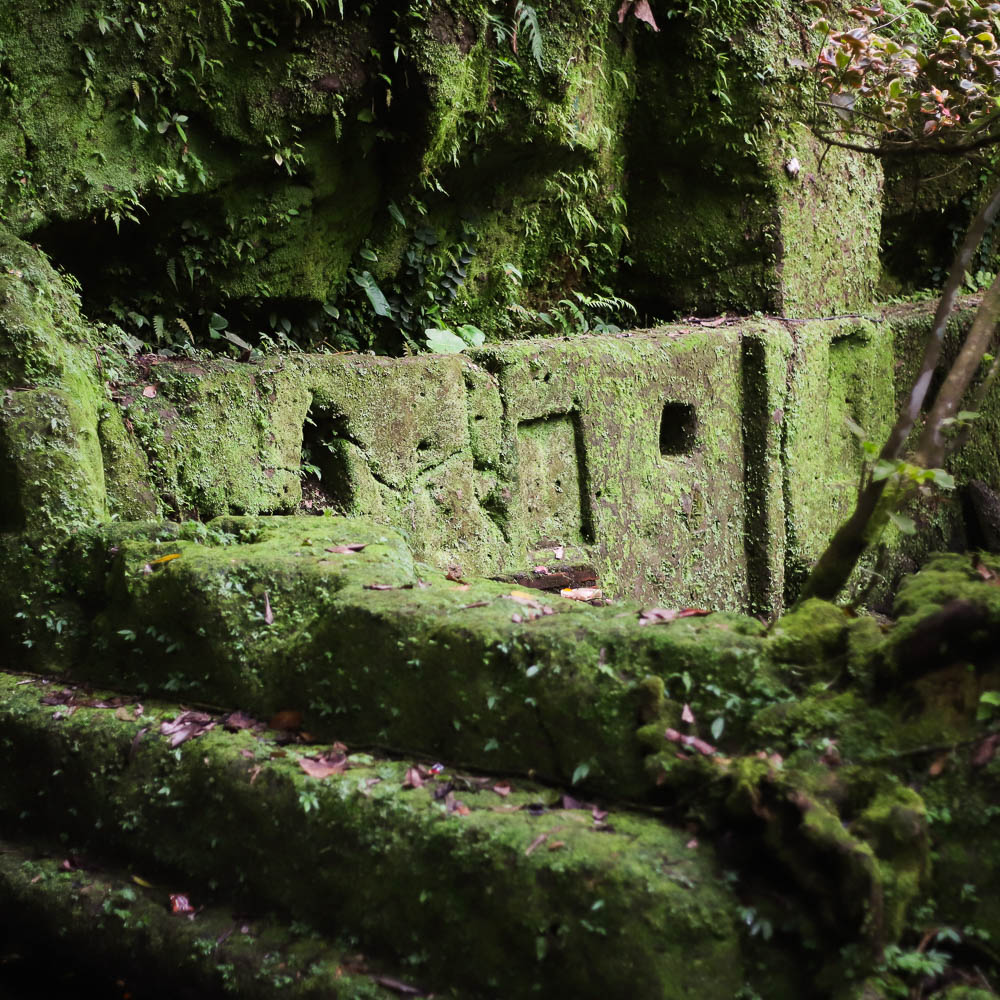
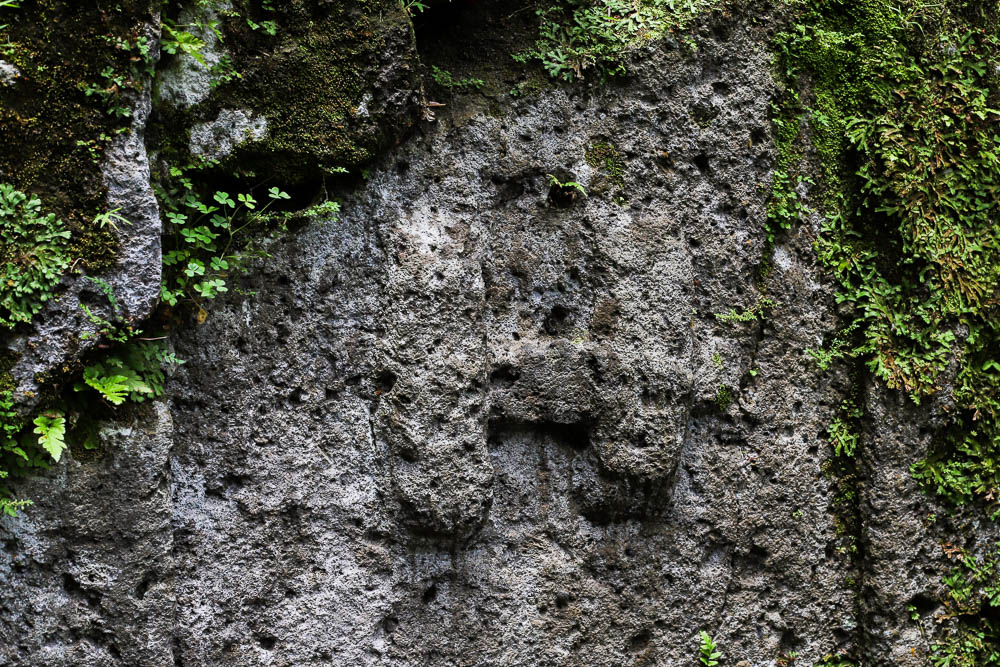
A distinctive H-shaped stone relief marks the entrance to the bathing area. Interpreted as a symbolic threshold between the visible (sekala) and invisible (niskala) worlds, it reflects the site’s long-standing role as a place of transition and transformation.
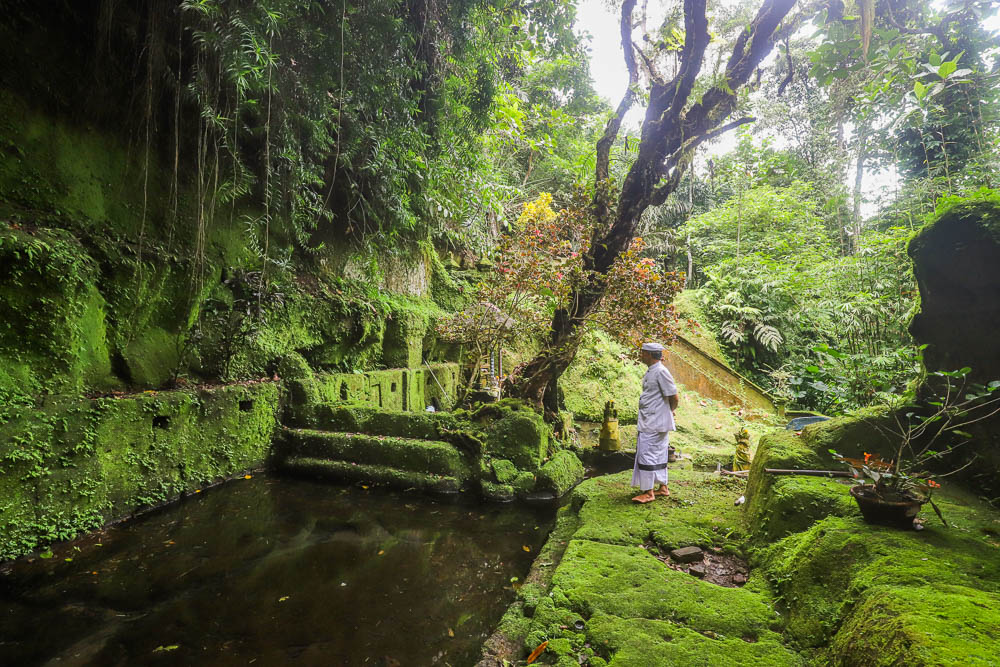
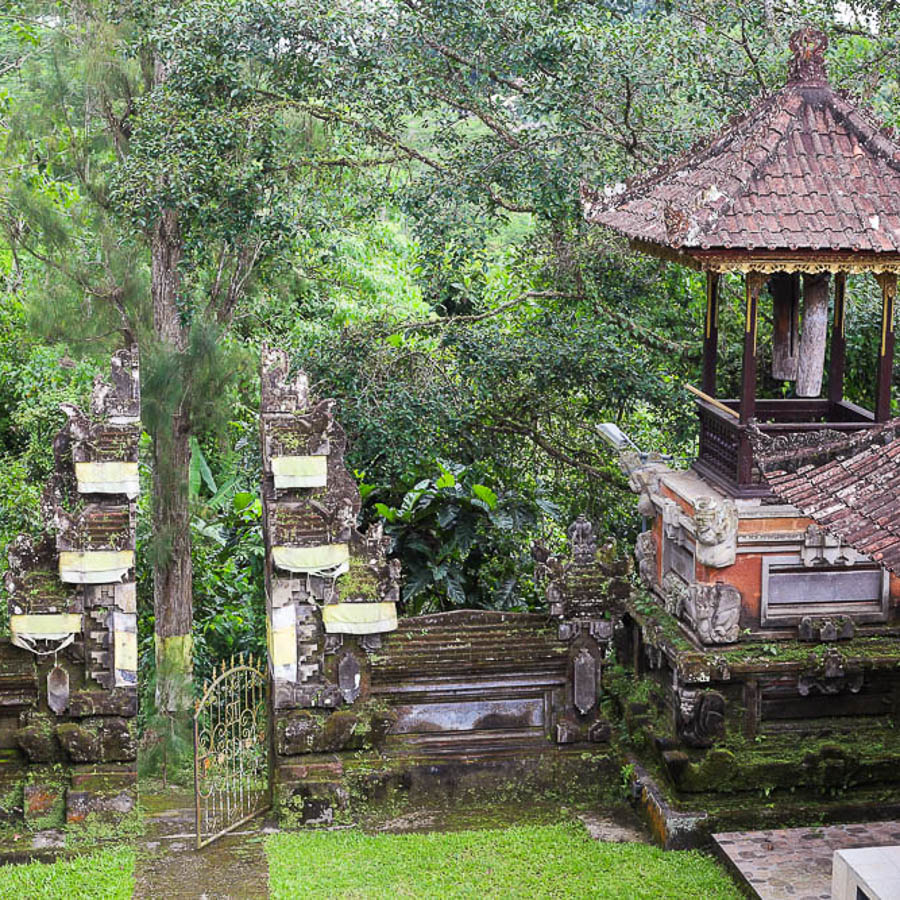
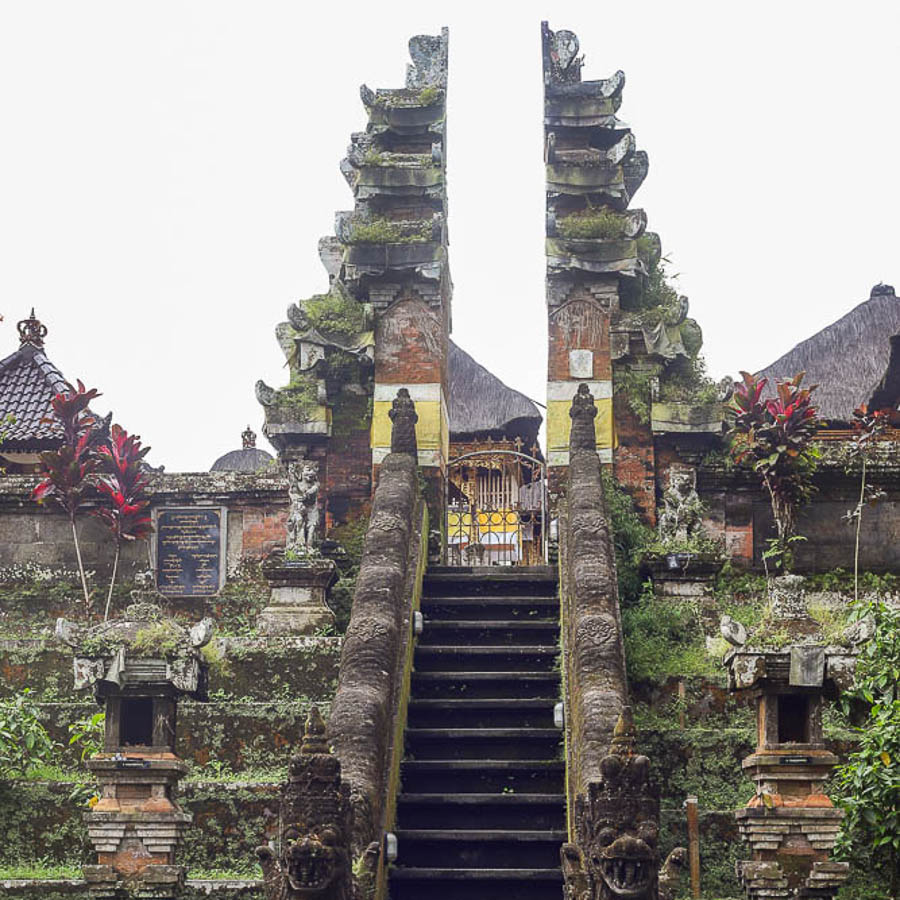
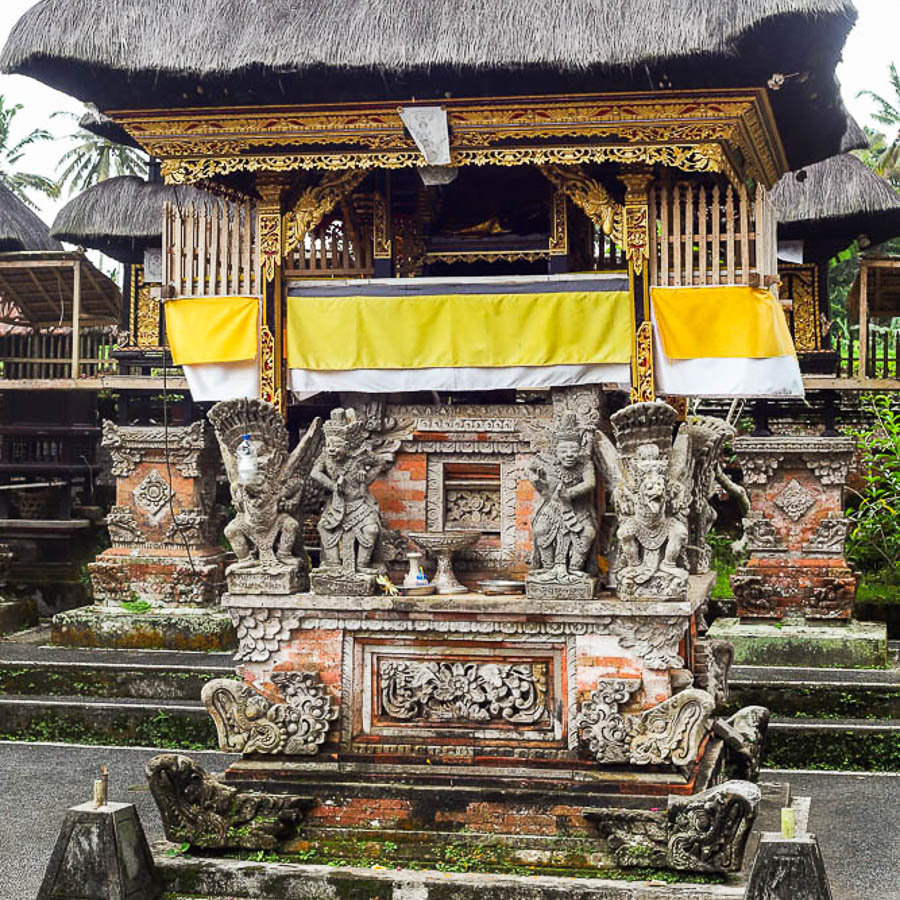
At the upper end of the stairs there is a more recent temple, dedicated to the water spring in the valley. Hindu bathing rituals begin here with prayer, before descending to the sacred pools below.
Melukat: Ritual in silence
The tirta of Telaga Waja has long been associated with fertility and continuity of life. Local belief holds that the water can bestow blessings in the form of children, linking the site not only to individual purification but to lineage and regeneration.
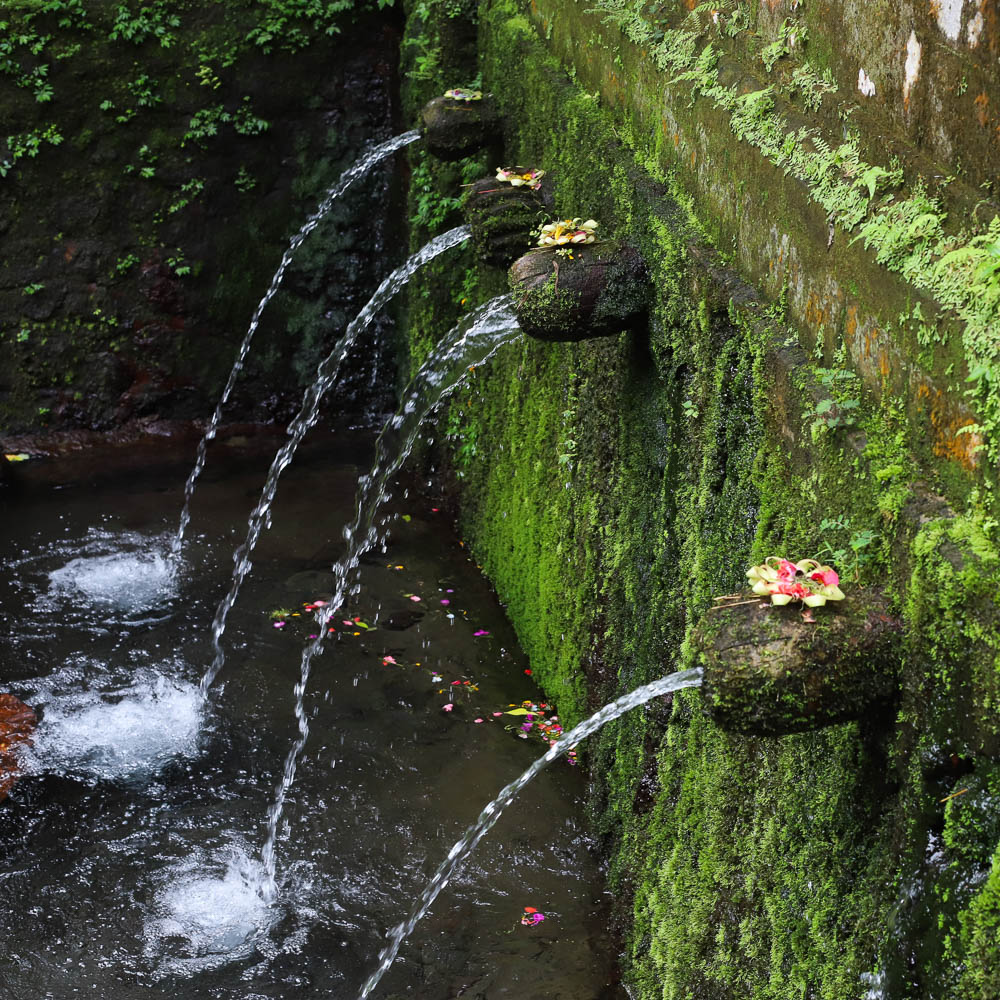
The bathing ritual is carried out at 11 water spouts, symbolically cleansing the six inner enemies (Sad Ripu) and the five senses. Holy water may also be taken home from a separate source for healing, prosperity, or family members.
Strict rules apply to the ritual. Visitors must dress traditionally upon entering the temple area, must not be menstruating or in mourning, and—afterward—perform melukat in complete privacy without clothing. Pura Telaga Waja is one of the very few places in Bali where wearing a sarong during melukat is explicitly forbidden. The ritual is performed in complete silence and privacy: participants enter alone or in same-gender groups, and even the caretaker priest withdraws while the bathing takes place.

Preserved as an ancient sacred site, Pura Telaga Waja continues to function much as it has for over a millennium: a quiet place of discipline, purification, and stillness, where one can feel deeply embedded in the freshness and sacredness of nature.
Visiting
Pura Telaga Waja remains untouched by tourism. It attracts primarily local worshippers, healers (balian), and high priests (pedanda), rather than casual visitors.
Finding the site requires some determination. On the western side of Kepitu, an unsigned footpath leads through rice fields and then down about a hundred steps to the temple and the Tukad Kungkang River. Visits are usually arranged in advance with the temple guardian to ensure proper conduct and access. You can find his phone number at the temple at the upper end of the stairs. For a melukat, donations are expected.
If the priest is encountered on the path or near the pools, visitors may be asked to wait, as a ritual may be in progress. His instructions should always be followed carefully, especially regarding where it is permitted to step around the pools.
Visits during the rainy season (from October to April) are discouraged, as the stone steps and structures can become slippery and moss-covered.
Bibliography
Davison, Julian, et al. Introduction to Balinese Architecture. Singapore: Periplus, 2003.
Eisema, Fred Bali: Sekala and Niskala. Essays on Religion, Ritual, and Art. Singapore: Periplus Editions, 1996.
Haer, Debbie Guthrie, Morillot, Julliet and Toh, Irene Bali, a Traveller’s Companion. Singapore: Didier Millet, 2007
Kempers, A. J. Bernet Monumental Bali. Singapore: Periplus Editions, 1991.
Previous temple:
Next temple:
Photos and text © 2025 Alida Szabo.
