– Bali’s Iconic Water Temple –
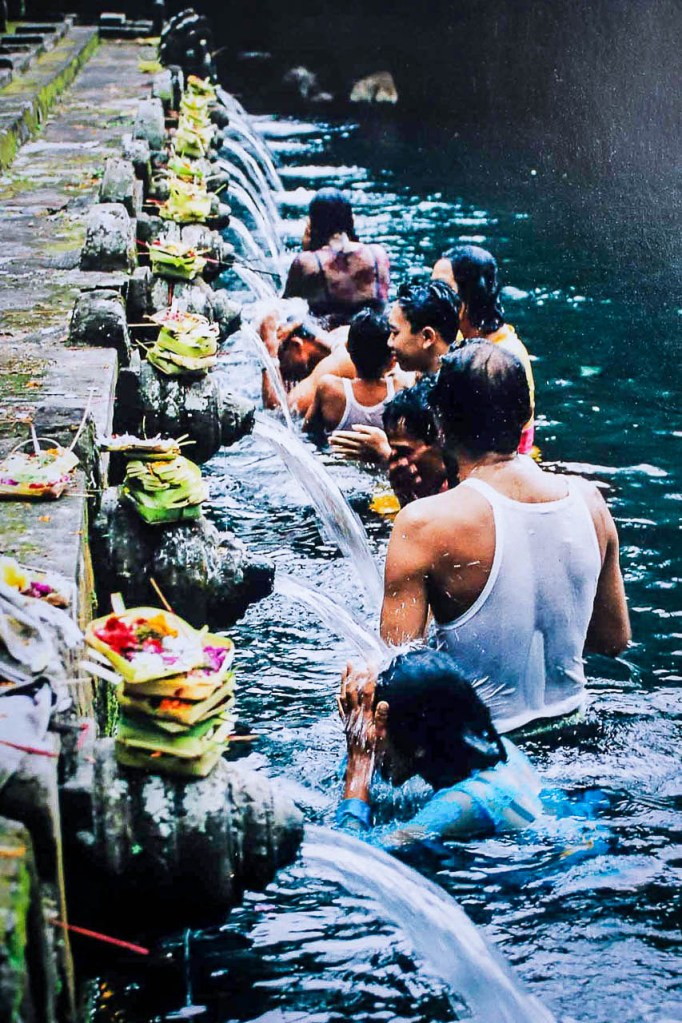
Meaning: “Temple of the Holy Bubbling Water.” The name comes from pura (temple), tirta (holy water), and empul (bubbling), referring to the sacred spring inside the temple where water continuously rises from the ground.
Location: In the upper valley of the Pakerisan River.
Map: Tampaksiring, Gianyar, Bali, Indonesia
Dates back to: 10ᵗʰ century
Dedicated to: Vishnu and Indra
Most interesting buildings: Bathing pools, sacred pool of the spring, lingga-yoni statue.
Region: Tampaksiring
Theme: Water Temples, Sacred Bathing Places
Requirements for visit: Tickets cost 50,000 Rp. Sarongs are available to borrow.
Sacred water management and history
For over a thousand years, Balinese water temples have been shaped by a blend of ancient religious influences, including Saivasiddhanta and Samkhyā Hinduism, Vajrayana Buddhism, and Austronesian cosmology, filtered through Javanese and Balinese cultural environments. These temples are not only centers of spiritual practice but also play a crucial role in water management and the traditional wet rice cultivation system called subak. Their ceremonies and rituals embody the principles of Tri Hita Karana, a philosophy that emphasizes balance and harmony between the spiritual realm, human society, and the natural world.
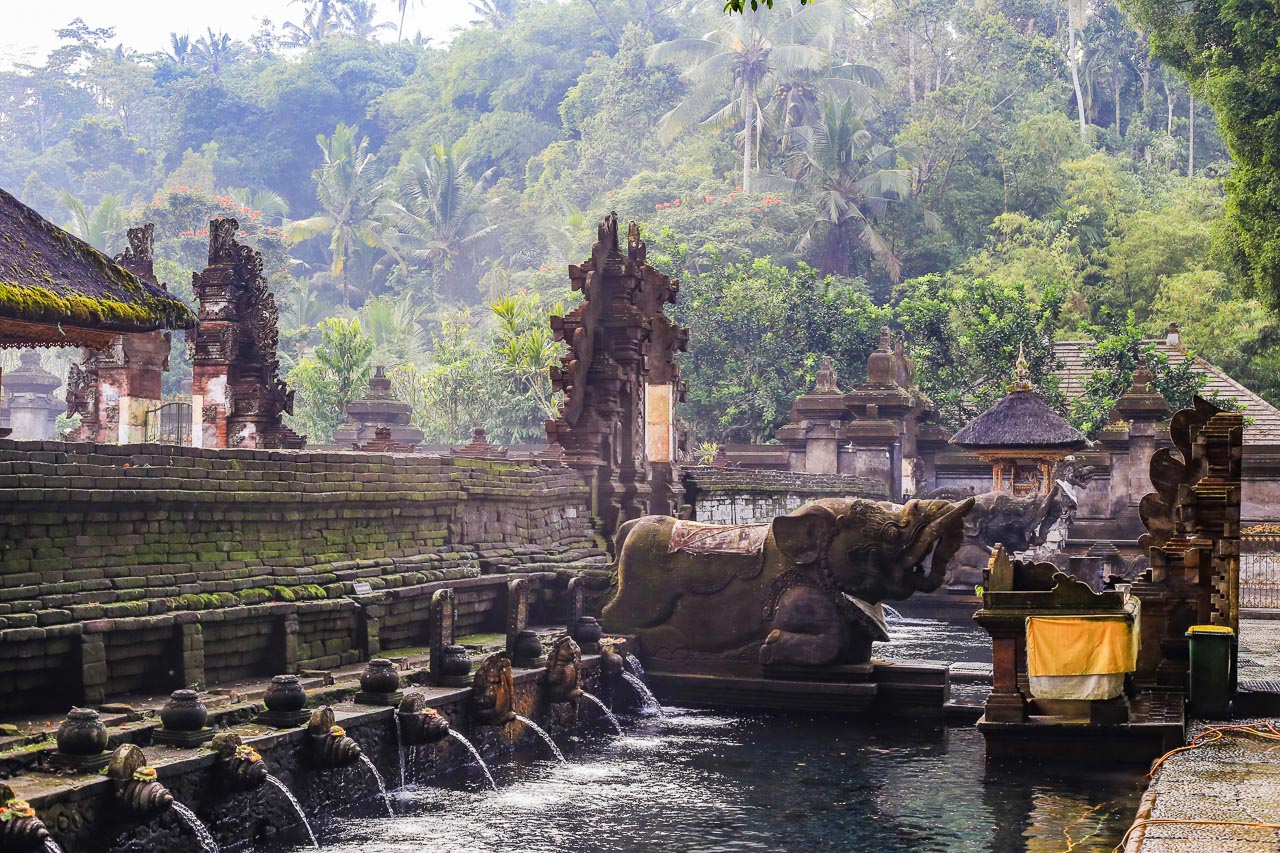
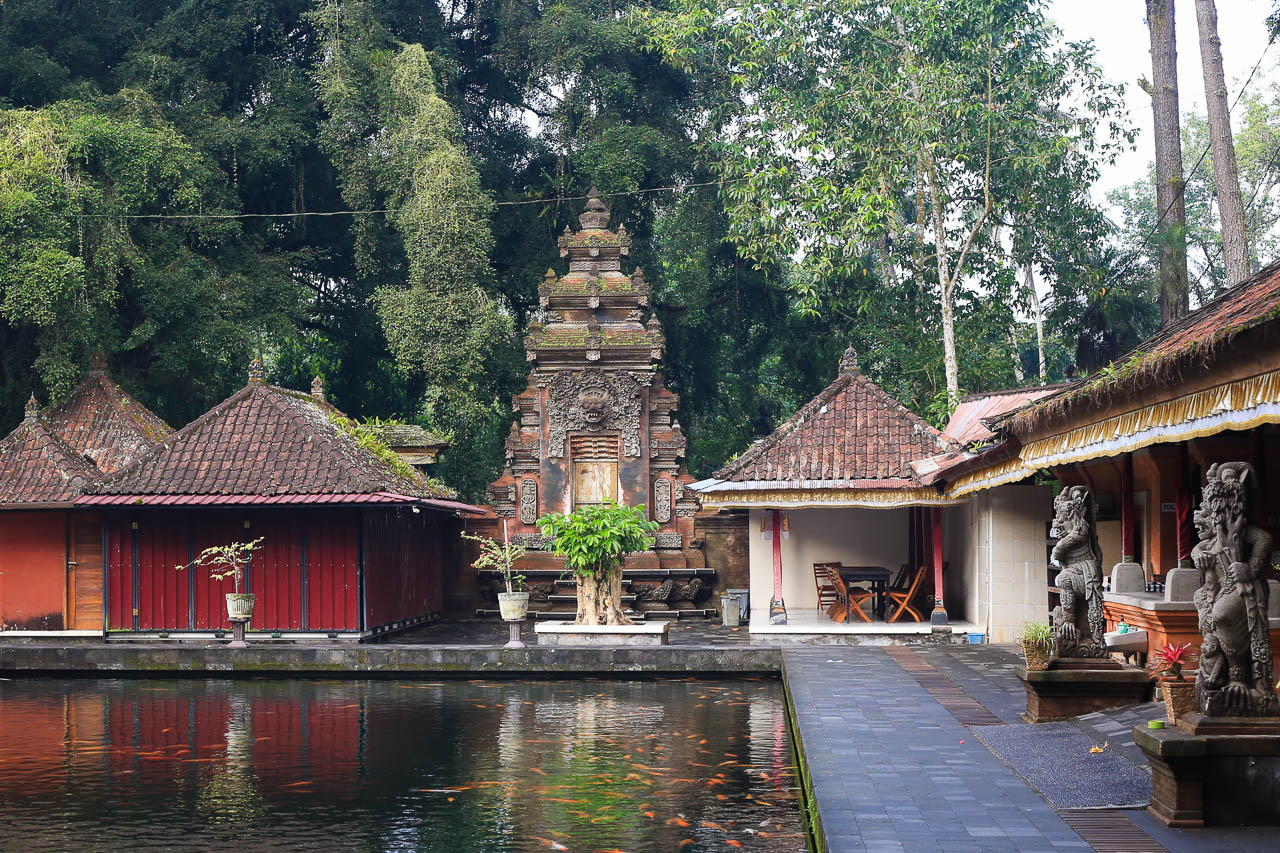
There are good reasons why Pura Tirta Empul is one of the most visited temples in Bali. It is nestled in the beautiful valley of the mystical Pakerisan River, highly sacred, easily accessible, and embodies the picture-book version of a Balinese water temple. It is a stunning place for purification baths — whether you wish to discreetly observe those taking part or join the row of “guest bather” visitors who immerse themselves for a few minutes in Bali’s sacred water culture.
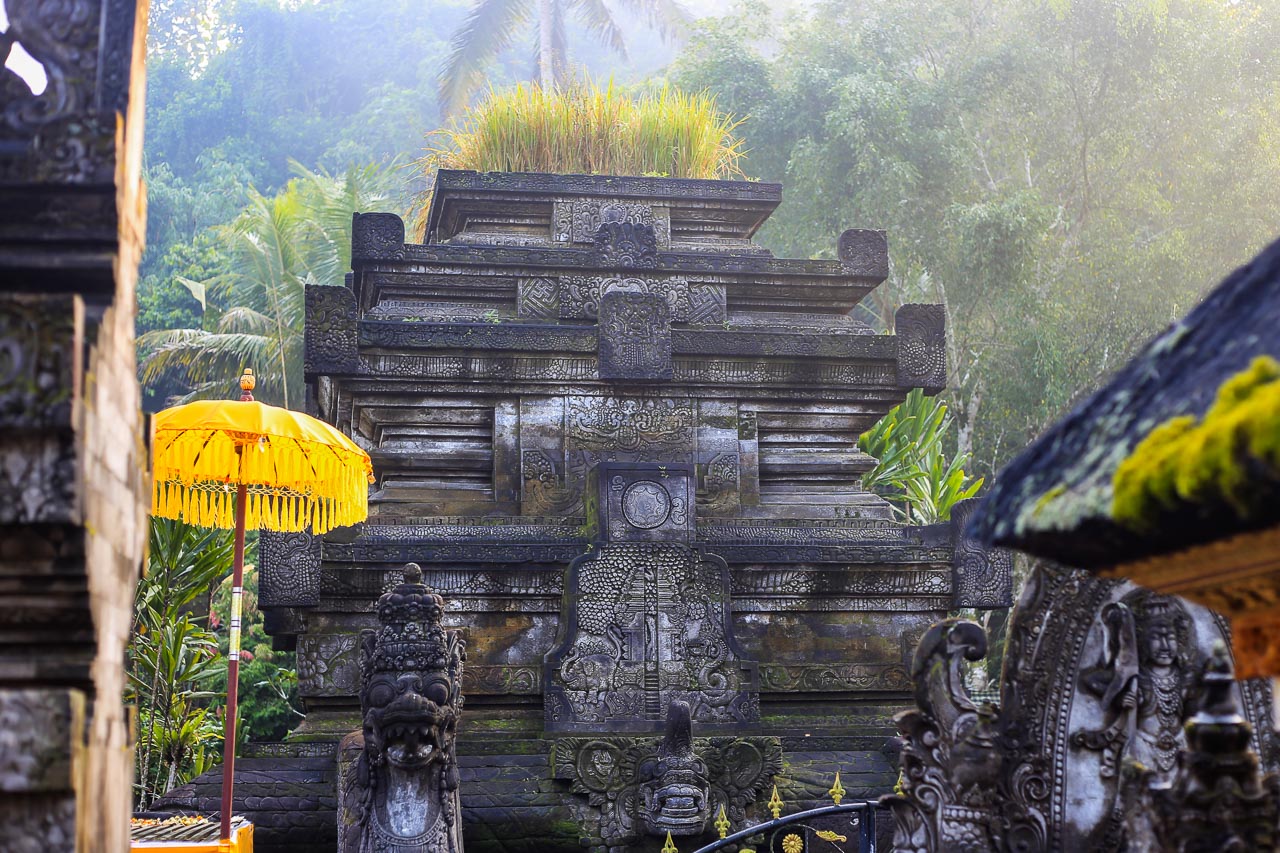
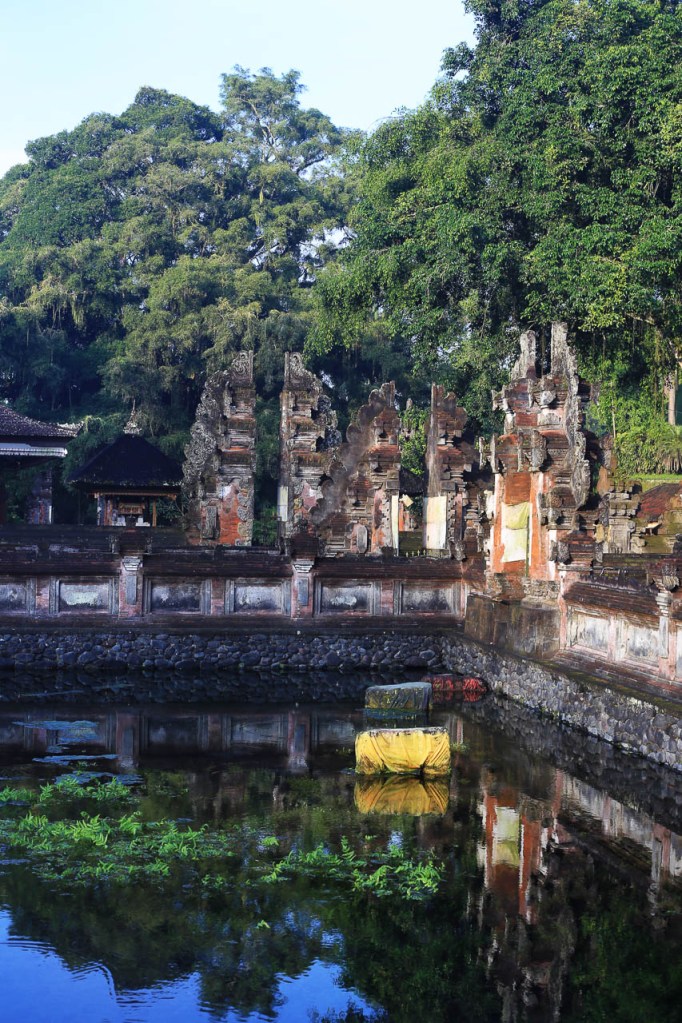
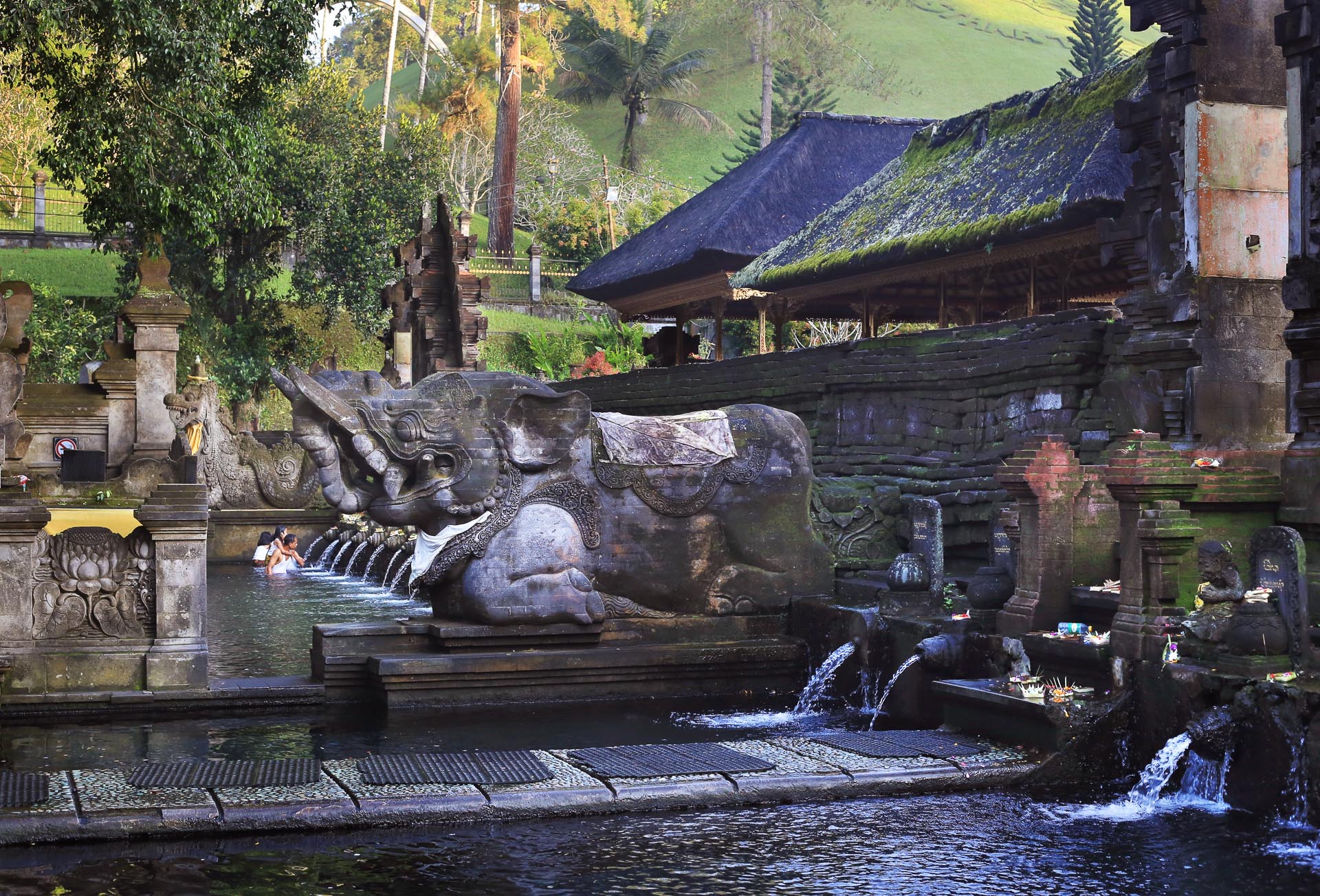
The temple’s central feature is a sacred spring. Its water is collected in a sacred pool and flows through a series of waterspouts into the bathing pools. The water, constantly fed by underground volcanic sources, is rich in minerals and maintains a stable temperature, contributing to its clarity and purity.
The origins of Tirta Empul are a blend of history and legend. The name Tirtha di (air) Mpul appears on a heavily worn stone at the nearby Sakenan temple, dating from around 960 AD (Manukaya inscription). It records the founding of the site by King Jayasingha Warmadewa and the creation of two ponds. The temple was rebuilt and renovated several times during its more than thousand years long history.
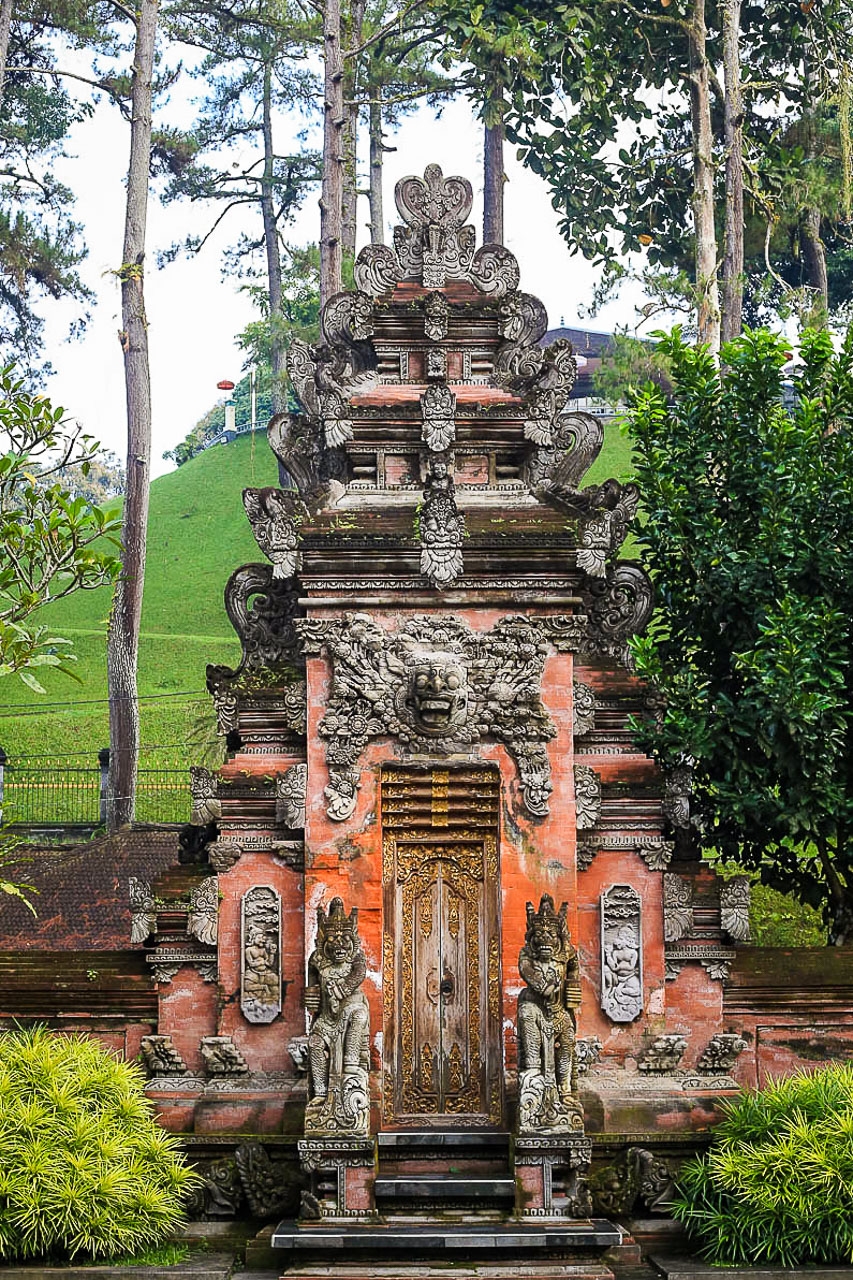

Origin legend
The myth of Mayadenawa tells that a king’s son, skilled in magic and invisible transformations, grew arrogant, he forbade the Balinese people from attending religious festivals and began destroying temples across the island. His actions brought famine, plague, and drought, and the people were unable to call upon the gods for blessings. In this time of crisis, the powerful Hindu priest Mpu Kulputih secretly traveled to Besakih temple to petition the gods for help.
According to the legend, the god Indra answered Mpu Kulputih’s plea by descending to the island with his warriors. Mayadanawa had poisoned the island’s water sources to win over Indra’s army. Indra intervened, piercing the ground to create the spring at Tirta Empul.The spring healed all of Indra’s soldiers who had been poisoned, and its waters became revered as sacred, embodying purification, fertility, and divine protection. This miraculous event restored balance to the land and ensured that the spring’s water would be treated as special ever since, allowing the people to perform ritual cleansing and continue their devotion without fear.
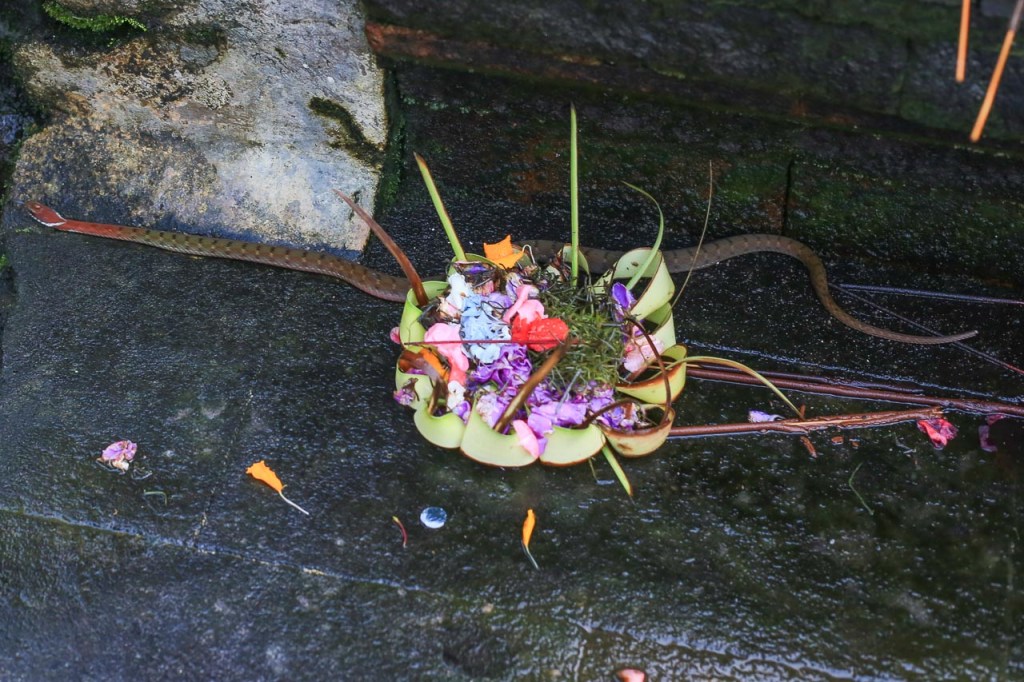
This origin legend highlights Bali’s deep respect for water which is regarded as both a source of life and a medium for spiritual renewal. This belief is intrinsic to Balinese Hinduism, which is also called agama tirtha — where agama (Indonesian) means religion and tirtha, derived from Sanskrit, signifies holy water, used in numerous ceremonies for cleansing, blessings, and ritual purification
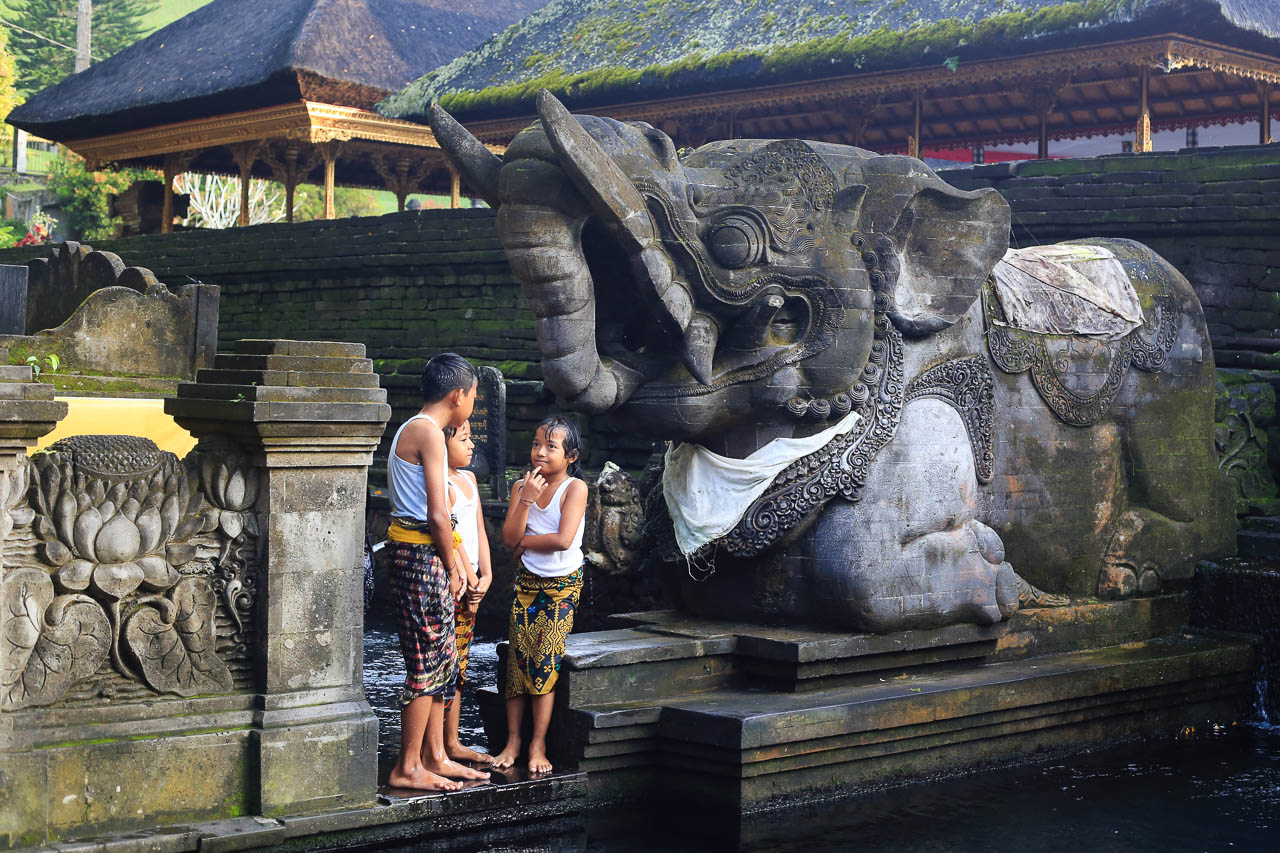
Gods and relics
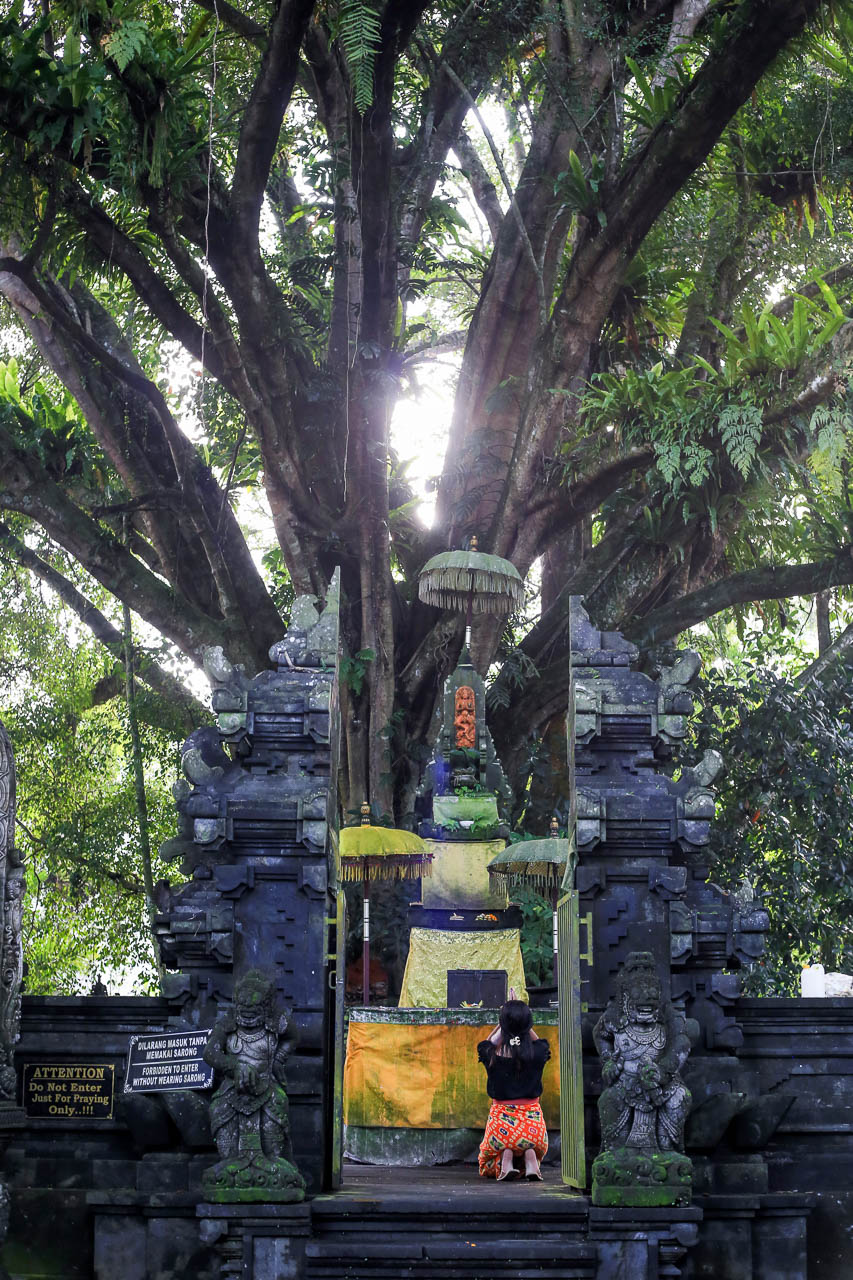
The temple is dedicated to Vishnu, the all-pervasive god of the Hindu triumvirate of Brahma, Shiva, and Vishnu, yet the god Indra—associated with rain, thunder, and the life-giving power of water—is also worshipped here. During certain rituals, Indra is believed to be present, seated on the pelinggih tepasana throne in the northeastern part of the jeroan, the inner courtyard.
Probably the oldest relics in the temple are a lingga and a yoni, symbols of Shiva and his consort, the goddess of fertility. The rectangular yoni has a spout through which sacred water once flowed from the lingga during ancient ceremonies, symbolizing purification, life, and fertility. They are kept in the jeroan, the inner, most sacred zone of the temple, on an open altar.
The temple is jointly managed by six traditional villages (banjar adat), out of which Manukaya bears the primary responsibility. Yet those who come to pray here arrive from all across Bali, and many foreign visitors also take part in the purification ceremonies.
-
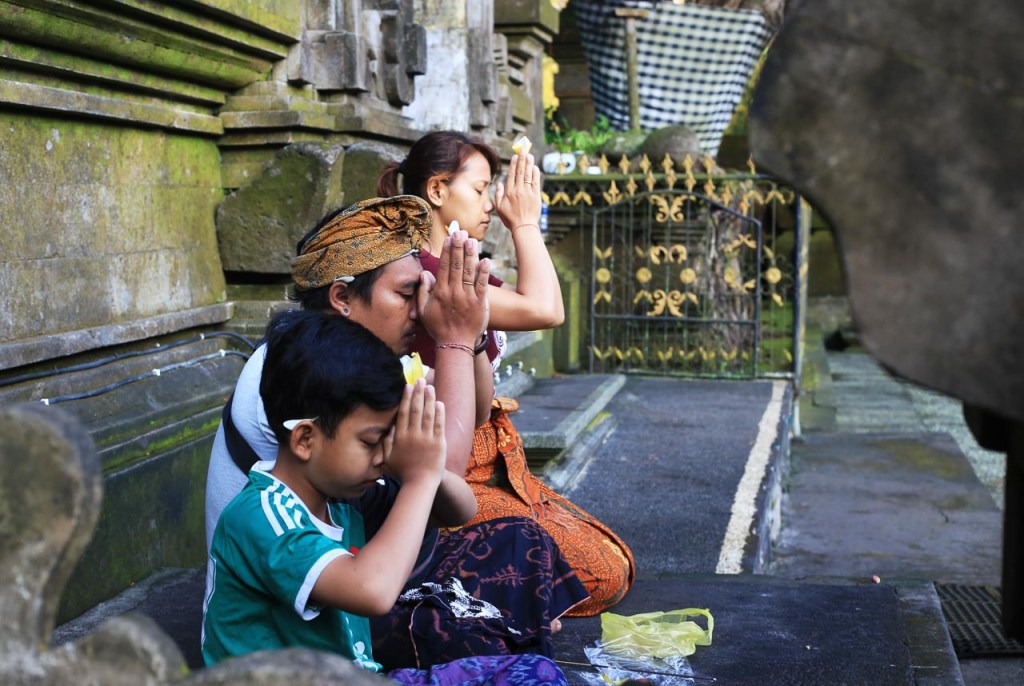
A Hindu family offers prayers before cleansing in the sacred waters of Tirta Empul.
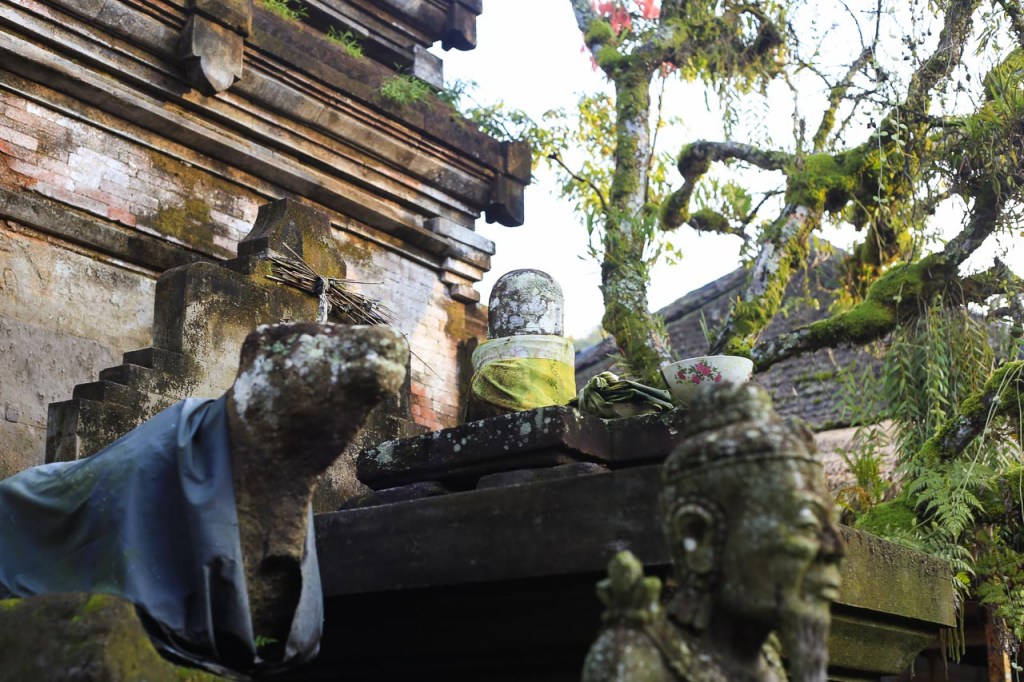
Visiting
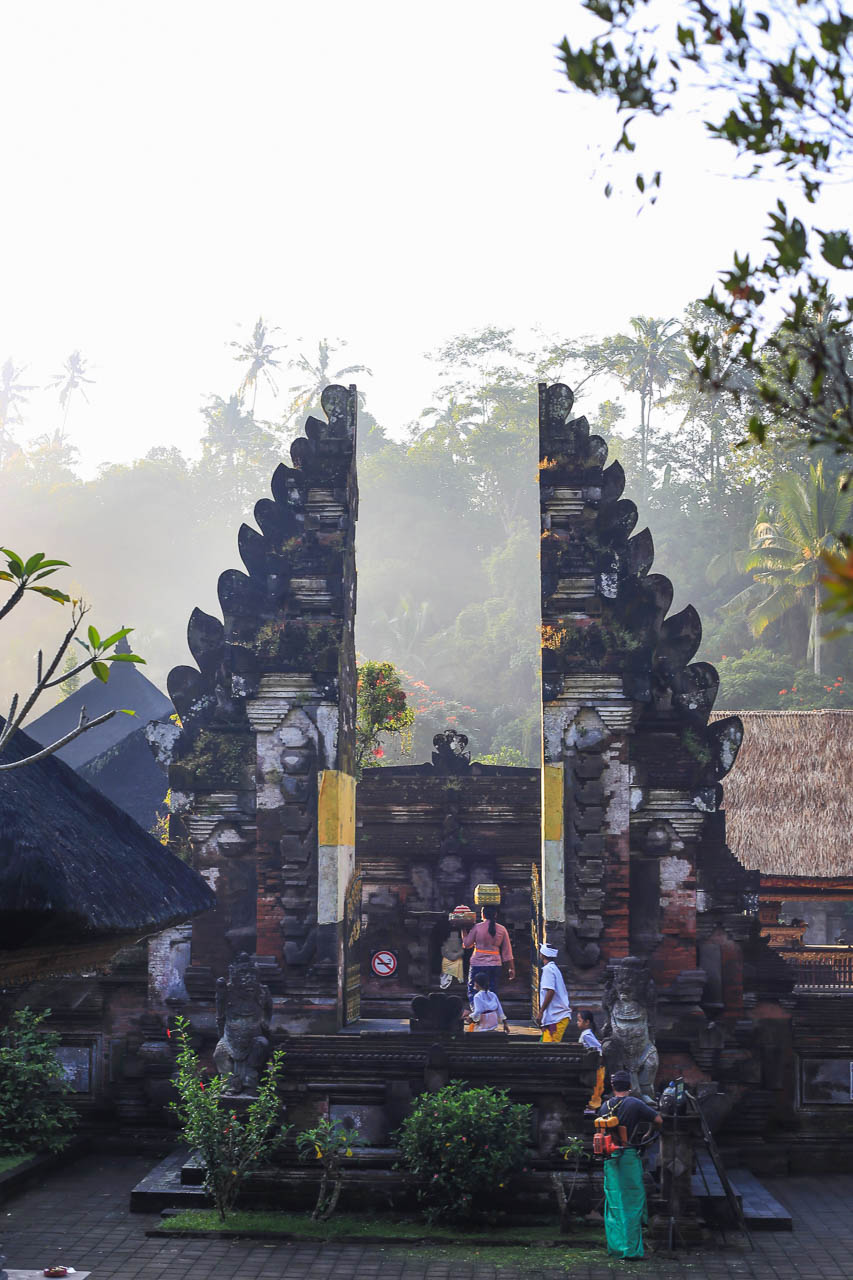
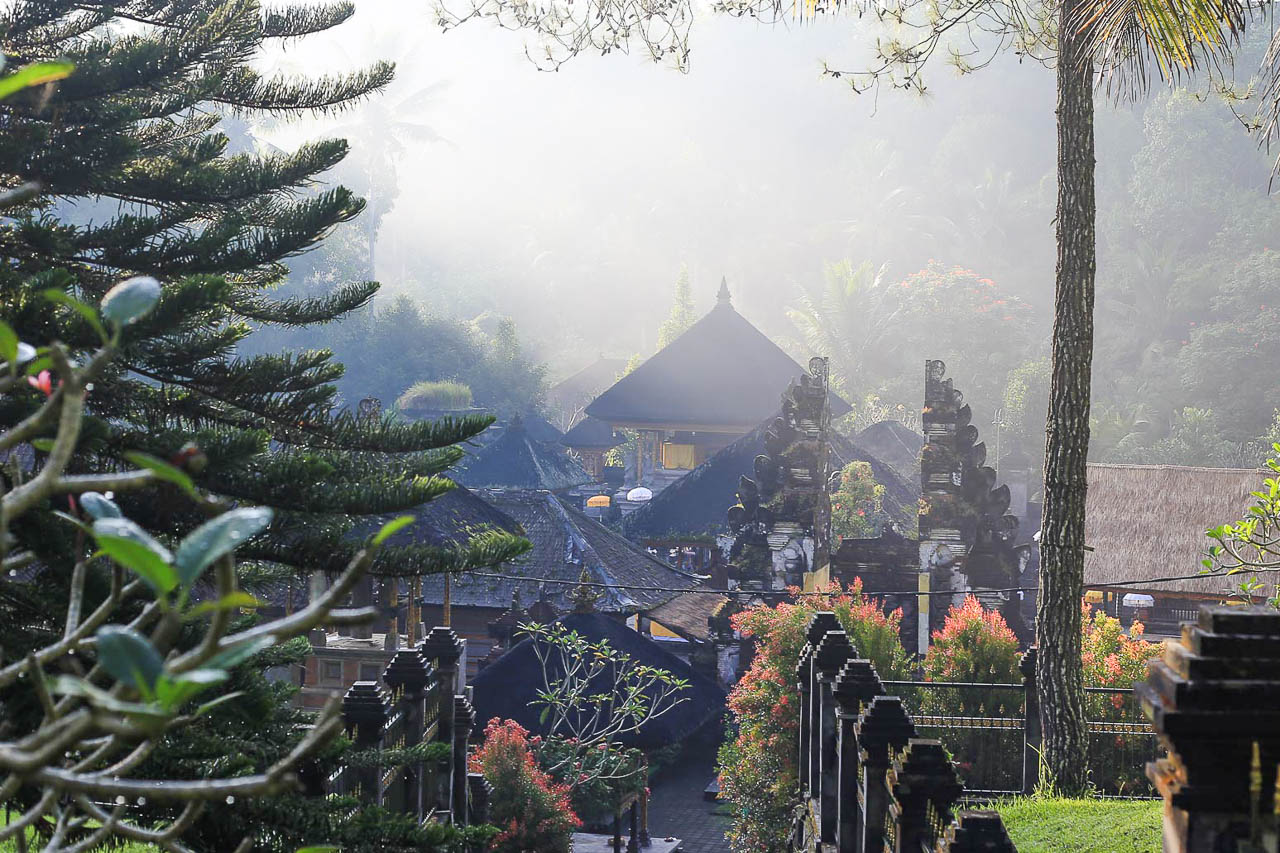
Consider arriving early (before 8 a.m.) for a peaceful experience, and you can watch local families arriving for their ceremonial baths, cleaners of the compound and . eventually the soft morning fog lingering in the valley. The free sarong rentals at the ticket booth open only at 9am, so if you plan to visit early, bring your own sarong for temple entry.
Bibliography
Asian Historical Architecture Pura Tirta Empul https://www.orientalarchitecture.com/sid/1667/indonesia/gianyar-regency-bali/tirta-empul
Cotterell, Arthur Bali, a Cultural History. Oxford: Signal Books, 2015.
Davison, Julian, et al. Introduction to Balinese Architecture. Singapore: Periplus, 2003.
Eisema, Fred Bali: Sekala and Niskala. Essays on Religion, Ritual, and Art. Singapore: Periplus Editions, 1996.
Exelby, Narina and Eveleigh, Mark Verborgenes Bali. Berlin: Jonglez Verlag, 2024.
Granquist, Bruce Mapping Bali: Island, Culture, People. Singapore: Talisman, 2023.
Kempers, A. J. Bernet Monumental Bali. Singapore: Periplus Editions, 1991.
Lansing, J. Stephen Perfect Order: Recognizing Complexity in Bali. Princeton University Press, 2006.
Sagemüller, Ernst, and Semadi, I Gde The Temple of Bali. Singapore: Talisman, 1999.
Spitzing, Günter Bali. Tempel, Mythen und Volkskunst auf der tropischen Insel zwischen Indischem und Pazifischem Ozean. Köln: DuMont, 1983.
Wijaya, Made Architecture of Bali. University of Hawai’i Press, 2002.
Nearby temples
Tampaksiring is the paradise on earth for temple – and nature – enthusiasts: You can find several ancient temples within a few kilometers here. The Hindu temple with a Buddhist stupa Pura Pegulingan is just a few hundred meters away, you can walk there by taking about 200 steps up to the east. The less known, but beautiful water temple Pura Mengening is also in walking distance, about 500m away down the Pakerisan river. The fantastic rock-cut Pura Gunung Kawi is about one kilometer to the south. Just a few kilometers to the west is another beautiful bathing temple: Pura Gunung Kawi Sebatu. If you drive north, the small forest temple Pura Gumang enchants you with its antiquities.
Next temple:
Photos and text © 2025 Alida Szabo.
