— Sanctuary of the Lake Goddess on the Caldera Edge —
Meaning of its name: “Head of Lake Batur”
Also called: PURA BATUR, PURA ULUN DANU BATUR ANYAR, ulun danu means ‘the head of the lake’, anyar means ‘new’.
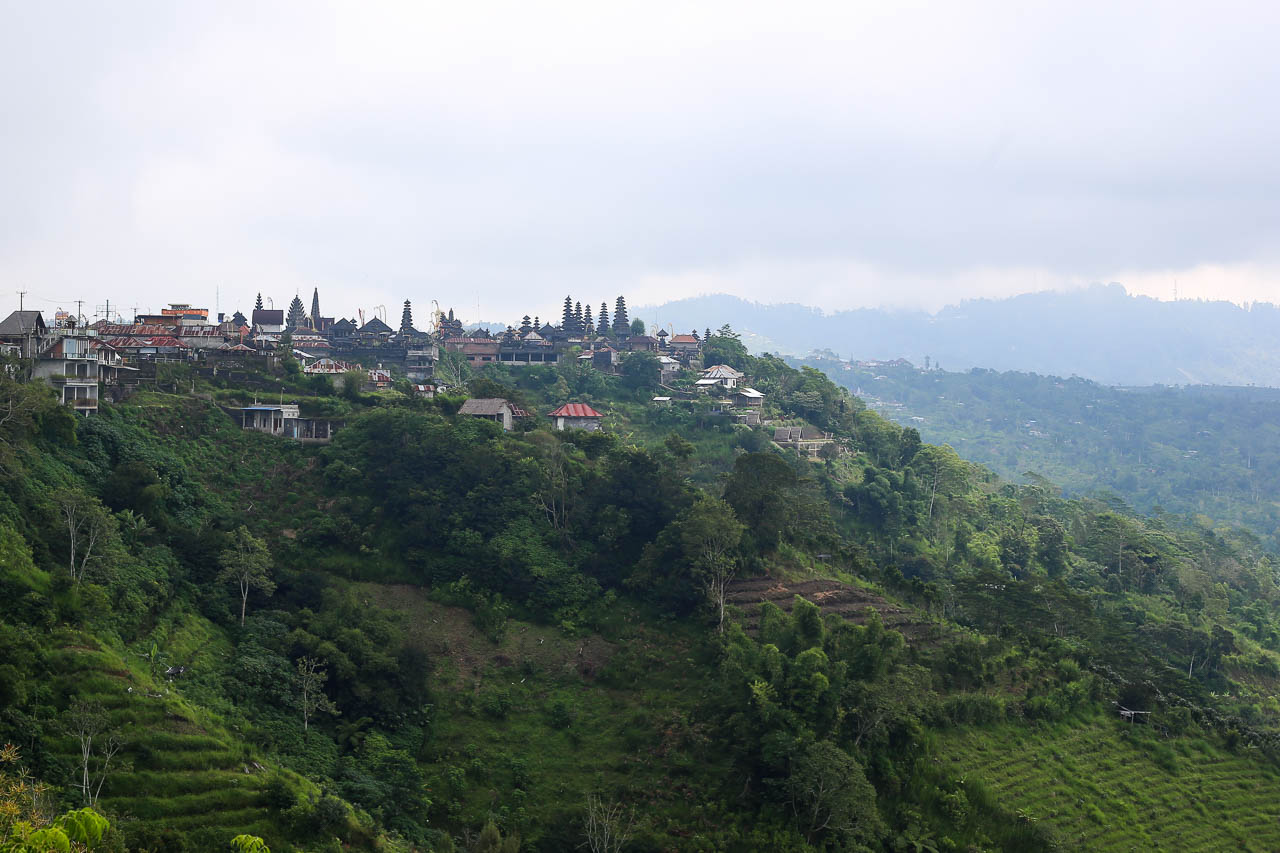
Location: At the southwestern edge of Mount Batur’s caldera at 1459 meters above sea level.
Map: Batur Selatan, Kintamani, Bangli, Bali, Indonesia
Dates back to: 16ᵗʰ or 17ᵗʰ century, perhaps earlier
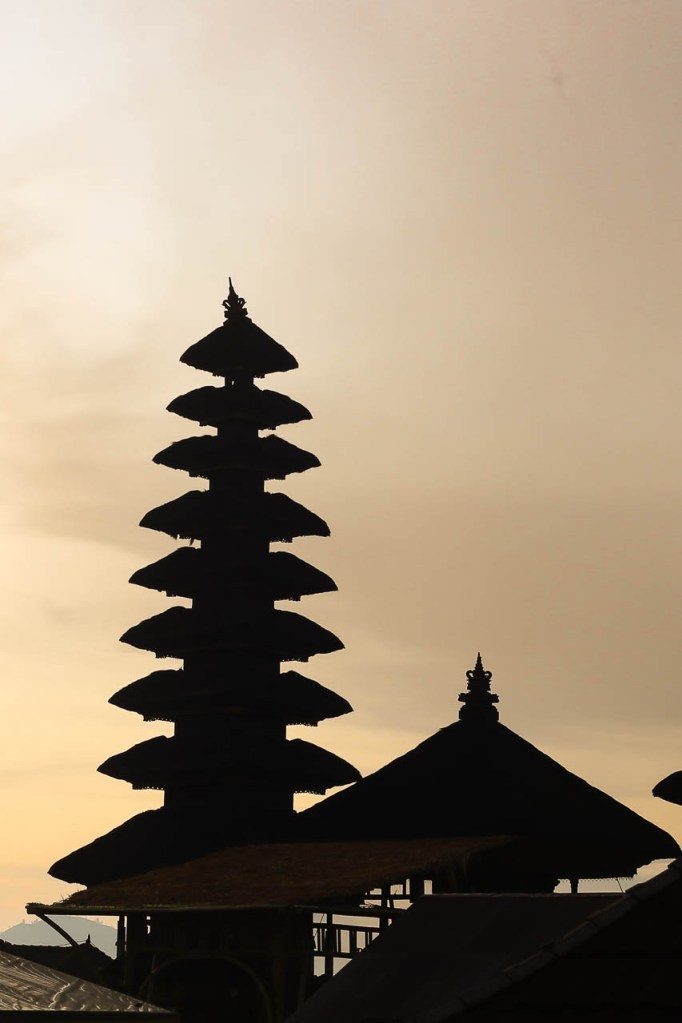
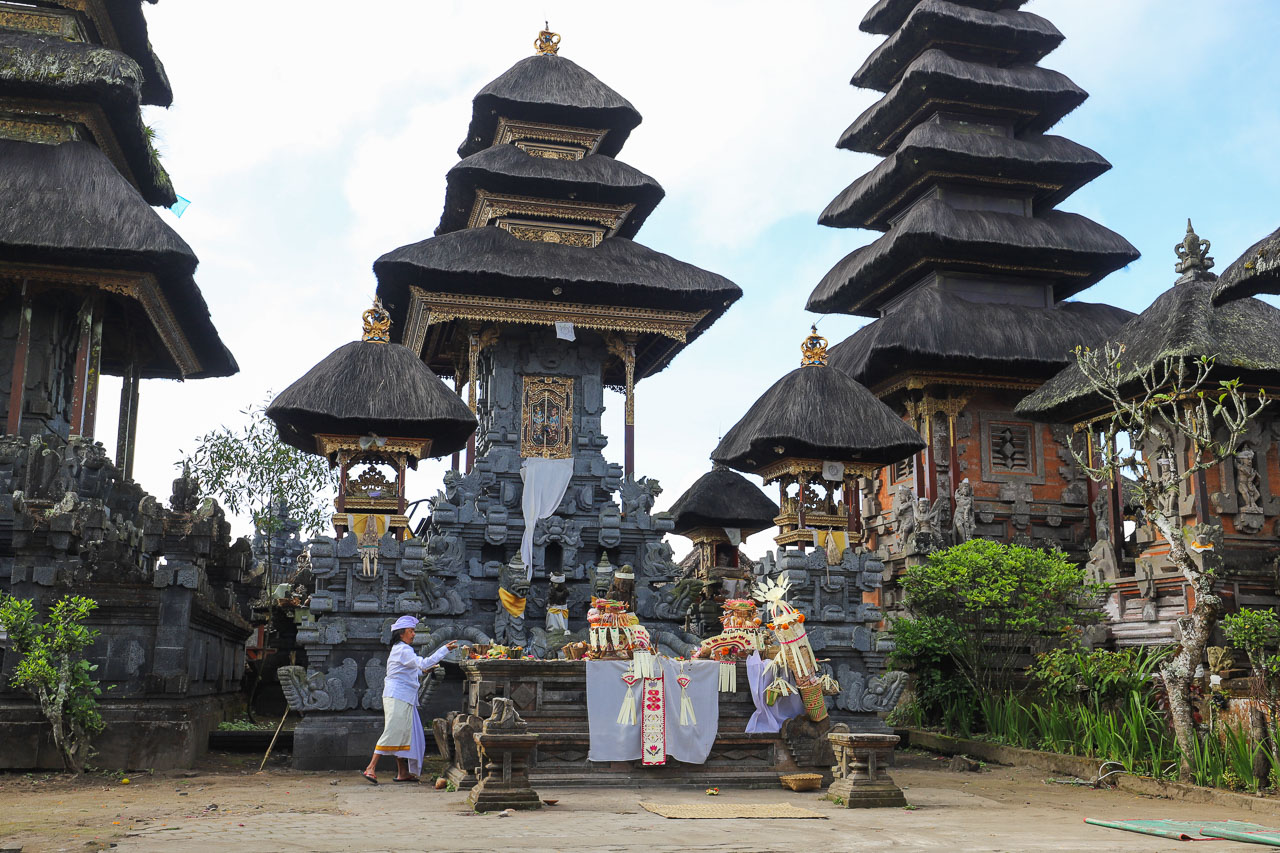
Main buildings: An 11-tiered and three 9-tiered meru (pagoda-like shrines).
Region: Mount Batur
Theme: Water Temples
Requirements for visit: Tickets cost 50,000 Rp and can be purchased across the road. Sarongs are available to borrow.
History and Devotion
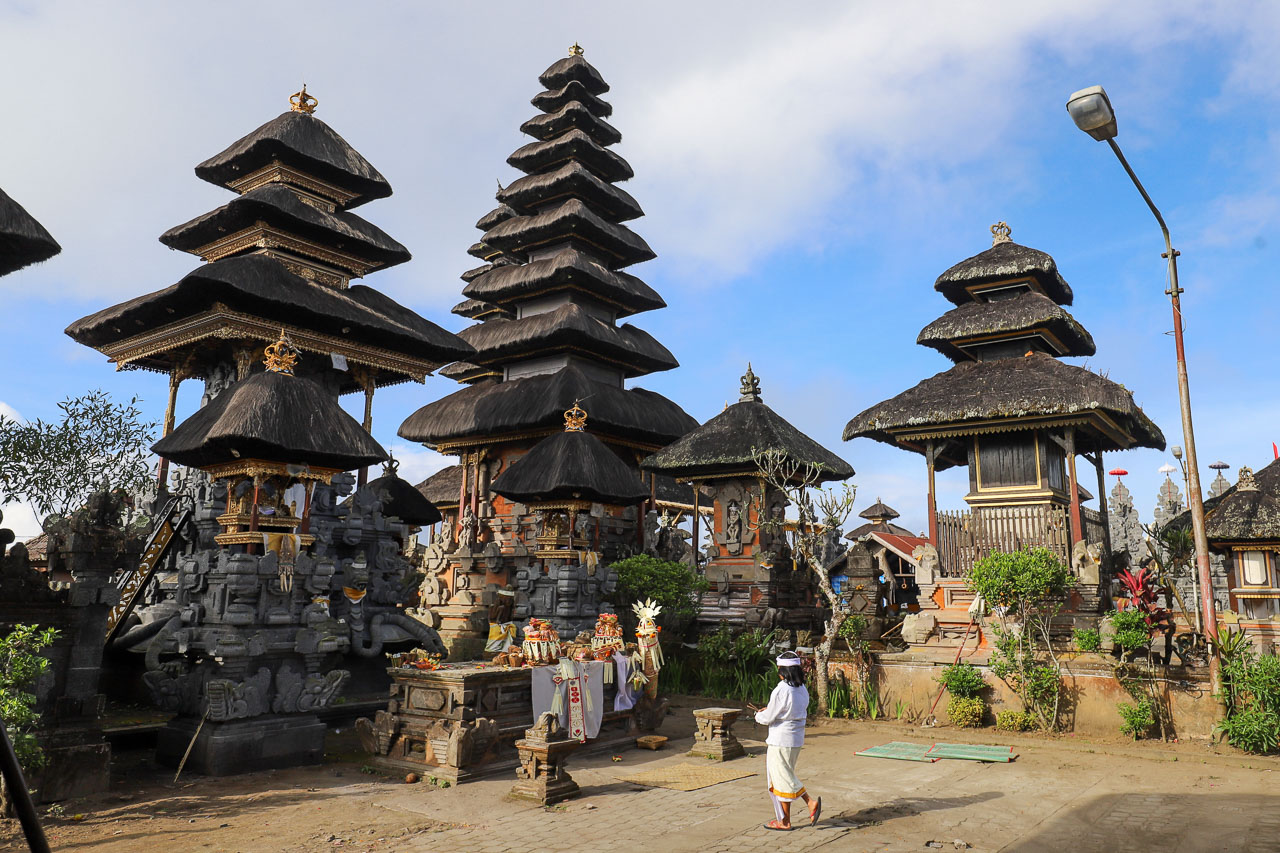
The impressive temple complex of Pura Ulun Danu Batur at Mount Batur is considered Bali’s second most important temple, after Pura Besakih, located on the slopes of Mount Agung. Because water from Lake Batur is believed to flow through the subak (traditional irrigation system) and nourish rice fields across much of the island, the livelihood of countless rice farmers is both spiritually and practically connected to this lake and temple.
As one of the nine Kahyangan Jagat temples (major directional temples), Pura Ulun Danu Batur plays a crucial role in maintaining Bali’s spiritual balance and harmony. Representing the northern cardinal direction, the temple complex is dedicated to both the Hindu god Vishnu — the preserver in Hinduism and a deity associated with water — and the local lake goddess, Dewi Danu. The temple also houses secondary shrines to Shiva, Parvati, and deified ancestral kings.
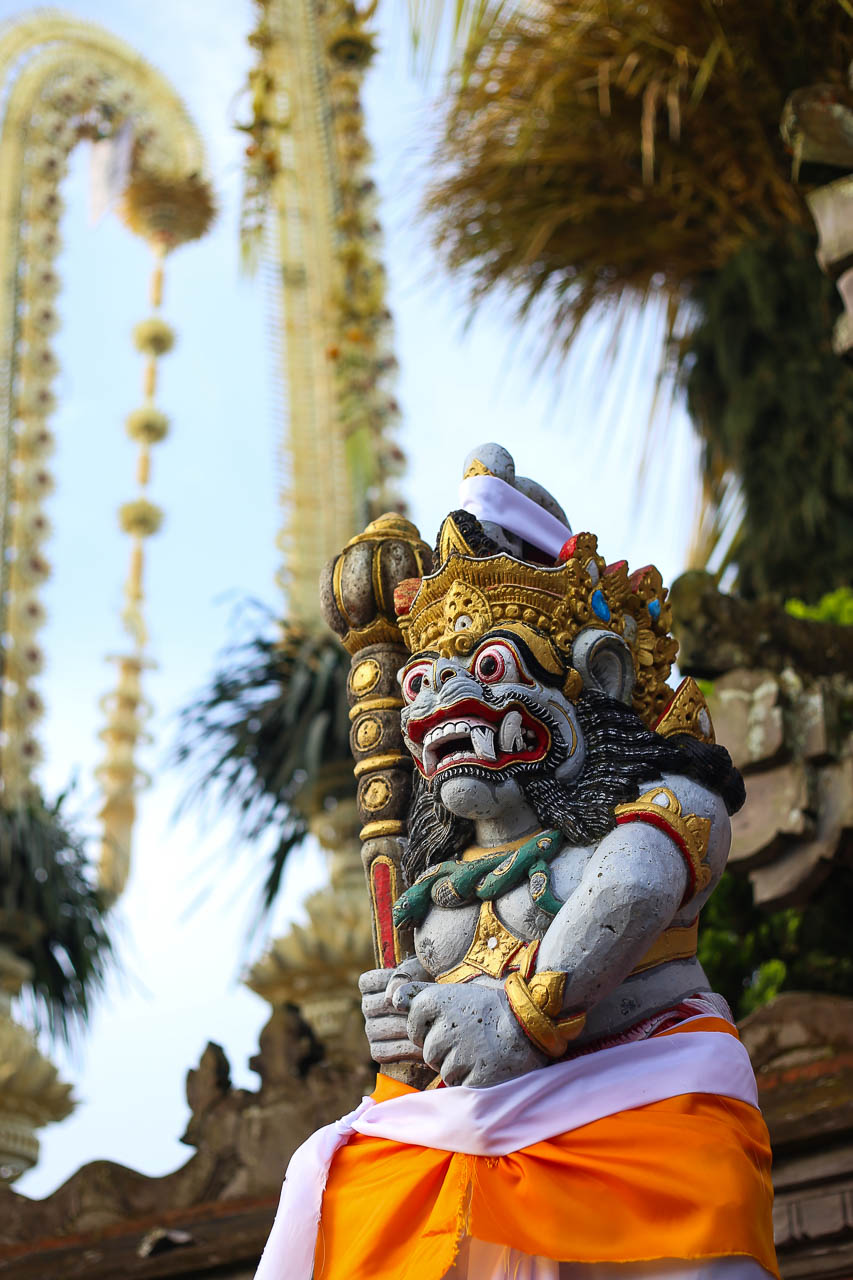
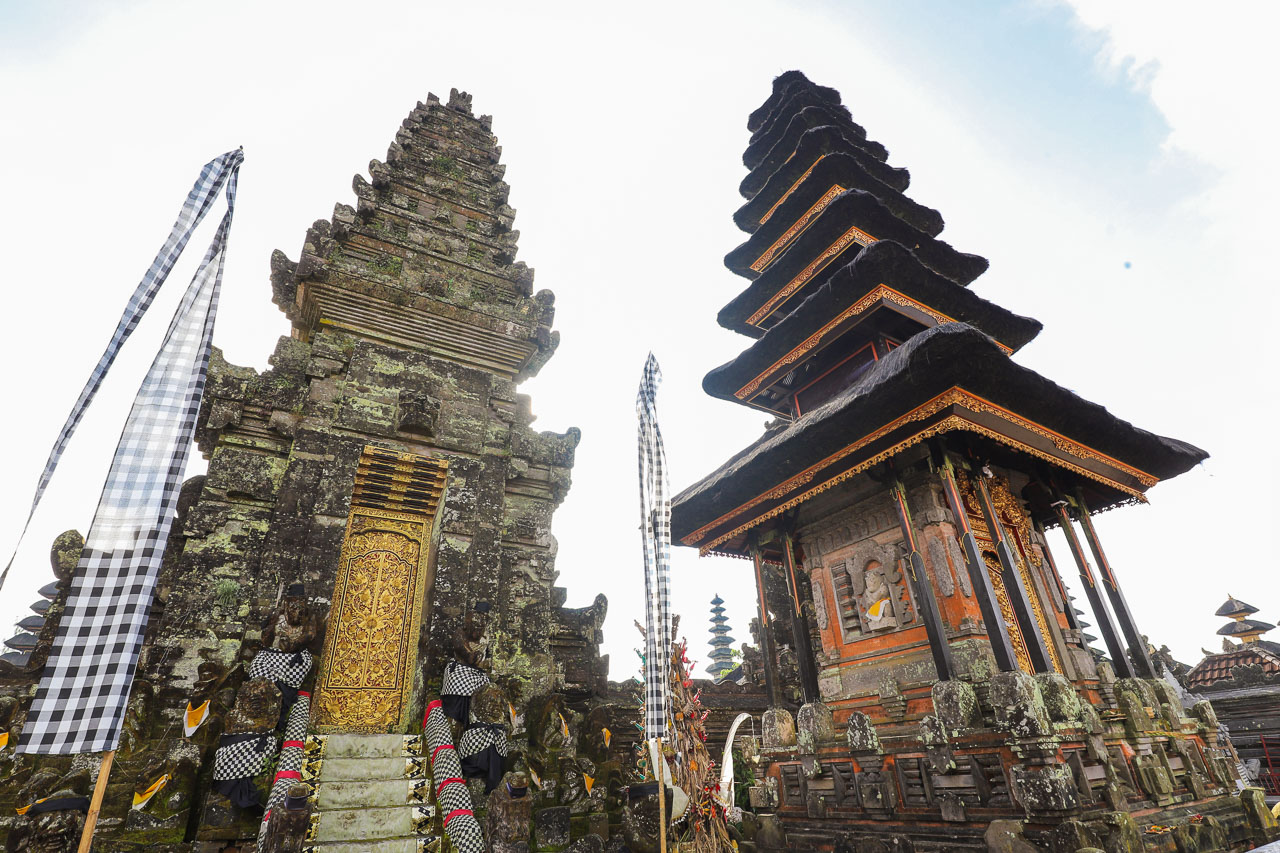
The Balinese temples are not inhabited by gods, except during ceremonies when they are invoked. The goddess of the lake, Dewi Danu is honored here with a tall, eleven-tiered meru (pagoda-like shrine), a sign of the highest divinity. The meru of her consort, the god of Mount Agung, has nine tiers, while two other nine-tiered merus are dedicated to the god of Mount Batur and Ida Batara Dalem Waturenggong — the deified king of the Gelgel dynasty (1460 to 1550).
Relocation
The temple was established in the 16th or 17th century, its exact age is unknown. Pura Ulun Danu Batur is a survivor with a remarkable story: it was moved, along with its village, from the southern slopes of Mount Batur to the caldera rim after the catastrophic eruption of 1926.
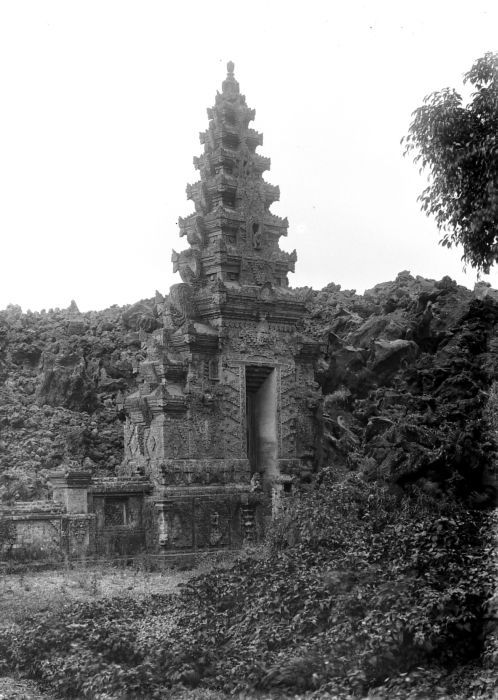
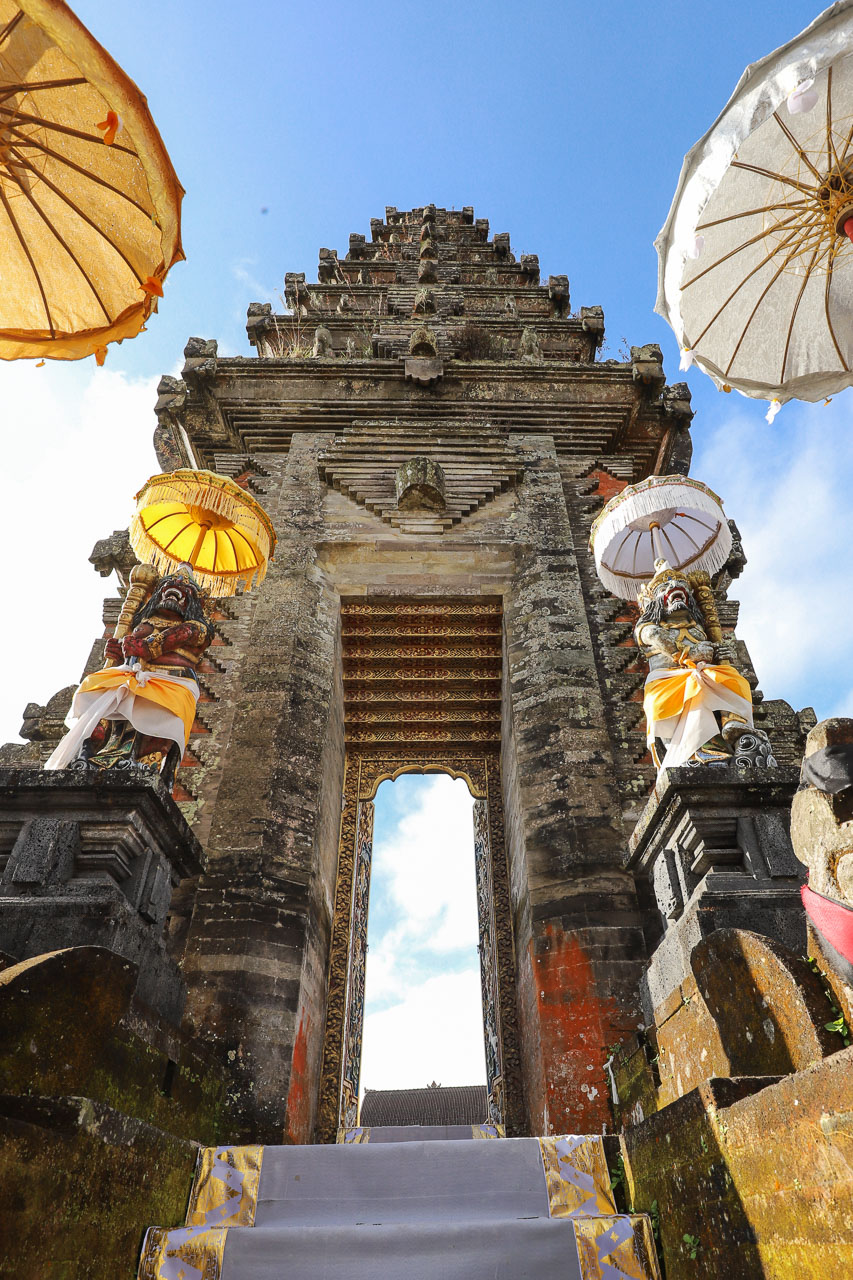
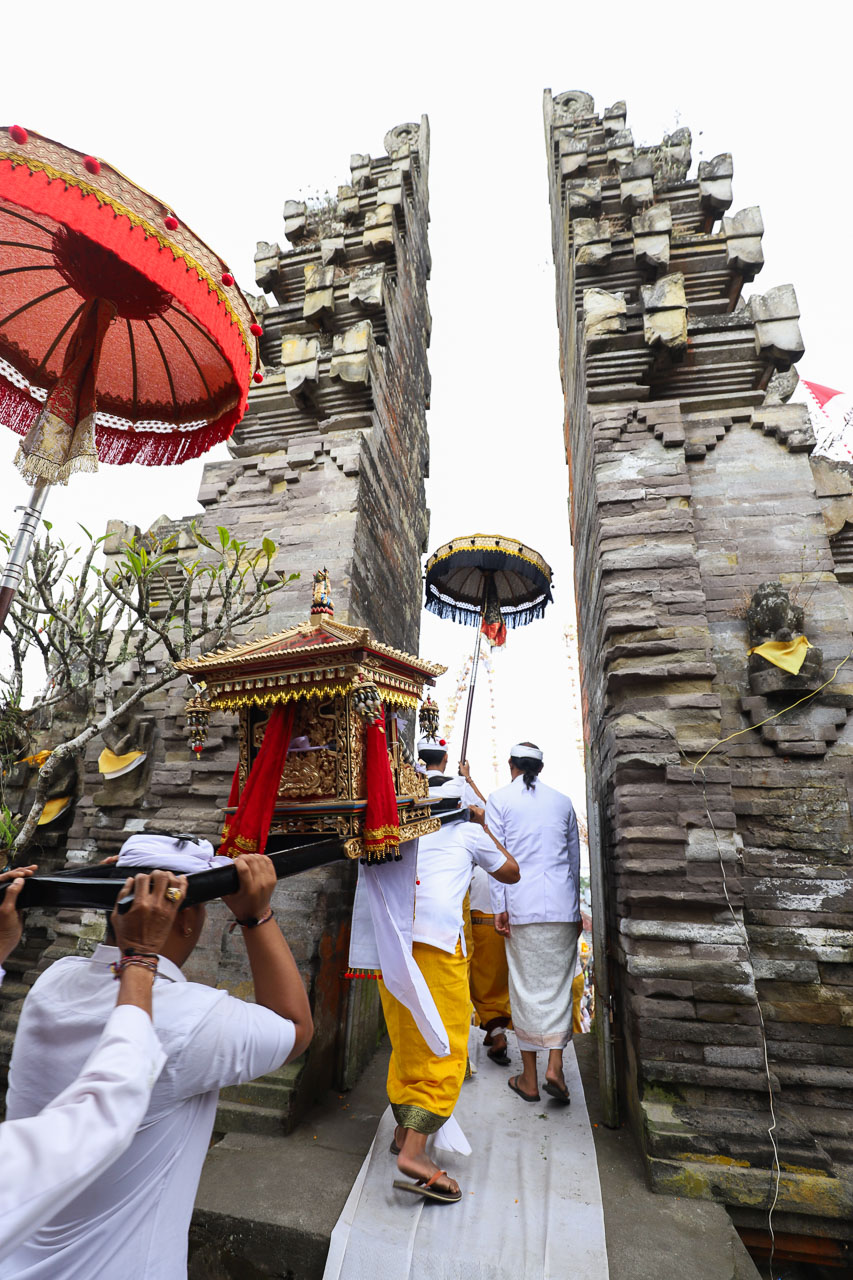
The earlier 1917 eruption caused thousands of casualties; remarkably, however, the lava flow stopped at the temple gates — a phenomenon the Balinese interpreted as a divine sign. But on April 21, 1926, a more devastating eruption destroyed nearly the entire temple compound and village, claiming approximately 1,500 lives. Despite the tragedy, the most sacred eleven-tiered shrine (meru) dedicated to Dewi Danu and a gate (see picture) survived the catastrophe.
Following this event, the villagers, with assistance from neighboring communities, relocated both their settlement and the temple to a safer location on the oldest and highest rim of the caldera. The surviving shrine and other sacred heirlooms, including the temple’s gamelan instruments and guardian spirit figures, were carefully transported to this new site, where the present temple complex was reconstructed and opened in 1935.
The Reign of Water
The temple, along with Lake Batur and several other sites in Central West Bali — such as Pura Ulun Danu Bratan, the Jatiluwih rice terraces, and Pura Taman Ayun water temple — forms part of the “Cultural Landscape of Bali Province: the Subak System as a Manifestation of the Tri Hita Karana Philosophy.” This cultural landscape was inscribed as a UNESCO World Heritage Site in 2012 for its outstanding universal value.
Rice farmers of the subaks contribute to the temple costs and participate in the main ceremonies. Their involvement reflects the interconnectedness of agriculture, religion, and community in Balinese culture.
While sometimes described as austere due to its dark lava stone construction, the temple features impressive decorative elements, including gold-adorned wooden doors, stone guardian sculptures, and pavilions with elaborately carved roof frameworks.
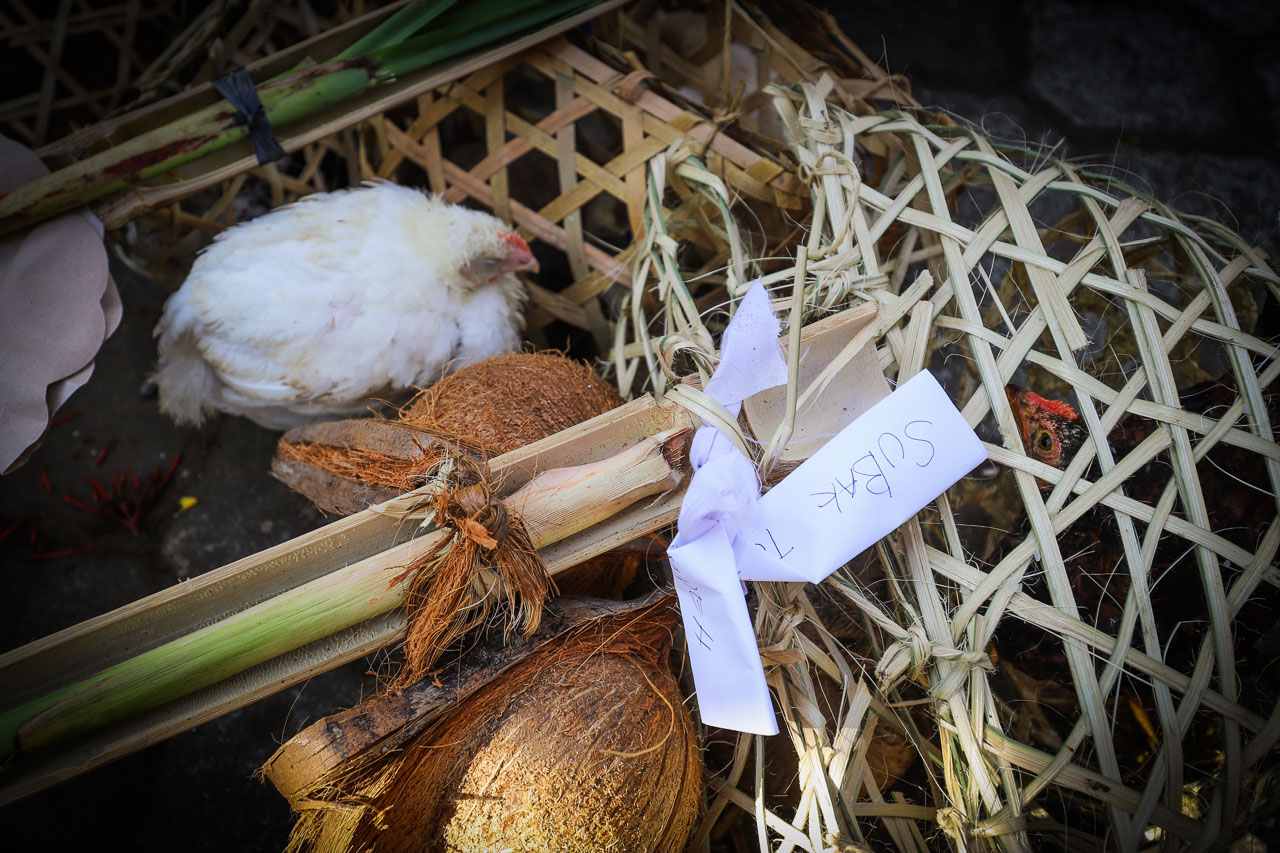
Ceremonies
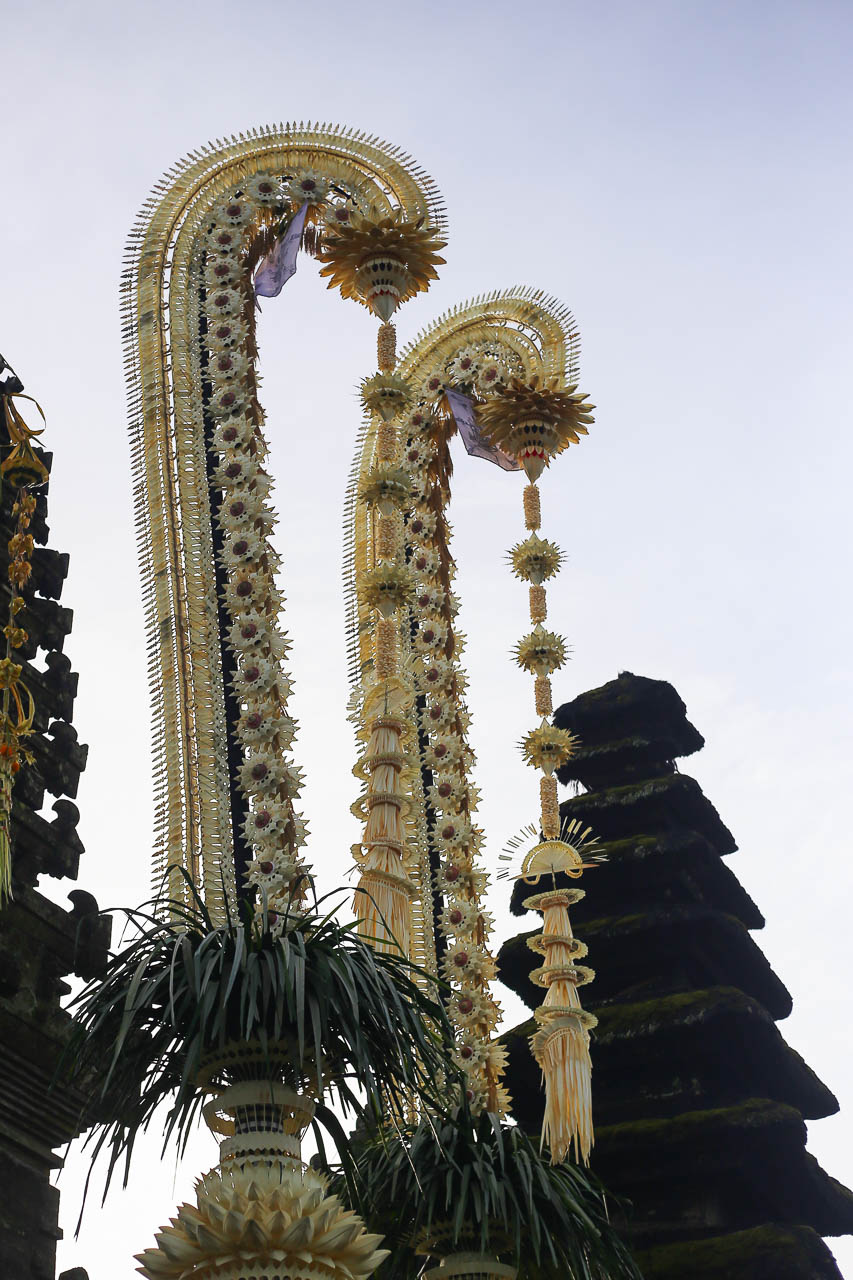
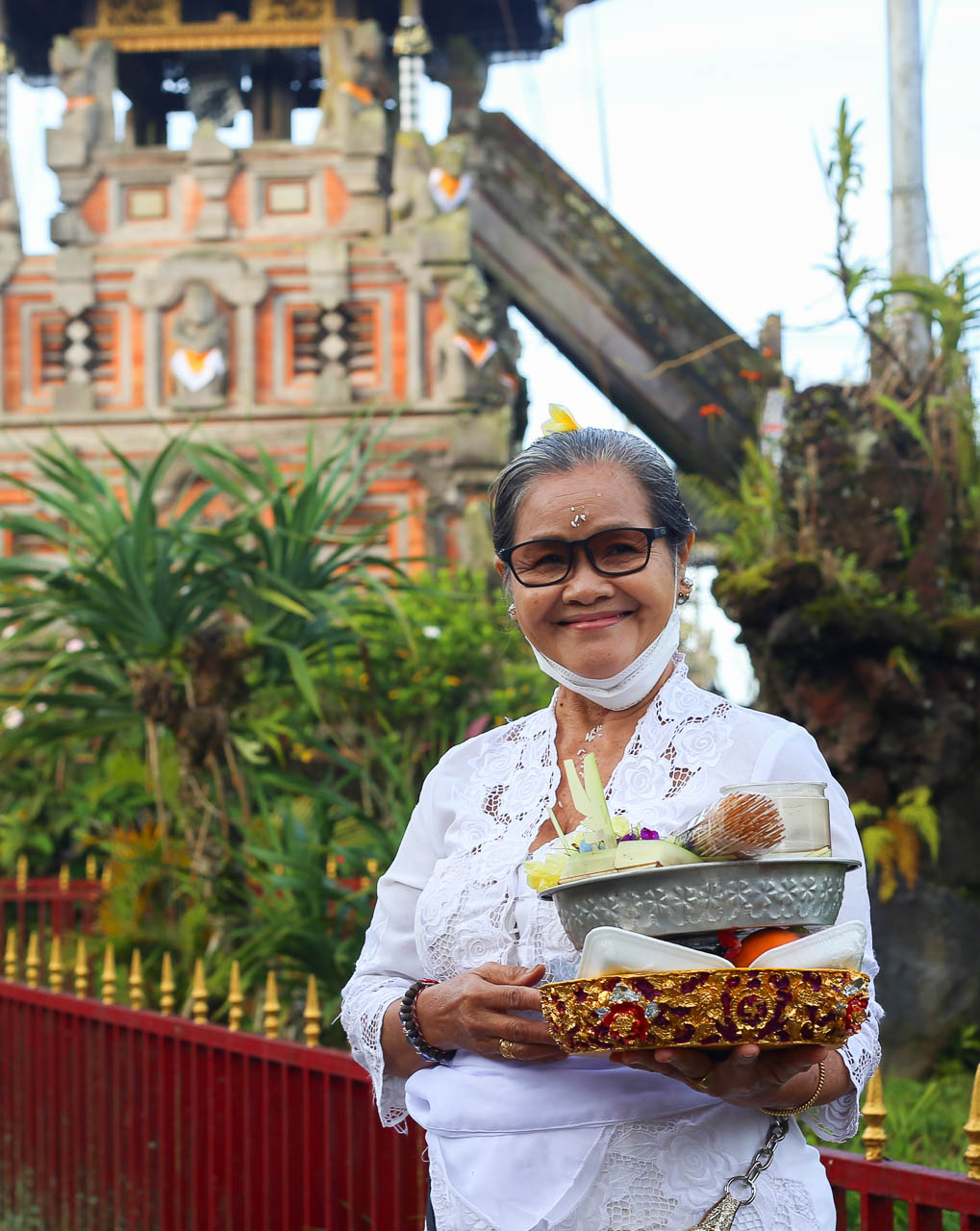
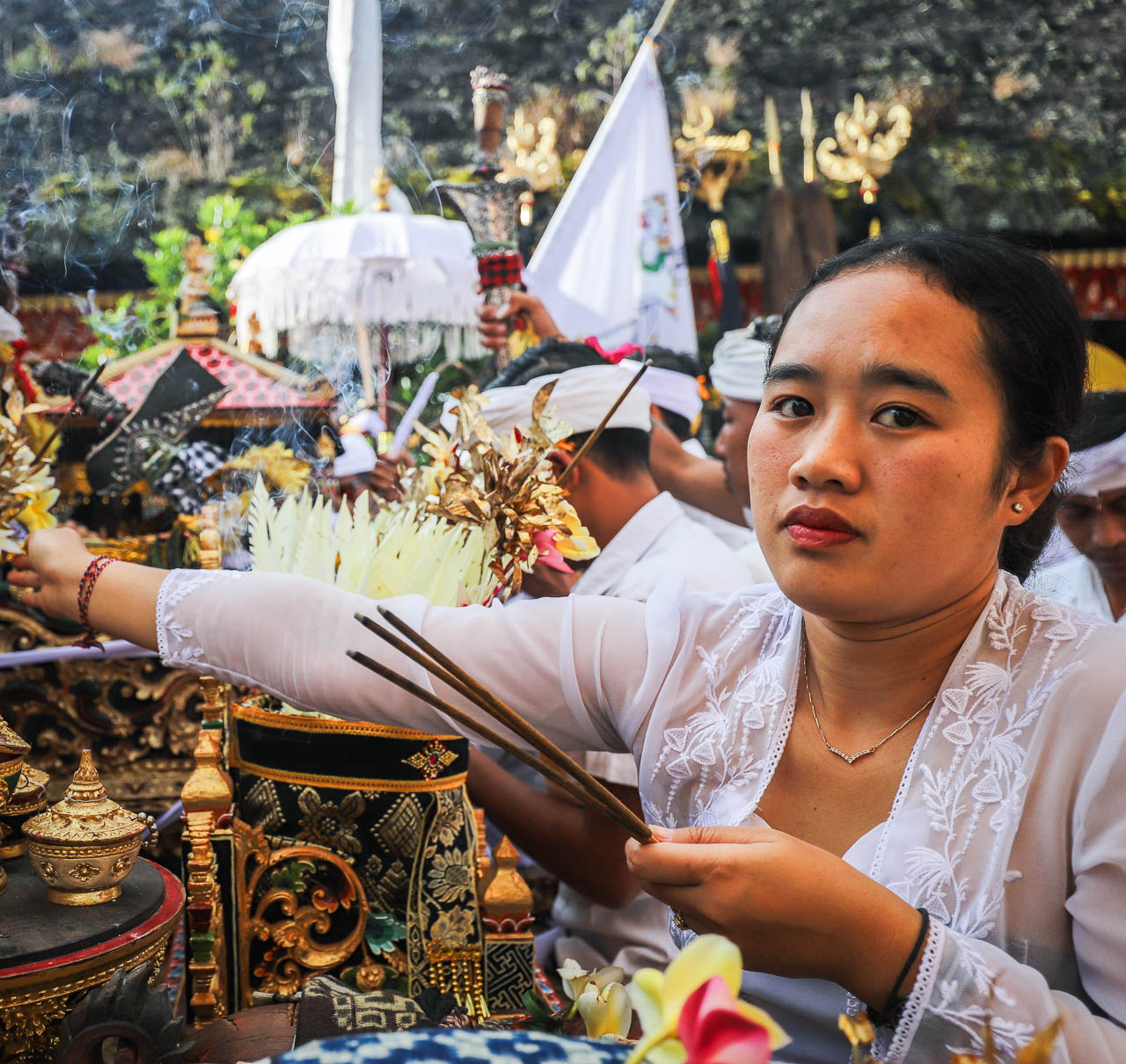
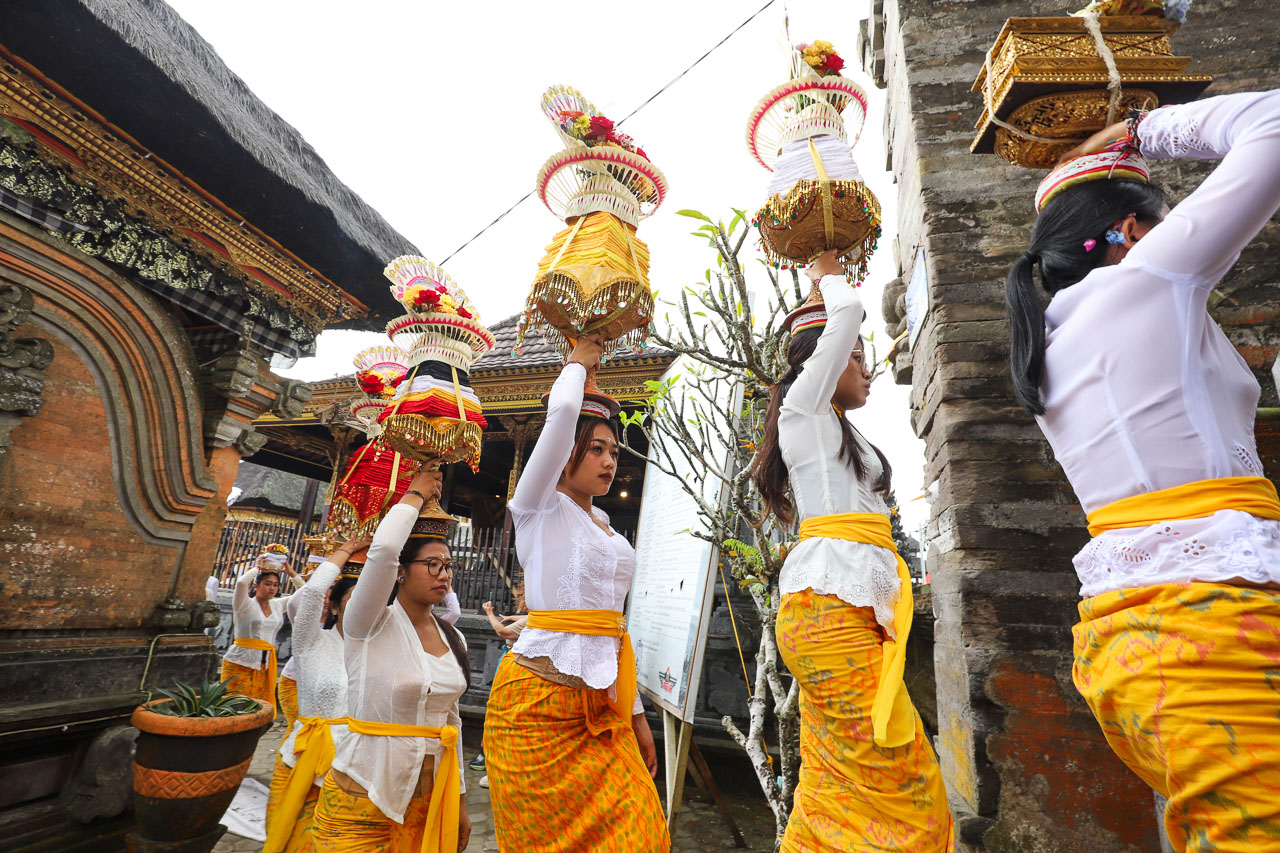
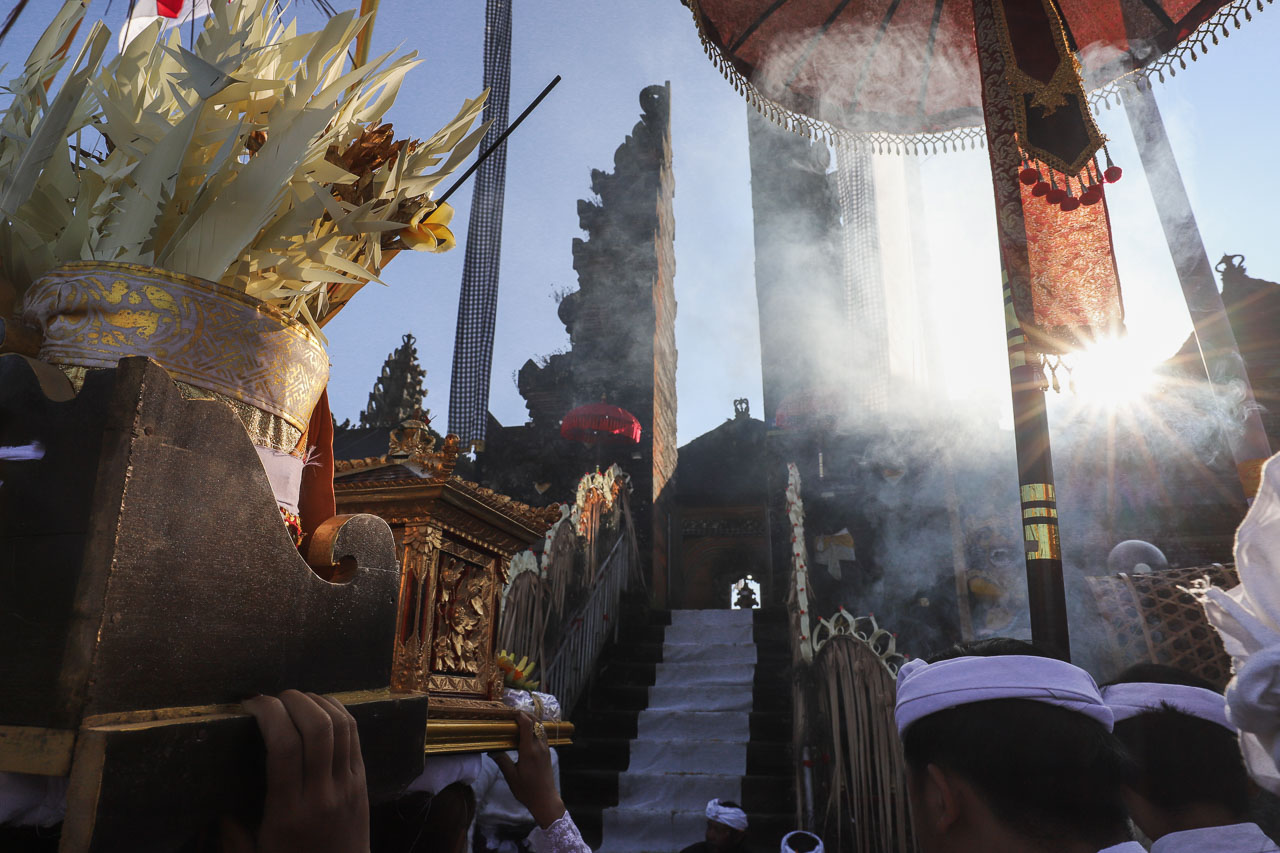
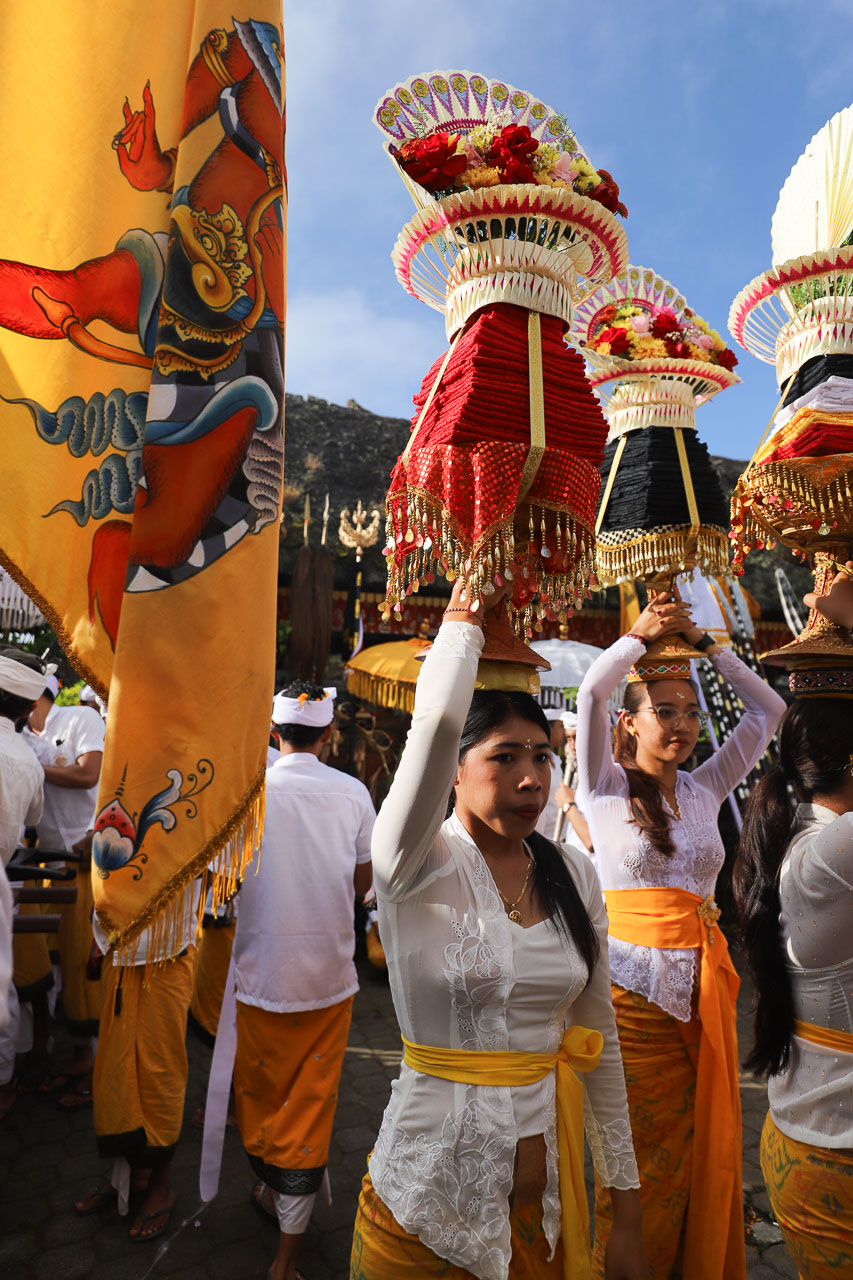
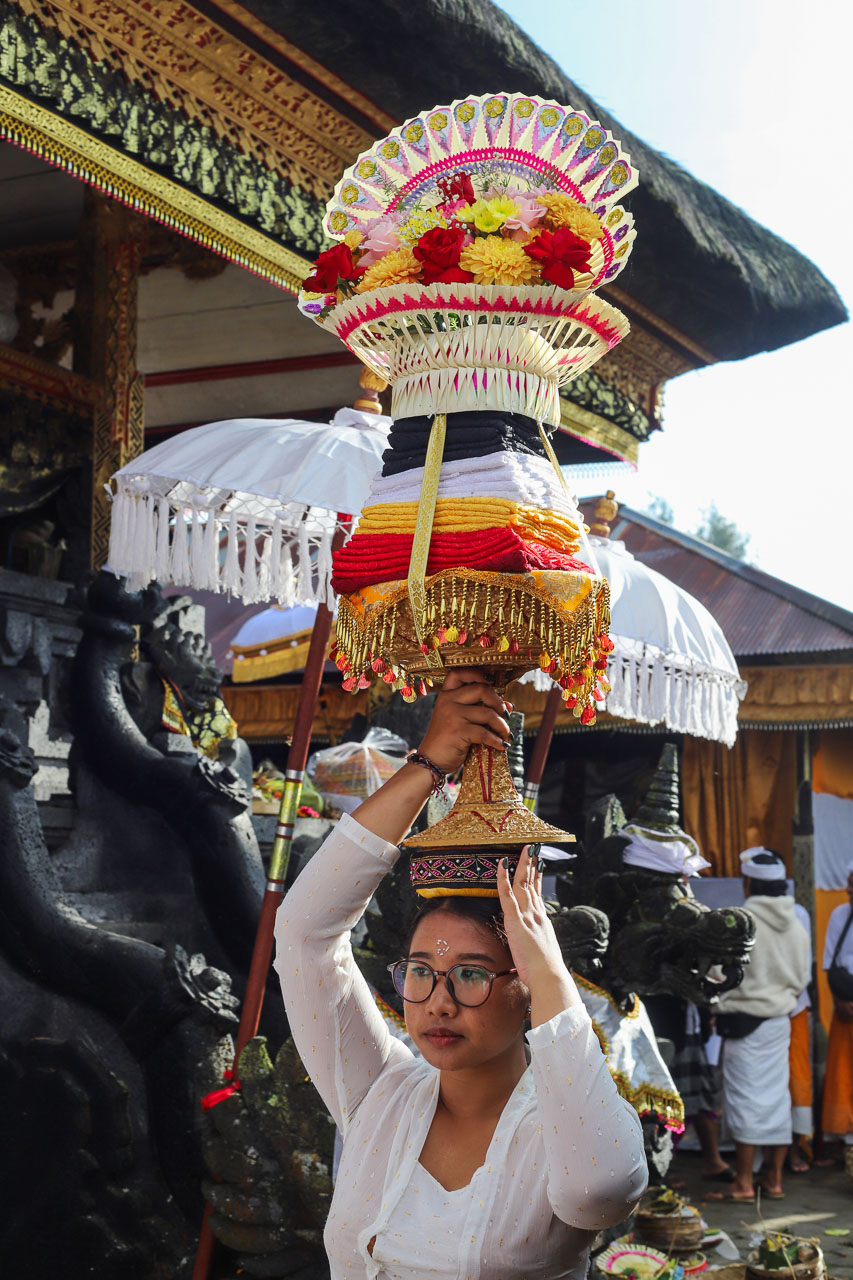
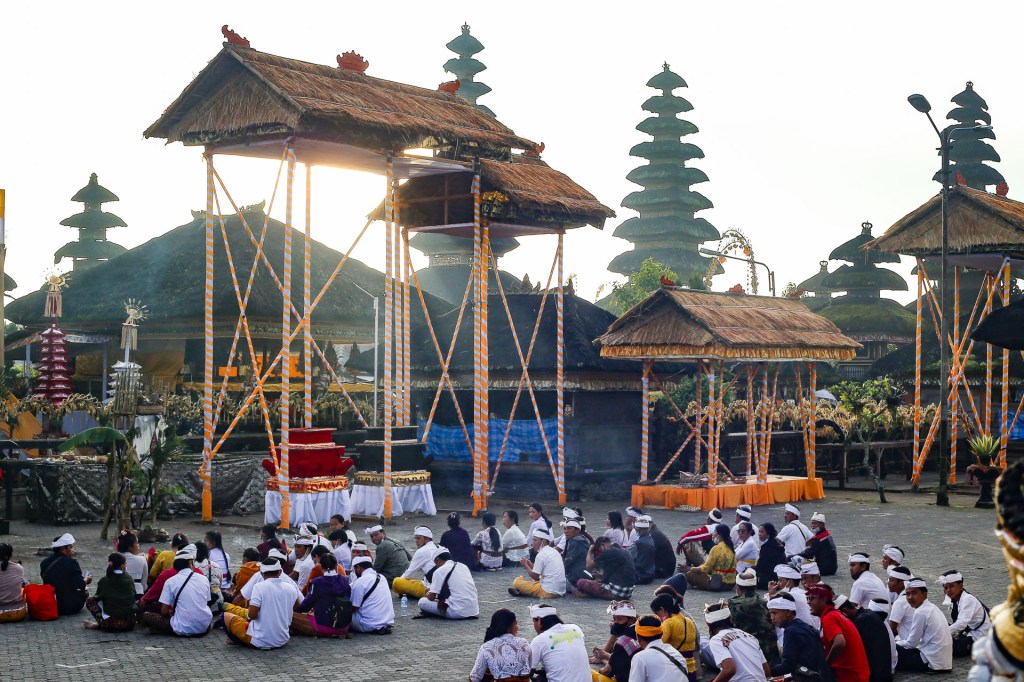
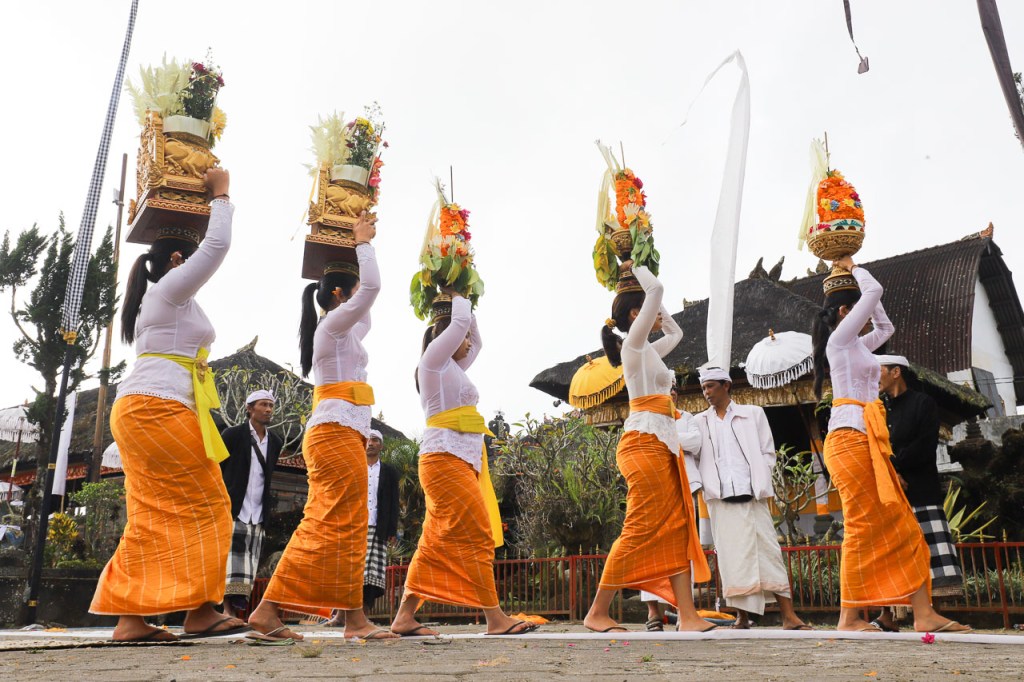
The main ceremony (Odalan) at Pura Ulun Danu Batur takes place on the tenth full moon (purnama) of the Balinese lunar calendar, specifically during Sasih Kedasa (tenth month). This typically falls between late March and early April. The Odalan is one of the temple’s most important events, drawing large numbers of devotees dressed in traditional attire, who participate in offerings, prayers, and processions.
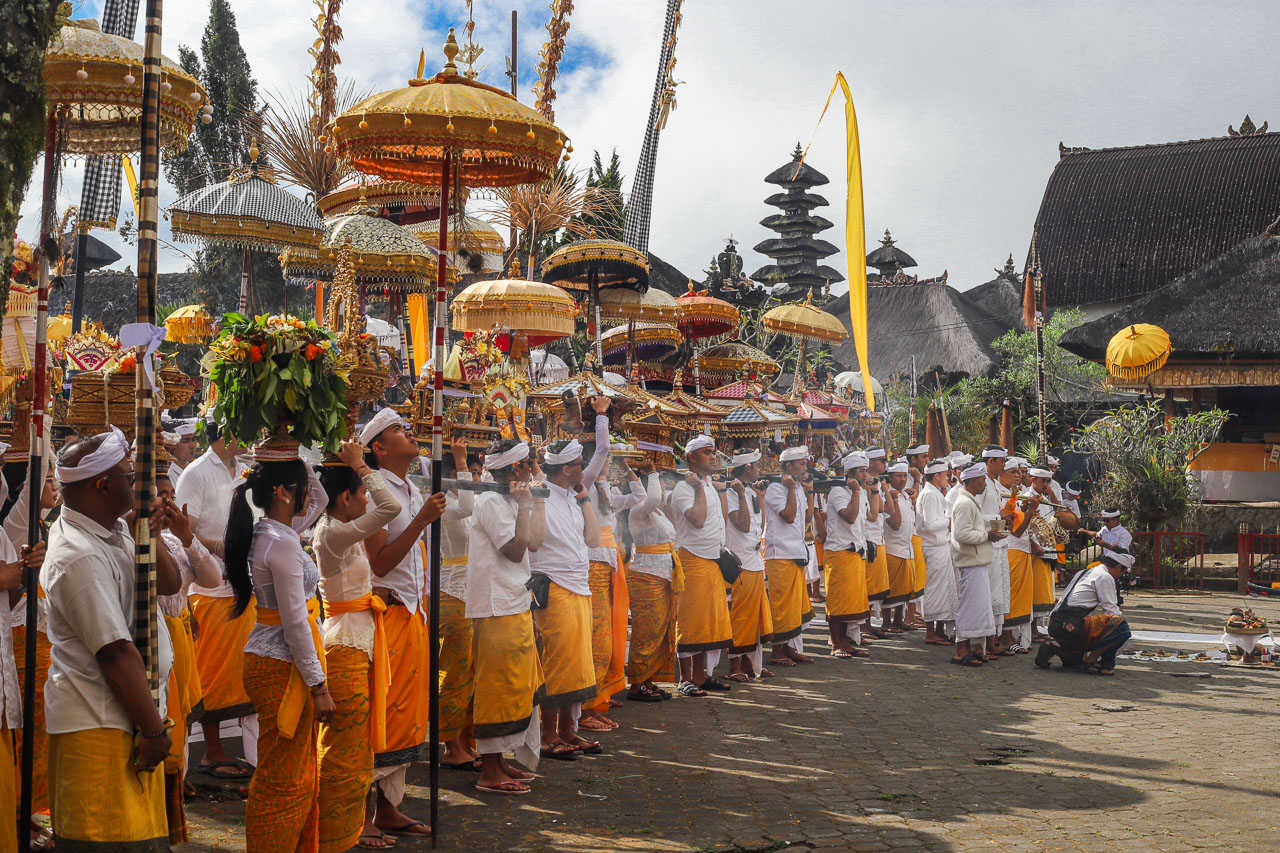
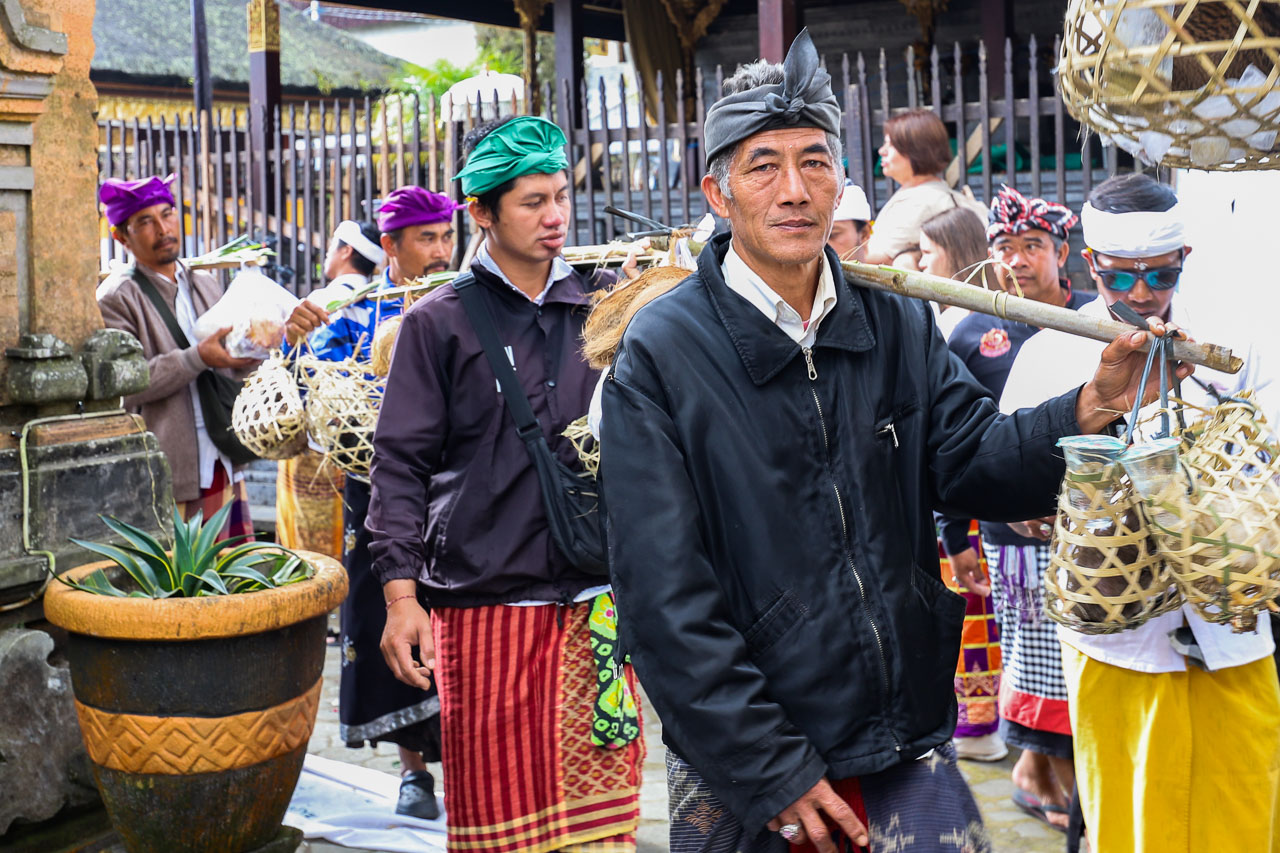
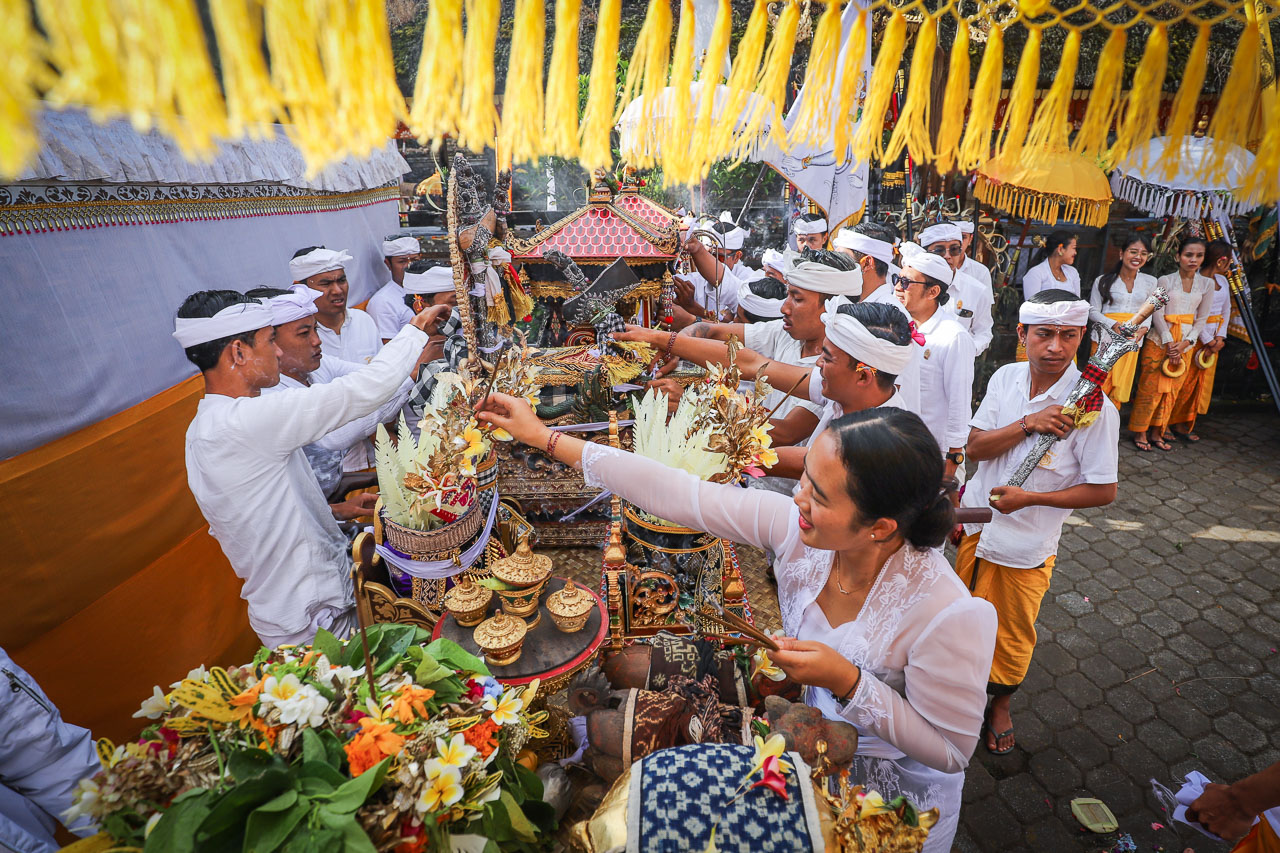
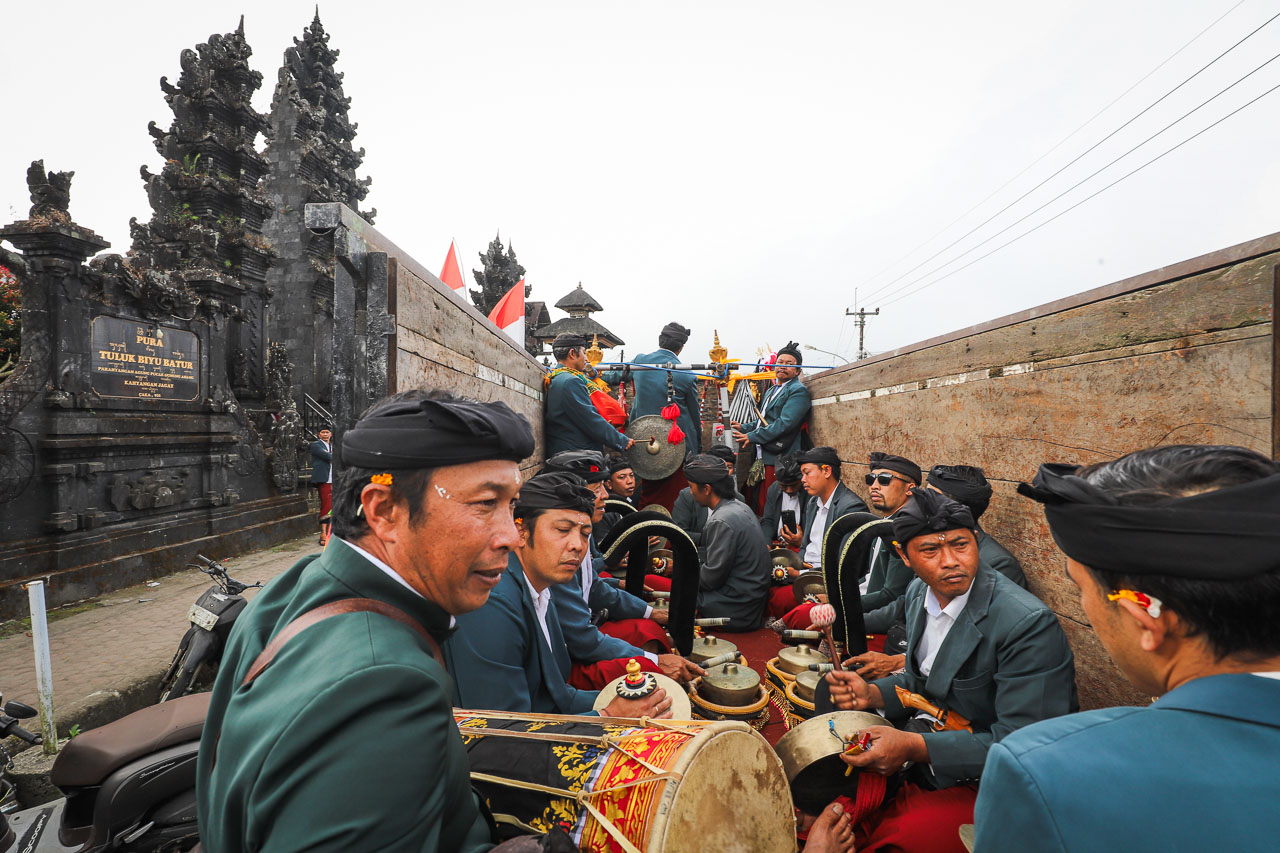
Another significant ritual is the biannual Ngusaba Melasih Karo ceremony, which spans three days. During this time, the gamelan orchestra, along with numerous sacred objects and offerings, are ceremonially moved from Pura Ulun Danu Batur on the caldera rim to the lakeside Pura Jati, and finally to Pura Hulundanu Batur Songan, both located within the volcanic caldera.
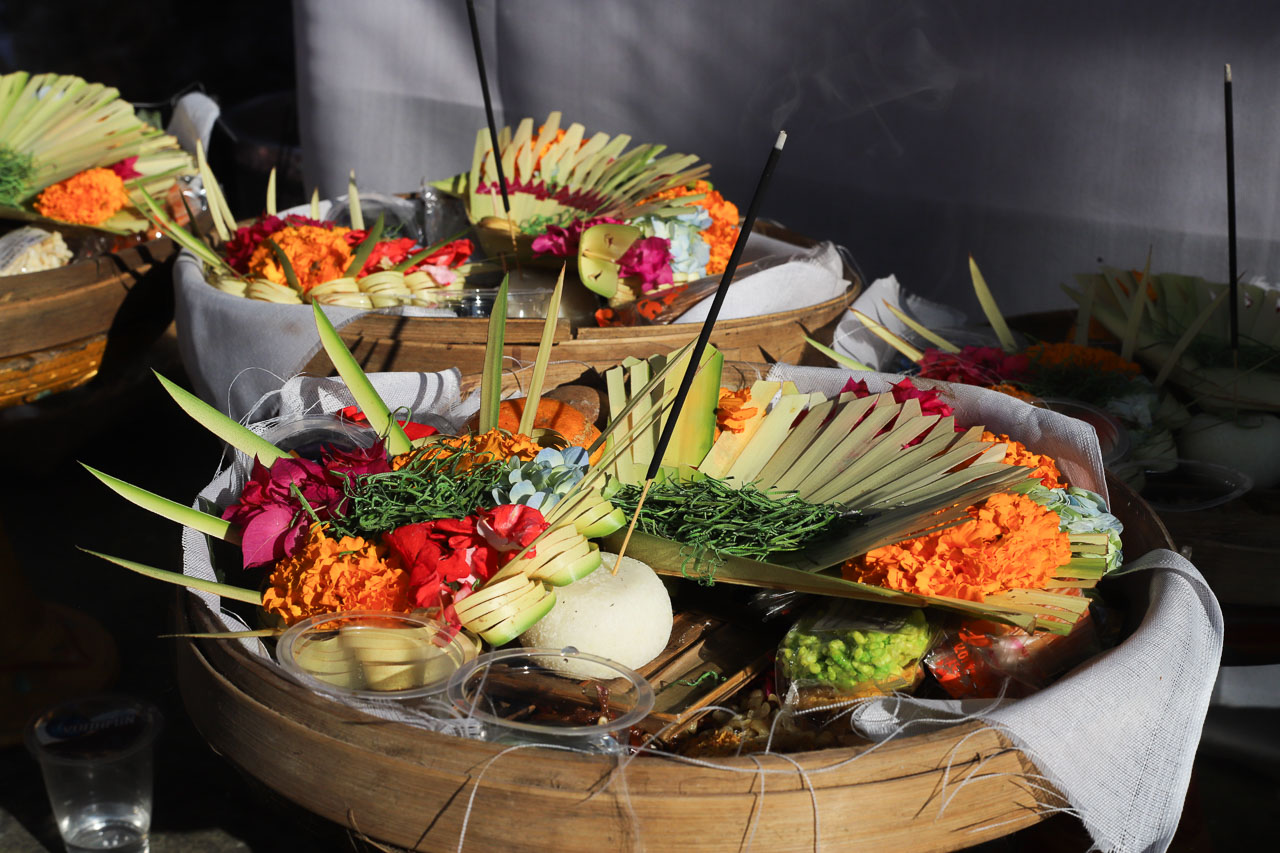
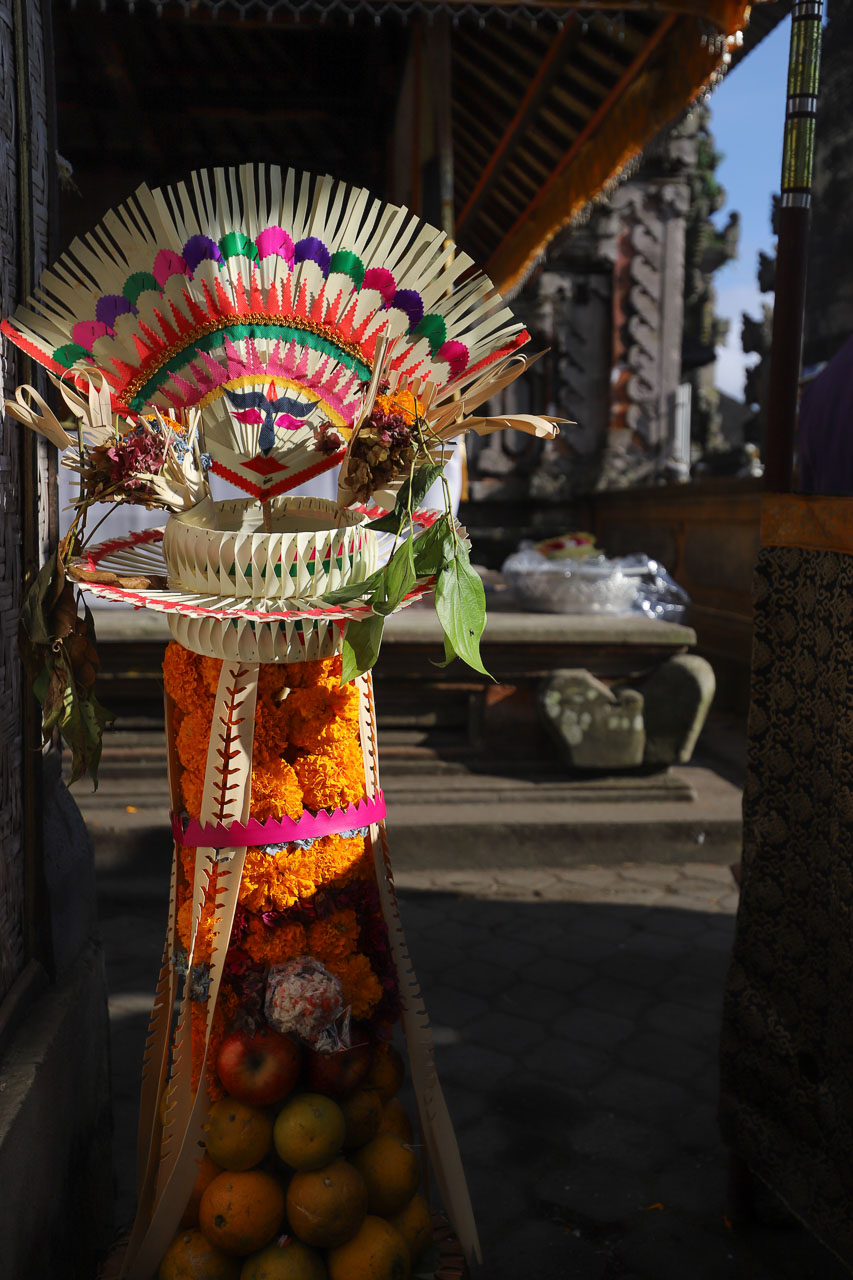
This ritual is held in honor of Dewi Danu, the lake goddess, and expresses gratitude for water, fertility, and agricultural abundance. The ceremonies feature elaborate offerings—including fruit, rice, and flowers—alongside processions, priest-led prayers, traditional music, and dance.
Origin Legend
Pura Besakih and Pura Ulun Danu Batur share a common origin legend found in the Usana Bali, a Balinese Hindu text written on palm-leaf manuscripts. According to the myth of Sang Kalputih, the High God Bathara Pasupati, residing on Mount Mahameru, sends his two children — Bhatara Putrajaya and his sister Dewi Danu — to Bali to become objects of worship.
They first appear in the form of palm leaf sheaths, which are mistakenly swept away as rubbish by a holy man’s wife. Only later do they reveal their divine identities and receive proper reverence from Sang Kalputih.
To establish their sacred dwellings, Bathara Pasupati breaks off the summit of Mount Mahameru, dividing it in two. The portion in his right hand becomes Mount Agung, where Bhatara Putrajaya (also known as Bhatara Mahadewa) resides. The part in his left hand becomes Mount Batur, near a sacred lake, where Dewi Danu takes her place.
Bibliography
Haer, Debbie Guthrie, Morillot, Julliet and Toh, Irene Bali, a Traveller’s Companion. Singapore: Didier Millet, 2007
Lansing, J. Stephen. Perfect Order: Recognizing Complexity in Bali. Princeton and Oxford: Princeton University Press, 2006.
Pringle, Robert A Short History of Bali: Indonesia’s Hindu Realm. Crows Nest NSW: Allen & Unwin, 2004.
Reuter, Thomas A. Custodians of the Sacred Mountains: The Ritual Domains of Highland Bali. Hawaii: University of Hawaii Press, 2022.
Stuart-Fox, David Pura Besakih. Temple, Religion and Society in Bali. Leiden: KITLV Press, 2002.
Nearby Temples
Pura Tuluk Biyu, the adjoining temple of Pura Ulun Danu Batur to the right (or south), was similarly relocated from its original site on the remote peak of Mount Abang, the mountain rising behind Trunyan. Its extraordinary Chinese shrine is worth a visit.
Pura Ulun Danu Batur should not be confused with the similarly named Pura Hulundanu Batur in Songan, located at the northern edge of Lake Batur, inside the volcanic caldera.
Previous temple:
Next temple:
Photos and text © 2025 Alida Szabo, unless otherwise noted.
