— Carved by the Mythical Giant Kebo Iwa —
Meaning of its name: ‘Womb cave’ – goa means cave, garba means womb or belly. Pengugukur-ukuran means measurement.
Location: In the valley of the Pakerisan River, between Pura Gunung Kawi and Candi Tebing Tegallingah.
Map: Pejeng Kelod, Tampaksiring, Gianyar, Bali, Indonesia
Dates back to: 11ᵗʰ-12ᵗʰ century
Region: Pejeng
Theme: The Rock Temples of Central Bali
Requirements for visit: There might be someone collecting a small entrance fee at the southern entrance. Wearing a sarong is recommended.
Accessibility: Goa Garba is located roughly a hundred steps down into the valley, while Pura Pengukur-ukuran stands about fifteen steps above the road.
The Pakerisan sacred corridor
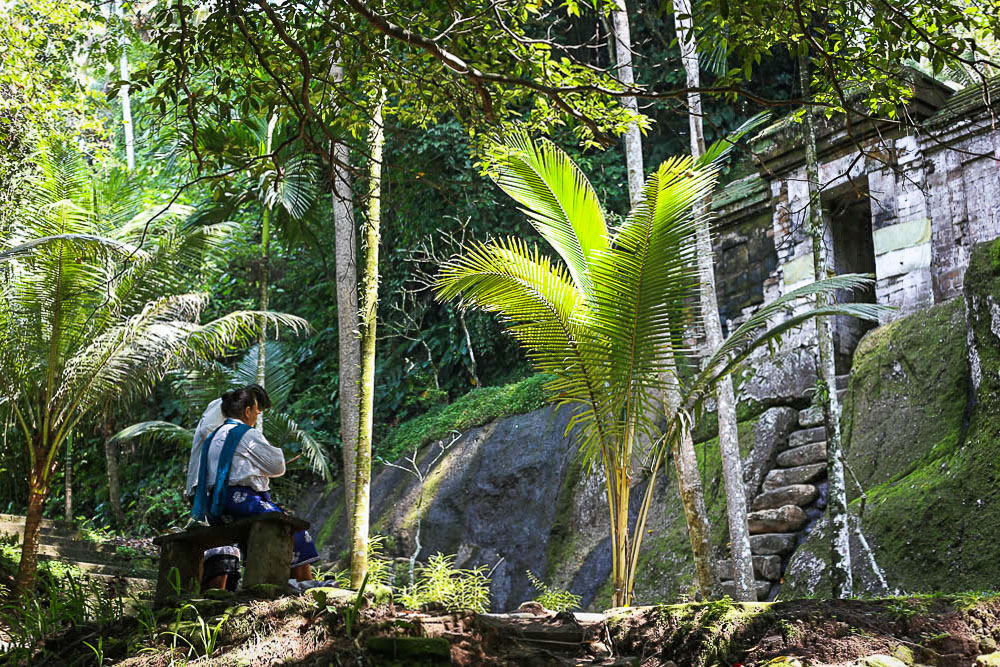
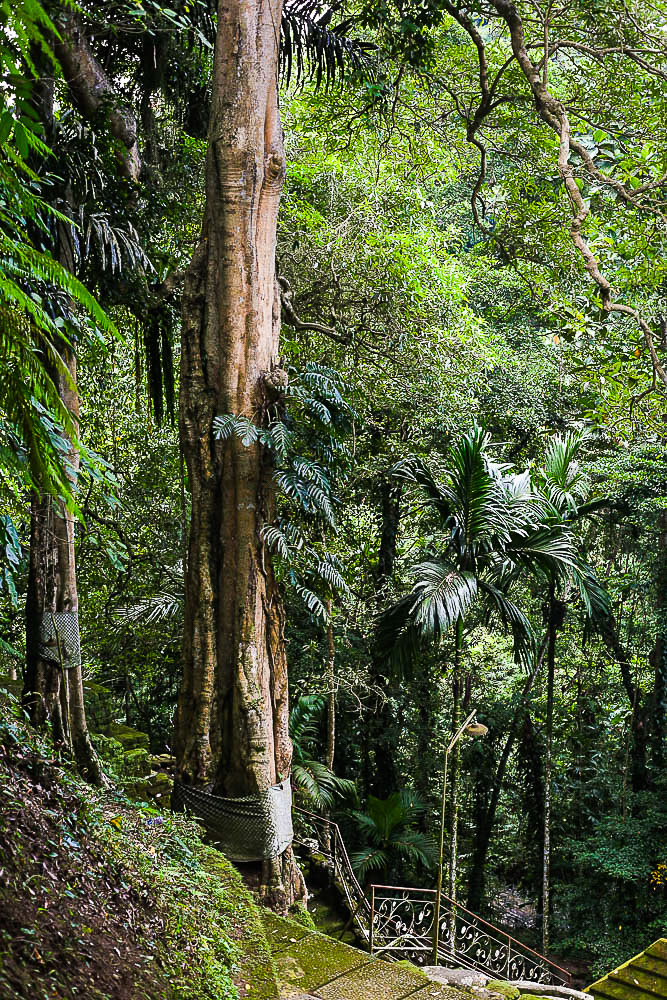
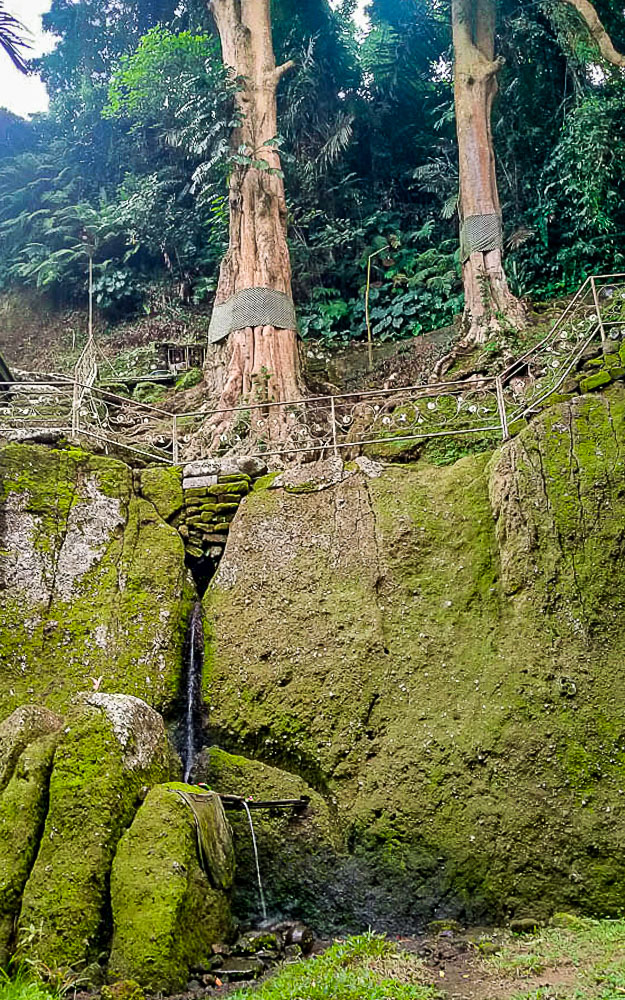
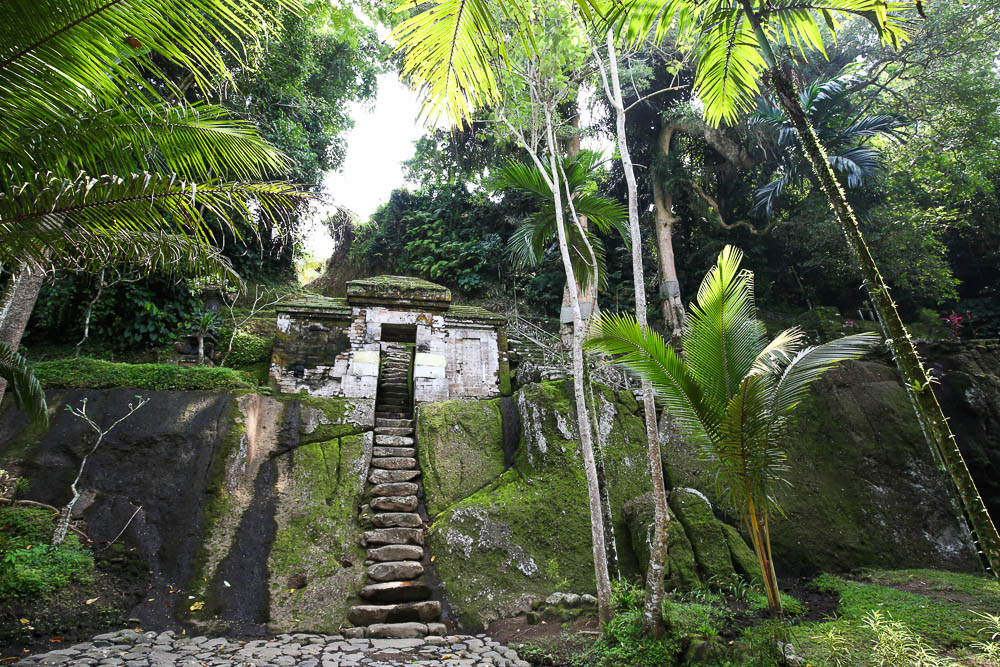
One of my favorite places in Bali, because of its huge trees, moss-covered rocks, and powerful atmosphere, is Goa Garba, which lies low in the ravine, carved into the cliff above the Pakerisan River.
Situated between Pejeng and Tampaksiring, Goa Garba and Pura Pengukur-ukuran form a connected sacred and archaeological site of classical Bali. The sites are part of the wider Petanu-Pakerisan corridor, one of the island’s most important concentrations of early monuments, which also includes Tirta Empul, Gunung Kawi, Goa Gajah, and Yeh Pulu. Their location within this river valley is significant: in premodern Bali, river landscapes were closely connected to ritual practice, royal authority, agriculture, and the establishment of hermitages and temples.
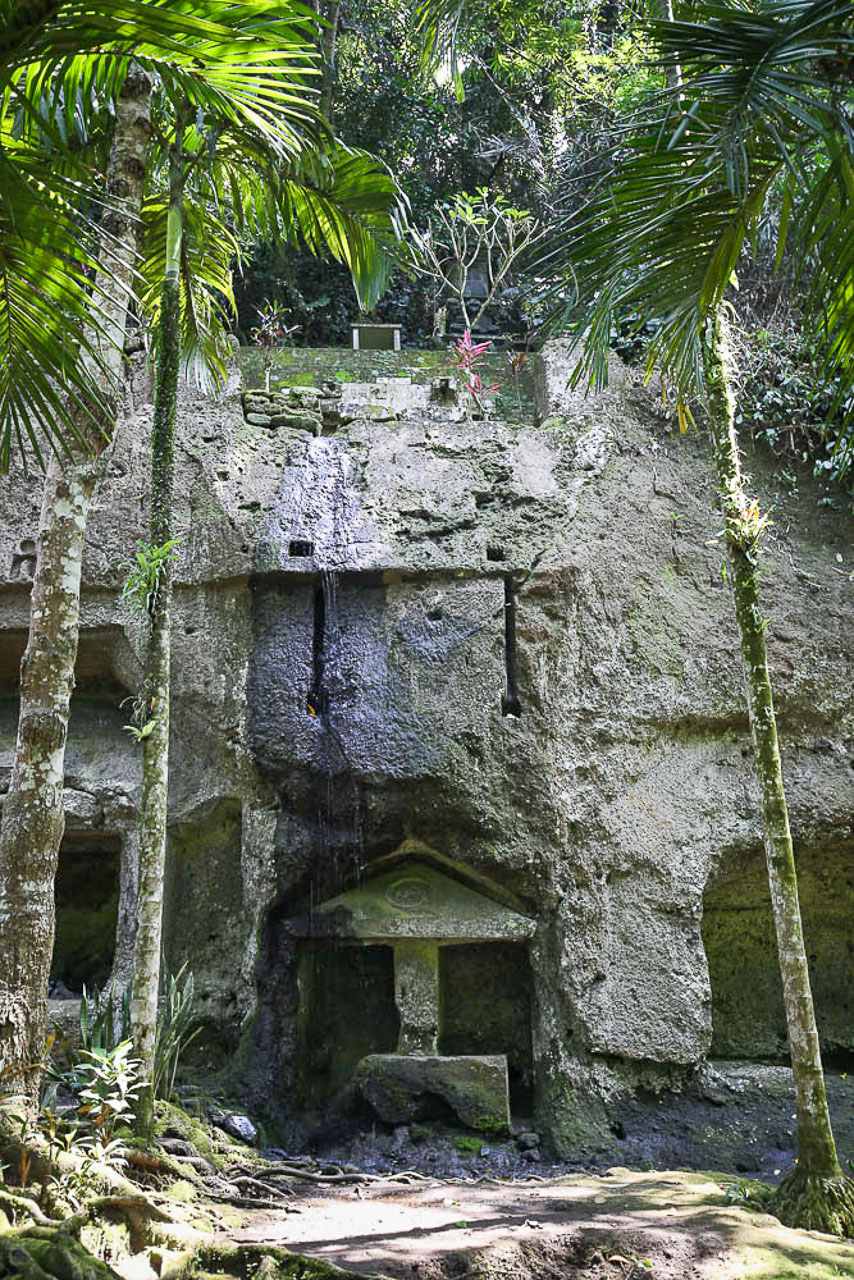
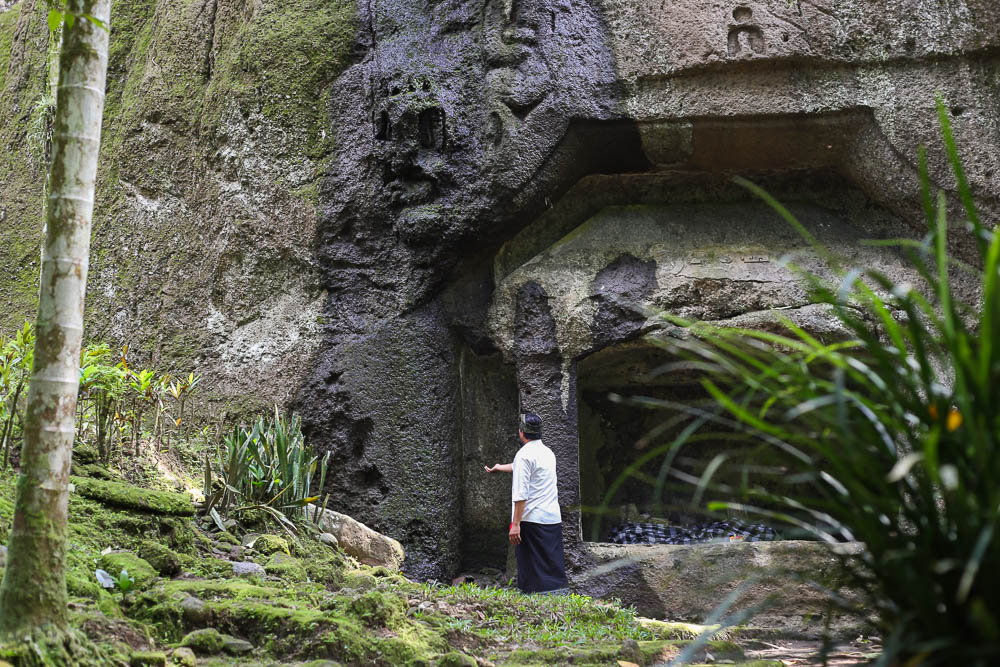
The niche on the left forms a small alcove large enough for a person to lie down in, similar to meditation spaces found at other Balinese rock-cut sanctuaries, like Pura Gunung Kawi, Jukut Paku and Candi Tebing Tegallinggah.
To the right there are two additional carved forms, small recesses, and inscriptions in Kadiri-style script, indicating connections with East Java and suggesting a probable date between the 11th and 12th centuries. The inscriptions remain undeciphered. Above the hermit’s alcove is an indentation shaped like an upside-down “U” surmounted by a circle. There are also several holes of indeterminate purpose between the two main niches. These might have been used to anchor pieces of wood projecting from the cliff.
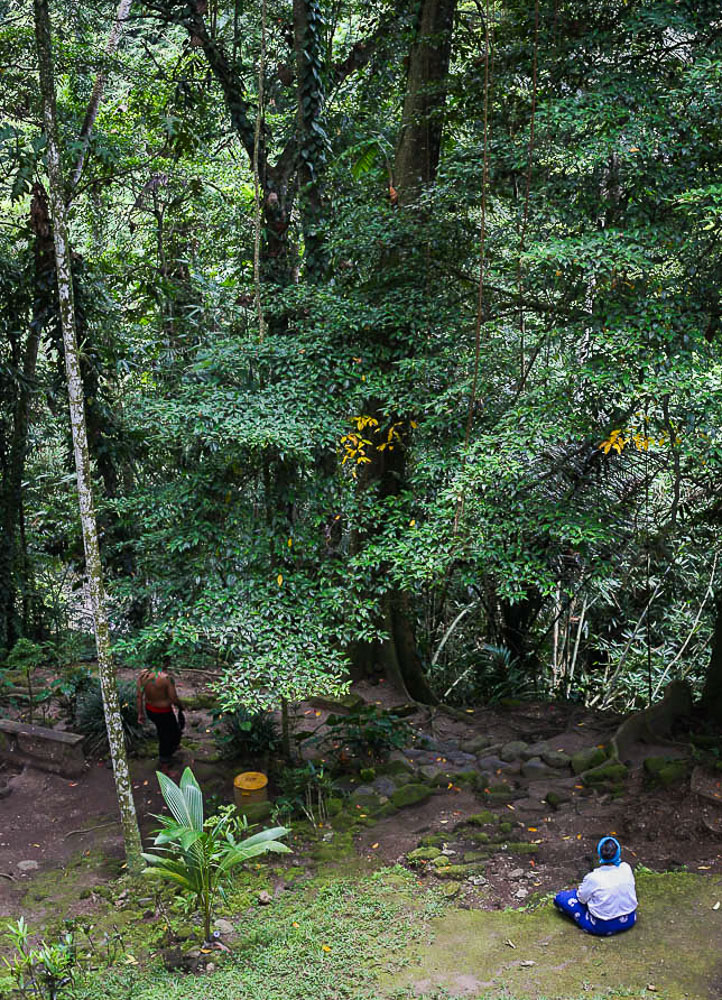
Water and hermitage
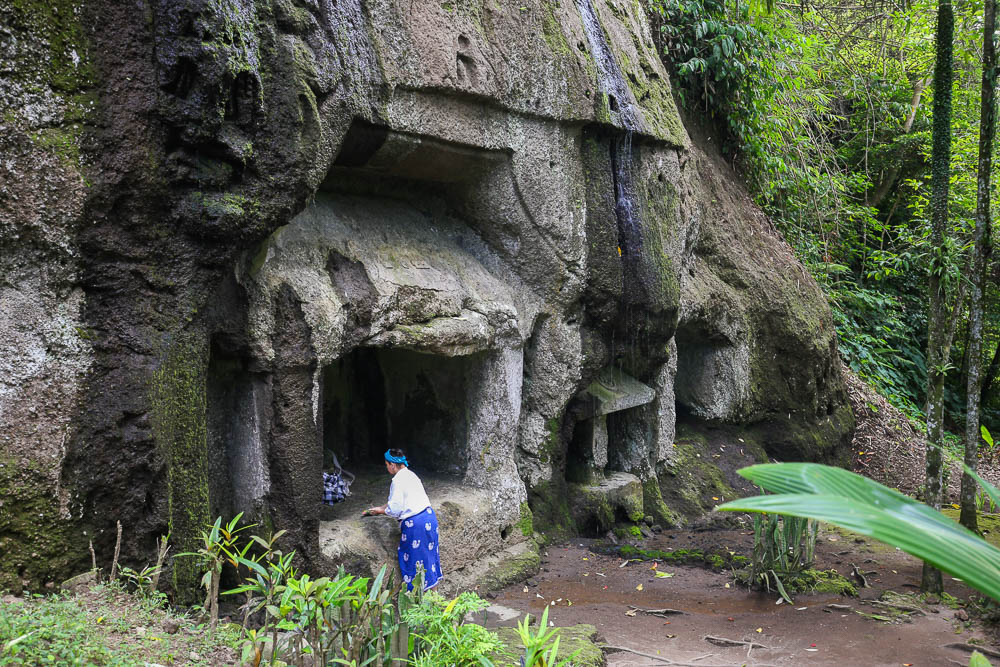
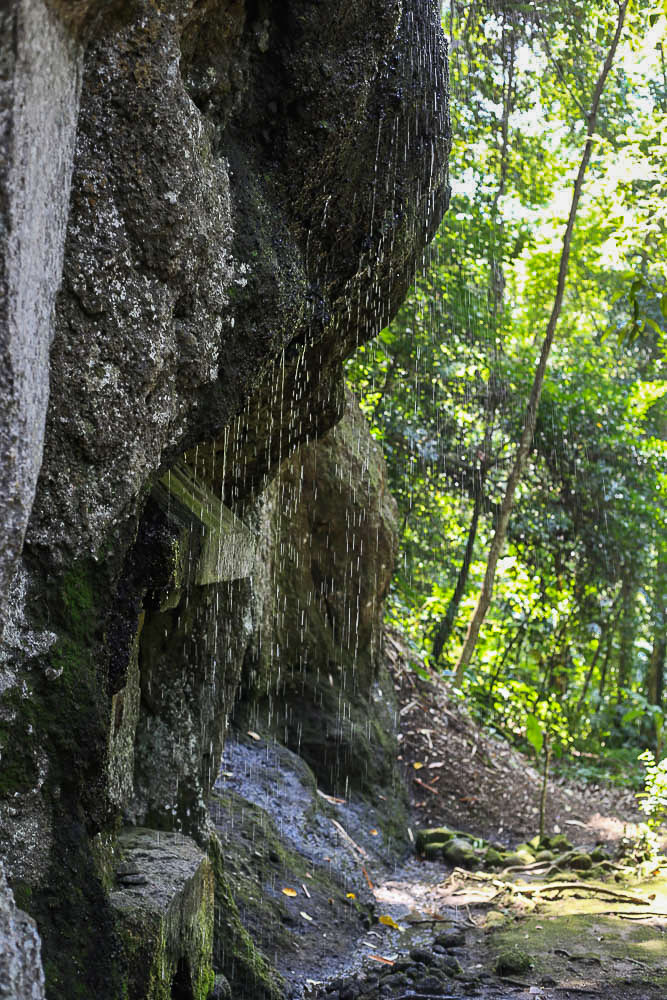
Springs emerge directly from the cliff, and bathing pools above the caves continue to be used for ritual cleansing. The constant flow of water across the rock surfaces is integrated into the architecture itself, emphasizing purification and the relationship between sacred space and the natural environment. Historical and local accounts describe the site as a pasraman, or hermitage and learning center, possibly connected to the spiritual education of royal children during the reign of King Jayapangus in the late 12th century.
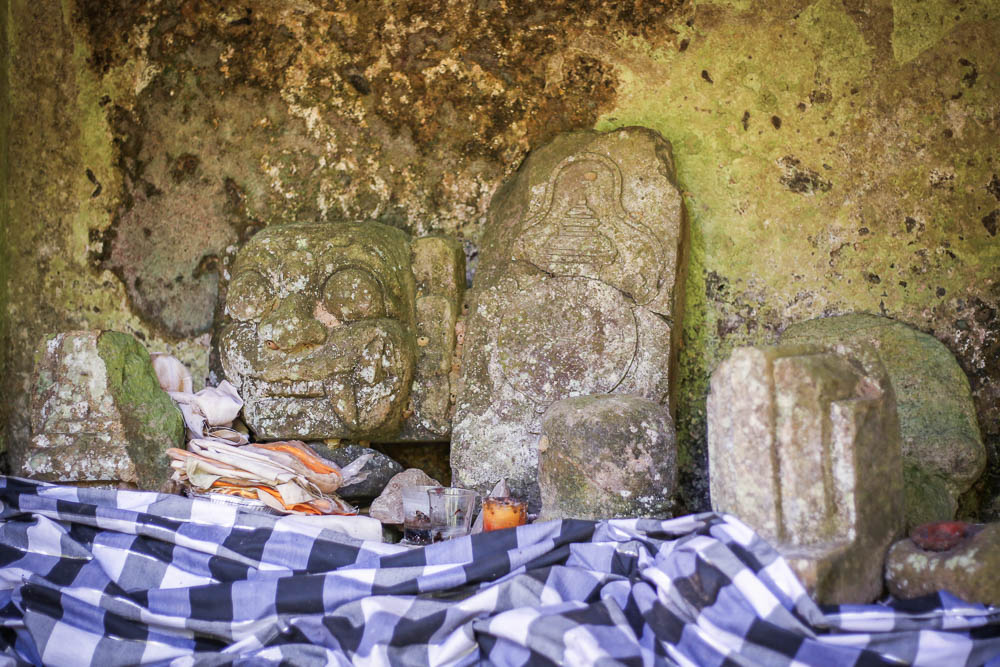
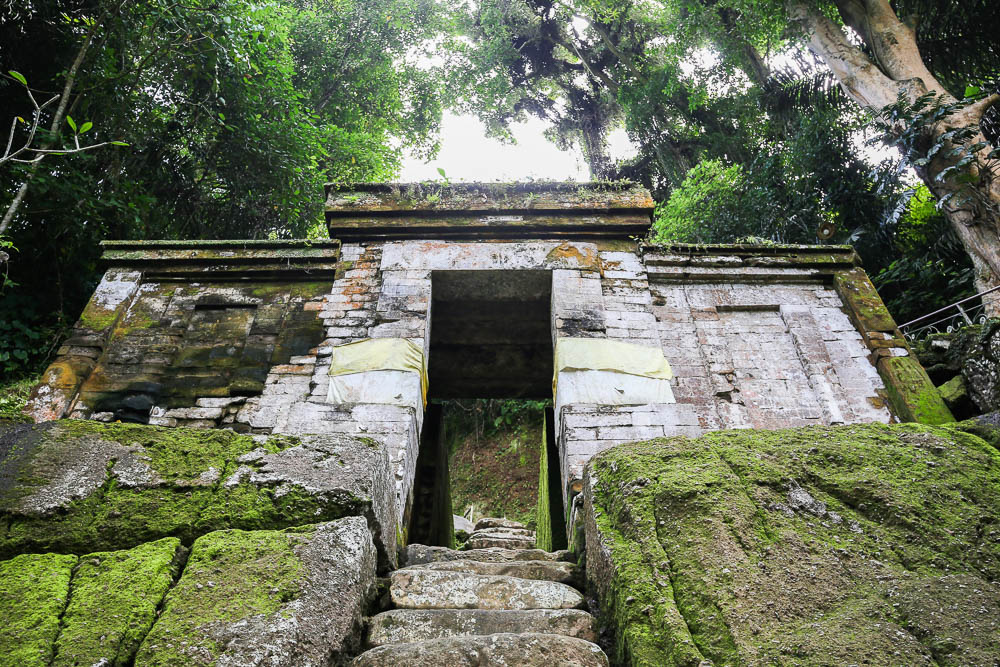
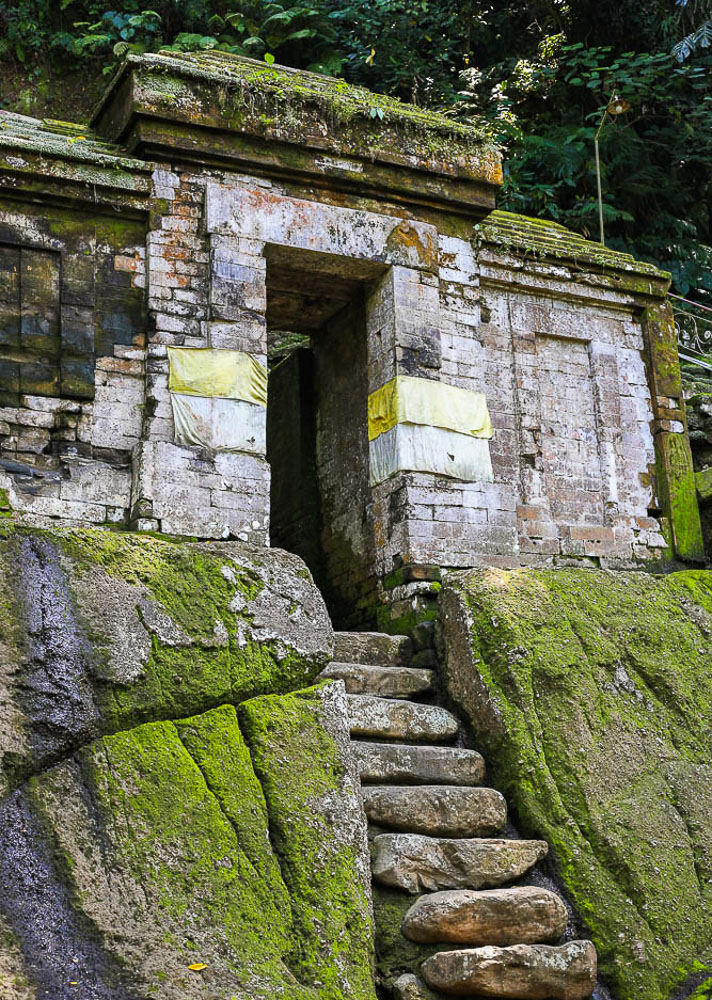
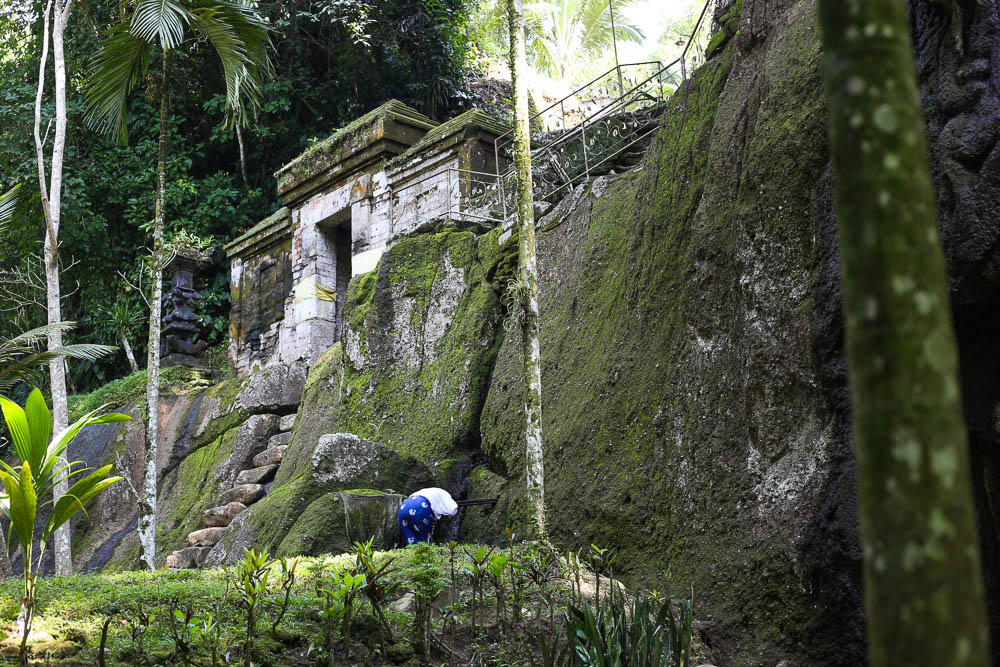
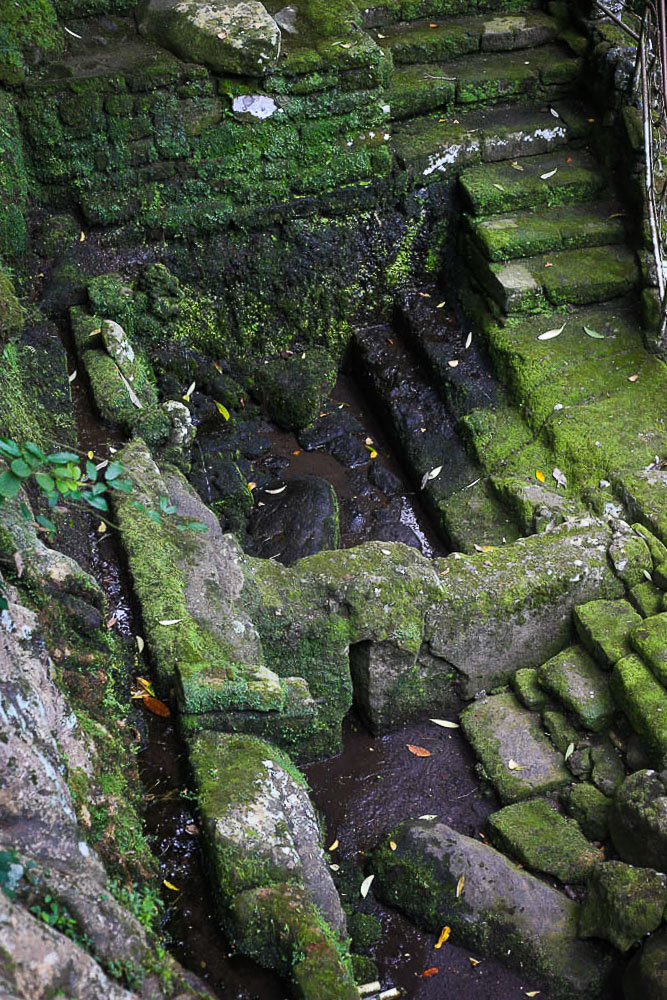
Goa Garba is connected to Pura Pengukur-ukuran, which stands on higher ground on the eastern side of the valley, by a steep flight of large stone steps leading through an entrance gateway. The gateway’s age is unknown. It shows similarities to the gateways at Candi Tebing Tegallinggah and to those flanking the Tenth Shrine near Gunung Kawi. According to local legend, one of the stones in the stairway was placed there by the gods themselves. Today, the stone is enclosed by a small iron fence.
The strongest mythic layer around the site is about Kebo Iwa, one of Bali’s best-known legendary figures. In the Goa Garba tradition, Pura Pengukur-ukuran is interpreted as the place where Kebo Iwa was “measured” or tested before becoming chief minister. The trials are said to have tested his strength, endurance, and spiritual worth; one tradition even says the carving and construction of the enormous stairway from the riverbank to the temple was part of that challenge.
Pura Pengukur-ukuran
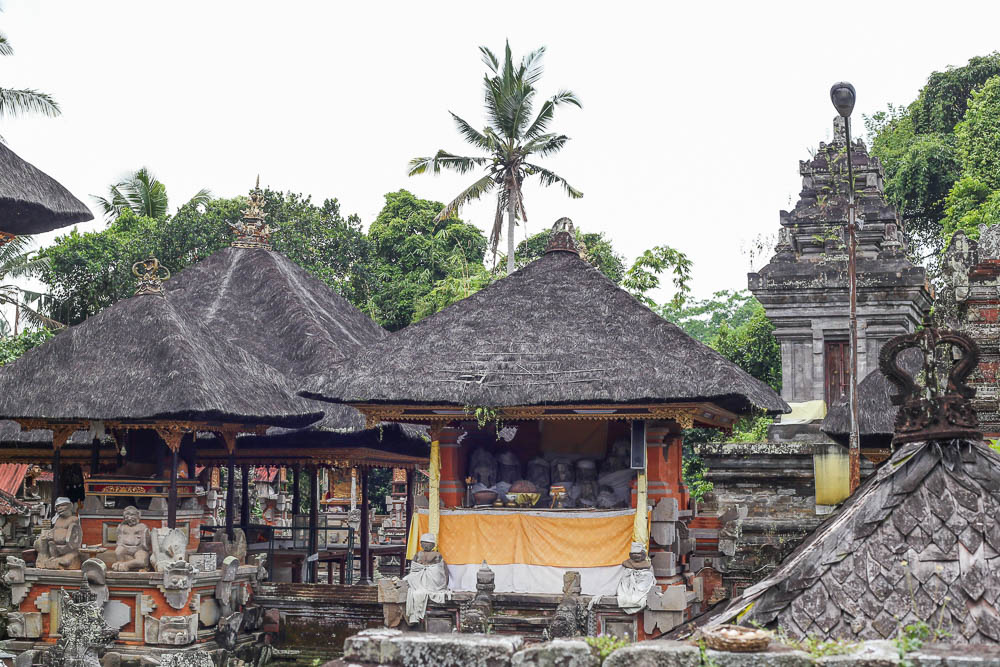
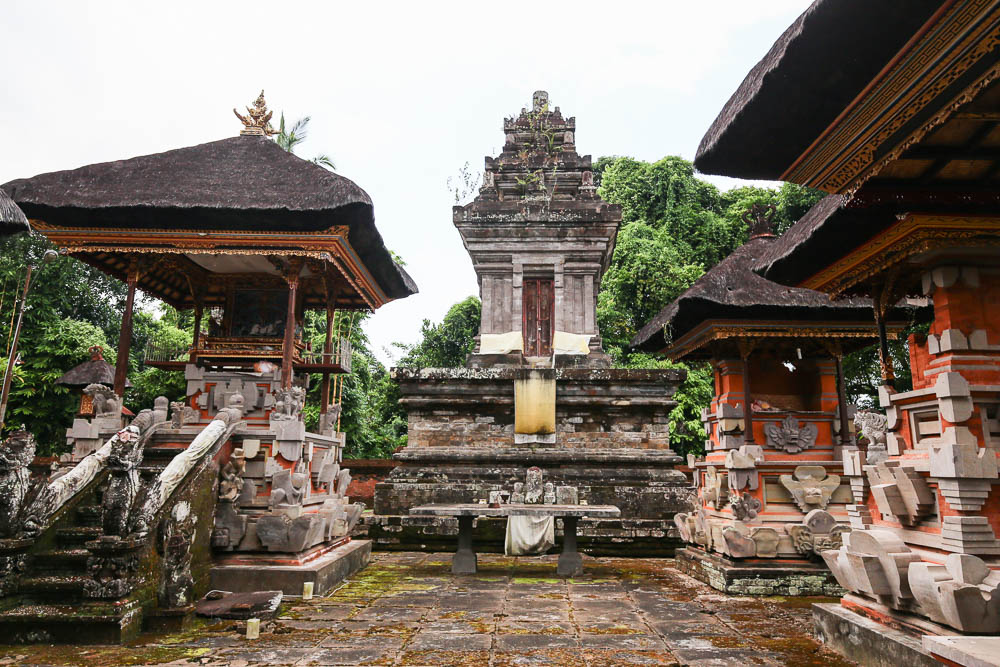
Pura Pengukur-ukuran follows the classical Balinese division into three courtyards: the outer courtyard (jaba pisan), middle courtyard (jaba tengah), and inner sanctuary (jeroan). An inscription dated 1116 Saka (1194 CE), associated with a threshold stone, refers to a place called Dharmma Hanyar, believed to have been the earlier name of the site. The inscription also connects the temple to a Shaivite religious context and to the priest Dang Acarya Jiwaya, a figure associated with royal religious authority during the Jayapangus period.
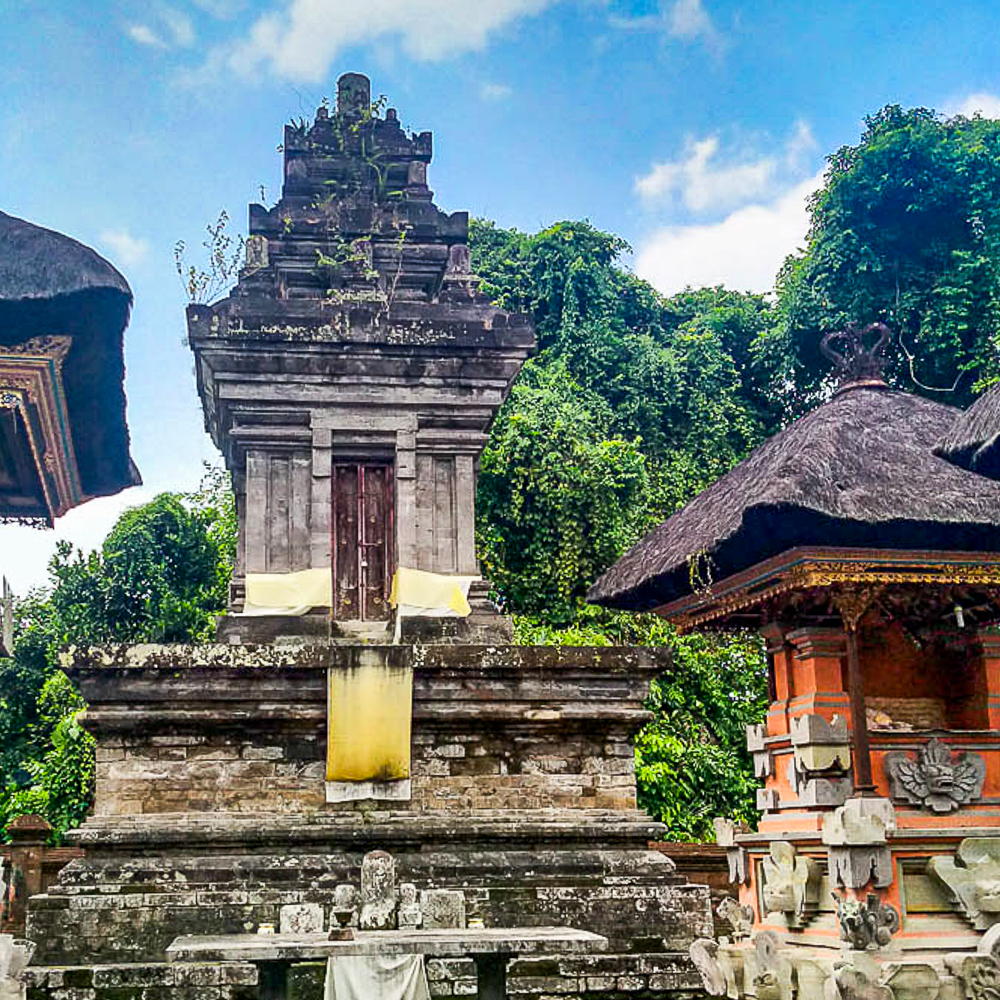
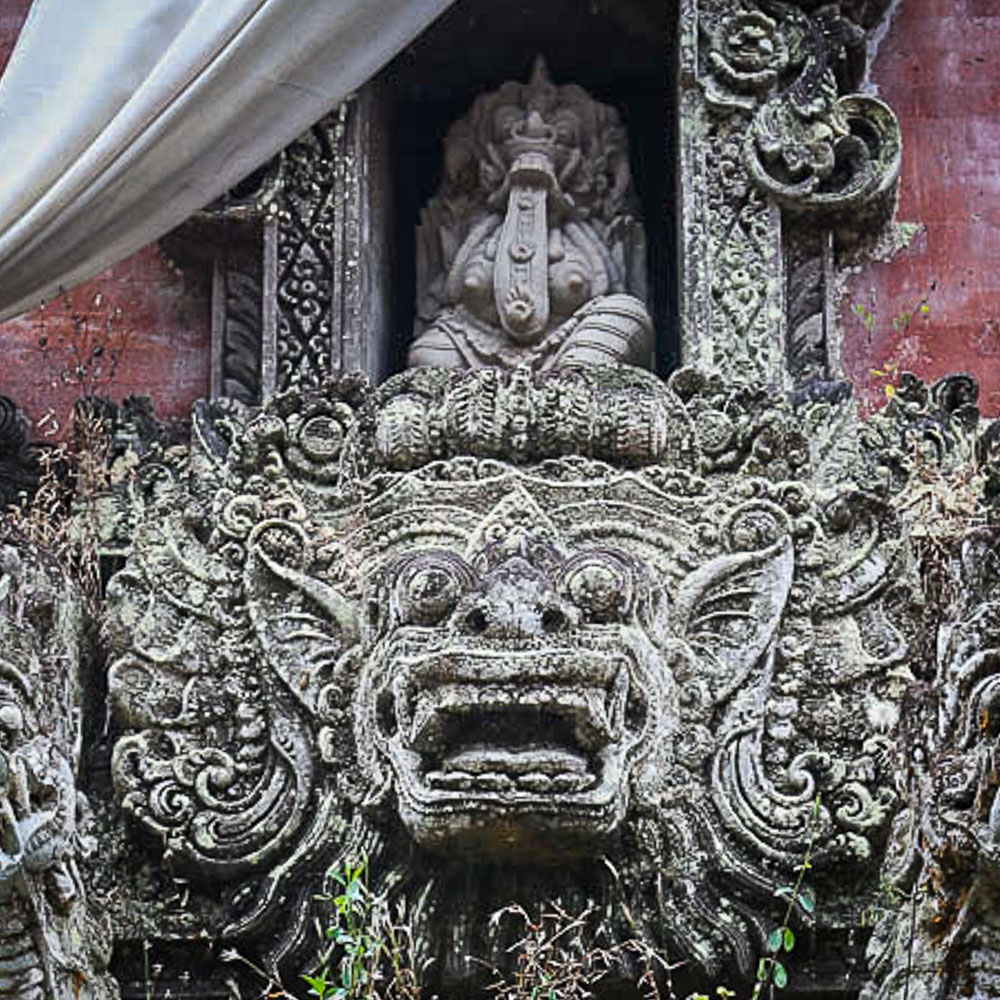
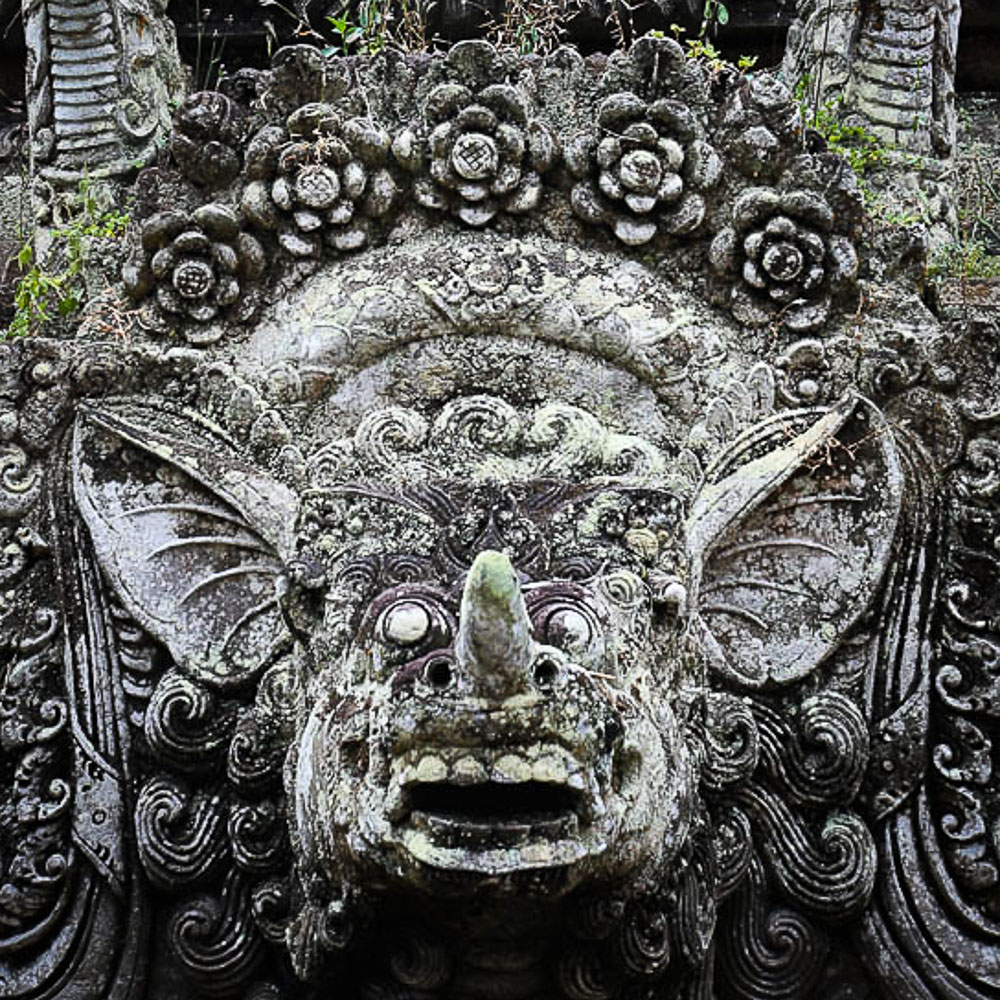
The inner courtyard contains a reconstructed candi, built upon ancient foundations discovered during archaeological work. The lower section preserves original andesite stone blocks, while the upper structure is a later reconstruction based on surviving evidence. Statues preserved within the temple include representations of Ganesha, Agastya, and Bodhisattvas. The coexistence of Shaivite, Buddhist, and megalithic elements — including the discovery of a prehistoric menhir within the complex — demonstrates the long religious history of the site and the continuity of ritual use over many centuries.
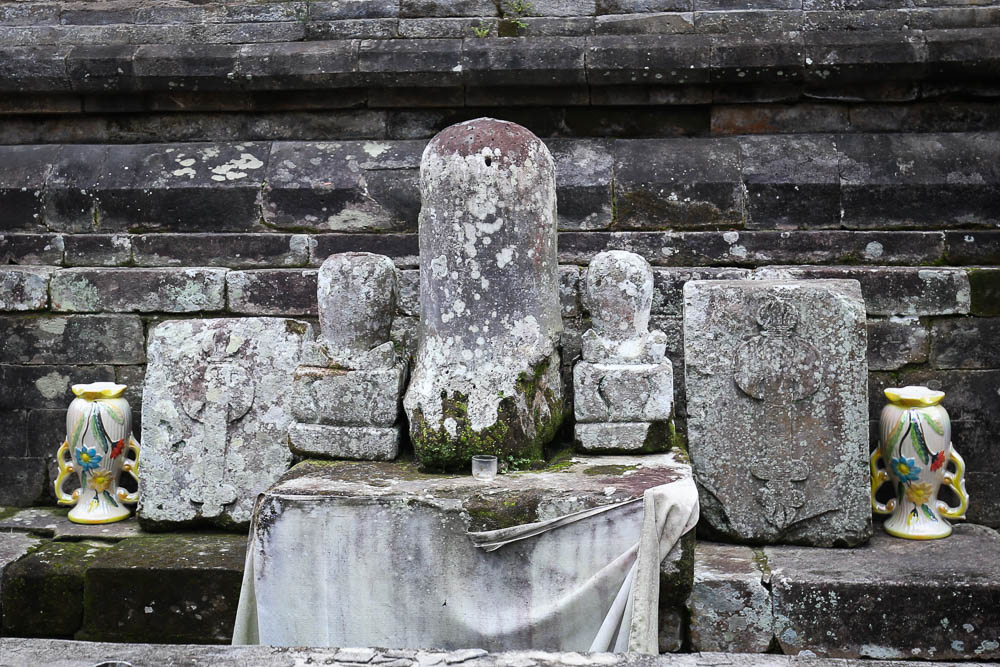
Today, Pura Pengukur-ukuran remains an active temple supported by local communities in the area. Ceremonies continue according to the Balinese ritual calendar, and the temple is visited by people seeking blessings, guidance, or taksu — a concept associated with spiritual presence, authority, creativity, and effectiveness.
Bibliography
Artanegara, Agung et al. Tinggalan arkeologi di daerah aliran sungai Pakerisan dan Petanu. Balai Pelestarian Cagar Budaya Bali, 2021.
Asian Historical Architecture Goa Garba https://www.orientalarchitecture.com/sid/1413/indonesia/gianyar-regency-bali/goa-garba-cave-of-the-womb
Kempers, A. J. Bernet Monumental Bali. Singapore: Periplus Editions, 1991.
Mason, Victor Bali Bird Walks. Singapore: APA Publ. U. Höfer Press, 1992.
Ramelan, Wiwin Djuwita Sudjana (Ed.) Candi Indonesia. Seri Sumatera, Kalimantan, Bali, Sumbawa. Jakarta: Direktorat Pelestarian Cagar Budaya dan Permuseuman, 2014.
Spitzing, Günter Bali. Tempel, Mythen und Volkskunst auf der tropischen Insel zwischen Indischem und Pazifischem Ozean. Köln: DuMont, 1983.
Nearby Temples
While Candi Tebing Kerobokan is just a few minutes – and 300 more steps – away to the north, the village of Intaran in the south hosts a whole bunch of historical temples. You can walk from site to site to see the “Moon of Pejeng” at Pura Penataran Sasih, the symbolic navel of the world at Pura Pusering Jagat, and an erotic (but covered) statue at Pura Kebo Edan.
Previous temple:
Next temple:
Photos and text © 2026 Alida Szabo.
