— The Keeper of the Moon of Pejeng – COMING SOON! —
Meaning of its name: ”, referring to
Location: In…
Map: Pejeng, Tampaksiring, Gianyar, Bali, Indonesia
Dates back to: ᵗʰ century
Region: Pejeng
Requirements for visit: Free to visit. Place your donation in one of the donation boxes.
Accessibility: Easily accessible from the road.
Legend of origin
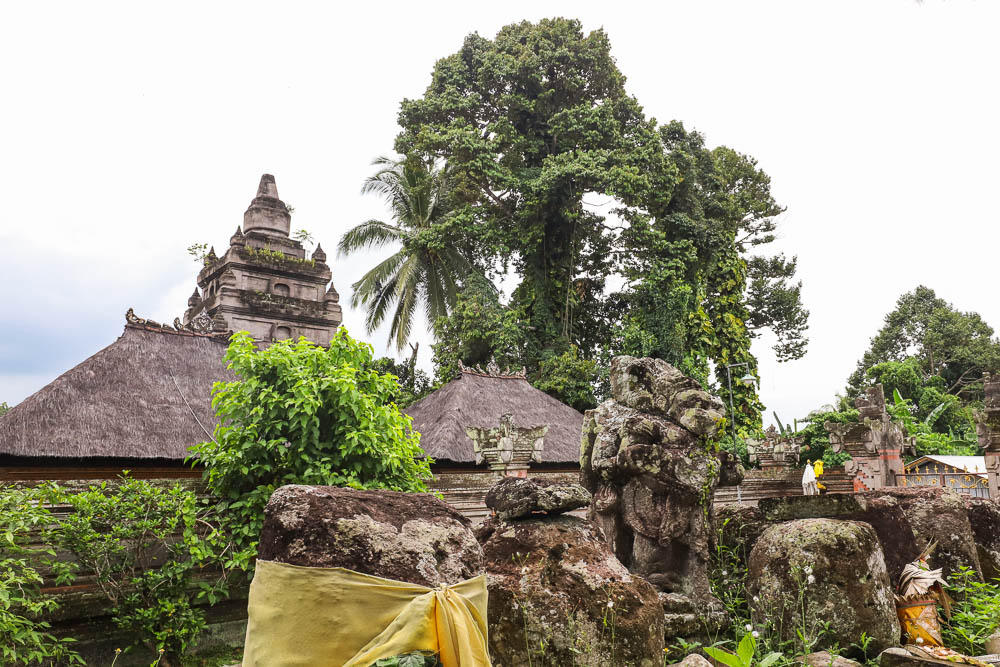
According to Balinese tradition, the legendary sage Rsi Markandhya began his journey to Bali from Mount Raung in the Banyuwangi area of Java in the 8ᵗʰ century. After founding Pura Besakih on Mount Agung, he continued westward toward the Campuhan area. When he arrived, he was struck by the beauty and spiritual potency of the hill, which he named Gunung Lebah. A stream called Wos Kiwa (“Left Wos”) flowed along its western side, while Wos Tengen (“Right Wos”) ran along the eastern side. These two branches of the Wos (sometimes spelled Oos or Uos) river merge in the southern part of the hill. Recognizing the site’s strong spiritual energy, Rsi Markandhya established a sanctuary here—today known as Pura Gunung Lebah.
Courtyards and rituals
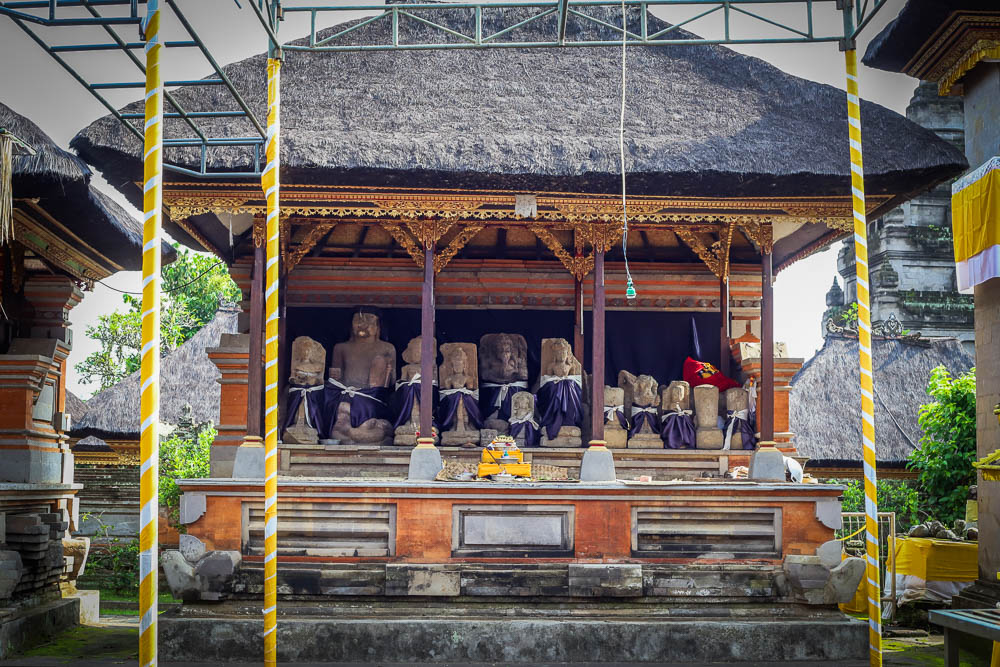
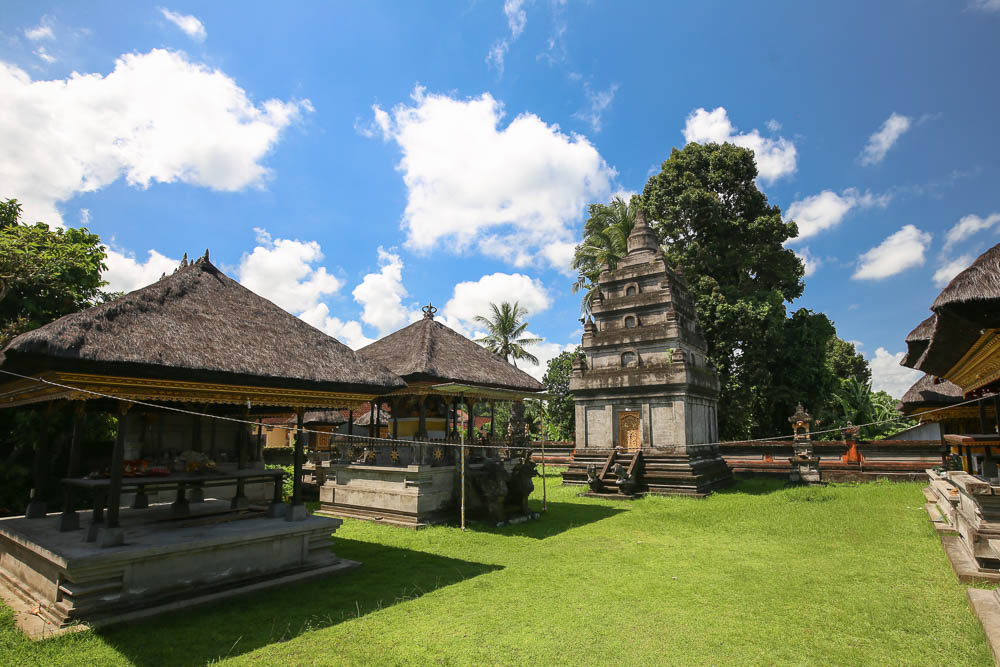
The temple has two distinct ritual functions. First, it serves as a clan temple (pura dadia) for the royal family residing in Ubud. Second, it is also a subak temple, which is why there is a single-tiered meru dedicated to Dewi Sri, the rice goddess.
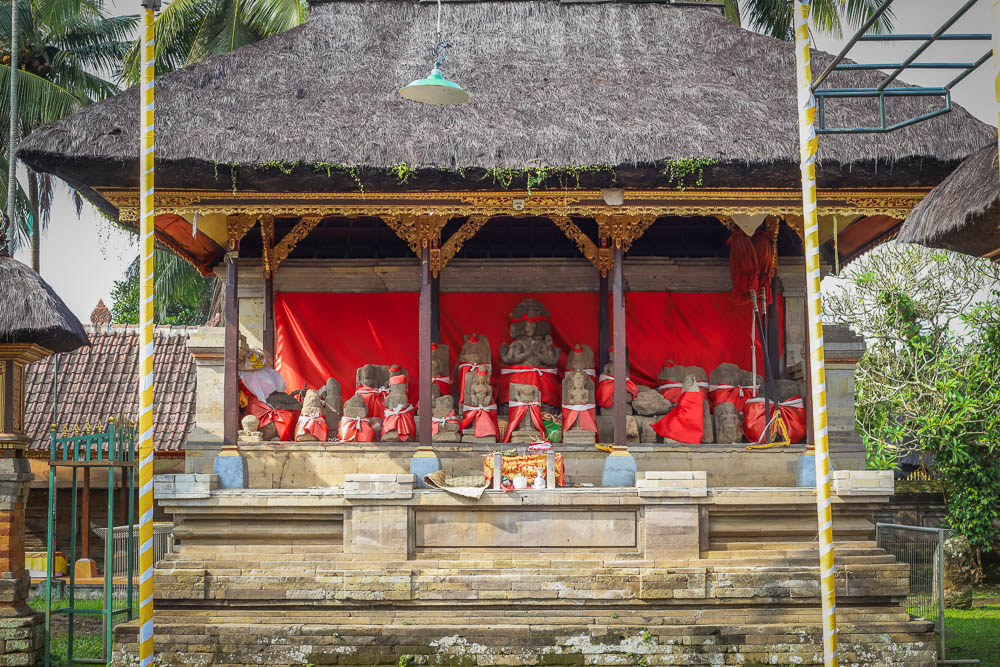
A seven-tiered meru, set upon a base of turtles and serpents, stands in the temple’s kaja-oriented third courtyard and is symbolically dedicated to Gunung Lebah—literally “the mountain that sits in the deep,” a name associated with Mount Batur. This sanctuary highlights the temple’s place within Bali’s wider sacred geography: the highland lakes, in Ubud that of Batur are regarded as the primordial sources of the waters that nourish the island’s rice fields, and the meru thus creates a symbolic link between the fertile river valley of Ubud and the volcanic mountain whose waters sustain agricultural life.
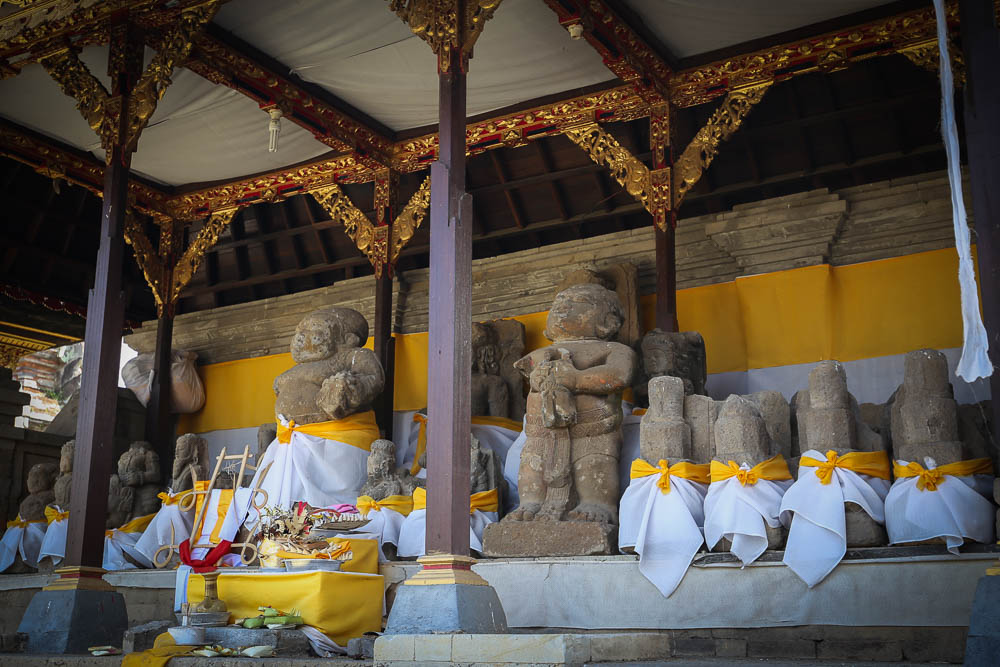
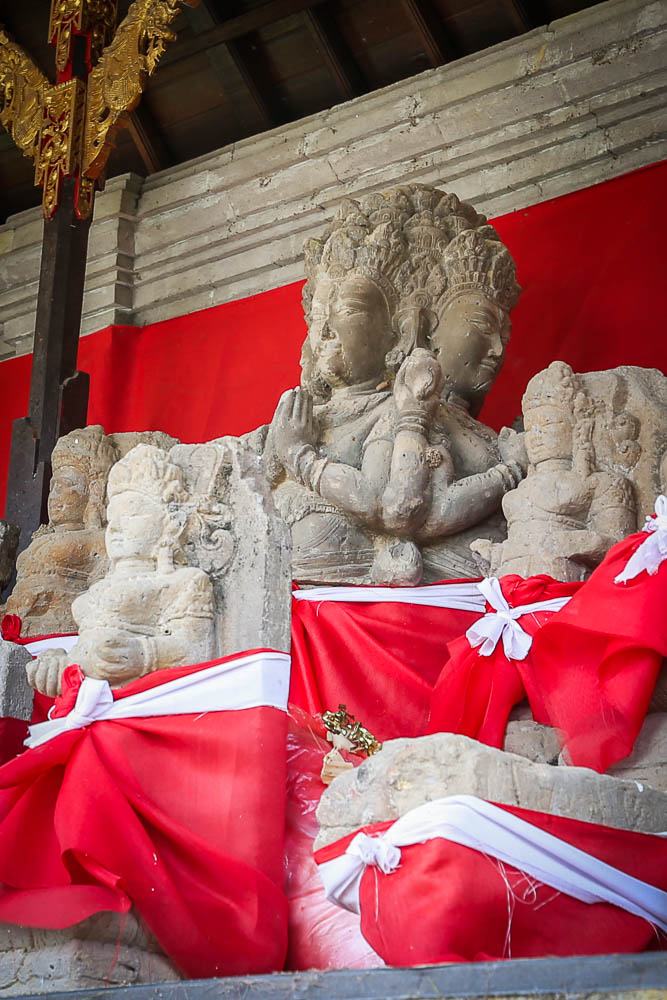
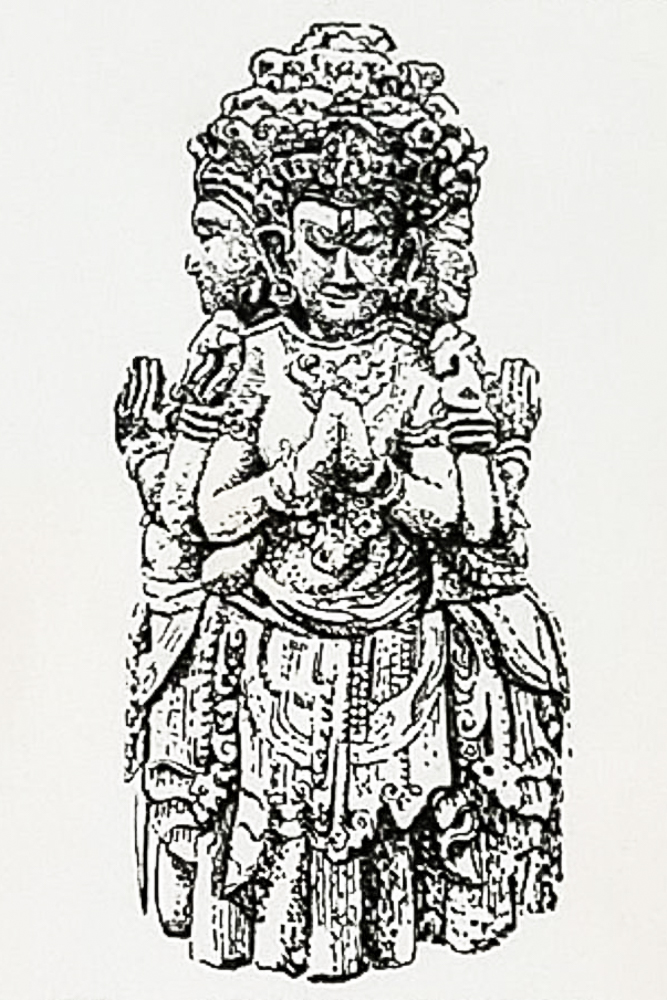
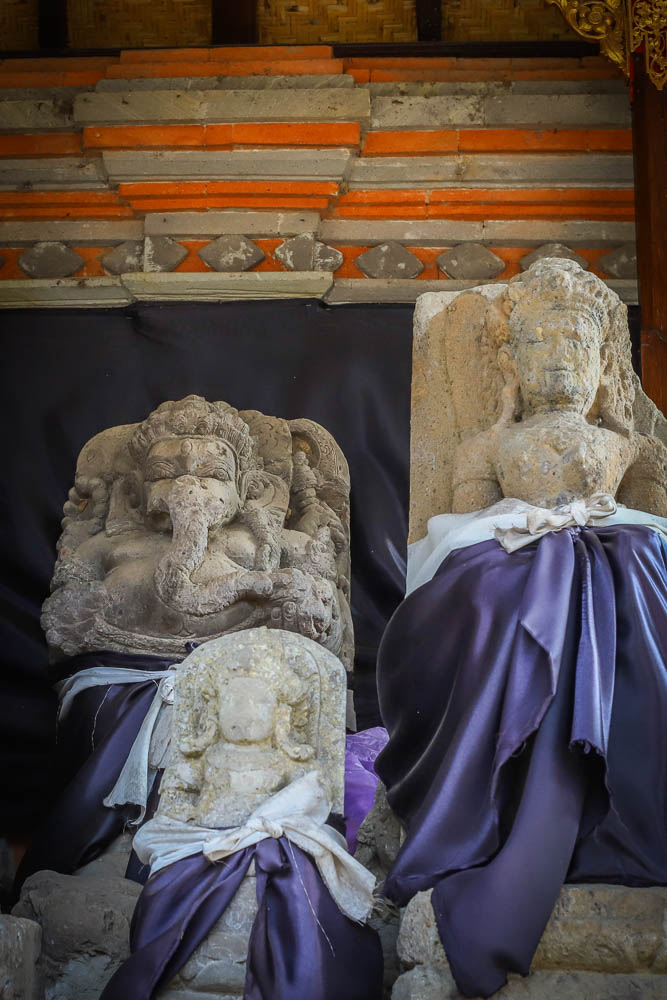
This figure above is probably an image of a king who regarded himself as an incarnation of the Trimurti. In favour of this view is the very typical headdress consisting of a crown composed of rows of stylized lotus-petals. The three gods, Brahma, Shiva and Vishnu, are indicated respectively by the book, the third eye and the conch. Among the Balinese this figure is known at present under the name Tjaturmuka, on account of the four heads. The complete volcanic tuff figure was originally composed of three parts, of which the undermost is lost. Height: 116 cm. From the 13ᵗʰ or 14ᵗʰ century.
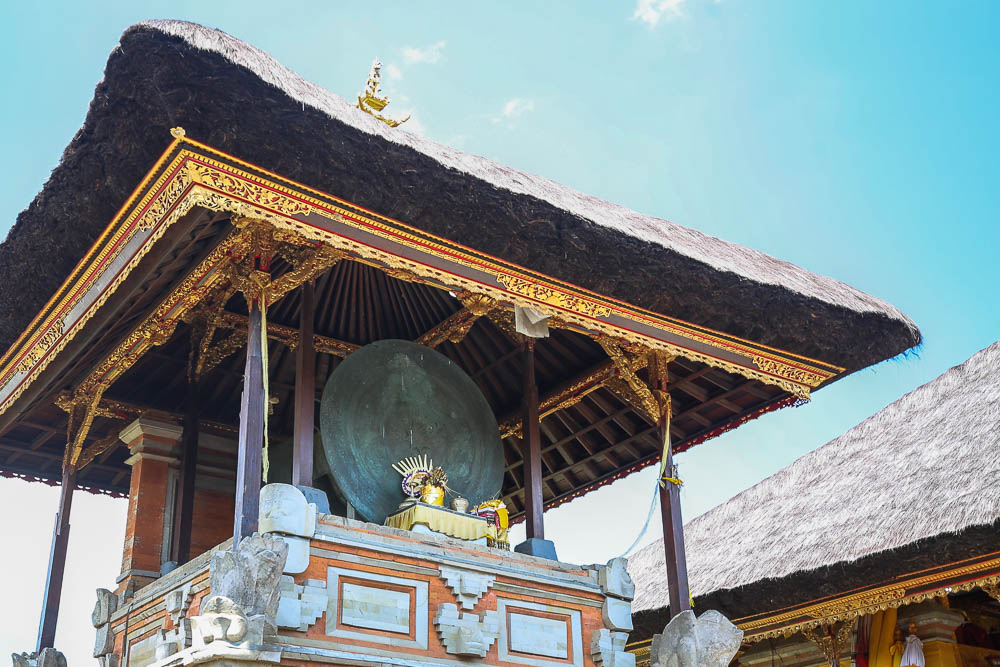
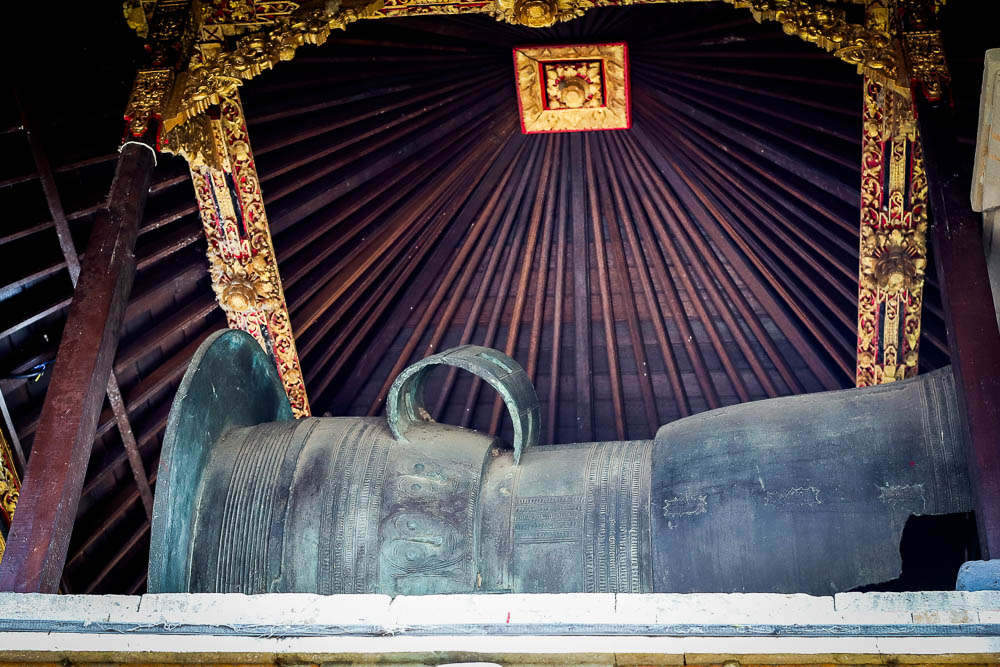
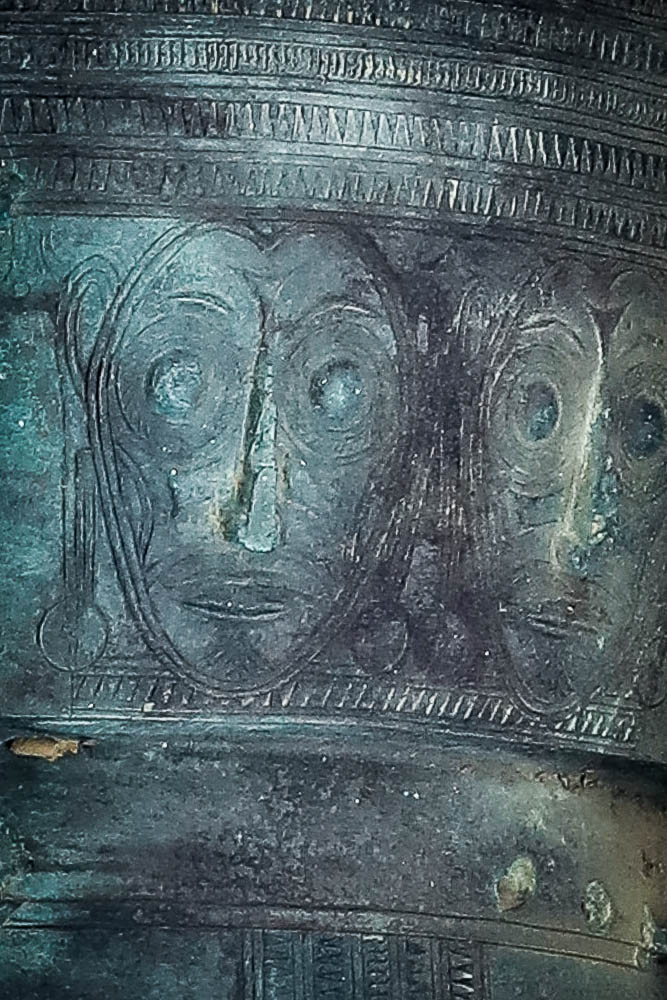
The ‘Moon of Pejeng’ – an ancient drum
From the temple forecourt, you can see the Campuhan Hotel. This bungalow complex developed from the house Walter Spies once built there.
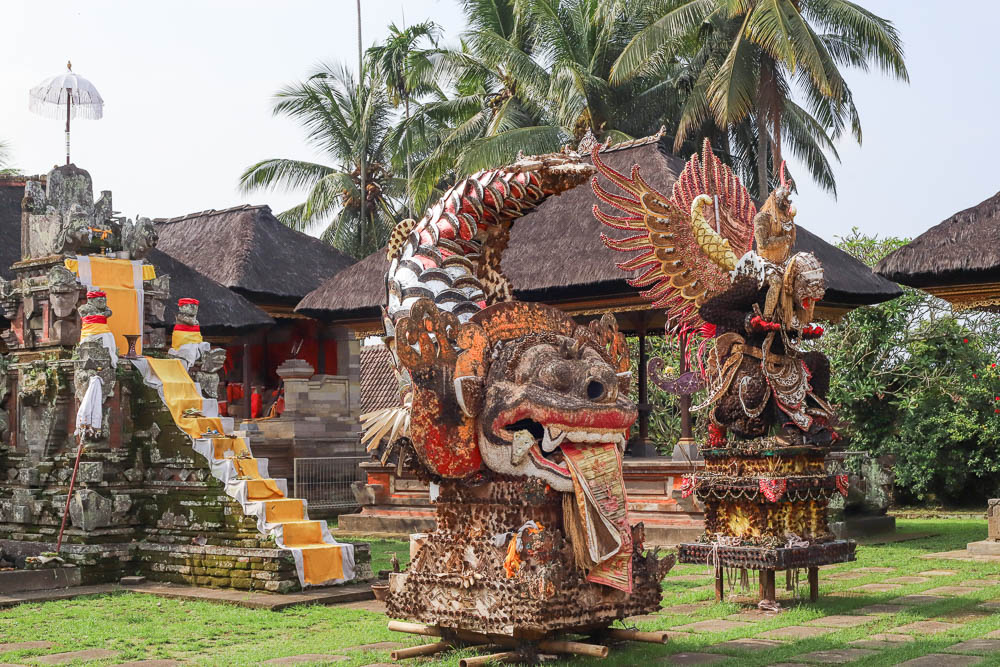
A barong figure, a kris sword, and a Hanoman mask belong to the temple’s sacred ritual objects. The Hanoman mask and the kris are kept in the palace (Puri Ubud) and brought to the temple for ceremonies, while the barong figure is housed in one of the temple’s pavilions. They embody ancestral forces and guardian spirits that are believed to safeguard the community. During major rituals, these sacred items are ritually awakened, purified, and carried in processions, allowing the divine presence they represent to interact with the human world.
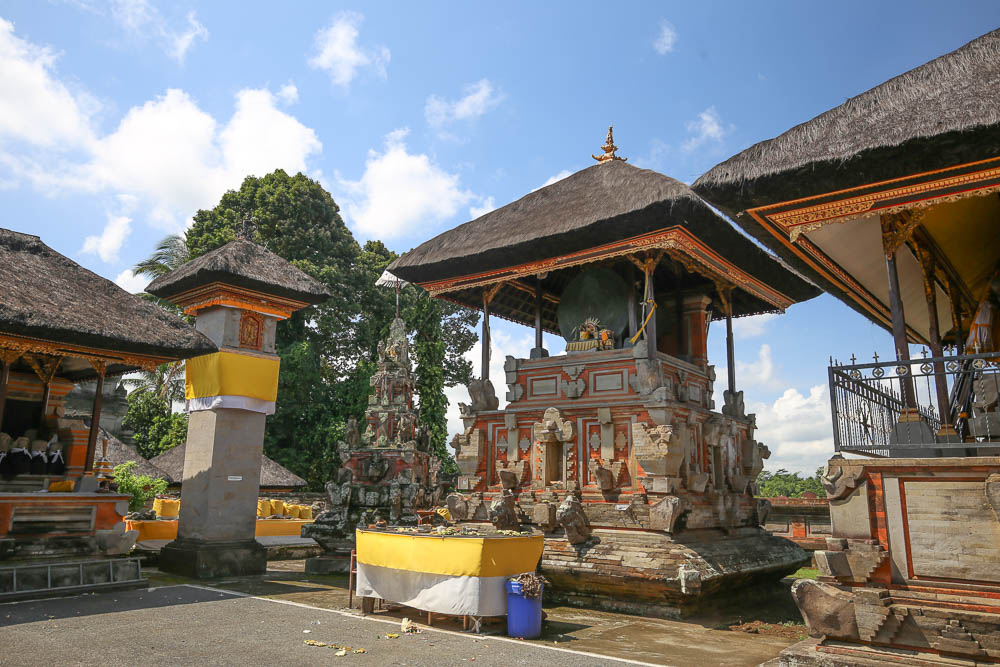
The most celebrated ceremony at Gunung Lebah is the temple anniversary, known locally as piodalan. It takes place during the full moon and consists of a series of elaborate purification and offering rituals, including Melasti (a purification procession to bring holy water), the collection and circulation of tirta (holy water) among related temples, Tawur Agung (a ritual to balance cosmic energies and purify the realm), and Mepada (ritual purification). A highlight is the symbolic descent of the temple’s Sesuhunan (ancestral spirit) deities to the nearby market, a rare procession in Bali. Local residents actively participate, creating vivid ceremonial procession
The drum
Today, the confluence is often visited by pilgrims for bathing or meditation. Two sculptors regularly work by the river, creating mask-like figures from stone. The walkway to the popular Campuhan Ridge Walk leads many foreign visitors to the temple’s outer walls, but the gates are opened only during ceremonies.
Bibliography
Artanegara, Agung et al. Tinggalan arkeologi di daerah aliran sungai Pakerisan dan Petanu. Balai Pelestarian Cagar Budaya Bali, 2021.
Kempers, A. J. Bernet Monumental Bali. Singapore: Periplus Editions, 1991.
Mason, Victor Bali Bird Walks. Singapore: APA Publ. U. Höfer Press, 1992.
Raka, Anak Agung Gd. Pura Penataran Sasih Pejeng Kahyangan Jagat Bali. Denpasar: Pustaka Larasan, 2016.
Ramelan, Wiwin Djuwita Sudjana (Ed.) Candi Indonesia. Seri Sumatera, Kalimantan, Bali, Sumbawa. Jakarta: Direktorat Pelestarian Cagar Budaya dan Permuseuman, 2014.
Spitzing, Günter Bali. Tempel, Mythen und Volkskunst auf der tropischen Insel zwischen Indischem und Pazifischem Ozean. Köln: DuMont, 1983.
Temba, Jesita Ananta Kahi, Maria Lediana Lamut, Ni Putu Yuniarika Parwati. Pura Penataran Sasih sebagai Objek Wisata Sejarah di Kabupaten Gianyar / Penataran Sasih Temple as a Historical Tourism Object in Gianyar Regency. Denpasar: Nirwasita: Jurnal Pendidikan Sejarah dan Ilmu, Vol. 4, No. 1, March 2023.
Ubud Story Walks
Nearby Temples
The area around Ubud is extremely rich in historical temples and thousand-year-old rock-cut sanctuaries. Many of them are located in the regions surrounding Ubud, including Pejeng and East-Central Bali, and can be reached within an hour. Since Ubud lies in the heart of Central Bali, the further historical sites across the island—whether in West-Central Bali, East Bali, or even parts of South Bali—are accessible from here within a two-hour drive.
Previous temple:
Next temple:
Photos and text © 2026 Alida Szabo
