— Overgrown by Nature —
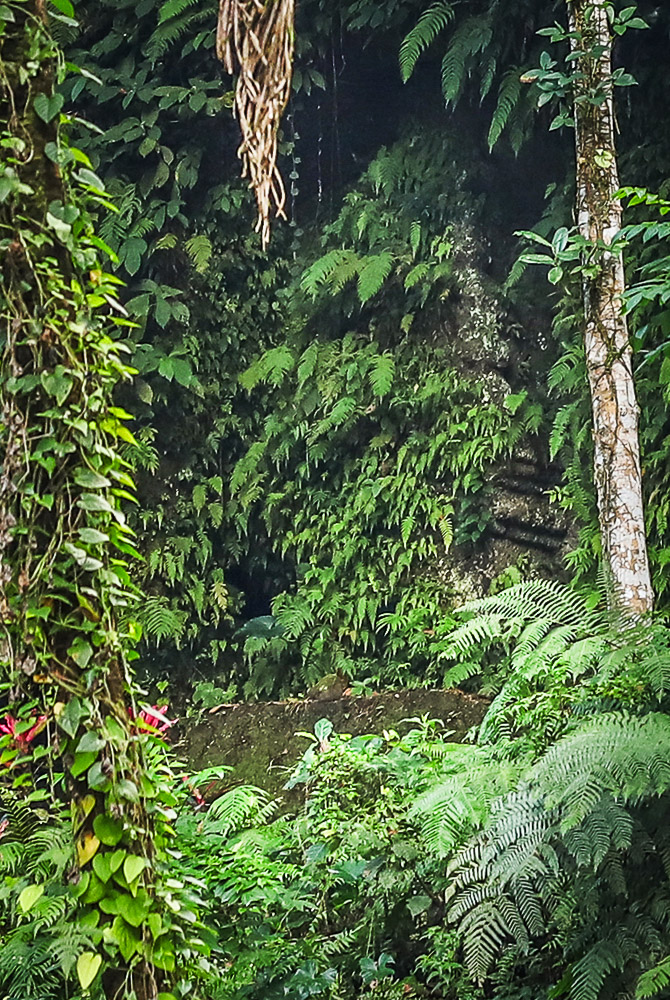
Meaning: ‘Kerobokan cliff temple’
Also called: CANDI TEBING KROBOKAN
Location: A few kilometers north of Pejeng, at the confluence of Pakerisan River and Kerobokan River
Map: Cemadik, Pejeng Kangin, Tampaksiring, Gianyar, Bali, Indonesia
Dates back to: 12ᵗʰ century
Main features: A rock-cut candi form and carved meditation caves
Region: Pejeng
Theme: The Rock Temples of Central Bali
Requirements for visit: none
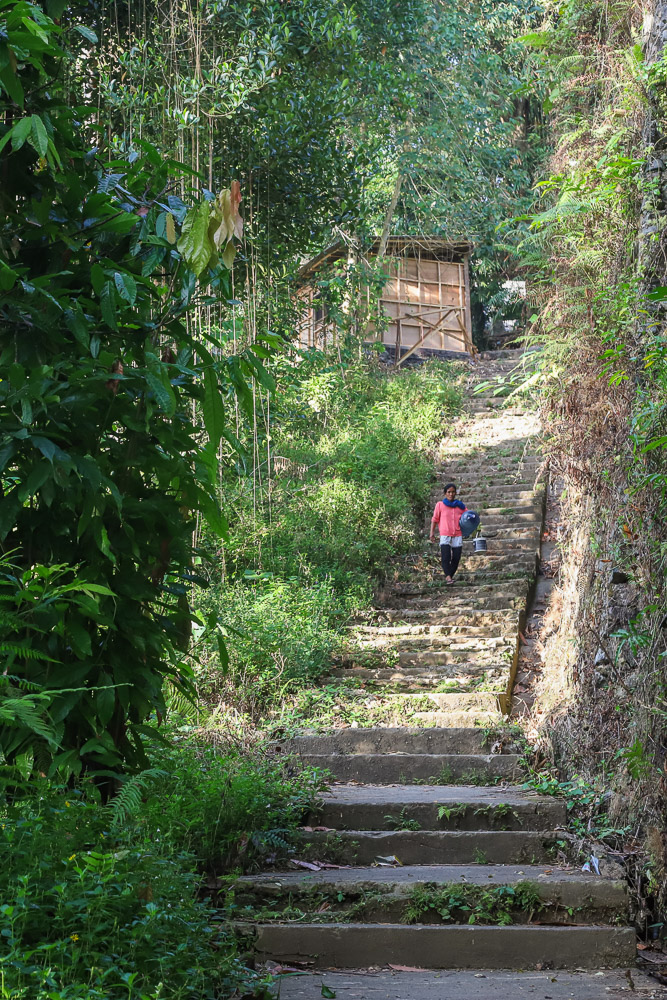
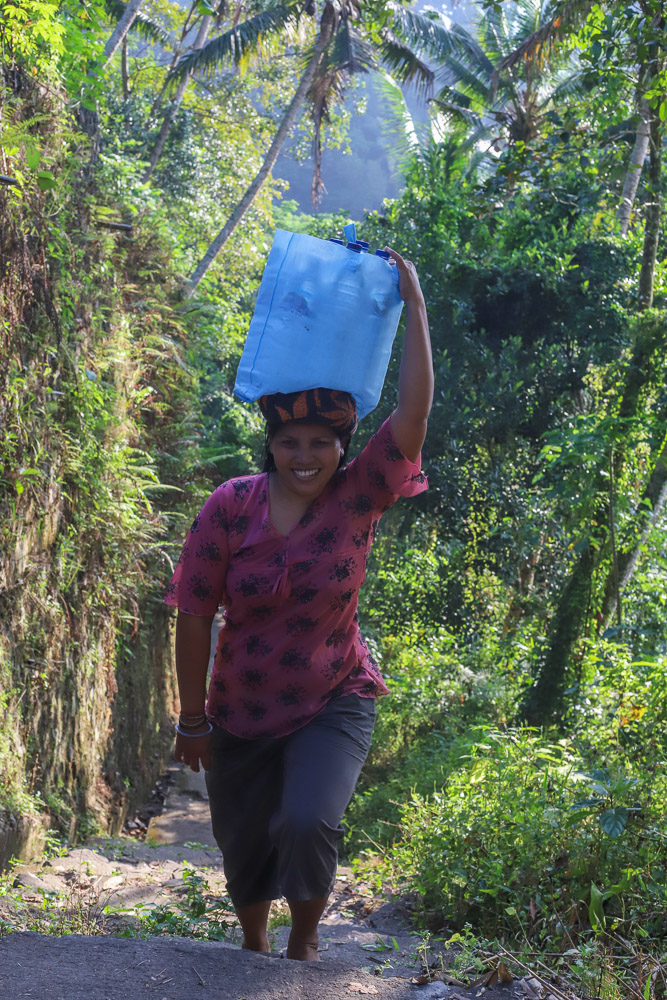
Accessibility: About 300 uneven steps lead down to the cliff temple
South of Tampaksiring, but still within the Pakerisan River valley—like Pura Tirta Empul, Pura Mengening, and Pura Gunung Kawi—there are several other ancient rock-cut temples: Candi Tebing Kerobokan, Goa Garba, and Candi Tebing Tegallinggah.
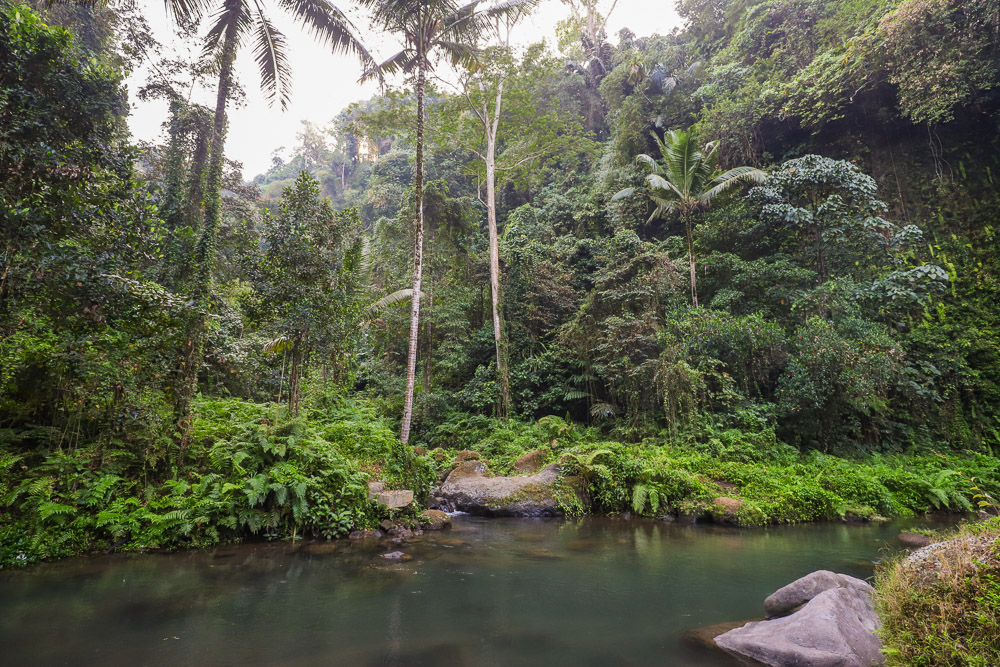
Location and landscape setting
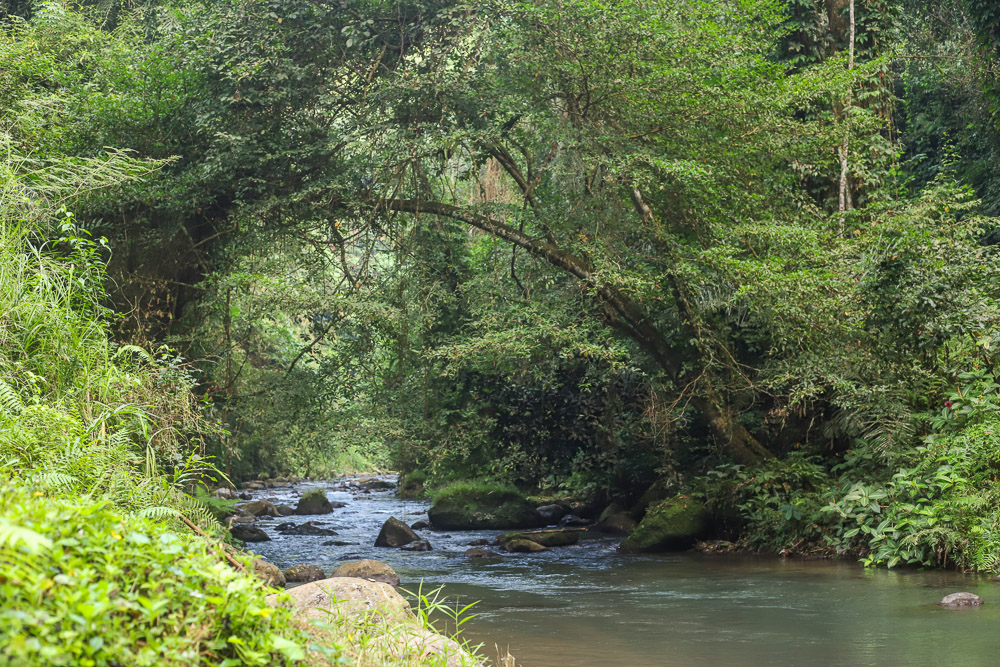
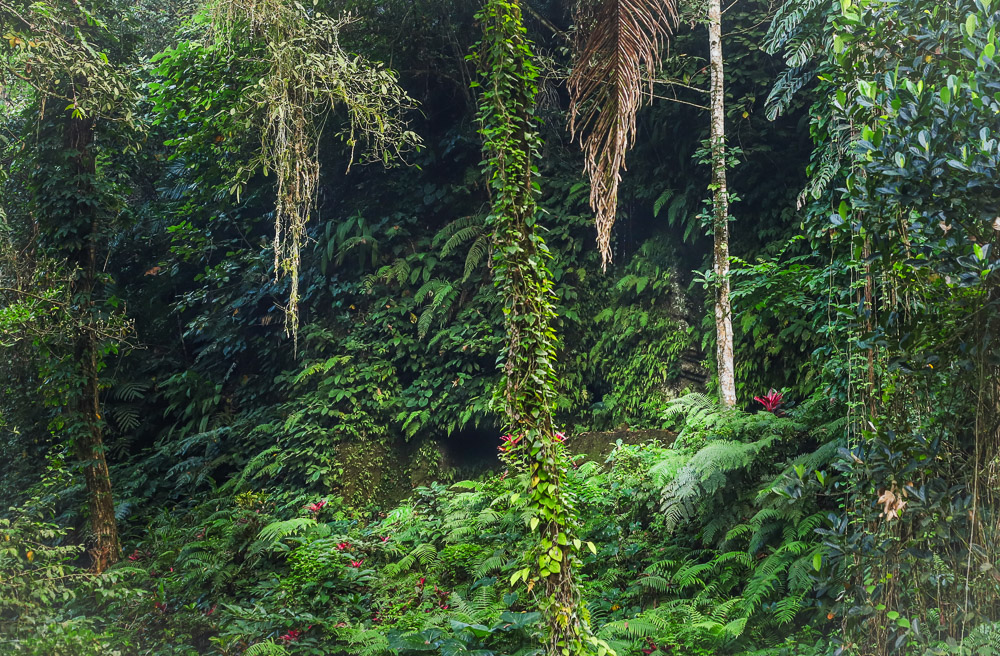
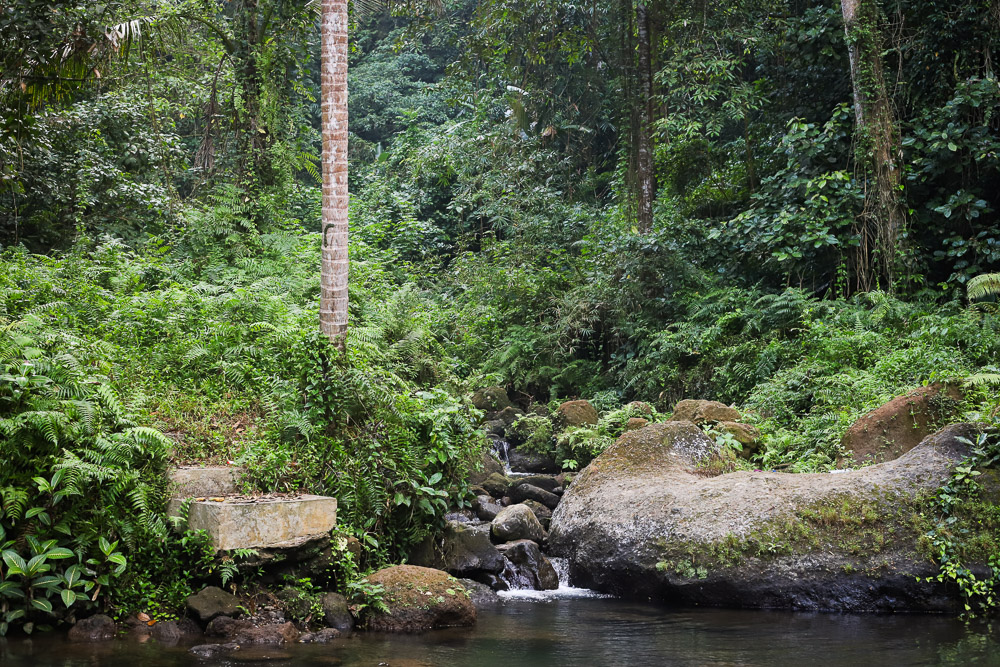
Candi Tebing Kerobokan is a small yet significant rock-cut cliff temple (candi tebing). It stands at the campuhan, the confluence of the Kerobokan River and the Pakerisan River. The candi is carved directly into the very steep northern cliff of the riverbank, embedded in a humid, shaded environment. Dense vegetation, moss, and constant moisture characterize the site, softening architectural contours while simultaneously accelerating stone weathering. The monument’s placement—overlooking flowing water at a river confluence—aligns it closely with Balinese concepts of purification, and spiritual transition.
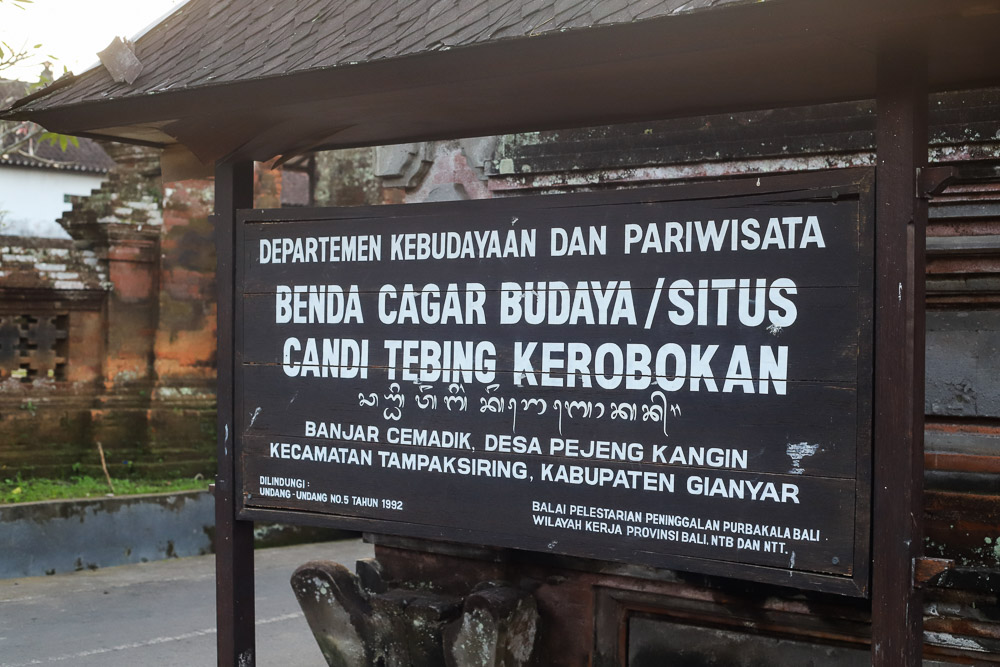
Historical context
Based on stylistic and typological analysis, scholars generally date Candi Tebing Kerobokan to around the 12ᵗʰ century CE, making it slightly younger than Gunung Kawi, which is associated with the 11ᵗʰ-century Warmadewa period.
The monument reflects the syncretic Hindu–Buddhist religious culture of early Bali, particularly the ascetic and Shaivite traditions that flourished in central Bali during this period. Its form and placement indicate continuity with earlier cliff sanctuaries, while also showing local variation and adaptation.
Architectural features, function and meaning
The complex consists of one main cliff-carved candi accompanied by at least three ascetic or hermitage caves carved into the same riverbank sector. Unlike Gunung Kawi—where shrines and caves are more clearly separated spatial units—at Kerobokan the candi is carved between or among the hermitage niches, forming a more integrated architectural ensemble. In this it is similar to the Tenth Shrine of Gunung Kawi and to Jukut Paku.
The main shrine is hewn as a tower-like structure, articulated into a base (kaki), body (tubuh), and roof (atap). While closely related in form to Gunung Kawi and Candi Tebing Tegallinggah, the Kerobokan shrine is slimmer and approximately one meter shorter. The roof is proportionally broader than those at Gunung Kawi.
Within the body of the candi is a cavity interpreted as a peripih chamber, used to place ritual deposits during consecration. Above this cavity are reliefs of niches with heavily eroded kala heads, originally functioning as guardian motifs at architectural thresholds. At the summit of the shrine sits a lingga–yoni, clearly indicating a Shaivite orientation and symbolizing cosmic union, and fertility.
Local narratives attribute the carving of the temple to a powerful figure working miraculously with fingernails, a motif common in Balinese oral tradition and sometimes associated—though anachronistically—with legendary figures such as Kebo Iwa. Nearby features, including a small cave and a large “pillow-like” stone said to be a royal resting place, reinforce local perceptions of the site as a retreat for high-status individuals, not merely a village shrine.
The combination of ascetic caves, river confluence, and lingga-yoni crown suggests intertwined practices of purification, meditation, and deity or ancestor veneration within the broader Pakerisan ritual landscape.
Due to the humid microclimate of the valley much of the structure is now visibly worn, and parts may already have collapsed. Heritage observers stress the urgency of ongoing conservation measures, including vegetation control, rock stabilization, and carefully managed access, to preserve both the physical integrity and interpretive legibility of this modest yet culturally important monument.
Overview of selected candi tebing in the Pakerisan Region
Here is a comparative table mapping Candi Tebing Kerobokan against other major candi tebing in the Pakerisan valley and beyond (in the case of Candi Tebing Tambahan). You can get an overview about the landscape, form, layout, dating, and ritual function of these sites.
| Site | Location and Landscape | Approx. Date | Scale and Proportions | Layout: Candi vs. Hermitage Caves | Key Architectural Features | Religious Orientation and Function |
|---|---|---|---|---|---|---|
| Candi Gunung Kawi | Steep cliffs along the Pakerisan River, Tampaksiring | 11th c. CE (Warmadewa period) | Monumental, tall and massive | Shrines and hermitage caves clearly separated, except at the Tenth Shrine | Multiple large rock-cut shrines; inscriptions | Royal monument; ancestor veneration; Shaivite with syncretic elements |
| Candi Tebing Kerobokan | Confluence of Pakerisan & Kerobokan rivers, Pejeng Kangin; overgrown cliff | 12th c. CE | Smaller, slimmer; ~1 m shorter than Gunung Kawi | Candi carved between hermitage caves (integrated layout) | Monolithic cliff-carved shrine; eroded kala heads; roof with lingga–yoni | Shaivite asceticism; meditation, purification |
| Candi Tebing Tegallinggah | Cliff at Pakerisan River | 11th–12th c. CE (unfinished) | Intended monumental scale, but incomplete | Separation of elements | Staircases and carved elements; evidence of abandoned construction | Likely similar function to Gunung Kawi |
| Candi Tebing Tambahan | Pakerisan watershed, more secluded river setting | 11th–12th c. CE | Smaller scale | Integrated shrine–cave relationship | Simpler cliff carvings; minimal ornamentation | Hermitage-oriented ritual use; ascetic practices |
| Candi Tebing Kalebutan | Petanu riverbank | 11th–12th c. CE | Smaller scale, slimmer shape | Integrated shrine–cave relationship | Less elaborate candi form; strong cave emphasis | Meditation, retreat, localized ritual practice |
Visiting
Today, Candi Tebing Kerobokan is little visited and often described as a “hidden” site, partly due to overgrown access paths and minimal infrastructure.
After going down about 200 steps, the stairway forks. Turning right leads to the temple, while continuing straight brings you to a water spring. At the bottom of the stairs by the river, the temple relief can be seen on the opposite side of the Pakerisan River, to the left, carved into the eastern rock face, facing south. If you wish to get closer, you need to cross the river.
Entry is generally free, and the atmosphere remains quiet and natural, offering a different experience from Bali’s more frequented temple attractions.
Bibliography
Artanegara, Agung et al. Tinggalan arkeologi di daerah aliran sungai Pakerisan dan Petanu. Balai Pelestarian Cagar Budaya Bali, 2021.
Kempers, A. J. Bernet Monumental Bali. Singapore: Periplus Editions, 1991.
Ramelan, Wiwin Djuwita Sudjana (Ed.) Candi Indonesia. Seri Sumatera, Kalimantan, Bali, Sumbawa. Jakarta: Direktorat Pelestarian Cagar Budaya dan Permuseuman, 2014.
Nearby Temples
Following the Pakerisan River northwards brings you to Tampaksiring, with its concentration of historic temples. Driving about ten minutes to the south leads to Goa Garba, another rock-cut site of striking natural beauty and historical and spiritual significance. Further south lies Pejeng village, home to three and a half major historical temples: Pura Penataran Sasih, Pura Pusering Jagat, and Pura Kebo Edan with Pura Arjuna Mentapa at its side. Beyond Pejeng begins the East Central Bali temple region, with many more remarkable historic puras.
Previous temple:
Next temple:
Photos and text © 2025 Alida Szabo.
